Avoiding Magma Block Damage Using Soul Sand — A Quick Guide
Understanding Magma Block Damage and Bubble Column Mechanics
In the vast world of Minecraft, navigating challenging terrain and dangerous blocks is a common part of survival and exploration. Magma blocks, often found in the Nether or near lava pools, pose a significant threat due to their continuous damage-dealing properties upon contact. However, with clever use of another common block, soul sand, players can not only mitigate this damage but also harness powerful vertical transportation systems. This guide will delve into the fundamental mechanics of magma blocks and soul sand bubble columns, providing a comprehensive strategy for safe and efficient travel.
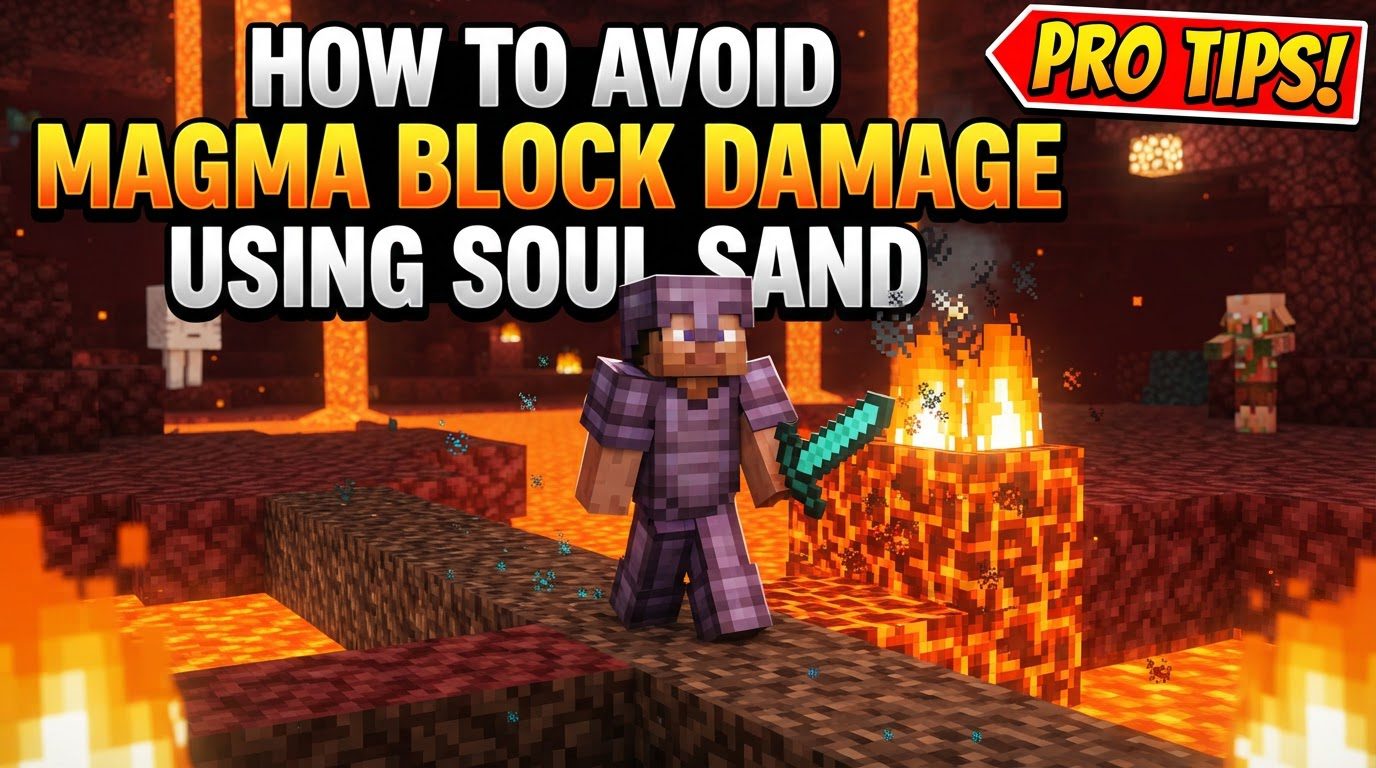
At its core, understanding how to avoid magma block damage using soul sand revolves around the unique properties these blocks exhibit when submerged in water. Specifically, they interact with water source blocks to create dynamic bubble columns, which are essential for vertical movement without taking harm.
Key Mechanics of Bubble Columns
- Soul Sand’s Upward Force: When a block of soul sand is placed at the bottom of a vertical shaft filled entirely with water source blocks, it generates an upward-flowing bubble column. This powerful current pushes any entity, including players, items, and even certain mobs, rapidly upwards through the water column. Crucially, traveling within this upward bubble column completely negates any damage from magma blocks if they were somehow part of the setup, though the primary goal is to use soul sand for upward travel and thus avoid magma blocks entirely in this context.
- Magma Block’s Downward Pull: Conversely, if a magma block is placed at the bottom of a water source block column, it creates a downward-flowing bubble column, often referred to as a whirlpool. This current pulls entities downwards. While useful for rapid descent, players must be cautious, as direct contact with the magma block at the bottom will still inflict damage.
- Magma Block Damage: Magma blocks inflict damage upon any entity that touches them. This damage is continuous, similar to standing on fire, and can quickly deplete a player’s health. There are only a few ways to prevent this damage: by sneaking (crouching) while on the block, or by wearing boots enchanted with Frost Walker, which converts the magma block into a temporary, harmless block when stepped upon. However, for continuous travel, these methods are less ideal than the soul sand solution.
- The Importance of Water Source Blocks: For any bubble column to function correctly and consistently, the entire vertical shaft must be composed of water source blocks. Flowing water (water that spreads from a source block) or waterlogged blocks that are not full source blocks will interrupt the bubble column, rendering it ineffective. This is a critical detail for successful construction.
Step-by-Step Process: Creating a No-Damage Upward Elevator
The most effective way to utilize soul sand to avoid magma block damage is by constructing a dedicated upward water elevator. This system allows for rapid vertical ascent without any risk of harm. Follow these steps carefully to build your own:
- Build an Enclosure:
First, you need to construct a vertical shaft that will house your water column. This enclosure defines the path of your elevator and prevents water from spilling out. The ideal material for this is glass, as it allows visibility and looks aesthetically pleasing, but any solid, non-flammable block like stone, cobblestone, or even dirt will work. The shaft should be at least one block wide (e.g., 1×1 or 2×2 internal dimensions) and as tall as you need your elevator to be. Ensure the walls are completely sealed to hold the water.
- Fill with Water:
Once your enclosure is built, you need to fill it with water. The most efficient way to do this is to place a single water source block at the very top-center of your shaft. This water will then flow downwards, filling the entire column with flowing water. Do not place water blocks at every level yet; the kelp method will take care of converting them to source blocks.
- Convert to Source Blocks using Kelp:
This is a crucial step to ensure your bubble column functions correctly. Descend to the very bottom of your water-filled shaft. Starting from the bottommost block of water, plant kelp. Kelp can only be planted on certain blocks (like dirt, sand, gravel, clay) but will grow upwards through water. As kelp grows, it automatically converts all flowing water blocks it passes through into water source blocks. Continue planting and growing kelp until it reaches the very top of your water column. You can speed up the kelp’s growth by applying bone meal to it, saving time and resources.
- Remove Kelp:
After all the water blocks have been converted into source blocks by the kelp, you no longer need the kelp itself. Break the very bottom kelp block in the column. When the bottom kelp block is broken, the entire column of kelp above it will instantly break and drop as items. This leaves behind a perfectly clear shaft filled entirely with water source blocks, ready for the final step.
- Place Soul Sand:
Now for the magic. Replace the bottom-most block of your shaft (the block directly underneath where the kelp was growing) with a block of soul sand. The moment the soul sand is placed, it will immediately generate a powerful upward-flowing bubble column throughout the entire water shaft. Stepping into this column will propel you rapidly to the top without any damage, providing a safe and efficient means of vertical travel.
Important Tips for Advanced Usage and Safety
While the primary focus is on avoiding magma block damage with soul sand, these tips expand on the utility and safety of bubble columns:
- Dedicated Upward Travel: Always remember that soul sand at the bottom of a water column creates an upward elevator, ensuring completely safe travel to higher elevations. This is your go-to method for vertical ascent without any damage concerns.
- Preventing Water Spills: To maintain the integrity of your water column and prevent water from flowing out at the entrance or exit points of your elevator, you can use signs. Place signs on the side of the opening at the entrance/exit level. Signs act as non-solid blocks that prevent water flow while still allowing players to pass through. This creates a neat and contained elevator system.
- Bidirectional Travel Systems: For comprehensive base designs, you can create separate upward and downward elevators side-by-side. Use a soul sand column for ascending and a magma block column for descending. This provides a complete two-way transportation system.
- Crouching for Downward Travel: If you are using a magma block for a downward bubble column (a whirlpool), remember that you can prevent damage from the magma block at the bottom by crouching (sneaking) as you land on it. This is a manual way to avoid the damage, but it requires player input.
- Boats and Magma Blocks: A boat can be placed over a magma block to create a temporary platform. When you stand in the boat, you are technically not in direct contact with the magma block, thus preventing damage. However, boats will shake violently over magma blocks and can eventually break or “sink” if left for too long, making this a less reliable and temporary solution compared to proper bubble column design or sneaking.
Common Mistakes to Avoid
Building effective bubble columns is straightforward, but a few common errors can lead to frustration or even damage:
- Standing Directly on Magma Blocks: This is the most critical mistake. Magma blocks cause continuous damage if you stand on them without protection (sneaking or Frost Walker). When designing any system involving magma blocks, ensure there’s no direct, prolonged contact. The soul sand elevator completely bypasses this risk by not using magma blocks for player contact.
- Not Having Full Water Source Blocks: The bubble column mechanic relies entirely on a continuous column of water source blocks. If even one block in the vertical shaft is flowing water or a waterlogged block that isn’t a source block, the bubble column will not form correctly, or it will be interrupted at that point. Always use the kelp method to guarantee all blocks are source blocks.
- Using Flowing Water Instead of Source Blocks: Related to the previous point, simply pouring water from the top and hoping it works is a common pitfall. Flowing water will not support a functional bubble column. The kelp method is the definitive way to ensure all water blocks in the column are converted into source blocks, which is essential for proper bubble column function with both soul sand and magma blocks.
By understanding these mechanics and following the detailed steps, you can effectively utilize soul sand to create safe, efficient, and damage-free vertical transportation systems in Minecraft, completely circumventing the dangers posed by magma blocks in your travel paths.
Tags:
YOU MAY ALSO LIKE...