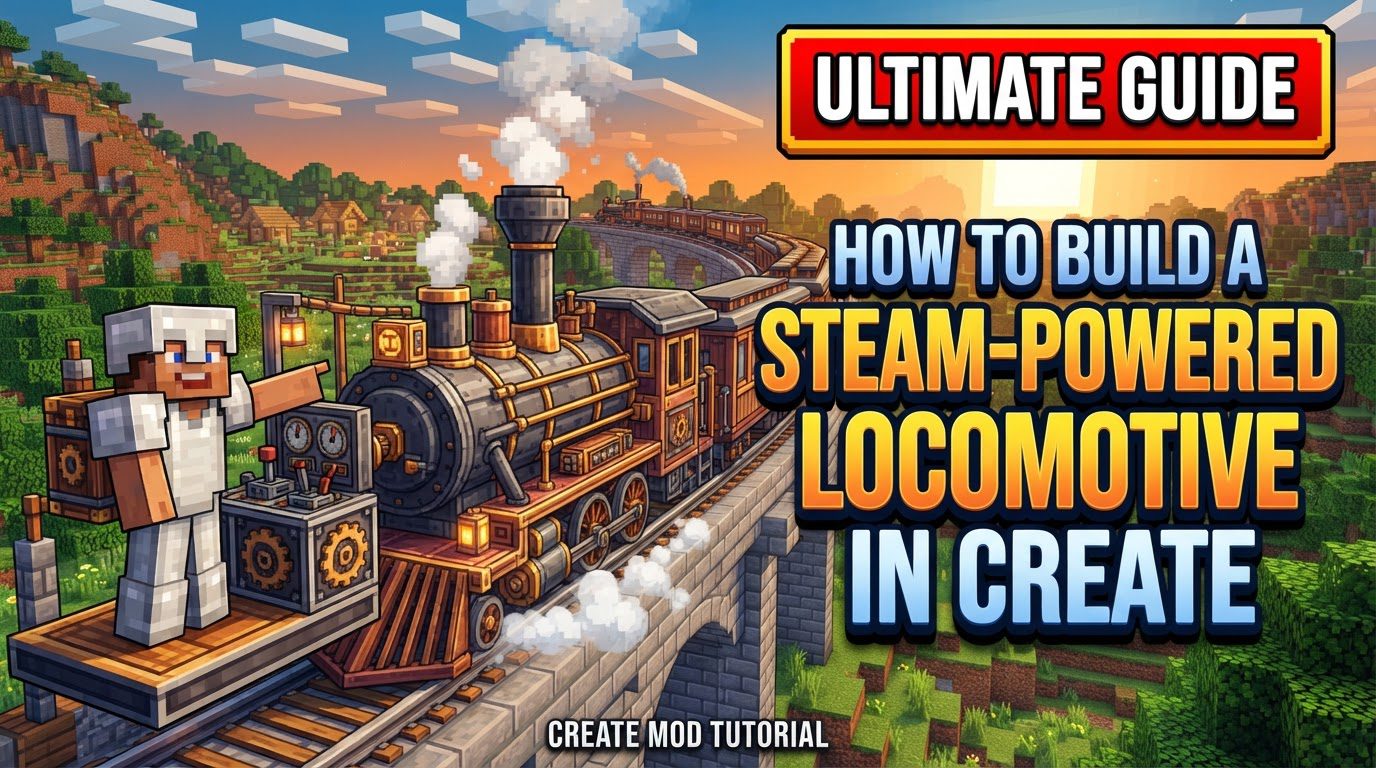
Building a Steam-powered Locomotive in Create (Step by Step)
Understanding the Fundamentals of Create Steam Engines
Building a powerful and aesthetically pleasing steam-powered locomotive in Minecraft’s Create mod is a rewarding endeavor. At its core, the Create steam engine functions by converting heat and water into rotational force, measured in Stress Units (SU). This mechanical power is crucial for driving your locomotive and other contraptions.
The power output of any steam engine is intricately linked to three primary factors:
- Boiler Size: This refers to the number of fluid tank blocks that constitute your boiler. A larger boiler can potentially hold more water and generate more steam.
- Heat Source: The intensity of the heat applied to the boiler is vital. Active blaze burners placed underneath the fluid tanks are the preferred method for consistent and high heat.
- Water Input Rate: A steady and sufficient supply of water is essential. Mechanical pumps are used to feed water into the fluid tank, and their RPM (rotations per minute) directly impacts the water input rate.
It is critical to understand that the boiler’s overall power level is capped by the lowest level among these three factors. For instance, if you have a massive boiler and strong heat, but insufficient water input, the water input rate will be the limiting factor for your power generation.
Each level of boiler power is designed to support one steam engine block. A single steam engine block, when adequately powered, outputs a substantial 16,384 SU at 64 RPM. While it is possible to attach multiple steam engine blocks to a single boiler, the total power generated by the boiler does not increase; instead, it is split among all attached engines. This means that if you attach too many engines, each individual engine will receive less power, reducing its speed and effective SU output.
An advanced and efficient design allows for a self-sustaining steam engine setup. Such a system can independently power its own water pumps, ensuring a continuous water supply, and even fuel its own blaze burners using mechanical arms. However, this self-sufficiency does require an initial SU overhead to operate these auxiliary components.
Step-by-Step Construction of Your Steam Locomotive
Embarking on the construction of your steam locomotive involves several distinct stages, from laying the groundwork to adding the finest details.
1. Lay the Tracks and Station
Your journey begins by establishing the infrastructure for your train. Start by laying a suitable stretch of track. Following this, place a train station in build mode. This station will serve as the central point for assembling and managing your locomotive.
2. Place Bogeys
Bogeys are the foundational components of your train, providing the wheels and connection to the tracks. To place them, first use train casings. Then, while holding the Alt key, open the bogey menu to select your desired bogey type. Options include various configurations such as the short 0-6-0 or the long 0-6-0 driver, each offering different aesthetics and functional characteristics for your locomotive.
3. Construct the Boiler
The boiler is the heart of your steam engine, responsible for generating the steam that powers the locomotive. Begin by assembling fluid tank blocks to form the main body of the boiler. Common configurations include 2×2 or 3×3 block arrangements, but you can scale this based on your power needs. Once the fluid tank structure is in place, position heat sources directly beneath the fluid tanks. Active blaze burners are highly recommended due to their efficiency and consistent heat output. Finally, ensure a constant water supply by pumping water into the fluid tank using mechanical pumps. It is crucial to provide sufficient RPM for these pumps, aiming for at least 20 RPM per boiler level to prevent power bottlenecks.
4. Attach Steam Engines
With the boiler constructed and ready to generate steam, place steam engine blocks directly onto the fluid tank boiler. These blocks will extract the generated steam and convert it into rotational force. Remember the principle that one steam engine block is optimally supported per boiler power level to maximize individual engine output.
5. Build the Locomotive’s Structure
This stage is where your locomotive truly takes shape, combining functionality with aesthetic design. Utilize a variety of Create mod blocks alongside decorative blocks to craft the engine’s casing and tender. Blocks like copper, prismarine, slabs, and stairs are excellent choices for creating intricate and realistic details. Don’t forget to incorporate essential functional and aesthetic elements such as train controls, comfortable seats for the operator, a whistle for signaling, and lanterns for illumination and character.
6. Glue the Components
The final crucial step in assembly is to use super glue to connect all the individual parts of your locomotive. This includes the structural blocks, decorative elements, and functional components, ensuring they are all securely attached to the bogeys. Proper gluing is paramount, as it ensures that everything moves as a single, cohesive unit when the train is in motion.
Important Tips for Enhanced Locomotive Building
To elevate your locomotive builds and ensure optimal performance, consider these advanced tips:
- Mod Integration: Enhance the realism and design possibilities of your locomotive by integrating supplementary mods. Mods like Steam ‘n Rails, Blocks & Bogeys, Create Deco, and Copycats+ offer a wealth of new blocks, parts, and features that can significantly improve the look and functionality of your train.
- Detailing: Pay close attention to mechanical details. Incorporate shafts and brackets to simulate internal workings, use basins for boiler parts to add depth, and include bells and whistles for a more authentic appearance and sound.
- Interior Decoration: Don’t overlook the cab interior. Detail it with elements like placards, clocks, and various other blocks to create an immersive and functional control space for the engineer.
- Automated Water Supply: For a truly self-sufficient system, automate the fueling of your blaze burners. This can be achieved through methods like lava farming using dripstone, ensuring a consistent and reliable heat source for your boiler.
- Optimal Engine Configuration: For the best results in terms of power and speed, aim to attach one steam engine block per boiler power level. This configuration ensures that each engine receives its maximum potential power output.
- Track Design: When designing tracks for large, detailed trains, it’s essential to use large curves. This prevents the train from looking unrealistic or encountering issues on tight turns. You can increase the track place distance in Create’s configuration settings to facilitate the creation of wider, more sweeping curves.
- Direction Control: If you find that the components of your factory or train are running in the wrong direction, you can use a wrench to change the rotation direction of the steam engine’s output shaft, providing precise control over your contraption’s movement.
Common Mistakes to Avoid
Being aware of potential pitfalls can save you time and frustration during your locomotive building process:
- Insufficient Water Flow: A common issue is the lack of adequate water supply to the boiler. Always ensure that your mechanical pumps are supplying water at a high enough RPM, specifically at least 20 RPM per boiler level. Failing to do so can cause the steam engine to stall or underperform.
- Mismatched Engine Count: Attaching too many steam engines for the boiler’s actual power level is a frequent mistake. This will inevitably reduce the stress units per engine and consequently its operational speed, leading to a less powerful locomotive than intended.
- Incorrect Gluing: Improper application of super glue can lead to parts detaching during operation or the entire train failing to function as a single contraption. Always double-check that all components, particularly to the bogeys, are correctly and securely glued.
- Tight Curves for Large Trains: Attempting to navigate large, detailed locomotives on very sharp turns can lead to undesirable outcomes. Such turns can make the train look “cursed” or even cause it to derail. Prioritize designing tracks with wider curves, especially for bigger builds, to ensure smooth and realistic operation.
- Boiler Troubleshooting: If you observe that a steam engine is not taking in water despite a mechanical pump being in place, a simple troubleshooting step is to remove and then replace the steam engines. This action often resets the fluid tank’s state and resolves the water intake issue.
Tags:
YOU MAY ALSO LIKE...