How to build an automatic Froglight farm in Minecraft
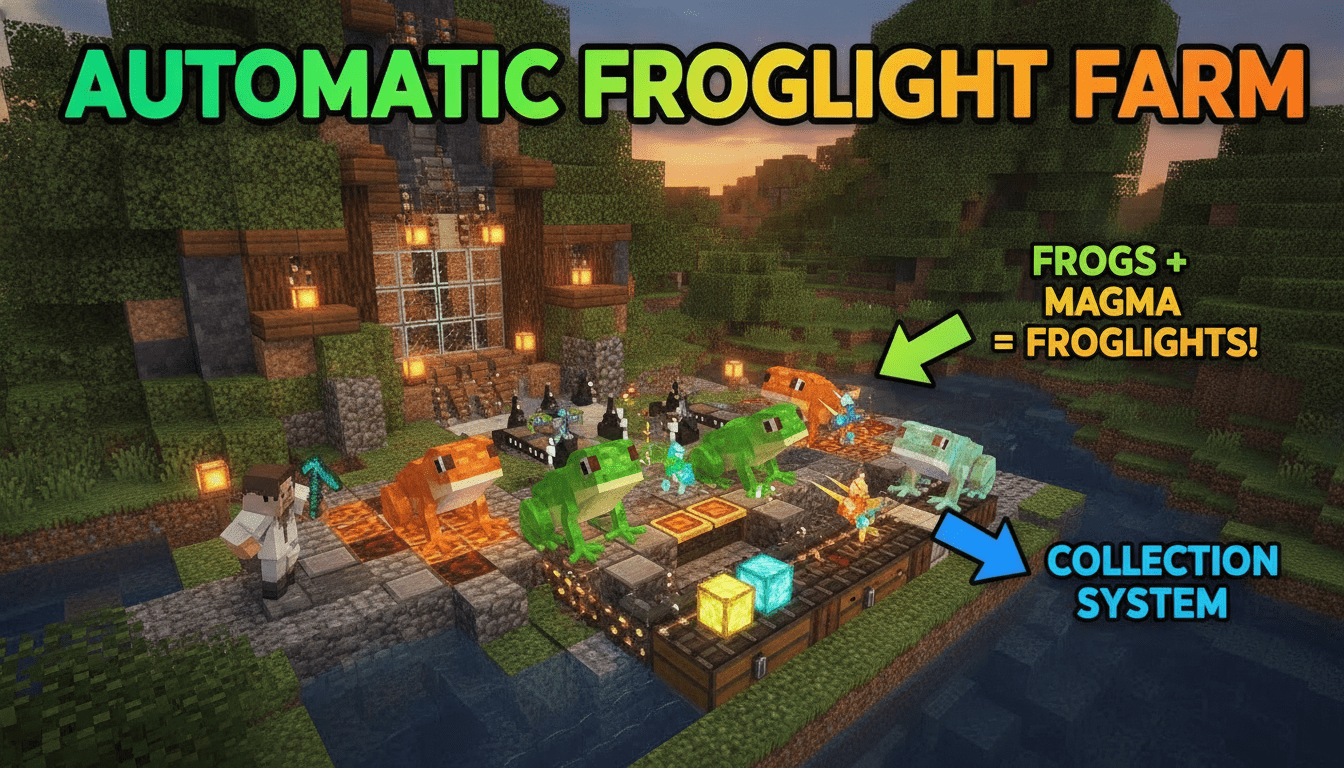
Building an automatic Froglight farm in Minecraft is a fantastic way to acquire all three beautiful Froglight variants for your building projects, turning an otherwise tedious manual process into a set-and-forget operation. This guide will walk you through constructing an efficient farm, focusing on the mechanics of frogs consuming magma cubes to produce these glowing blocks.
What You’ll Need
Here’s a list of essential materials and where to find them to build your automatic Froglight farm. Quantities are estimates and can vary based on your specific design and desired scale.
- Frogs (at least 1 of each desired type, recommended 2-3 per type):
- Where to get: Find adult frogs in Swamp or Mangrove Swamp biomes. Breed them with slimeballs to get frogspawn, which will hatch into tadpoles. Scoop tadpoles into a water bucket.
- Frog Variants: Tadpoles mature into different frog types based on the biome temperature they grow up in:
- Temperate (Orange/Ochre Froglight): Grow in most common biomes like rivers, plains, forests.
- Cold (Green/Verdant Froglight): Grow in snowy biomes, frozen peaks, or cold oceans.
- Warm (White/Pearlescent Froglight): Grow in deserts, savannas, jungles, or specifically in the Nether (tadpoles grown in the Nether always become white frogs).
- Magma Cube Spawner (optional, but highly recommended for efficiency):
- Where to get: Locate a Bastion Remnant’s treasure room in the Nether.
- Powdered Snow (9-49 buckets):
- Where to get: Collect with an empty bucket in snowy biomes (e.g., Snowy Peaks) or by placing cauldrons in any biome where it snows and waiting for them to fill.
- Building Blocks (9-10 stacks of non-flammable blocks):
- Where to get: Any solid block like cobblestone, smooth stone, or glass. Glass is excellent for visibility. Gather from mining or crafting.
- Hoppers (9-52+):
- Where to get: Craft using 5 Iron Ingots and 1 Chest. Iron Ingots are smelted from Iron Ore.
- Chests (2-4+):
- Where to get: Craft using 8 wooden planks of any type.
- Minecart with Hopper (1):
- Where to get: Craft using 1 Hopper and 1 Minecart (craft with 5 Iron Ingots).
- Rails (11-56+ regular, 4-27+ powered):
- Where to get: Craft regular rails with 6 Iron Ingots and 1 Stick. Craft powered rails with 6 Gold Ingots, 1 Stick, and 1 Redstone Dust.
- Redstone Components (quantities vary by design):
- Levers: Craft with 1 Stick and 1 Cobblestone.
- Redstone Dust: Mine from Redstone Ore.
- Redstone Blocks: Craft with 9 Redstone Dust.
- Comparators: Craft with 3 Stone, 3 Redstone Torches, and 1 Nether Quartz.
- Repeaters: Craft with 3 Stone, 2 Redstone Torches, and 1 Redstone Dust.
- Redstone Torches: Craft with 1 Stick and 1 Redstone Dust.
- Ladders:
- Where to get: Craft with 7 Sticks.
- Slabs (any type):
- Where to get: Craft with 3 blocks of the same material (e.g., 3 stone blocks for stone slabs).
- Leads/Boats:
- Where to get: Leads are crafted with 4 String and 1 Slimeball. Boats are crafted with 5 wooden planks. Used for transporting frogs.
- Iron Golem (optional, for aggro in some designs):
- Where to get: Construct by placing 4 Iron Blocks in a T-shape and a Carved Pumpkin on top.
- Slimeballs:
- Where to get: Dropped by Slimes (found in swamp biomes at night or slime chunks) or by frogs eating small slimes. Useful for breeding more frogs.
Step-by-Step
This guide outlines the general steps for building a spawner-based automatic Froglight farm, which is typically the most efficient. If you’re building in a Basalt Delta without a spawner, adapt the initial containment to a larger, spawn-proofed area.
1. Locate and Secure Your Site
- Find a Magma Cube Spawner: Travel to the Nether and search for a Bastion Remnant. Specifically, look for the treasure room variant, which contains a magma cube spawner.
- Clear the Area: Once you’ve found the spawner, carefully clear out any hostile mobs, especially Piglin Brutes, which are very dangerous. Remove any lava or other obstructions around the spawner. You’ll need a significant amount of space.
- Secure the Spawner: Place temporary blocks directly around the spawner to prevent magma cubes from immediately escaping once they spawn. You can also place torches on the spawner temporarily to deactivate it while you build.
2. Construct the Spawning Chamber
- Enclose the Spawner: Build an enclosed chamber around the magma cube spawner. For Java Edition, a common size is an 11×11 block area, with the spawner at the exact center. Ensure there’s at least 3 blocks of headroom above the spawner to allow even the largest magma cubes to spawn.
- Why: Magma cube spawners in Java Edition spawn mobs in a square area. The 11×11 size ensures all possible spawn locations are contained. The 3-block height is crucial because magma cubes can spawn in three sizes: large (3 blocks tall), medium (2 blocks tall), and small (1 block tall).
- Wall Material: Use solid, non-flammable blocks for the walls. Glass can be incorporated for visibility.
- Floor Design: The floor of this chamber will funnel the magma cubes. A common design is to create a slightly sloped floor leading to a central drop shaft, or simply a flat floor that pushes them towards a specific area with water (if applicable, though water evaporates in the Nether, so this is less common for Nether farms). For magma cubes, simply having a drop-off is usually sufficient.
3. Create the Drop Shaft and Powdered Snow Layer
- Define the Drop: Below your spawning chamber, create a vertical drop shaft. This shaft needs to be at least 6 blocks deep to prevent magma cubes from jumping back up.
- Why: Magma cubes, especially larger ones, can jump quite high. A 6-block drop ensures they can’t escape the killing chamber below.
- Install Powdered Snow: At the very bottom of this drop shaft, create a layer of powdered snow. This layer should cover the entire floor area where the magma cubes will land.
- Why: Powdered snow is the critical component for shrinking magma cubes. When a magma cube (or any mob) enters powdered snow, it takes freezing damage. Crucially, magma cubes that take damage in powdered snow will split into smaller versions, eventually reaching their smallest size. Only the smallest magma cubes can be eaten by frogs.
4. Build the Frog Killing Chamber
- Enclose the Snow: Build walls around the powdered snow layer to create an enclosed chamber. This will be where your frogs reside and where the smallest magma cubes will be consumed.
- Frog Entry Point: Design a way to get your frogs into this chamber. This could be a small opening you can block off, or a controlled drop from above.
- Introduce Frogs: Transport your desired frog types (Temperate, Cold, Warm) into this chamber. Use leads or boats to guide them through the Nether. If dropping them from a height, powdered snow can cushion their fall. Ensure you have the correct frog types to get the specific Froglight colors (Ochre for Temperate, Verdant for Cold, Pearlescent for Warm).
- Tip: Transporting tadpoles in water buckets is often easier than adult frogs. Grow the tadpoles in the Nether to ensure they become Warm (white) frogs for Pearlescent Froglights. For other colors, grow them in their respective biomes in the Overworld and then transport the adult frogs.
- Frog Protection (Optional): If you’re concerned about entity cramming (too many mobs in one block causing damage) or other issues, you can spread your frogs out using leads and fences, or design individual cells for them.
- Why: While frogs are generally safe from magma cubes they are eating, an overwhelming number of magma cubes or too many frogs in a single block can cause issues.
5. Implement the Item Collection System
- Hoppers Below: Directly beneath the powdered snow layer (and the frogs), place a network of hoppers. These hoppers should be configured to feed into one another, leading to a central collection point.
- Why: Froglights are dropped when frogs consume small magma cubes. Hoppers are essential for automatically collecting these drops.
- Minecart with Hopper (Optimal for larger farms): For wider collection areas, set up a rail system underneath the hoppers, running a Minecart with Hopper back and forth. This minecart will pick up items from the hoppers above and deposit them into chests.
- How to set up: Build a track of regular and powered rails. Place a Redstone Block next to a powered rail at each end of the track to create an automatic shuttle system for the minecart.
- Storage Chests: At the end of your hopper/minecart system, place a series of double chests to store the collected Froglights and Magma Cream (also dropped by magma cubes).
6. Power and Activation
- Spawner Activation: If using a spawner, ensure your AFK (Away From Keyboard) spot is within 16 blocks of the spawner to keep it active.
- Redstone for Powered Rails: If using a minecart system, ensure your powered rails are activated with Redstone Torches, Redstone Blocks, or Levers.
- Light Up/Slab Around Farm: Outside your farm, especially in the Nether, light up or place slabs on any spawnable surfaces within a 128-block radius (spherical for Bedrock, square for Java) to prevent other hostile mobs (like Ghasts or more magma cubes) from spawning. This helps concentrate spawns within your farm.
- Why: Mob caps and spawn mechanics mean that if other mobs are spawning, fewer magma cubes will spawn in your farm, reducing efficiency.
7. Final Checks and AFK Spot
- Test the Farm: Before going AFK, observe the farm for a few minutes. Ensure magma cubes are spawning, shrinking in the powdered snow, being eaten by frogs, and that items are being collected.
- Safe AFK Spot: Create a safe, enclosed area for yourself to stand while the farm runs. This should be within 16 blocks of the spawner (if applicable) and protected from any stray Ghast fireballs or other Nether hazards.
- Nether Roof (Java Edition Specific): For maximum efficiency in Java Edition, consider building your farm on the Nether roof (above bedrock layer Y=127). This significantly limits other mob spawns, funneling almost all hostile mob spawns into your farm. This is generally not possible in Bedrock Edition.
Tips for Efficiency
- Frog Quantity: While one frog per type is enough, having 2-3 frogs of each desired type can slightly increase the collection rate, as more frogs mean more opportunities to consume magma cubes. Some larger designs use 30-60 frogs total.
- Magma Cube Control: If you find magma cubes escaping or causing entity cramming, consider adding more powdered snow or refining the drop shaft to ensure they are quickly reduced to their smallest size and guided towards the frogs.
- Lava Lake Management: If your Bastion Remnant is over a lava lake, you’ll need to fill a large area with solid blocks (like sand or gravel) to prevent magma cubes from spawning in the lava, which they can do.
- Bedrock Edition Considerations:
- Spawner Shape: Bedrock Edition spawners generate mobs in a diamond shape (radius 4 blocks) rather than a square. Adjust your containment chamber accordingly.
- Redstone: Redstone can sometimes be less reliable or behave slightly differently in Bedrock Edition. Test your redstone components thoroughly.
- Nether Roof: You typically cannot build on the Nether roof in Bedrock Edition, so focus on spawn-proofing the area below the roof.
FAQ
Q: Why do I need powdered snow?
A: Powdered snow is crucial because it causes magma cubes to take freezing damage, which makes them split into smaller versions. Only the smallest magma cubes can be eaten by frogs, which then drop Froglights.
Q: How do I get different colored Froglights?
A: The color of the Froglight depends on the type of frog that eats the small magma cube. Tadpoles grow into different frog types (Temperate/Orange, Cold/Green, Warm/White) based on the biome temperature they mature in. For example, tadpoles grown in a snowy biome become cold frogs, which produce Verdant (green) Froglights.
Q: Can I build this farm without a magma cube spawner?
A: Yes, you can build a Froglight farm in a Basalt Delta biome, where magma cubes naturally spawn at a high rate. However, a spawner-based farm is generally more consistent and efficient due to the guaranteed spawn location and rate. You’ll need a much larger spawning area for a natural spawn farm.
Q: What is “entity cramming” and how does it affect my farm?
A: Entity cramming occurs when too many entities (mobs or items) occupy the same block space, causing them to take damage and potentially die. If too many magma cubes or frogs are concentrated in one block, it can lead to dead frogs or lost items. Spreading out frogs or controlling magma cube flow can mitigate this.
Q: Do I need to light up the farm area?
A: You generally do not need to light up the inside of the magma cube spawning area, as magma cubes can spawn in any light level. However, it’s vital to light up or slab the surrounding areas outside your farm in the Nether to prevent other hostile mobs from spawning and consuming the mob cap, thereby increasing your farm’s efficiency.
Enjoy your abundant supply of beautiful Froglights for all your decorative needs!
Tags:
YOU MAY ALSO LIKE...