Building an End Crystal-based Dragon Farm — A Quick Guide
Building an End Crystal-Based Dragon Farm
An end crystal-based dragon farm in Minecraft is an advanced and highly efficient system designed for repeatedly defeating the Ender Dragon. This process primarily aims to gain substantial amounts of experience points (XP), making it a popular choice for players looking to quickly level up. The core of this farming method involves respawning the Ender Dragon using end crystals and then eliminating it through an automated mechanism. Understanding the key mechanics, step-by-step construction, important tips, and common pitfalls is crucial for building a successful and sustainable farm.
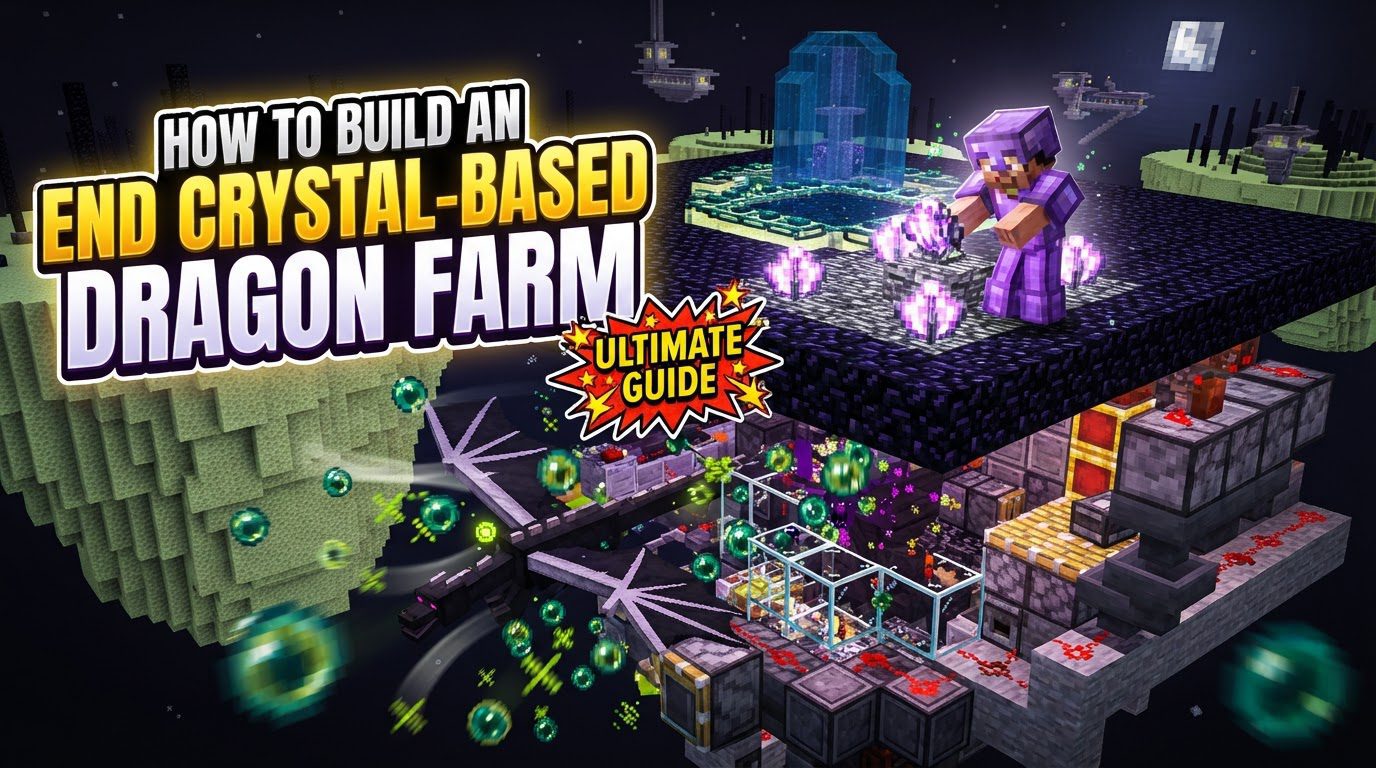
The fundamental principle behind dragon farming is the repeated resurrection of the Ender Dragon. This action requires placing four end crystals on the four middle blocks of the bedrock exit portal in a precise cross pattern. This specific placement not only brings the dragon back but also regenerates all the obsidian pillars in the End, including the crystals atop them. The methods for killing the dragon can vary widely, from manual player combat or the use of Wither Skeletons and TNT to sophisticated automated systems employing accelerated arrows or TNT minecarts. Effective farms often incorporate systems to control the dragon’s spawn location, efficiently kill it, automatically restart the farming loop, and collect the dropped XP. Some highly advanced designs even “steal” and reuse end crystals from the regenerating obsidian pillars to significantly reduce resource consumption over time.
Step-by-Step Farm Construction
Building an end crystal-based dragon farm involves several distinct stages, each requiring careful planning and execution.
- Clear the Area: The first step is to prepare the environment. Begin by clearing a flat space around the central End exit portal. This provides ample room for constructing the various components of your farm without obstruction. A clear area ensures that redstone contraptions and killing mechanisms can function optimally and without interference from existing End terrain.
- Build a Dragon Trap/Killing Chamber: Next, construct a mechanism designed to contain the dragon and deliver damage. The specifics of this chamber can differ significantly based on your Minecraft edition. For instance, in Bedrock Edition, bubble columns can be employed to hold the dragon in a fixed position, while dispensers drop TNT minecarts onto it. In Java Edition, an arrow-launching system, often fueled by Ghast fireballs to ignite the arrows, can be used to efficiently damage the dragon. The goal is to create an enclosed or controlled space where the dragon can be quickly and safely dispatched.
- Implement Crystal Placement System: A critical component is the system for automatically or semi-automatically placing the four end crystals on the exit portal. This system is responsible for triggering the dragon’s respawn. Redstone contraptions, such as piston pushers or dispenser-based mechanisms, can be designed to place the crystals on the specific bedrock blocks around the portal. The efficiency of this system directly impacts the farm’s overall XP per hour.
- Create Crystal Recycling (Optional, Advanced): For players aiming for maximum resource efficiency, an advanced crystal recycling system can be integrated. This involves building flying machines or other redstone contraptions that move end crystals from the regenerating obsidian pillars back to the central placement area. This “stealing” of crystals significantly reduces the need to craft new ones, making the farm much more sustainable for long-term use. This step is complex but highly rewarding for dedicated farmers.
- XP Collection: After the dragon is defeated, it releases a massive amount of experience orbs. A reliable system must be in place to gather these orbs. Typically, this involves ensuring that the orbs drop into the End exit portal, which teleports them to the overworld or a designated collection area. Hoppers, water streams, or even simple collection points where the player can stand are common methods to ensure no XP is lost.
- Redstone Automation: The final step is to connect all these components with redstone circuits to automate the entire farming loop. This includes mechanisms for respawning the dragon, activating the killing chamber, and initiating the XP collection. A well-designed redstone system allows for minimal player intervention, transforming the individual components into a cohesive and efficient dragon farming machine.
Important Tips for Success
Consider these crucial tips to optimize your dragon farm and avoid common pitfalls.
- Crafting End Crystals: Each end crystal is crafted using 1 Eye of Ender, 1 Ghast Tear, and 7 Glass. Understanding this recipe is vital for resource planning, especially if you opt not to implement a crystal recycling system.
- Resource Gathering: Efficiently gathering resources is key. Ghast Tears are obtained from Ghasts found in the Nether. Ender Pearls, which are used to craft Eyes of Ender, drop from Endermen. Blaze Powder, another component for Eyes of Ender, is derived from Blaze Rods, which are dropped by Blazes in Nether Fortresses. Establishing efficient farms for these resources can greatly accelerate your dragon farm’s construction.
- Version Differences: Be acutely aware that optimal farm designs and killing methods can vary significantly between Minecraft Java and Bedrock Editions. This is due to differing game mechanics, redstone behavior, and mob interactions. Always research designs specific to your game version.
- Crystal Invulnerability: An exploitable mechanic is that during the dragon respawn animation, end crystals on the pillars are temporarily invulnerable. This brief period of invulnerability can be leveraged by redstone contraptions, such as flying machines, to safely move these crystals without them exploding.
- Explosion Resistance: Obsidian and bedrock blocks located directly below an end crystal are not destroyed when the crystal explodes. This property is useful for building blast-resistant structures around the crystal placement area, ensuring the farm’s durability.
Common Mistakes to Avoid
Preventing these common errors can save you significant time and frustration during and after farm construction.
- Unbreakable Crystals Glitch: A game crash that occurs during the dragon respawning process can lead to a severe glitch where end crystals become indestructible. These “unbreakable” crystals will continuously heal the Ender Dragon, making it impossible to kill. This is a rare but debilitating issue.
- Accidental Crystal Explosions: End crystals are highly volatile. They explode if attacked (punched, shot, etc.) or if pushed while on fire. These explosions can cause significant damage to surrounding blocks and entities, potentially destroying parts of your farm or even killing the player. Exercise extreme caution when handling them.
- Ignoring Mob Griefing: While disabling the “mobGriefing” game rule prevents end crystals from destroying blocks in Bedrock Edition, it’s crucial to note that this game rule has no effect on end crystal behavior in Java Edition. In Java, crystals will always destroy blocks when they explode, regardless of the mobGriefing setting.
- Incorrect Crystal Placement: For the dragon to respawn, end crystals must be placed precisely on the four specific bedrock blocks around the End exit portal. Misplacing even one crystal will prevent the respawn animation from triggering, wasting resources and effort. Double-check your placement system.
- Lack of Preparedness: Respawning the dragon is an instantaneous event once the four crystals are placed correctly. It is vital to be fully prepared for the dragon’s appearance, or ensure your automated system is completely functional and ready to engage the dragon immediately. An unprepared system can lead to the dragon flying off or causing unintended damage.
Tags:
YOU MAY ALSO LIKE...