

Comparing Furnace Fuel Burn Times, Explained
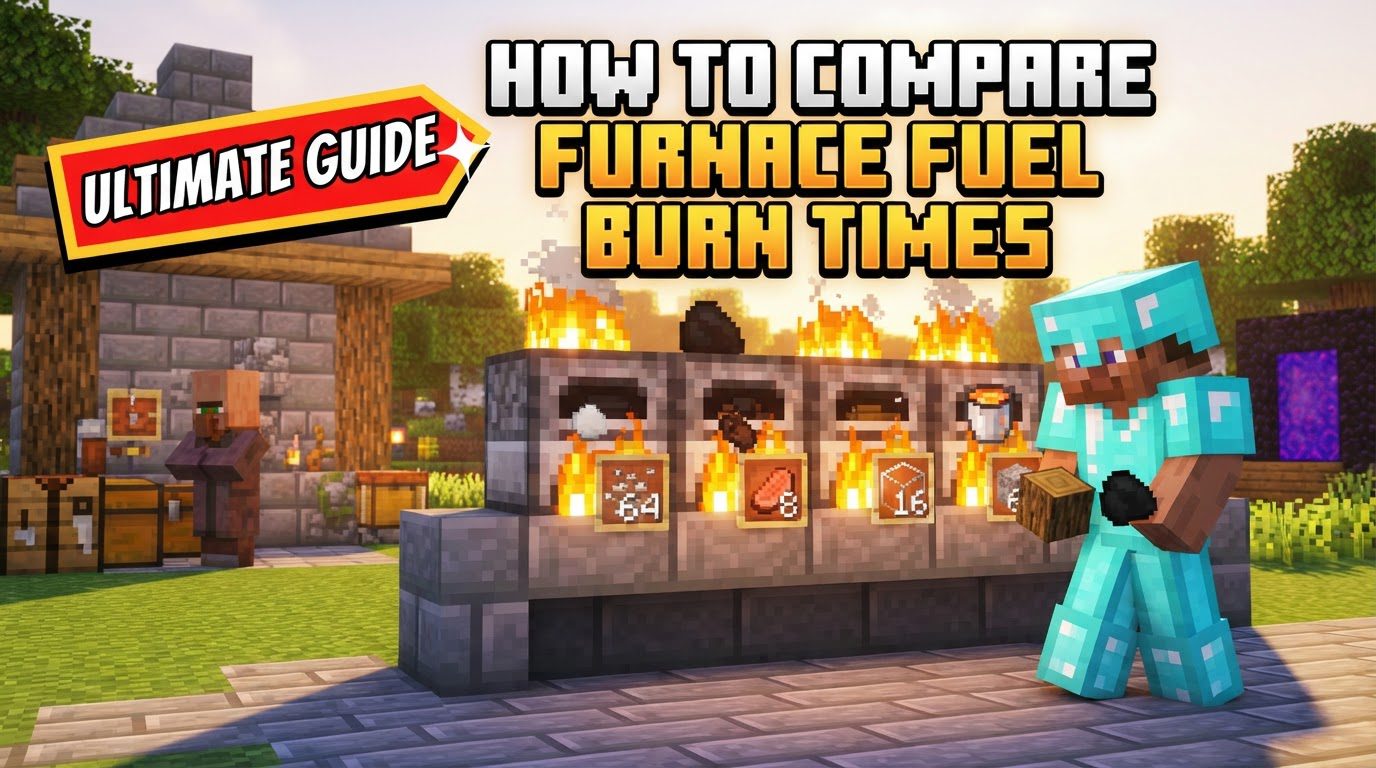
This guide will delve into the mechanics of furnace operation, provide a step-by-step method for evaluating fuel efficiency, highlight important tips for maximizing your smelting operations, and point out common mistakes to avoid. By mastering the art of fuel comparison, you can make informed decisions that will significantly impact your Minecraft experience.
Key Mechanics of Furnace Operation
To effectively compare fuels, it’s essential to first grasp the fundamental mechanics governing how a furnace operates. These principles apply across all furnace types, though some variations in speed exist.
-
Fuel Consumption: A furnace consumes one fuel item at a time from its designated fuel slot. Once a fuel item is placed, it immediately begins to burn, powering the smelting process for a specific duration.
-
Burn Time: Each fuel item possesses a unique “burn time” – a predetermined duration for which it will power the furnace. This burn time dictates how many items a single unit of that fuel can smelt.
-
Standard Smelting Speed: In a regular furnace, the baseline speed for smelting any single item is 10 seconds, which translates to 200 game ticks. This is the constant rate at which items are processed, regardless of the fuel type used.
-
Specialized Furnace Speed: Minecraft offers specialized furnaces designed for specific tasks. Blast furnaces are engineered for smelting ores, tools, and armor, while smokers are dedicated to cooking food items. Both of these specialized furnaces operate at twice the speed of a regular furnace, processing items in just 5 seconds (100 game ticks). This significant speed boost makes them invaluable for their respective item categories.
-
Fuel Consumption Consistency: Despite their increased smelting speed, blast furnaces and smokers consume the same amount of fuel per item smelted as a regular furnace. This means that while they process items faster, a single unit of fuel will still smelt the same total number of items, regardless of whether it’s used in a regular furnace, blast furnace, or smoker.
-
Visual Fuel Indicator: Within the furnace interface, a flame icon visually represents the remaining burn time of the currently active fuel. A full flame indicates plenty of fuel remaining, while a diminishing flame signals that the fuel is nearing depletion.
-
Visual Smelting Progress: Adjacent to the flame, an arrow icon illustrates the progress of the item currently undergoing smelting. As the arrow fills, the item is closer to being fully processed and moved to the output slot.
-
Consequence of Fuel Depletion: A critical mechanic to remember is that if the fuel runs out before an item is fully processed, any smelting progress made on that item is lost. This emphasizes the importance of providing sufficient fuel for the task at hand to avoid waste.
Step-by-Step Process for Comparing Fuels
To accurately compare the efficiency of different fuel types, a systematic approach is required. This method allows you to quantify how many items a single unit of fuel can smelt, providing a clear metric for comparison.
-
Prepare the Furnace: Begin by ensuring your furnace (or specialized furnace, if applicable) is empty of any previous items or fuel. This provides a clean slate for your experiment.
-
Insert a Single Fuel Unit: Place precisely one unit of the fuel you wish to test into the furnace’s fuel slot. It is crucial to use only a single unit to isolate its individual burn time and efficiency.
-
Load Smeltable Items: Into the input slot, place a large stack of identical smeltable items. For instance, a full stack of 64 raw iron or cobblestone is ideal. Using a large, identical stack ensures that the fuel will be fully consumed while smelting, and consistency in items removes any variables related to different smelting times for various materials (though this doesn’t apply to a standard furnace, it’s good practice).
-
Observe and Record: Carefully observe the furnace as it operates. Count and record the exact number of items that are fully smelted and transferred to the output slot before the single fuel unit is completely consumed and the flame icon disappears. This number represents the efficiency of that particular fuel unit.
-
Repeat for Comparison: Repeat this entire process for every different fuel type you wish to compare. By systematically testing each fuel, you can directly compare their efficiency based on the “items smelted per fuel unit” metric. This empirical data will inform your fuel choices for various smelting tasks.
Important Tips for Fuel Efficiency
Beyond simply knowing burn times, several strategic considerations can significantly enhance your fuel efficiency and overall smelting operations in Minecraft.
-
Leverage Specialized Furnaces: Always utilize blast furnaces for smelting ores, tools, and armor. Similarly, use smokers for cooking food. These specialized blocks operate at twice the speed of a regular furnace for their specific item types. While they don’t change the items-per-fuel ratio, they drastically reduce the time required for large-scale operations, making your fuel consumption feel more efficient due to faster throughput.
-
Lava Buckets: The Powerhouse Fuel: Lava buckets are exceptionally efficient, capable of smelting a remarkable 100 items per bucket. This translates to an impressive 1000 seconds of burn time. Furthermore, lava is a renewable resource, especially accessible from the Nether, making lava buckets an excellent choice for long-term, high-volume smelting needs. Once the lava is consumed, the empty bucket is returned to your inventory.
-
Blocks of Coal for Compact Efficiency: Blocks of coal offer a highly efficient and compact fuel source. Each block can smelt 80 items. This is particularly efficient when considering that a block of coal is crafted from nine individual pieces of coal, which would only smelt 72 items (9 * 8 items/coal). Therefore, crafting coal into blocks provides a bonus in efficiency and saves inventory space.
-
Charcoal: A Renewable Alternative: Charcoal serves as a fantastic renewable alternative to coal. It provides the same burn time, smelting 8 items per unit, just like regular coal. Charcoal can be easily produced by smelting any type of wood log in a furnace, offering a sustainable fuel source that doesn’t require mining.
-
Dried Kelp Blocks for Automation: Dried kelp blocks are an excellent renewable fuel, capable of smelting 20 items per block. They are particularly useful for automated furnace setups due to their ease of mass production from kelp farms. Their compact nature and renewability make them a staple for large-scale, hands-off smelting.
-
Wood Processing for Enhanced Efficiency: When using wood as a fuel source, converting logs into charcoal significantly increases its efficiency. While logs themselves can be used as fuel, transforming them into charcoal yields a much higher burn time per unit of wood initially gathered. In Bedrock Edition specifically, wooden slabs can surprisingly be more fuel-efficient than other wooden items, offering a niche optimization for players on that platform.
-
Campfires for Basic Food Cooking: For simple, small-scale food cooking, campfires offer a unique, fuel-free solution. They can cook up to four food items simultaneously without requiring any fuel. However, they are slower than smokers and cannot be automated for input, limiting their utility for large-scale operations or complex setups.
Common Mistakes to Avoid
Even experienced players can fall into common traps that lead to inefficient fuel usage or wasted resources. Being aware of these pitfalls can help you optimize your smelting operations.
-
Misusing Furnace Types: A frequent mistake is using a regular furnace for large-scale ore smelting or food cooking. While it works, a blast furnace would process ores, tools, and armor twice as fast, and a smoker would cook food twice as fast. Failing to utilize these specialized blocks for their intended purposes leads to unnecessary waiting times and slower production.
-
Wasting Fuel Burn Time: Allowing fuel to burn in a furnace without any input items is a common and wasteful practice. The furnace will continue to consume fuel even if there’s nothing to smelt, effectively wasting its entire burn time. Always ensure there are items in the input slot when fuel is burning.
-
Over-Fueling for Small Tasks: For small tasks involving only a few items, using a high-burn-time fuel like a lava bucket can result in significant waste. If you only need to smelt, for example, two items, and a lava bucket is used, the vast majority of its burn time will be unused if the furnace is left unattended. It’s often better to use a lower-efficiency fuel (like a single piece of coal or a wooden plank) for small jobs to match the fuel consumption more closely to the task’s requirements.
-
Neglecting Renewable Fuel Sources: Many players overlook the immense benefits of renewable fuel sources. Ignoring options like charcoal, dried kelp blocks, or bamboo (which can be crafted into scaffolding for fuel) can lead to constant mining trips for coal or cutting down trees, rather than establishing a continuous and sustainable supply of furnace power through automated farms or simple production chains.
-
Confusing Burn Time with Smelting Speed: A common misconception is believing that different fuel types directly increase the *speed* at which a single item smelts in a standard furnace. This is incorrect. Fuels only affect how long the furnace *burns*. The smelting speed of an item in a standard furnace remains constant at 10 seconds, regardless of whether you’re using wood or a lava bucket. Faster smelting is only achieved through specialized furnaces (blast furnaces or smokers) for their specific item categories.
By understanding the intricate mechanics of furnace operation, employing a systematic approach to fuel comparison, leveraging efficiency tips, and avoiding common errors, you can transform your smelting operations from a bottleneck into a streamlined and sustainable process. Mastering fuel management is a key skill for any successful Minecraft player, ensuring you always have the resources you need, when you need them.
Tags:
YOU MAY ALSO LIKE...


