Completing a Minecraft One-block Challenge (Step by Step)
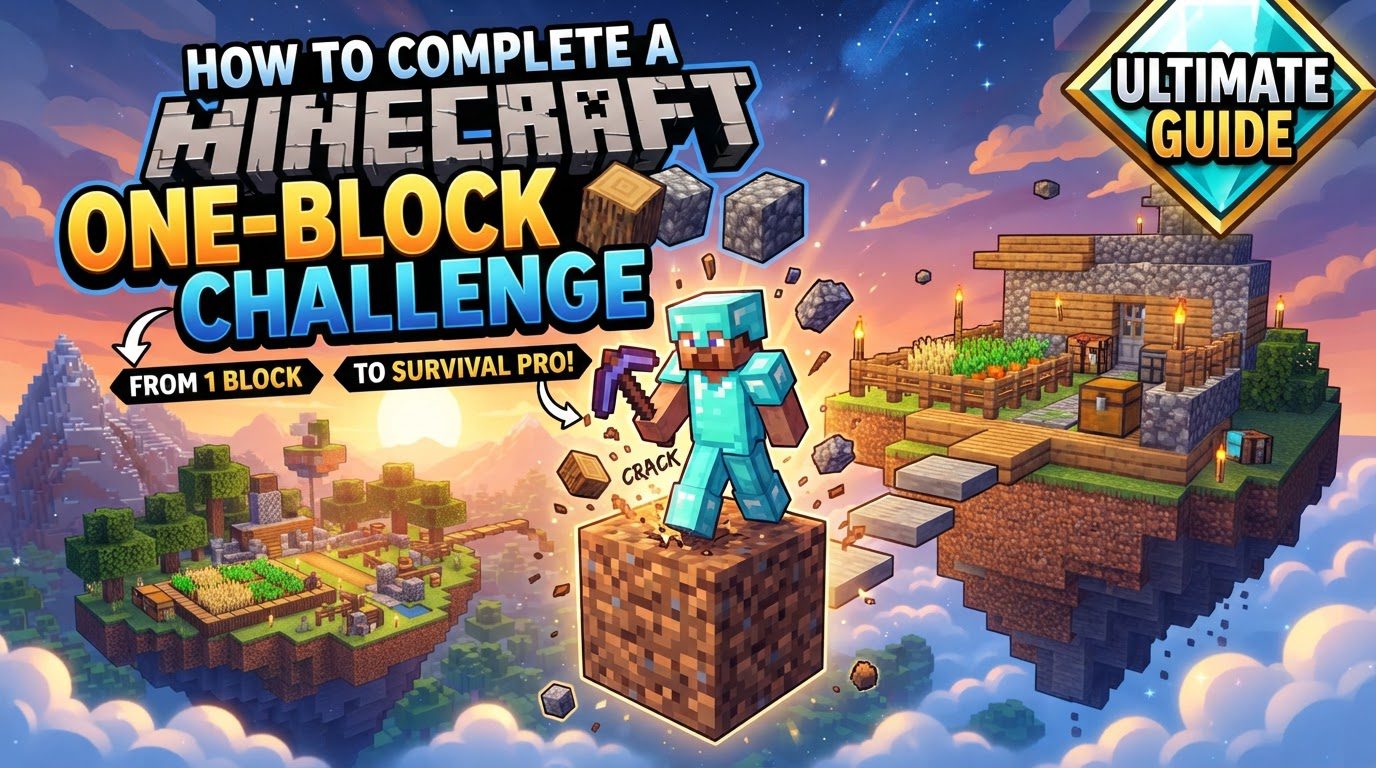
The Minecraft one-block challenge presents a unique and demanding test of a player’s survival skills, resourcefulness, and strategic thinking. Starting on a solitary block suspended in the void, players must meticulously mine this regenerating block to acquire all necessary resources. The ultimate goal is to expand their world, establish a thriving base, overcome various environmental challenges and hostile mobs, and finally, conquer the formidable Ender Dragon.
Key Mechanics of the One-Block Challenge
Understanding the fundamental mechanics is crucial for success in the one-block challenge. These core principles dictate how resources are acquired and how the game progresses.
-
Solitary Block Regeneration: Players initiate their journey on a single block, typically a basic material like dirt or grass. The defining mechanic is that when this block is mined, it immediately regenerates, but not necessarily as the same material. Instead, it transforms into various other block types, serving as the sole source of all resources needed for survival and expansion.
-
Phased Progression: The challenge unfolds through distinct phases, each designed to introduce new elements and escalate the difficulty. As players continue to mine, the regenerating block begins to yield materials characteristic of specific environments. Common phases mentioned include the Overworld, Forest, Desert, Mountain, Cave, Ocean, Nether, and End. Each phase brings forth new blocks, items, mobs, and unique environmental challenges that players must adapt to and overcome.
-
Comprehensive Goal: The overarching objective of the one-block challenge is to gather sufficient resources to craft essential tools, establish a secure base, defend against an increasing variety of hostile mobs, and ultimately accumulate the necessary items and strength to defeat the Ender Dragon, mirroring the standard Minecraft survival endgame.
-
Optional In-Game Economy: Some variations of the one-block challenge integrate an in-game economy. In these versions, mining blocks can earn players virtual currency. This money can then be utilized to unlock new islands or purchase specific items that might otherwise be difficult or time-consuming to acquire through the regenerating block mechanic alone, adding another layer of strategy to resource management.
Step-by-Step Process for Success
Navigating the early stages of the one-block challenge requires a focused and systematic approach to ensure immediate survival and lay the groundwork for future expansion.
-
Getting Started: The very first action is to break the initial block. This act initiates the resource generation cycle and will reveal the first set of materials available to the player.
-
Prioritize Wood: Following the initial block break, the immediate and most critical priority is to acquire wood. The regenerating block will often provide a tree or wood blocks. Breaking down this starting tree for wood is essential, as wood is the foundational material for crafting all basic tools and, most importantly, a crafting table.
-
Craft Essential Tools: Once enough wood is gathered, players must immediately craft a crafting table. With the crafting table, the next step is to create a wooden pickaxe. This wooden pickaxe is vital for mining stone, which in turn allows for the creation of more durable and efficient stone tools, significantly accelerating resource gathering.
-
Build a Basic Shelter: As night approaches in Minecraft, hostile mobs emerge. Constructing a small, basic shelter early on is paramount for protection against these threats. A simple enclosure provides a safe space to avoid damage and continue operations during the night cycle.
-
Conserve Resources: Given the unique nature of the challenge where all resources originate from a single point, mindfulness of every block used is critical. Especially in the early game, resources are limited, making careful planning and conservation essential to avoid running out of crucial materials.
-
Expand and Progress: The core loop of the challenge involves continuously mining the regenerating block. This consistent effort is how players acquire new materials, which in turn allows them to progress through the different phases of the challenge. Each new phase unlocks new biomes, a wider variety of resources, and introduces fresh challenges that demand adaptation and strategic planning.
Important Tips for Effective Gameplay
Mastering the one-block challenge demands not just basic survival skills, but also strategic planning and efficient resource management.
-
Resource Management: Efficiently mining and managing your limited resources is key to long-term success. As soon as possible, establish reliable farms for food sources such as wheat, potatoes, and carrots to prevent starvation. A crucial technique for generating infinite building materials is to utilize lava and water to create cobblestone generators, providing a steady supply of stone for construction and crafting.
-
Safety First: Personal safety must always be a top priority. Always maintain a consistent food source to prevent starvation, which can lead to health loss and hinder progress. Light up your base and surrounding platforms with torches to prevent hostile mob spawns within your safe zones. As you acquire better materials, prioritize building and equipping yourself with stronger armor to protect against the increasing threats from mobs.
-
Space is a Luxury: Given the confined starting area, available space is extremely limited and must be managed judiciously. Plan all builds carefully, prioritizing functional structures that serve immediate needs over grand or unnecessary aesthetic constructions, especially in the early and mid-game stages. Efficient use of vertical space can also be beneficial.
-
Mob Management: Hostile mobs are a constant threat. Utilize the void to your advantage by constructing platforms and mechanisms that allow you to safely knock hostile mobs off your platform, eliminating them without direct combat. During the challenging Nether phase, it is crucial to construct a flame-proof arena or barrier around your magical block to protect your base from fire-based mobs and their destructive projectiles.
-
Preserve Animals: When the regenerating block yields passive animals like pigs, resist the urge to kill them immediately for resources. Instead, focus on creating secure platforms and fences to contain them. Building up your livestock population allows for a sustainable source of food and other valuable resources (like leather) later in the game, ensuring long-term self-sufficiency.
Common Mistakes to Avoid
Avoiding critical errors can save significant time and prevent frustrating setbacks in the one-block challenge.
-
Wasting Wood: Wood is the most fundamental early-game resource. Avoid using wood for non-essential items or structures early on. Its primary purpose should be for crafting essential tools and a crafting table, which are critical for progression.
-
Ignoring Food: Neglecting to establish a consistent food source is a common pitfall. Running out of food leads to starvation, health loss, and can significantly impede progress, potentially forcing players into risky situations to find sustenance.
-
Not Building Shelter: Failing to construct even a basic shelter before nightfall leaves players highly vulnerable to hostile mobs. This can lead to frequent deaths, loss of items, and a significant waste of valuable time and effort.
-
Lack of Planning: Proceeding without proper planning for builds, farms, and overall resource management can result in an inefficient and disorganized base. This disorganization can lead to wasted resources, suboptimal production, and increased difficulty in managing the challenge.
-
Getting Lost/Dying without Precautions: In versions of the challenge without keep inventory enabled, dying or losing track of your base, especially when carrying valuable items, can be detrimental. Taking too many valuable items into risky situations without a plan for retrieval can set back progress considerably.
-
Fire Hazards: Carelessness when working with highly destructive elements like lava or fire, particularly within a base constructed from flammable materials like wood, poses a significant risk. A single misplaced block of lava or a stray spark can quickly destroy your entire progress and base.
Tags:
YOU MAY ALSO LIKE...