Discovering Ancient Seeds Using a Sniffer, Explained
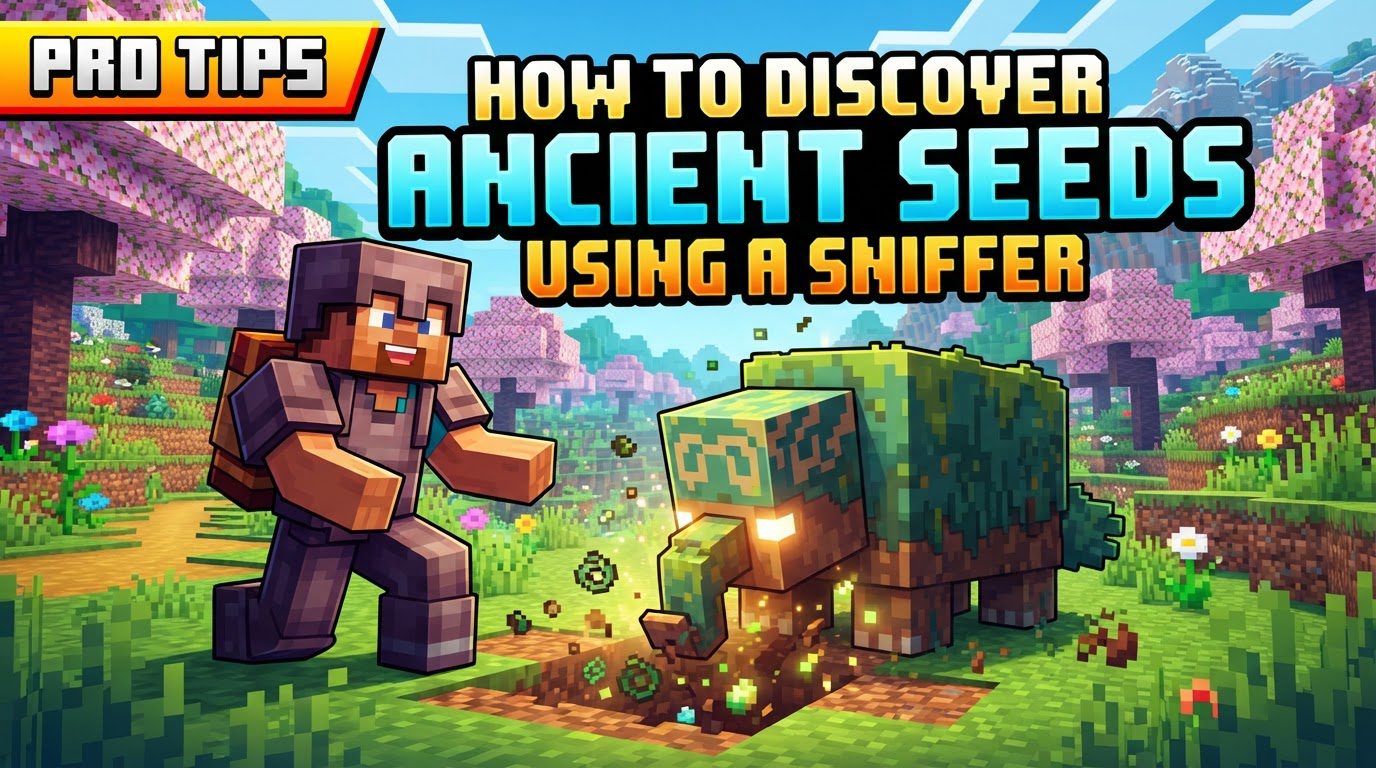
The Minecraft 1.20 Trails & Tales update introduced a fascinating new passive mob: the Sniffer. These ancient creatures are not just a decorative addition; they possess a unique ability to unearth “ancient seeds,” providing players with new decorative flora for their builds. Understanding how to leverage a sniffer’s natural instincts is key to discovering these valuable resources. This guide will walk you through the entire process, from finding a sniffer egg to cultivating your very own Torchflower and Pitcher Plants.
Understanding the Sniffer and Ancient Seeds
Sniffers are unique passive mobs that serve a singular, yet crucial, purpose: finding ancient seeds. These seeds consist of two distinct types:
- Torchflower Seeds: Used to grow the vibrant Torchflower.
- Pitcher Pods: Used to grow the tall and distinctive Pitcher Plant.
When an adult sniffer is allowed to roam, it will wander aimlessly until it occasionally stops to sniff the ground. Following this sniffing animation, it will perform a digging action, producing either a Torchflower Seed or a Pitcher Pod as a dropped item. This process is not continuous; sniffers have an 8-minute cooldown after each successful dig before they can find another seed.
For a sniffer to successfully dig, it requires a minimum clear area of 6×6 blocks. Furthermore, sniffers are particular about the blocks they can dig in. They will only unearth seeds from the following block types:
- Dirt
- Grass Block
- Coarse Dirt
- Rooted Dirt
- Podzol
- Moss Block
- Mud
- Muddy Mangrove Roots
There is an equal 50/50 chance for a sniffer to dig up either a Torchflower Seed or a Pitcher Pod. It’s important to note that sniffers do not spawn naturally in the world; they must be hatched from eggs, which are themselves a rare find.
Step-by-Step Guide to Discovering Ancient Seeds
1. Find a Sniffer Egg
Your journey to ancient seeds begins with locating a sniffer egg. This requires a bit of preparation and exploration:
- Craft a Brush: You’ll need a brush to extract items from suspicious blocks. The crafting recipe for a brush is one stick, one copper ingot, and one feather.
- Locate Warm Ocean Ruins: Sniffer eggs are exclusively found within Warm Ocean Ruins. These structures are typically generated in warm or lukewarm ocean biomes.
- Search for Suspicious Sand: Within these ruins, look for suspicious sand blocks. These blocks have a subtly different texture compared to regular sand.
- Use the Brush: Carefully use your crafted brush on the suspicious sand blocks. Be patient, as sniffer eggs have approximately a 6.7% chance of dropping from suspicious sand. Mining suspicious sand with a pickaxe will destroy its contents, so always use the brush.
2. Hatch the Egg
Once you have a Sniffer egg, the next step is to hatch it:
- Place the Egg: Place the obtained Sniffer egg on any block in the world.
- Accelerate Hatching: To significantly speed up the hatching process, place the egg on a Moss Block. This reduces the hatching time from 20 minutes to just 10 minutes.
- Keep the Chunk Loaded: For the egg to hatch, the chunk it is placed in must be loaded. If you leave the area, the hatching timer will pause until you return.
3. Grow the Snifflet
After the egg hatches, a baby sniffer, known as a snifflet, will emerge. Like most baby mobs, it needs time to mature:
- Maturation Time: A snifflet takes approximately 20 minutes of in-game time to grow into a fully adult sniffer. During this time, it will wander around but will not dig for seeds.
4. Allow the Sniffer to Roam
Once your snifflet has matured into an adult sniffer, it’s ready to start finding seeds:
- Provide Space: Ensure the adult sniffer has access to a sufficiently large area. Remember, it needs at least a 6×6 block clear space to perform its digging animation.
- Use Diggable Blocks: The area where the sniffer roams must be composed of the specific diggable block types mentioned earlier (Dirt, Grass Block, Coarse Dirt, Rooted Dirt, Podzol, Moss Block, Mud, and Muddy Mangrove Roots).
5. Collect Seeds
Now, it’s time to observe and collect your rewards:
- Observe the Behavior: Watch your sniffer. It will periodically stop, sniff the ground, and then dig its head into the earth.
- Collect the Item: After a short digging animation, either a Torchflower Seed or a Pitcher Pod will appear as a dropped item near the sniffer. Simply walk over the item to pick it up and add it to your inventory.
Important Tips for Efficient Seed Discovery
- Prioritize Moss Blocks for Hatching: Always place Sniffer eggs on Moss Blocks. Halving the hatching time from 20 to 10 minutes is a significant efficiency boost, especially if you plan to breed multiple sniffers.
- Design an Expansive Enclosure: To maximize a sniffer’s seed-finding efficiency, create a large enclosure filled entirely with diggable blocks. The more space and diggable blocks available, the more opportunities your sniffer has to find seeds.
- Transporting Sniffers: Adult sniffers are too large to fit into boats. For transportation over distances, you can use Leads to guide them or Minecarts for more automated travel.
- Scale Up with Breeding: To increase your seed production, you can breed two adult sniffers. Feed each adult a Torchflower Seed, and they will produce another Sniffer egg. This allows you to expand your sniffer population and, consequently, your seed yield. Breeding has a 5-minute cooldown.
- Optimize Digging Areas: Sniffers remember the last 20 blocks they’ve dug. To prevent them from repeatedly checking the same depleted spots, either provide an extremely large area of diggable blocks or consider mechanisms to move or replace diggable blocks, effectively forcing them to find new, untapped locations.
- Planting and Growing Seeds: Once collected, both Torchflower Seeds and Pitcher Pods can be planted on farmland. Their growth can be sped up significantly by using bone meal, just like other crops.
- Java Edition Farmer Villagers: In the Java Edition of Minecraft, farmer villagers are capable of planting Torchflower seeds and Pitcher Pods, which can be useful for automated farms.
Common Mistakes to Avoid
- Insufficient Space: A sniffer needs at least a 6×6 block clear area of diggable blocks to initiate its digging animation. If this space is not provided, it will not be able to dig for seeds.
- Impatience: Remember the 8-minute cooldown between successful digs. Continuous seed discovery is not possible, so plan your expectations accordingly.
- Incorrect Block Types: Sniffers will only dig in specific blocks like Dirt, Grass Block, Moss Block, etc. They will not dig on non-diggable blocks such as stone, regular sand (not suspicious sand), or pathways. Ensure your sniffer’s environment is conducive to digging.
- Harvesting Immature Plants: Always ensure that Torchflowers and Pitcher Plants are fully grown before harvesting. Harvesting them prematurely will yield nothing or only partial resources, wasting your efforts.
- Wasting Rare Torchflower Seeds: While Torchflower seeds can technically accelerate snifflet growth, they are initially difficult to obtain. It is generally more efficient to let snifflets grow naturally rather than using a rare seed for a small time saving. Save your Torchflower seeds for planting or breeding.
- Unloaded Chunks: Sniffer eggs will not hatch if the chunk they are in is not loaded. Ensure you or another player remains in the vicinity, or use chunk loaders if playing on a server.
- Inefficient Breeding: Breeding requires two Torchflower seeds per pair of sniffers, and there’s a 5-minute cooldown after successful breeding. Plan your seed usage for breeding carefully.
- Mining Suspicious Sand Directly: Always use a brush on suspicious sand. Mining it with a pickaxe will destroy any potential contents, including Sniffer eggs, preventing you from obtaining them.
- Relying on Bedrock Edition Villagers for Planting: While farmer villagers in Java Edition can plant sniffer seeds, their behavior regarding these seeds may be inconsistent or bugged in Bedrock Edition. It’s often safer to plant them manually in Bedrock.
By following this comprehensive guide and avoiding common pitfalls, you will be well on your way to establishing a thriving ancient seed farm and adorning your Minecraft world with the unique beauty of Torchflowers and Pitcher Plants.
Tags:
YOU MAY ALSO LIKE...