Displaying Trophies and Rare Items in a Museum Room — A Quick Guide
Creating a dedicated museum room in Minecraft is an excellent way to showcase your hard-earned trophies, rare finds, and cherished mementos from your adventures. A well-designed museum not only preserves your world’s history but also provides an engaging experience for visitors. This comprehensive guide will walk you through the essential mechanics, a step-by-step process, and crucial tips to help you build a captivating display, while also highlighting common pitfalls to avoid.
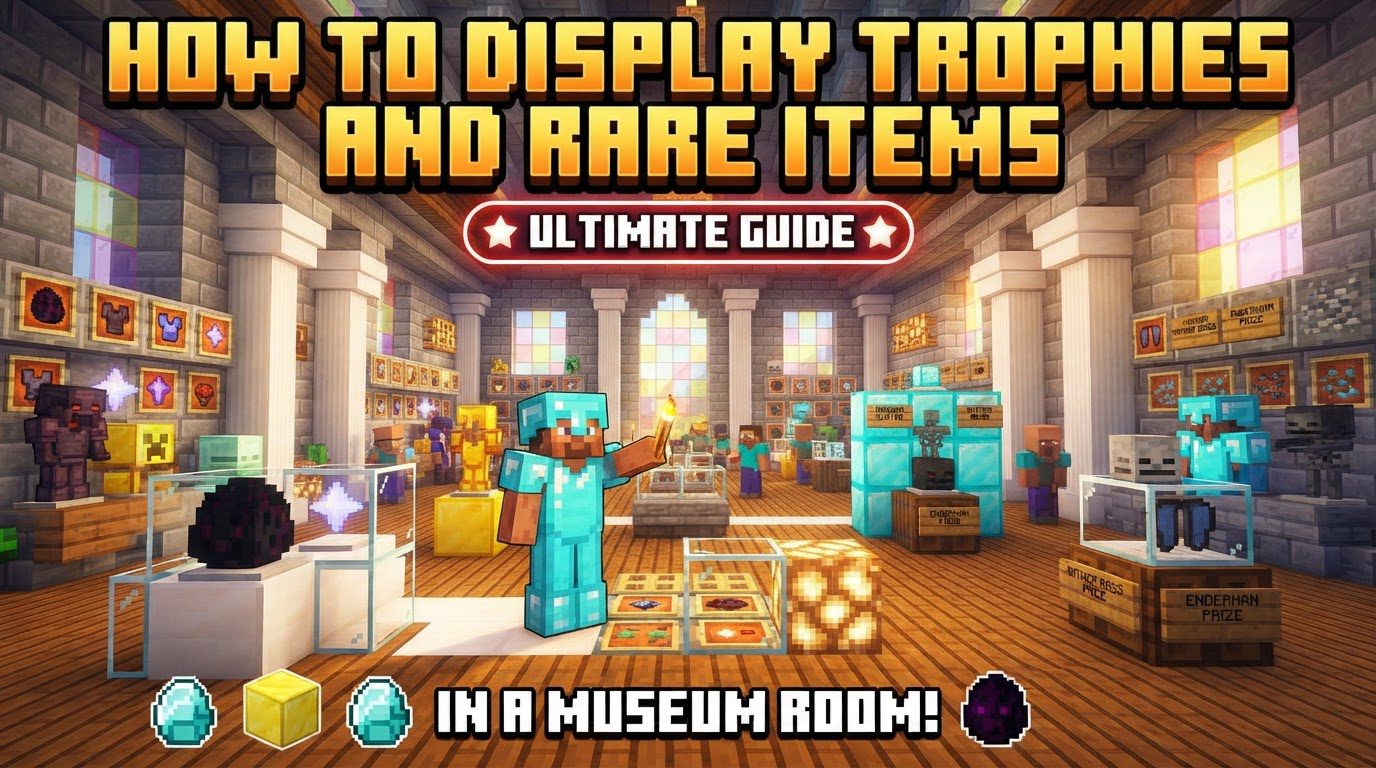
Key Mechanics for Display
Understanding the core display mechanics is fundamental to building an effective museum. Each tool offers unique ways to present your items.
- Item Frames and Glow Item Frames: These are your primary tools for displaying individual items on walls or embedded into other blocks. An item frame holds a single item, allowing it to be rotated. Glow Item Frames function identically but emit a subtle light, effectively highlighting the item and adding a touch of ambiance to darker exhibits. They are perfect for showcasing unique weapons, tools, or small artifacts.
- Armor Stands: For a more dynamic and three-dimensional presentation, armor stands are invaluable. They can display full sets of armor, mob heads, or even tools held in their hands, offering a lifelike representation. With careful posing, armor stands can be used to create detailed scenes or convey a sense of action within an exhibit.
- Barrier Blocks: These invisible and indestructible blocks are crucial for security and advanced display techniques. When placed around a priceless artifact, barrier blocks prevent players from interacting with or stealing the item, while remaining completely hidden. They can also be used to create invisible platforms or supports for complex displays.
- Glass Panes/Iron Bars: To create classic museum-style display cases, glass panes or iron bars are ideal. They allow visitors to view items from multiple angles while providing a physical barrier, adding to the sense of protection and presentation. These can encase individual items, armor stands, or even small dioramas.
- Lecterns with Written Books: A museum thrives on context and storytelling. Lecterns, when combined with written books, serve as information kiosks for your exhibits. You can write detailed descriptions, historical lore, or personal anecdotes about the displayed items, enriching the visitor’s experience and providing valuable context.
- Redstone Automation: For truly dynamic and interactive exhibits, redstone automation opens up a world of possibilities. This can range from simple mechanisms like rotating armor stands to showcase all angles of a piece, to more complex systems that cycle through different items in a display case, creating a sense of movement and surprise.
- Pistons: Pistons are versatile tools for manipulating blocks and entities. In a museum setting, they can be used for unique display effects, such as pushing a mob head into a glass block to create a perfectly encased trophy, or precisely positioning other display elements for intricate setups.
Step-by-Step Process for Museum Construction
Building an effective museum requires careful planning and execution. Follow these steps to bring your vision to life.
- Define Your Vision: Before placing a single block, determine the overarching theme and narrative of your museum. What story do you want it to tell? Will it focus on mob trophies, rare blocks, historical artifacts from your world, or a combination? Clearly defining your vision will guide all subsequent decisions, from layout to item selection.
- Plan the Layout: Sketch a blueprint for your museum. This includes defining its overall size, the number of distinct exhibit spaces, and the flow of traffic. Consider creating different areas for specific galleries (e.g., a “Mob Trophy Hall,” a “Rare Blocks Gallery”), intricate dioramas depicting events, or even interactive zones where visitors can learn more. A well-planned layout prevents overcrowding and ensures a logical progression through your exhibits.
- Construct the Structure: Begin building the physical structure of your museum. Pay close attention to aesthetics, ensuring a consistent and appealing block palette. Detail work, such as decorative pillars, archways, and flooring patterns, can significantly enhance the atmosphere and visual appeal of your building. Consider high ceilings for a grand feel and spacious corridors to accommodate visitors.
- Curate Exhibits: This is where your treasures come to life. Carefully place your rare items and trophies using the mechanics discussed earlier. Experiment with item frames on walls, armor stands posing with equipment, and items encased within glass or barrier blocks. Think about the best way to highlight each item’s unique qualities.
- Add Documentation: Once items are in place, provide context. Use signs for simple labels and titles, and strategically place lecterns with written books near exhibits that require more in-depth explanations. These books can detail the item’s origin, its significance, or interesting facts about it, making the exhibit much more engaging.
- Implement Lighting: Strategic lighting is paramount. It not only illuminates your displays but also sets the mood. Use a combination of hidden light sources (like glowstone or sea lanterns behind blocks) and visible ones (torches, lamps) to ensure every exhibit is well-lit without being overly bright. Highlight specific items with targeted lighting to draw attention.
Important Tips for a Superior Museum
Elevate your museum from good to extraordinary with these expert tips.
- Combine Item Frames and Armor Stands: Don’t limit yourself to one display method. Using item frames on a wall behind an armor stand displaying related gear creates a richer, more diverse visual experience. For instance, a shield in an item frame above an armor stand wearing diamond armor and holding a sword.
- Use Barrier Blocks for Protection: For your most invaluable and irreplaceable items, always encase them in barrier blocks. This ensures that even if your museum is open to others, these priceless artifacts remain untouched and secure.
- Incorporate Biome Dioramas or Recreated Scenes: Go beyond static displays. Build small-scale dioramas representing the biomes where certain items are found, or recreate iconic scenes from your world’s history. This makes exhibits far more immersive and engaging, telling a story within a miniature world.
- Utilize Command Blocks for Advanced Features: For multiplayer servers or truly ambitious projects, command blocks can add interactive elements. Consider creating an “audio tour” system that plays specific sounds or messages when a player approaches an exhibit, or dynamic lighting changes.
- Consider the Surrounding Environment or Biome: Integrate your museum with its surroundings. A museum dedicated to ocean exploration might be built underwater, while a collection of nether treasures could reside in a volcanic landscape. This contextualizes the exhibits and enhances the overall theme.
- Display Items that Represent Key Moments or Achievements: Your museum should tell a story. Focus on items that symbolize significant milestones, epic battles, or grand construction projects in your world. These items carry a personal narrative that visitors will appreciate.
Common Mistakes to Avoid
Steer clear of these pitfalls to ensure your museum is a success.
- Lack of Planning: Starting construction without a clear vision or layout plan often results in a disorganized, inefficient, or incomplete project. Take the time to plan thoroughly.
- Poor Item Presentation: Simply placing rare items in chests or on random blocks without proper display mechanisms makes them appear like “glorified junk.” Invest time in presenting each item thoughtfully to highlight its rarity and significance.
- Insufficient Documentation: Exhibits without context or labels can be confusing and unengaging for visitors. Always provide clear information, whether through signs or detailed books on lecterns, to explain what an item is and why it’s important.
- Ignoring Lighting: Poor lighting can obscure details, create unwanted shadows, and detract significantly from the visual impact of your displays. Ensure all exhibits are adequately and strategically lit to enhance their appeal.
- Limited Expandability: Designing a museum without considering future additions can lead to problems. If your world continues to grow and you find more rare items, a museum that cannot easily expand will become overcrowded or necessitate a complete and time-consuming reconstruction. Build with future growth in mind.
Tags:
YOU MAY ALSO LIKE...