Finding a Mangrove Swamp for Mud and Boats — A Quick Guide
The quest for resources in Minecraft often leads players to explore diverse biomes, each offering unique materials and challenges. Among the most distinctive and resource-rich additions from The Wild Update (1.19) is the Mangrove Swamp. This warm, atmospheric biome is a treasure trove for specific building materials like mud and a source of unique wood, making it a crucial discovery for many survival players.
Understanding the Mangrove Swamp Biome
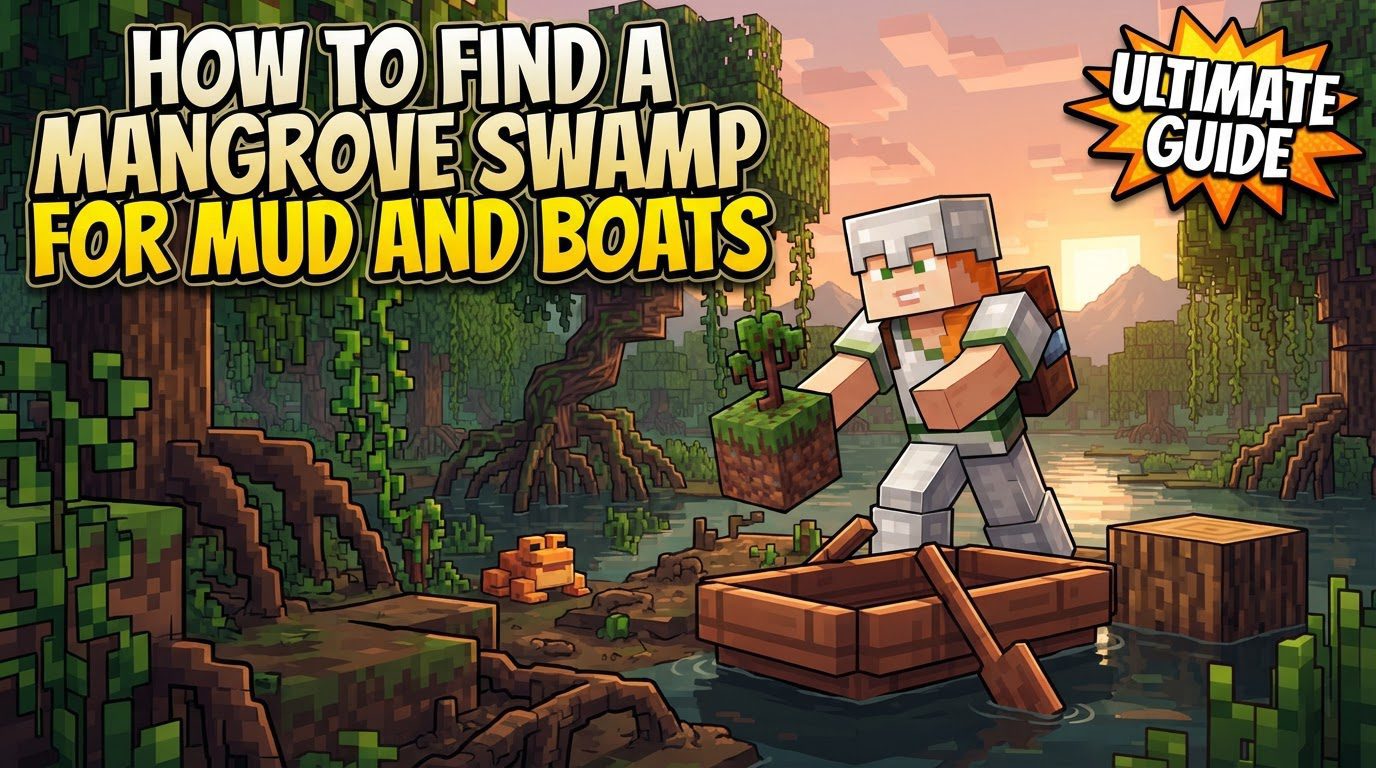
Mangrove Swamps are characterized by their dense, somewhat eerie beauty. Upon entering, players are immediately struck by the towering mangrove trees, which feature intricate, arching prop roots that extend into the murky, shallow water. The entire landscape is often waterlogged and covered in a distinctive dark brown mud. These biomes are exclusively warm, meaning they will never generate in cold regions of your Minecraft world, a crucial detail to remember when beginning your search.
The primary draw of a Mangrove Swamp is its abundance of unique resources:
- Mud Blocks: These dark brown blocks are unique to this biome and are found in vast quantities, often several blocks deep beneath the surface. Mud is incredibly versatile. It can be harvested and then crafted into packed mud, which further allows for the creation of mud bricks, providing a unique aesthetic for construction. Alternatively, mud can be placed with a pointed dripstone block underneath it, causing it to dry out over time and transform into clay, offering a renewable source for this valuable crafting material.
- Mangrove Trees: These unique trees yield a reddish wood type, distinctive from other tree varieties. Unlike traditional trees that drop saplings, mangrove trees produce propagules. These propagules can be found hanging from the leaves of mature mangrove trees and serve as their equivalent of saplings. Uniquely, propagules can be planted not only on mud or dirt but also underwater, offering flexible planting options. They also grow faster when bone meal is applied. The trees also yield muddy mangrove roots, which are primarily decorative blocks.
- Fauna: Mangrove Swamps are the exclusive spawning grounds for the warm region (white) variant of frogs. Their distinct croaking sounds can often serve as an auditory cue that you are nearing or within the biome.
- Boats: While not unique to the biome, boats are an absolutely essential tool for navigating the dense, waterlogged terrain of a Mangrove Swamp. The unique mangrove wood can be used to craft all standard wooden items, including boats, allowing players to utilize the biome’s own resources for navigation.
Methods for Locating a Mangrove Swamp
Finding a Mangrove Swamp can be approached in several ways, depending on your play style and whether you have cheats enabled in your world.
Method 1: Exploration (Survival Mode)
This is the most common and rewarding method for players in a survival world. It requires patience and an understanding of biome generation rules.
- Start in Warm Biomes: Given that Mangrove Swamps are warm biomes, your search should begin in other warm biomes. These include vast savannas, arid deserts, lush jungles, or expansive plains. Mangrove Swamps frequently generate adjacent to these biomes, making them good starting points for your exploration.
- Look for Specific Terrain Features: As you travel, keep an eye out for flat terrain that is relatively close to sea level. Mangrove Swamps often exhibit high erosion values, contributing to their waterlogged appearance. The water itself will appear murky, a telltale sign.
- Identify Characteristic Visuals: The most obvious indicators are the large mangrove trees themselves, with their distinctive, exposed arching roots plunging into the water. Look for muddy blocks covering the ground and dense, waterlogged vegetation. The overall atmosphere will feel distinct from regular swamps or other warm biomes.
- Listen for Frogs: The sound of croaking frogs is a strong auditory cue. Since the warm region (white) variant of frogs spawns exclusively in Mangrove Swamps, hearing them is a reliable indicator that you are either in or very close to the biome.
Method 2: Using the `/locate biome` Command (Cheats/Creative Mode)
For players who have cheats enabled or are playing in creative mode, the `/locate biome` command offers an instant solution to finding a Mangrove Swamp.
- Open the Chat Window: Press the ‘T’ key (default) to open the chat interface in your game.
- Enter the Command: Type the command
/locate biome minecraft:mangrove_swampexactly as shown, and then press Enter. - Receive Coordinates: The game will respond by providing the coordinates (X, Y, Z) of the nearest Mangrove Swamp biome.
- Travel to Coordinates: You can then travel to these coordinates. In creative mode, you might use the
/tp [your username] X Y Zcommand to instantly teleport. In survival with cheats, you can fly or simply walk/boat towards the indicated location.
Method 3: Using an External Biome Finder (e.g., Chunkbase)
External tools like Chunkbase’s Biome Finder are invaluable for pre-planning your expeditions, especially if you prefer to play in survival mode without in-game cheats.
- Find Your World’s Seed: First, you need your world’s unique seed. In Java Edition, you can type
/seedinto the chat and press Enter. In Bedrock Edition, the seed can be found in your world settings. - Access an External Biome Finder: Open your web browser and go to a website like Chunkbase’s Biome Finder.
- Enter World Details: Input your world seed into the designated field. Select your correct Minecraft version and ensure “Overworld” is chosen as the dimension.
- Locate the Biome: On the interactive map, you can highlight “Mangrove Swamp” (or filter for it) to see all locations where this biome generates in your world.
- Identify and Navigate: Note the coordinates of a convenient Mangrove Swamp location and then navigate to that spot in your game world. This method allows for efficient travel planning and avoids aimless wandering.
Important Tips for Your Mangrove Swamp Expedition
- Biome Borders: While Mangrove Swamps never directly border the ocean, their water bodies typically connect to larger bodies of water, which can eventually lead to the ocean.
- Mud Collection: Remember that mud generates several blocks deep. This means you can collect a significant amount of mud from relatively flat areas without quickly depleting the surface. Bring plenty of shovels!
- Propagule Growth: Mangrove propagules are found hanging from the leaves of the trees; they do not drop from breaking leaves like traditional saplings. They can be harvested directly. Once planted, applying bone meal will significantly speed up their growth process. Their ability to grow underwater provides unique landscaping opportunities.
- Boats are Key: The dense, waterlogged, and often root-filled terrain of a Mangrove Swamp makes on-foot navigation incredibly challenging and slow. A boat is absolutely essential for efficient exploration and resource gathering within the biome.
- Dense Environment: Be prepared for a visually dense environment. The thick canopy and numerous roots can obscure vision and make it easy to get turned around. Using a boat helps bypass some of these ground-level obstacles.
Common Mistakes to Avoid
To ensure a successful search and efficient resource gathering, be mindful of these common pitfalls:
- Searching in Cold Climates: This is the most crucial mistake to avoid. Mangrove Swamps are strictly warm biomes. Do not waste time exploring snowy tundras, frozen oceans, or cold taigas, as you will never find one there.
- Expecting Traditional Saplings: Mangrove trees grow from propagules, not saplings. Look for these unique hanging structures on the tree leaves when you want to collect them for replanting.
- Looking for Swamp Huts: Unlike regular swamps, Mangrove Swamps do not generate swamp huts, which are typically home to witches. Do not use the absence of a witch hut as an indicator that you are not in a Mangrove Swamp.
- Ignoring Visual Cues: The biome has very distinct visual characteristics: the unique arching roots, the murky water, the dark muddy ground, and the dense reddish canopy. Failing to pay attention to these specific features can lead you to overlook the biome even when you are standing within it.
- Underestimating Mud Depth: Don’t assume mud is just a surface block. It often extends several blocks deep, providing a substantial amount of material for collection. Plan your digging accordingly.
By understanding the unique characteristics of the Mangrove Swamp and employing the right search strategies, you’ll soon be able to locate this valuable biome, gather its abundant mud, and utilize its distinctive wood for all your crafting and building needs. Happy exploring!
Tags:
YOU MAY ALSO LIKE...