Fireproofing a Build Using Non-flammable Blocks (Step by Step)
Fireproofing a build in Minecraft is a critical aspect of creating durable and safe structures, especially when venturing into survival mode or designing elaborate creations. Understanding the intricate mechanics of fire and strategically employing non-flammable blocks are paramount to protecting your creations from accidental destruction. This comprehensive guide will walk you through the essential knowledge and techniques to ensure your builds remain untouched by the destructive power of flames.
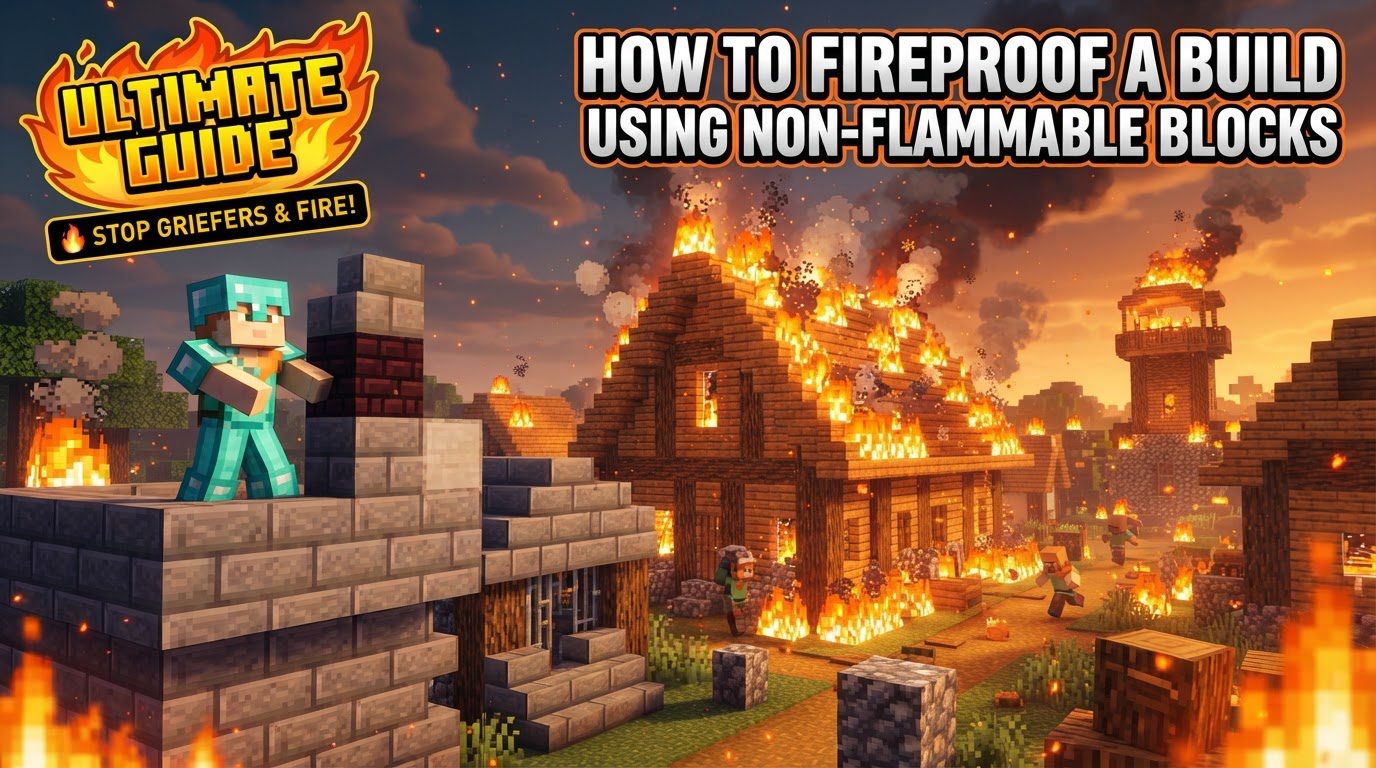
Understanding Minecraft Fire Mechanics
Before fireproofing, it’s crucial to grasp how fire behaves within the game world. Fire in Minecraft is not merely a static entity; it is a dynamic force that can spread rapidly and unpredictably if not contained.
- Fire Spread Dynamics: Fire possesses a significant spread radius. It can propagate up to two blocks horizontally, one block diagonally, one block downward, and an impressive four blocks upward from its initial source. Critically, fire can spread to flammable blocks even when non-flammable blocks are positioned in between, as it travels through the air. This aerial spread is a common pitfall for many builders.
- Ignition Sources: Beyond direct placement, fire can originate from several sources. Lava, a ubiquitous hazard in many biomes, can ignite nearby flammable blocks. Similarly, lightning strikes, particularly during thunderstorms, pose a significant risk, capable of setting flammable blocks ablaze regardless of the surrounding environment.
- Non-Flammable Blocks and Fire: While non-flammable blocks are the cornerstone of fireproofing, it’s important to note that they can briefly catch fire themselves. However, this fire quickly extinguishes unless the block in question is netherrack or a magma block. These specific blocks possess the unique property of sustaining fire indefinitely, making them ideal for permanent fire sources but also dangerous if not properly contained.
- Soul Fire: A special variant of fire, soul fire, is created by igniting soul sand or soul soil. Its key characteristic is that it does not spread to other blocks and burns eternally. This makes soul fire an excellent choice for aesthetic flames where fire spread is undesirable.
- Game Rule for Fire Control: For those who wish to completely negate fire hazards, the game rule
/gamerule doFireTick falsecan be employed. This command will stop fire from spreading or burning away blocks, though any existing fire will persist indefinitely. While effective, this removes a core game mechanic and might not be suitable for all players.
Step-by-Step Fireproofing Process
Implementing a robust fireproofing strategy involves careful planning and material selection from the outset of your construction project.
- Select Non-Flammable Core Materials: The foundation of any fireproof build lies in its core materials. Construct the main structure, including walls, floors, and the roof, using naturally fire-resistant blocks. Excellent choices include stone, cobblestone, brick, glass, obsidian, iron blocks, gold blocks, and various Nether blocks such as nether brick and blackstone. These materials will form an impervious shell against flames.
- Design Safe Fire Sources: If your build incorporates elements like fireplaces, furnaces, or decorative fire pits, meticulous design is essential. Ensure that all blocks immediately surrounding the fire source, and especially those positioned directly above it, are constructed from non-flammable materials. This prevents upward or lateral fire spread from the source itself.
- Maintain Separation: One of the most critical rules in fireproofing is maintaining adequate separation between fire sources and any flammable elements of your build. Any flammable components, such as wooden planks, wool, or leaves, should be kept at least five blocks above a fire source and a minimum of two blocks horizontally or one block diagonally away from it. This substantial buffer zone accounts for fire’s extensive spread radius through the air.
- Utilize Water for Critical Areas: Water is an invaluable tool in fire prevention and suppression. Consider incorporating water around potential fire hazards, such as lava pits or active fire sources, to create a natural barrier. Additionally, waterlogging stairs and slabs within wooden structures can significantly increase their fire resistance, providing an extra layer of protection against unexpected blazes.
Important Tips for Enhanced Fireproofing
Beyond the fundamental steps, several advanced techniques and considerations can further bolster your build’s resilience against fire.
- Prioritize Non-Flammable Materials: When choosing materials, always lean towards non-flammable options. Blocks like stone, cobblestone, bricks, glass, obsidian, iron blocks, gold blocks, nether bricks, blackstone, and polished blackstone offer superior fire resistance. Even certain fire-resistant Nether woods, specifically warped planks and crimson planks, can be safely incorporated into designs where a wooden aesthetic is desired without the fire risk of overworld woods.
- Construct Fireplaces with Care: Fireplaces are common culprits for house fires in Minecraft. To prevent this, fully enclose firepits with non-combustible materials on all sides. Crucially, ensure that absolutely no flammable blocks are present within a 5-block vertical range directly above the fire. This vertical clearance is vital to prevent upward fire spread.
- Use Soul Fire for Aesthetic Flames: For builders seeking an eternal flame for decorative purposes without the risk of fire spread, soul fire is the perfect solution. By igniting soul sand or soul soil, you can create a unique blue flame that burns indefinitely and, unlike regular fire, will not spread to adjacent blocks.
- Water as an Active Extinguisher and Barrier: Flowing water is not only a passive barrier but also an active fire extinguisher. It can put out fires on contact and creates an impassable fireproof barrier. Furthermore, waterlogging blocks, where applicable, provides both fire and explosion resistance, making it a highly versatile defensive measure for critical areas or vulnerable structures.
- Netherite Items are Impervious to Fire and Lava: While not directly related to building fireproof structures, it’s a useful tip to remember that dropped netherite tools, weapons, and armor are unique in their immunity to fire and lava. They will not burn up, offering peace of mind for valuable items in hazardous environments.
Common Mistakes to Avoid
Even with the best intentions, certain oversights can compromise your build’s fireproofing. Being aware of these common mistakes can save your creations from incineration.
- Underestimating Fire Spread: A frequent misconception is that a solid line of non-flammable blocks will completely halt fire. Remember, fire can spread through the air to flammable blocks nearby, even if there’s a non-flammable barrier in between. Always consider the aerial spread radius.
- Placing Flammable Blocks Too Close to Fire or Lava: This is a critical error. Fire has a “jump” distance. Even with a seemingly protective non-flammable barrier, if the distance to a flammable block isn’t sufficient (e.g., less than two blocks horizontally or five blocks vertically), fire can still ignite it. Always adhere to the recommended separation distances.
- Building Fireplaces with Flammable Surrounds: Many builds meet an untimely end due to improperly constructed fireplaces. Using flammable materials for the mantle, walls directly adjacent, or the ceiling above a fireplace is a recipe for disaster. Always ensure these areas are constructed from non-combustible materials.
- Ignoring Lightning Risks: Lightning strikes are an external threat that can start fires regardless of your internal building materials. Even a perfectly fireproof interior can be compromised if the roof is flammable and struck by lightning. Consider constructing a fireproof roof using materials like stone, or strategically placing a lightning rod to divert strikes.
- Not Considering Waterlogging for Wooden Components: While simply stacking slabs might appear to offer some fire resistance, waterlogging them provides a much higher degree of safety. For any wooden components or areas susceptible to fire, waterlogging stairs and slabs can significantly enhance their fire and explosion resistance, adding a crucial layer of protection.
By diligently following these guidelines and understanding the nuances of fire mechanics in Minecraft, you can construct magnificent and resilient structures that will stand the test of time, impervious to the destructive power of flames.
Tags:
YOU MAY ALSO LIKE...