

How to lead a llama caravan
Minecraft offers a unique and convenient way to transport a large quantity of items across your world: the llama caravan. These hardy pack animals, when properly managed, can significantly enhance your exploratory and resource-gathering efforts. Understanding the core mechanics, following a clear step-by-step process, and being aware of common pitfalls will allow you to efficiently utilize llamas for your in-game adventures.
Key Mechanics of Llama Caravans
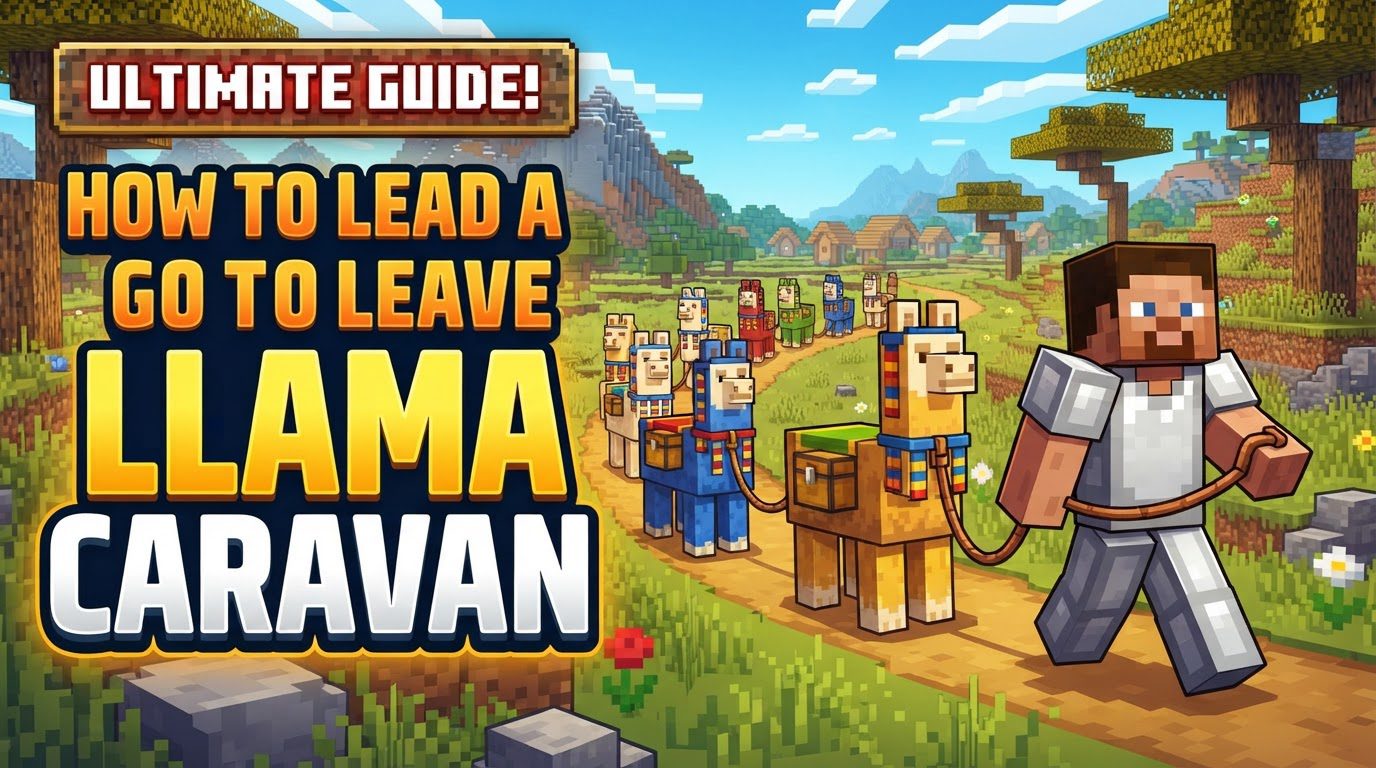
The foundation of a llama caravan lies in its automatic linking behavior. When one llama is led by a player using a lead, any other llamas in close proximity will automatically form a line behind it, creating a caravan. This ingenious system allows for the simultaneous movement of multiple animals with minimal player effort. A single lead is sufficient to manage an entire caravan, which can consist of up to ten llamas – the one being directly led, plus nine others trailing behind.
Llamas are renowned as pack animals within Minecraft, making them invaluable for storage. Their capacity for carrying items is unlocked by equipping them with a chest. The number of inventory slots a llama provides varies depending on its individual strength, ranging from a modest 3 slots up to a substantial 15 slots. This variability means that some llamas will be far more efficient carriers than others, making it beneficial to seek out stronger specimens if maximizing storage is a priority.
It is crucial to understand that llamas differ significantly from horses in terms of control. While you can mount a llama, much like a horse, you cannot steer it. This means that riding a llama will not allow you to guide its direction; its movement is dictated solely by the player leading the caravan. Therefore, direct control of the caravan’s path is always achieved by leading the front llama with a lead. This caravan system functions effectively with both tamed and untamed llamas, and even baby llamas will join the procession, though they cannot carry chests until they mature.
Step-by-Step Guide to Leading a Llama Caravan
1. Obtain a Lead
The first and most fundamental item required for forming a llama caravan is a lead. Leads can be crafted using a combination of four string and one slimeball. String is commonly obtained from shearing spiders or breaking cobwebs, while slimeballs are dropped by slimes. Alternatively, leads can be discovered as loot in various structures across the Minecraft world, including ancient cities, trail ruins, and woodland mansions. Another method to acquire leads is by defeating a wandering trader, as they often travel with their own llamas, which are leashed and will drop their leads upon the trader’s demise.
2. Find Llamas
Once you have a lead, your next objective is to locate llamas. These animals naturally spawn in specific biomes: the savanna and mountain biomes. They typically appear in herds, ranging from four to six individuals. Exploring these biomes will increase your chances of encountering a group of llamas suitable for forming a caravan. Keep an eye out for these distinctive creatures as you traverse the landscape.
3. Tame Llamas (Optional for Chests)
Taming a llama is an optional step, but it becomes necessary if you intend to equip them with chests for carrying items. To tame a llama, repeatedly right-click on it to mount it. The llama may buck you off several times, but persist in mounting it. Eventually, hearts will appear around the llama, indicating that it has been successfully tamed. To increase your chances of taming a llama more quickly, you can feed it hay bales. While not strictly required for caravan formation, taming allows for the crucial storage functionality.
4. Equip Chests (Optional)
After a llama has been tamed, you can equip it with a chest to unlock its storage capabilities. To do this, simply hold a chest in your hand and right-click on the tamed llama. Once a chest is equipped, it cannot be removed from the llama unless the llama dies. Therefore, consider carefully which llamas you wish to designate as your primary carriers, especially given their varying inventory slot capacities. This step transforms your llama from a simple follower into a mobile storage unit.
5. Attach the Lead
With a lead in hand, approach one of the llamas you wish to lead. Right-click on the llama with the lead to attach it. This action will cause the selected llama to immediately begin following you. This is the designated “leader” of your caravan, and its movement will dictate the path for all subsequent llamas that join.
6. Form the Caravan
Once you have a llama on a lead, simply walk it near other llamas. Any llamas that are within a certain proximity to your led llama and are not already part of another caravan will automatically link up behind it. This creates the chain-like formation characteristic of a llama caravan. Remember that a single lead can manage a caravan of up to ten llamas, allowing you to transport a significant number of animals and, if equipped with chests, a vast amount of inventory space.
7. Decorate (Optional)
For players who enjoy customizing their animals, tamed llamas offer an aesthetic option: decoration with carpets. By right-clicking a carpet on a tamed llama, you can apply one of the 16 different colored patterns available in the game. This allows for personalization and can help distinguish different llamas within your caravan, adding a touch of flair to your mobile storage units.
Important Tips for Llama Caravan Management
- Portable Storage: Equipping tamed llamas with chests is highly recommended. This significantly increases your portable storage capacity, allowing you to carry more resources, tools, and supplies on long expeditions or mining trips without constantly returning to base. The varying slot counts mean some llamas are more valuable for this purpose.
- Llamas Can Swim: Llamas possess the ability to swim in water bodies. While their swimming speed is not particularly fast, this trait is incredibly useful for navigating across rivers, lakes, or even small oceans. You won’t have to worry about your caravan drowning or getting stuck when encountering aquatic obstacles, though patience will be required for longer crossings.
- Tying to a Fence Post: To temporarily secure your caravan, you can tie the led llama to a fence post. This action will keep the lead llama stationary, and by extension, the entire caravan will remain in place. This is invaluable for pausing your journey, organizing inventory, or dealing with threats without the llamas wandering off.
- Achievement “So I Got That Going for Me”: For Bedrock Edition players, leading a caravan of at least five llamas will unlock the “So I Got That Going for Me” achievement. This provides an additional incentive to gather a sizable group of these pack animals.
Common Mistakes to Avoid When Leading Llamas
- Lead Breaking: One of the most frequent issues encountered is the lead breaking. This occurs if you move too far or too fast (more than 10 blocks) away from the llama you are leading. When a lead breaks, it drops as an item on the ground and can be retrieved. To prevent this, maintain a steady pace and stay within close proximity to your lead llama, especially when traversing challenging terrain.
- Direct Control: Do not attempt to control a llama’s direction by riding it. Unlike horses, llamas cannot be steered when mounted. Their movement is solely dictated by the player leading them with a lead. Mounting a llama will only allow you to ride along, but you will not be able to guide the caravan’s path. Always rely on the lead for navigation.
- Llamas Despawning: Be mindful of the risk of llamas despawning. If you lose sight of your caravan or travel too far away from them for an extended period, they may despawn from the world. This can result in the loss of your animals and any items they were carrying in their chests. Always keep your llamas within your loaded chunks and line of sight, especially if they are valuable for storage.
- Rough Terrain: Navigating rough or uneven terrain can be particularly challenging for llama caravans. The leads have a tendency to break more easily when llamas get stuck on blocks, fall from small heights, or struggle to keep up on steep inclines. Plan your routes carefully, opting for flatter paths where possible, to minimize lead breakage and prevent your llamas from becoming separated or trapped.
Tags:
YOU MAY ALSO LIKE...


