Navigating a Stronghold Maze Safely, Explained
Navigating a Minecraft stronghold maze safely involves a strategic approach, understanding its unique generation, utilizing environmental cues, and being thoroughly prepared for its inhabitants. Strongholds are not randomly generated labyrinths but follow a more structured, “tree-like” pattern, with a central “starter staircase” acting as the core from which various branches extend. Mastering this internal logic is key to efficient and safe exploration.
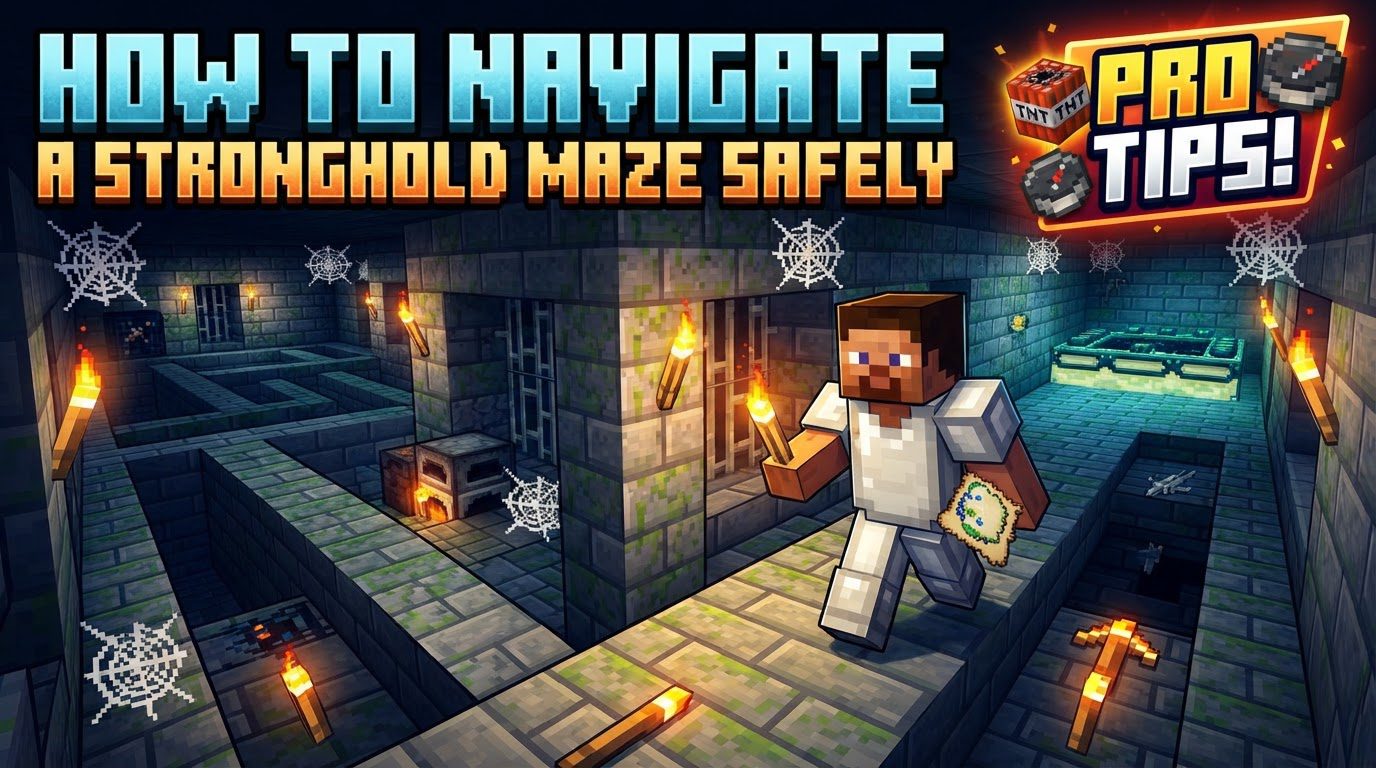
Understanding Stronghold Mechanics
Unlike a traditional maze, a stronghold’s layout is more akin to a branching tree. The starter staircase serves as the central hub, from which numerous pathways diverge. This staircase is a critical landmark to identify immediately upon entry, as it anchors your exploration.
- End Portal Room Proximity: The ultimate goal, the End Portal room, is typically found within a relatively short distance from this central starter staircase, often within 5 to 10 rooms. This proximity is a crucial piece of information, discouraging excessively long expeditions down single branches.
- Portal Room Characteristics: The End Portal room possesses distinct features that can help in its identification. It almost always contains a silverfish spawner, which will be an audio cue if subtitles are enabled or if you are listening carefully. Additionally, the room is often brighter than surrounding areas due to the presence of lava, which provides a natural light source.
- Door Cues: Stronghold doors can offer subtle but powerful directional hints. Doors that appear flush-sided, meaning they are level with the wall on both sides, generally indicate a path leading further away from the starter staircase and deeper into the stronghold. Conversely, doors that are recessed, appearing set back into the wall, typically lead towards the starter staircase or more central areas. Learning to distinguish these can significantly aid navigation.
- Generation Anomalies: Strongholds are not always perfectly generated. They can sometimes be “scuffed” or intersect with other generated structures like abandoned mineshafts or natural cave systems. These intersections can lead to unusual, broken, or partially generated layouts, making navigation more challenging but not impossible with careful observation.
Step-by-Step Safe Navigation
Successful stronghold navigation begins even before you set foot inside the structure itself.
- Locating and Entering: After locating the stronghold’s chunk using an Eye of Ender, the most efficient entry method is to dig down at specific coordinates within that chunk, such as 4,4 or 3,3. This precise digging technique is designed to land you directly within or very near the starter staircase, providing an immediate anchor point for your exploration.
- Identifying the Starter Staircase: Once you’ve dug down, your immediate priority is to identify the starter staircase. This central point often leads to a five-way room, offering multiple paths, or sometimes terminates against a blank stone wall, indicating you’ve hit its boundary. Confirming this central point is vital for methodical exploration.
- Methodical Exploration: With the starter staircase identified, begin exploring its branches methodically. The key is to avoid over-committing to any single path. If a branch extends for more than 10 rooms without revealing the End Portal room or strong indicators of its presence, it is generally advisable to return to the starter staircase and try a different path. This prevents getting lost in long, unproductive corridors.
- Searching for Hidden Rooms: Strongholds can sometimes hide additional pathways or rooms behind seemingly solid walls. Be observant for suspicious wall textures or dead ends that seem unnaturally abrupt. Breaking these walls can occasionally reveal new sections of the stronghold, potentially leading to the portal room.
Important Tips for Success
Beyond understanding the structure, several practical tips can significantly enhance your safety and efficiency.
- Leave a Trail (Breadcrumbs): Always place torches or other distinct blocks to mark your path. A consistent system, such as placing torches only on the right-hand side as you enter a new area, allows you to easily follow your “breadcrumbs” back to your starting point. This is perhaps the most critical tip for preventing disorientation.
- Utilize Audio Cues: Enable subtitles in your game settings. The sound of “Silverfish scuttling” is a strong indicator that you are near the End Portal room, as it typically houses a silverfish spawner. Even without subtitles, listening for the distinct sound of silverfish can guide you.
- Pay Attention to Light Sources: The End Portal room is often distinctively brighter than other stronghold areas due to the presence of lava. Keep an eye out for sudden increases in ambient light, as this can be a strong visual cue to the portal room’s proximity.
- Secure the Portal Room Immediately: Upon discovering the End Portal room, your first priority should be to secure the area. Break the silverfish spawner as quickly as possible to prevent overwhelming attacks. Then, place torches or other light sources to prevent further hostile mob spawns within the room, creating a safe staging ground for activating the portal.
- Bring Enough Eyes of Ender: The End Portal frame may have empty slots. While 12 Eyes of Ender are needed to fully activate the portal, it’s wise to bring at least that many, as some frames may already be filled. Being prepared ensures you don’t have to make a return trip.
- Visualize in 3D: As you explore, try to visualize the stronghold’s layout in three dimensions. This mental mapping helps you understand how different branches connect and where they might intersect with previously explored areas, preventing you from re-exploring redundant paths.
Common Mistakes to Avoid
Being aware of common pitfalls can save you time, resources, and frustration.
- Getting Disoriented: The primary mistake is failing to implement a consistent marking system. Without “breadcrumbs” or a clear method to track your path, it’s incredibly easy to get lost in the labyrinthine corridors. Always use a consistent system, such as placing torches on the right side on your way in, to ensure you can easily navigate back to your entry point or the starter staircase.
- Over-exploring a Single Branch: As the End Portal room is usually within 5-10 rooms of the starter staircase, spending too much time exploring a single, excessively long corridor is inefficient. The portal room is rarely found deep within a single, extended branch. Learn to recognize when a path is leading too far afield and return to the central hub.
- Ignoring Audio or Light Cues: These environmental hints are invaluable. Disregarding the sounds of silverfish or failing to notice significant changes in light levels deprives you of critical information that can pinpoint the portal room’s location. Pay close attention to your surroundings.
- Failing to Secure the Portal Room: Discovering the portal room is just the first step. Neglecting to immediately break the silverfish spawner and light up the area can lead to a rapid and overwhelming onslaught of silverfish and other hostile mobs, turning your discovery into a dangerous encounter.
- Expecting Every Stronghold to Have a Portal: While rare, strongholds can occasionally generate without an End Portal room due to generation errors or world corruption. While this is uncommon, it’s a possibility to be aware of if, after extensive and thorough searching, no portal room can be found.
By understanding the unique generation patterns, utilizing environmental cues, and employing methodical exploration techniques, you can navigate the stronghold maze safely and efficiently, ultimately leading you to the End Portal and your journey to defeat the Ender Dragon.