

Raising a Tadpole Into a Frog, Explained
Understanding Tadpoles and Frogs
Raising tadpoles into majestic frogs in Minecraft is a rewarding process that adds vibrant life to your world and can provide useful resources. Understanding the fundamental mechanics of their lifecycle, environment, and growth is crucial for successfully transforming these tiny aquatic creatures into their adult forms.
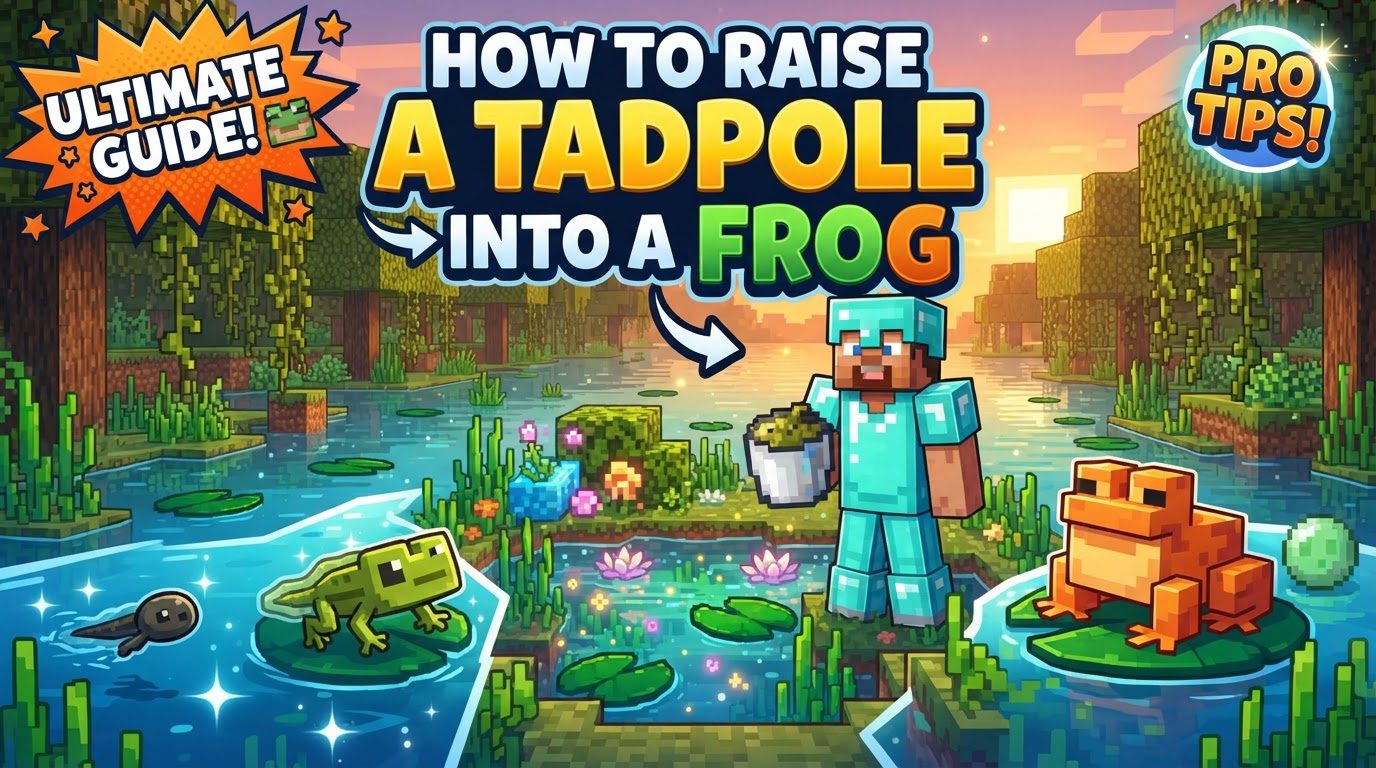
Tadpoles represent the juvenile stage of frogs within Minecraft. They emerge from frogspawn, which is the initial stage laid by adult frogs. The journey from frogspawn to a fully grown frog involves several key factors, most notably the environment in which the tadpole matures.
- Frog Color Determination: The color of the frog a tadpole eventually grows into is directly influenced by the temperature of the biome where it spends its maturation period. This offers players control over the type of frog they wish to cultivate.
- Brown Frogs: These frogs develop from tadpoles maturing in temperate biomes. Examples of such biomes include plains, rivers, and various forest types.
- White (Warm) Frogs: If a tadpole matures in a warm biome, it will transform into a white frog. Deserts, savannas, and mangrove swamps are prime examples of warm biomes suitable for white frog production.
- Green (Cold) Frogs: Tadpoles raised in cold biomes, such as snowy slopes, will grow into green frogs.
- Tadpole Transport: Tadpoles are surprisingly easy to transport. They can be scooped up using a water bucket, similar to fish or axolotls, allowing players to move them to desired locations or biomes for specific frog variants.
- Luring Tadpoles: To guide tadpoles in water, players can hold a slimeball. This item acts as a lure, causing tadpoles to follow the player, which can be useful for herding them into specific enclosures or transport areas.
- Aquatic Dependency: Tadpoles are strictly aquatic creatures. They thrive in water, swimming freely. However, if they are removed from water and left on land, they will flop around and quickly perish. It is vital to keep them submerged.
- Natural Predators: Players must be vigilant about potential threats to their tadpoles. Axolotls, a common aquatic mob, are natural predators and will actively hunt and kill tadpoles if they are in the same water body.
Step-by-Step Guide to Raising Frogs
Follow these steps to successfully breed frogs and raise their tadpoles into the desired adult forms:
- 1. Obtain Adult Frogs: Your journey begins by locating two adult frogs. These creatures are typically found in swamp biomes and mangrove swamp biomes. It’s advisable to bring them back to a controlled environment if you plan on large-scale breeding.
- 2. Breed Frogs: Once you have two adult frogs, you can encourage them to breed. This is achieved by feeding both frogs a slimeball. Upon consuming the slimeballs, they will enter love mode, signifying their readiness to breed.
- 3. Lay Frogspawn: After successful breeding, one of the frogs will seek out a suitable location to lay frogspawn. The ideal spot is a water source block that has an air block directly above it. This frogspawn is the egg cluster from which tadpoles will hatch. Frogspawn takes approximately 10 minutes of in-game time to hatch.
- 4. Hatch Tadpoles: Once the 10-minute period has passed, the frogspawn will hatch. Each frogspawn block will release between 2 to 6 tadpoles, providing a good number of juveniles for your frog-raising efforts.
- 5. Relocate Tadpoles (Optional for Color): If your goal is to obtain a specific frog color (brown, white, or green) that differs from the biome where the frogspawn was laid, you must relocate the newly hatched tadpoles. Use a water bucket to scoop up each tadpole individually. Then, release them into a water source within the biome that corresponds to your desired frog color – warm, temperate, or cold. This step is critical for biome-specific frog variants.
- 6. Natural Growth: Tadpoles will naturally mature into frogs over a period of approximately one in-game day. During this time, they require no further intervention beyond being kept safe and in water.
- 7. Accelerate Growth (Optional): For players who wish to speed up the growth process, tadpoles can be fed slimeballs. Each slimeball fed will significantly reduce the time it takes for a tadpole to grow into an adult frog, making the process much faster.
Crucial Tips for Successful Frog Raising
To ensure a high success rate and to achieve your desired frog variants, keep the following important tips in mind:
- Achieving Different Frog Variants: As previously noted, the key to obtaining brown, white, or green frogs lies in the maturation biome. Always move your tadpoles to a water body situated within the corresponding biome (temperate for brown, warm for white, cold for green) if you aim for specific colors.
- Accelerated Growth with Slimeballs: Feeding tadpoles slimeballs is the most efficient way to reduce their growth time. This is particularly useful when you need a large number of frogs quickly or simply wish to see them mature without waiting a full in-game day.
- Adequate Water for Growth: Tadpoles require a sufficient water environment to grow properly. Ensure that the water body where your tadpoles are maturing has at least two adjoining water source blocks. Additionally, there must be air blocks directly above these water sources. This provides them with enough space and the right conditions for development.
- Preventing Water Freezing in Cold Biomes: If you are raising green frogs in a cold biome, water freezing is a significant threat to your tadpoles. To prevent the water from turning into ice, you can place blocks directly above the water, leaving an air block between the water surface and the placed block. Alternatively, placing a light source (such as a torch or glowstone) nearby will also prevent water from freezing, ensuring the tadpoles’ survival.
Common Mistakes to Avoid
Being aware of potential pitfalls can save you time, effort, and your precious tadpoles. Steer clear of these common errors:
- Leaving Tadpoles on Land: This is perhaps the most critical mistake. Tadpoles cannot survive outside of water. If they are left on land, even for a short period, they will suffocate and die very quickly. Always ensure they are in a water source.
- Ignoring Predators (Axolotls): Axolotls are not friendly to tadpoles. If you have axolotls in the same water body as your tadpoles, the axolotls will actively hunt and kill them. It is imperative to keep these two mobs separated to protect your growing frogs.
- Attempting to Collect Frogspawn: While many blocks can be collected with specific tools, frogspawn is an exception. It cannot be collected, even if you use a tool enchanted with Silk Touch. You must allow frogspawn to hatch naturally into tadpoles; any attempt to break it will destroy it without yielding an item.
- Insufficient Water for Growth: A single water source block is often not enough for tadpoles to properly mature. They need a larger area, specifically at least two adjoining water source blocks with air blocks above them, to grow into frogs. Without adequate space, they may not mature.
- Frozen Water in Cold Biomes: As mentioned, water freezing in cold biomes is lethal to tadpoles. If the water they are in freezes, the tadpoles will die. Always take precautions to prevent water from freezing if you are raising green frogs in cold environments.
By understanding these mechanics and diligently following the steps, you will be well-equipped to successfully raise tadpoles into a thriving population of frogs, adding a unique and dynamic element to your Minecraft world.
Tags:
YOU MAY ALSO LIKE...


