

Reducing Fall Damage Using a Honey Block — A Quick Guide
Fall damage is a persistent threat in the expansive world of Minecraft, often leading to frustrating and untimely demises. Whether exploring vast cave systems, constructing towering bases, or simply misjudging a jump, the impact of a long fall can be deadly. Fortunately, the game offers several ingenious ways to mitigate this danger, and among the most versatile and interesting solutions is the honey block. This comprehensive guide will delve into the unique properties of honey blocks and how they can be masterfully employed to reduce, or even completely negate, fall damage, safeguarding your precious inventory and your in-game life.
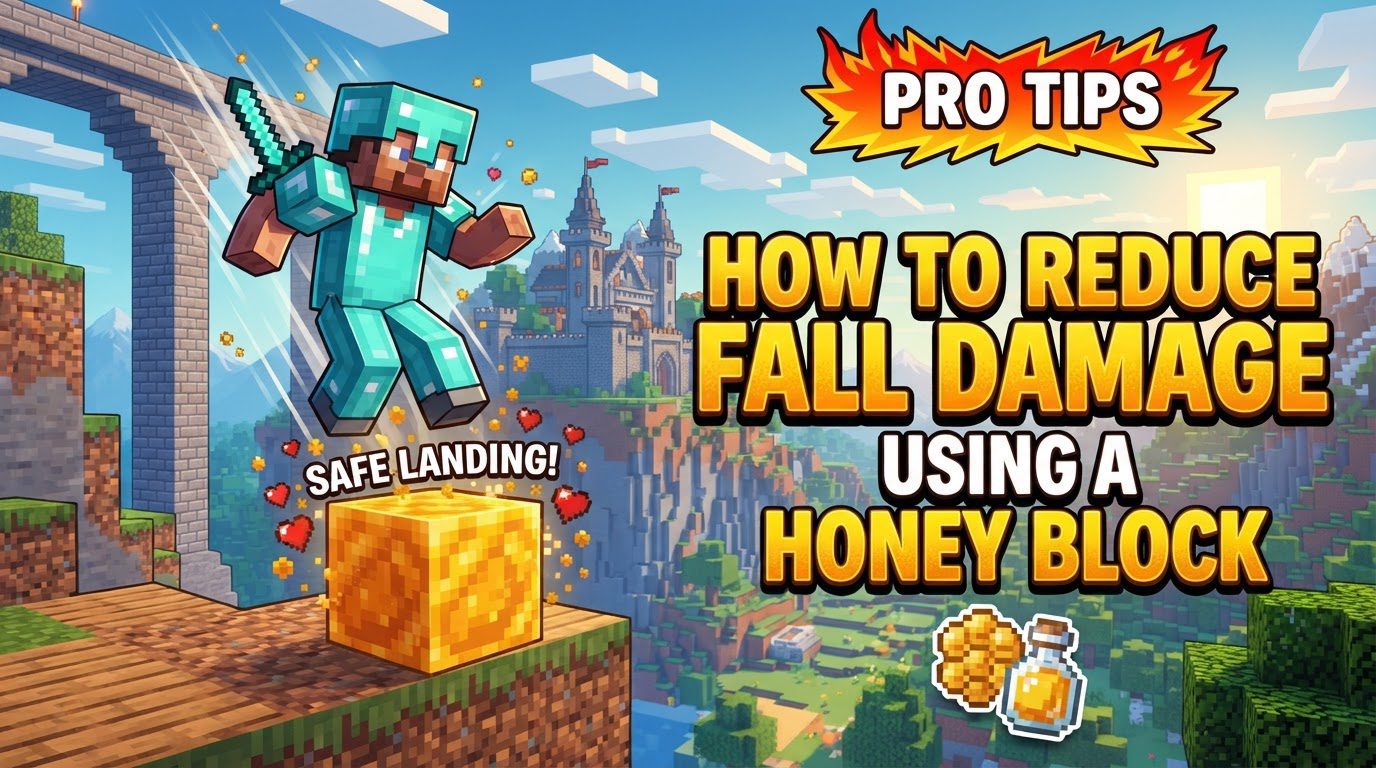
Understanding Honey Block Mechanics for Fall Damage
Honey blocks possess a fascinating set of physical properties that make them exceptional tools for fall damage reduction. Unlike many other blocks, their interaction with entities, particularly players and mobs, is highly distinctive. Grasping these core mechanics is fundamental to effectively utilizing them.
- Partial Fall Damage Reduction: When a player falls directly onto the top surface of a honey block, the impact of the fall is significantly cushioned. This direct landing reduces incoming fall damage by a substantial 80%. This mechanic is akin to the protective effect offered by hay bales, providing a substantial buffer against otherwise lethal falls. It’s important to note that this is a reduction, meaning if the fall is excessively high, you might still take a small amount of damage, but it will be drastically less than without the honey block.
- Complete Fall Damage Negation via Sliding: One of the most powerful and reliable applications of honey blocks for fall damage is through sliding. By brushing or sliding down the side of a honey block during your descent, your fall is significantly slowed. This controlled deceleration completely negates any fall damage, regardless of the height from which you fell. This method offers a foolproof way to survive even the most extreme drops.
- Movement Restriction: Honey blocks have a unique effect on movement. When a player or mob is standing on a honey block, they are prevented from jumping. Additionally, movement speed across the top of a honey block is significantly reduced. This stickiness can be both a benefit and a hindrance, depending on the situation.
- Sticky Properties and Piston Interaction: Beyond their effects on entities, honey blocks share a key characteristic with slime blocks: their stickiness. They can pull adjacent movable blocks when pushed by a piston, making them invaluable in redstone contraptions. However, a critical distinction must be made: unlike slime blocks, honey blocks do not bounce entities upwards. This difference is paramount when designing mechanisms or predicting interactions.
Crafting Your Honey Blocks
Before you can deploy honey blocks to prevent fall damage, you first need to craft them. The process is straightforward, but it requires a specific resource:
- Gathering Honey Bottles: The primary ingredient for a honey block is the honey bottle. Honey bottles are obtained by interacting with a beehive or bee nest that has reached “honey level five” using an empty glass bottle. Honey level five is the maximum honey level, visually indicated by the hive or nest appearing full of honey, often with honey dripping from it. To safely collect honey, it’s advisable to place a campfire or other smoke source directly beneath the beehive/nest to pacify the bees, preventing them from attacking you.
- Crafting Recipe: Once you have four honey bottles, open a crafting table. Place one honey bottle in each of the four slots of a 2×2 square within the crafting grid. This arrangement will yield one honey block.
Utilizing Honey Blocks for Fall Damage Reduction: Step-by-Step
Now that you understand the mechanics and how to craft them, let’s explore the practical methods for using honey blocks to save yourself from fatal falls.
Direct Landing for 80% Reduction
This method is suitable for situations where you need a quick, less precise fall arrest, or when space is limited.
- Placement: Place a honey block directly at your intended landing spot. Ensure it is on a solid surface or integrated into your build where you anticipate a fall.
- Aiming: When falling, your primary goal is to aim precisely to land on top of the honey block. The 80% damage reduction only applies if your character’s hitbox makes full contact with the honey block’s top surface.
- Considerations: While effective for reducing damage, remember this is not a complete negation. For very high falls, you might still take a minor amount of damage. Precision is key; if your hitbox is only partially over the honey block, you risk taking full fall damage.
Sliding Down for Complete Negation
This is the most reliable and recommended method for completely preventing fall damage, regardless of height.
- Strategic Placement: To utilize the sliding mechanic, you need to position honey blocks along a vertical surface, such as a wall or the side of a shaft. These blocks should be placed in a way that allows you to make contact with their side surface during your fall.
- Maneuvering Your Descent: As you fall, maneuver your character to make contact with the side of the honey block. By pressing against the block (e.g., holding W and A/D to move into the wall while falling), you will begin to slide down its side. This action significantly slows your descent, effectively turning a dangerous fall into a controlled, harmless slide.
- Benefit: This technique completely negates fall damage. It’s an excellent solution for deep shafts, emergency exits, or multi-level constructions where falls are common.
Important Tips for Honey Block Mastery
To maximize your effectiveness with honey blocks, keep these additional insights in mind:
- Sliding is King: Always prioritize the sliding technique when absolute fall damage prevention is critical. Its reliability makes it superior to direct landing for high falls. Practice this maneuver to become proficient, as it can be a lifesaver in many situations.
- Redstone Integration: Beyond fall damage, honey blocks are fantastic components for redstone contraptions. Their sticky nature, which allows them to pull adjacent movable blocks when pushed by a piston, opens up possibilities for compact and efficient designs. Unlike slime blocks, they don’t bounce entities, which can be advantageous in builds where you want to move blocks or even players/mobs without launching them into the air. This property makes them useful for intricate piston doors, automatic farms that require precise block manipulation, or even some advanced movement systems where controlled, non-bouncing movement is desired. Experiment with them in your builds to discover their full potential.
Common Mistakes to Avoid
Even with a clear understanding, it’s easy to fall into common traps when using honey blocks. Being aware of these pitfalls can prevent frustrating accidents:
- Insufficient Landing Precision: When attempting to reduce damage by 80% through direct landing, a common mistake is not landing precisely on the center of the honey block. If only a portion of your character’s hitbox (the invisible collision box that defines your physical presence in the game world) makes contact with the block, or if you clip the edge, the game might not register the fall damage reduction, leading to you taking full damage. Always aim for the absolute center of the block for the best results with direct landings.
- Confusing Honey Blocks with Slime Blocks: While both honey and slime blocks share sticky properties and interact with pistons similarly, their effect on entities is fundamentally different. Honey blocks do not cause you to bounce when you land on them or when they move. Expecting a bounce, as you would from a slime block, and instead hitting a honey block can lead to unexpected fall damage or a missed jump, potentially placing you in a dangerous situation. Always remember the distinction: honey blocks absorb or slow, they do not launch.
- Attempting to Jump on a Honey Block: Honey blocks significantly reduce jump height when you are standing on them. Attempting to jump from a honey block will result in a very small, almost negligible hop. This can be problematic if you are trying to escape a situation, cross a gap, or ascend quickly. If you need to jump, move off the honey block first. This property can also be used strategically, for example, in mob traps where you want to prevent creatures from escaping by jumping.
In conclusion, honey blocks are an incredibly valuable and versatile asset in a Minecraft player’s toolkit, especially when it comes to fall damage mitigation. Understanding their unique mechanics-the 80% damage reduction on direct impact and, more importantly, the complete negation of damage through controlled sliding-is key to mastering their use. From crafting them with honey bottles to strategically placing them in your builds, honey blocks offer reliable protection against one of Minecraft’s most common hazards. By avoiding common mistakes and embracing the powerful sliding technique, you can navigate the most perilous heights with confidence, turning potentially fatal falls into mere controlled descents. Incorporate these sticky wonders into your survival strategies and redstone designs, and you’ll find yourself much safer and more efficient in your blocky adventures.
Tags:
YOU MAY ALSO LIKE...


