Setting Up a Mana Spreader Network in Botania
Understanding the Mana Spreader Network
In the mystical world of Botania, Mana Spreaders are the foundational components for distributing the vital energy known as Mana. These essential devices act as conduits, collecting Mana from various generating flowers or adjacent Mana Pools and subsequently transferring it in distinct, concentrated bursts. A well-configured Mana Spreader network is crucial for powering Botania’s numerous functional blocks and ensuring your magical infrastructure operates at peak efficiency. Mastery of their mechanics and proper setup is paramount for any aspiring Botania enthusiast.
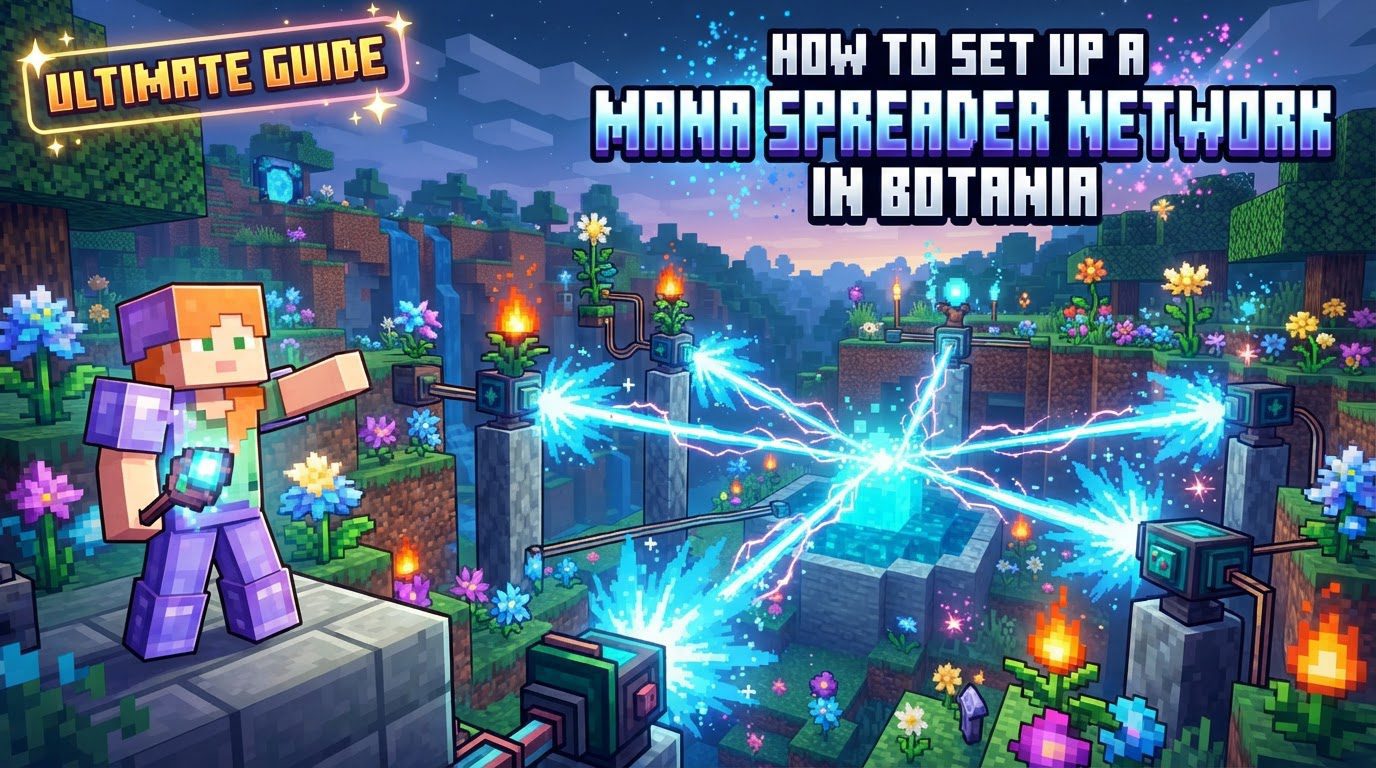
The core function of a Mana Spreader is to bridge the gap between Mana generation and Mana consumption or storage. They possess an internal mana buffer, allowing them to temporarily hold Mana before releasing it. However, it’s important to note that a Mana Spreader can only dispatch one Mana burst at any given time. This fundamental limitation influences network design, especially when dealing with high rates of Mana generation.
The Wand of the Forest is an indispensable tool for managing any Mana Spreader network. It serves multiple critical purposes: binding elements together, precisely directing the flow of Mana, and offering a visual means to check established connections. Without this wand, setting up an efficient network would be virtually impossible.
Mana-generating flowers, the source of all Mana, must be strategically placed. They need to be either within a 6-block radius of a Mana Spreader to automatically link, or they can be manually bound to a specific spreader regardless of distance, provided the binding process is followed correctly. Standard Mana Spreaders have a default transfer range, capable of transporting Mana up to 12 blocks without any loss. However, Mana bursts are susceptible to degradation; they will lose some of their potency if they travel over longer distances or if their journey to the destination takes an extended period.
As your Botania progression advances, you will encounter more sophisticated options for Mana distribution. Advanced Mana Spreaders, such as the Elven and Gaia variants, offer significant upgrades. These, along with specialized Lenses, can dramatically enhance the speed, overall potency, and effective range of Mana transfer. For more complex and expansive mana distribution requirements, particularly across multiple Mana Pools, the advanced concept of Sparks provides a wireless solution, offering greater flexibility and scalability.
Step-by-Step Guide to Setting Up a Mana Spreader Network
Establishing your first Mana Spreader network is a straightforward process, provided you follow these steps carefully. This guide will walk you through the initial setup, ensuring a smooth and functional Mana flow.
- Craft a Mana Spreader: The very first step is to create the Mana Spreader itself. This item is crafted by combining one Gold Ingot, a Mystical Petal (any color will suffice), and six pieces of Livingwood within a crafting interface. Gather these resources and assemble your first Mana Spreader.
- Place Components: Once you have your Mana Spreader, it’s time to arrange the core elements of your network. Begin by placing your chosen mana-generating flower (for example, an Endoflame, which generates Mana from burning fuel). Next, place the Mana Spreader in a suitable location, keeping in mind its range and potential future expansions. Finally, place a Mana Pool, which will serve as the recipient and storage for the Mana generated, completing the basic arrangement. Consider the proximity of these components to optimize efficiency from the start.
- Bind Flower to Spreader: This crucial step links your Mana source to its distributor. Equip your Wand of the Forest. To activate its binding mode, Shift + Right-click in the open air. You will see a visual cue indicating the wand is ready for binding. With the wand in bind mode, Shift + Right-click on your generating flower. Then, without changing modes, Shift + Right-click on the Mana Spreader. This action establishes a directional link, telling the flower to send its Mana to that specific spreader.
- Bind Spreader to Mana Pool: With the Mana Spreader now receiving Mana, you need to direct where it should send its bursts. Ensure your Wand of the Forest is still in “bind mode.” Shift + Right-click the Mana Spreader to select it as the source for the next binding. Immediately after, Shift + Right-click the Mana Pool. This creates the final link in your basic network, instructing the Mana Spreader to direct its Mana bursts towards that particular Mana Pool for storage.
- Fuel the Flower: A Mana-generating flower cannot produce Mana without its required input. For an Endoflame, this means throwing coal or another combustible item near it. Ensure your generating flower is adequately supplied with its specific fuel type to begin Mana production. Without fuel, no Mana will be generated, and your network will remain dormant.
- Verify Connection: After setting up all the links and fueling your flower, it’s vital to confirm everything is working as intended. Hold the Wand of the Forest in your hand. A visible green line should appear, originating from the Mana Spreader and extending directly to the Mana Pool. This green line visually represents the path of the Mana bursts, confirming that your connections are active and Mana is ready to flow. If the line is not present, re-check your binding steps.
Important Tips for an Efficient Mana Spreader Network
Optimizing your Mana Spreader network is key to maximizing Mana generation and utilization. Here are some essential tips to enhance your setup:
- Regularly Use the Wand of the Forest: Make it a habit to periodically hold the Wand of the Forest. This simple action allows you to visualize all active connections and confirms that Mana is flowing correctly through your network. It’s an invaluable diagnostic tool for troubleshooting any potential issues or confirming new setups.
- Proximity to Mana Pool: Always endeavor to place the Mana Spreader as close as possible to its target Mana Pool. This minimizes the distance Mana bursts need to travel, which in turn reduces Mana loss and significantly increases the speed at which Mana is transferred into the pool. Shorter distances mean more efficient energy delivery.
- Utilize Multiple Mana Spreaders for High Generation: When your Mana generation setup begins to produce a substantial amount of Mana, a single standard Mana Spreader may not be sufficient to handle the output. To prevent Mana from being wasted or lost due to an overloaded spreader, deploy multiple Mana Spreaders. Each spreader can then handle a portion of the generated Mana, ensuring efficient transfer and preventing bottlenecks.
- Upgrade to Advanced Spreaders and Lenses: As you progress further into Botania, you will gain access to more powerful tools. Upgrade your standard Mana Spreaders to Elven or Gaia Mana Spreaders. These advanced versions offer superior performance, including faster burst rates and greater range. Additionally, incorporate Lenses, such as the Potency Lens to increase Mana per burst, or the Velocity Lens to speed up burst travel time. These enhancements will dramatically improve your network’s overall efficiency.
- Consider Sparks for Large-Scale Distribution: For very large-scale or intricately complex Mana distribution needs, especially when you have multiple Mana Pools spread across an area, consider implementing Sparks. Sparks and their augmentations provide a sophisticated, wireless mana transfer system between pools. This eliminates the need for direct Mana Spreader connections between every pool, offering unparalleled flexibility and reducing clutter in your base.
Common Mistakes to Avoid in Your Mana Spreader Network
Even experienced players can sometimes overlook crucial details. Being aware of these common pitfalls will help you maintain a robust and efficient Mana Spreader network.
- Forgetting to Bind Components: One of the most frequent errors is neglecting to bind the generating flower to the Mana Spreader, or the Mana Spreader to the Mana Pool. Remember that the Wand of the Forest is essential for these bindings, requiring you to enter “bind mode” and then Shift + Right-click the source followed by the destination. Without proper binding, Mana will not flow.
- Incorrect Flower Placement or Binding: Generating flowers must either be within a 6-block radius of a spreader for automatic linking, or they must be manually bound if placed further away or before the spreader. Failing to meet these conditions means the flower will generate Mana that has nowhere to go.
- Overloading a Single Standard Mana Spreader: Standard Mana Spreaders have an internal buffer and can only send one Mana burst at a time. Trying to channel too much Mana from numerous generating flowers through a single standard spreader will lead to Mana destruction. The excess Mana that cannot be buffered or sent will simply vanish, resulting in wasted resources.
- Misusing Pulse Mana Spreaders: Be mindful of the type of Mana Spreader you are using. A Pulse Mana Spreader, as its name suggests, only sends a single Mana burst when it receives a Redstone pulse. If you require a continuous flow of Mana, ensure you are using a standard, Elven, or Gaia Mana Spreader, not a Pulse variant.
- Obstructing Mana Burst Paths: Mana bursts travel in a straight line from the spreader to the pool. Placing any solid blocks that obstruct this path will prevent the Mana from reaching its destination. Always ensure a clear line of sight for your Mana bursts.
- Inadequate Fueling of Flowers: Mana-generating flowers are not self-sufficient. They require specific inputs to function. Not providing sufficient fuel (e.g., coal for an Endoflame) will halt Mana generation, rendering your entire network inactive.
- Environmental Interference: Be aware that certain environmental factors or specific items can interfere with Mana movement. For instance, the Swiftwolf’s Rending Gale, when used in its deflect mode, can disrupt Mana bursts. Always consider potential external interferences that might impact your network’s performance.
Tags:
YOU MAY ALSO LIKE...