

Setting Up Player-to-player Trading Safely (Step by Step)
In the vast and dynamic world of Minecraft, player-to-player trading is a fundamental aspect of community interaction and resource management. While offering great opportunities for item exchange, it also carries inherent risks if not conducted securely. This guide provides a comprehensive overview of how to set up and execute player-to-player trades safely, emphasizing dedicated systems and best practices to protect your valuable items and ensure fair exchanges in the game world.
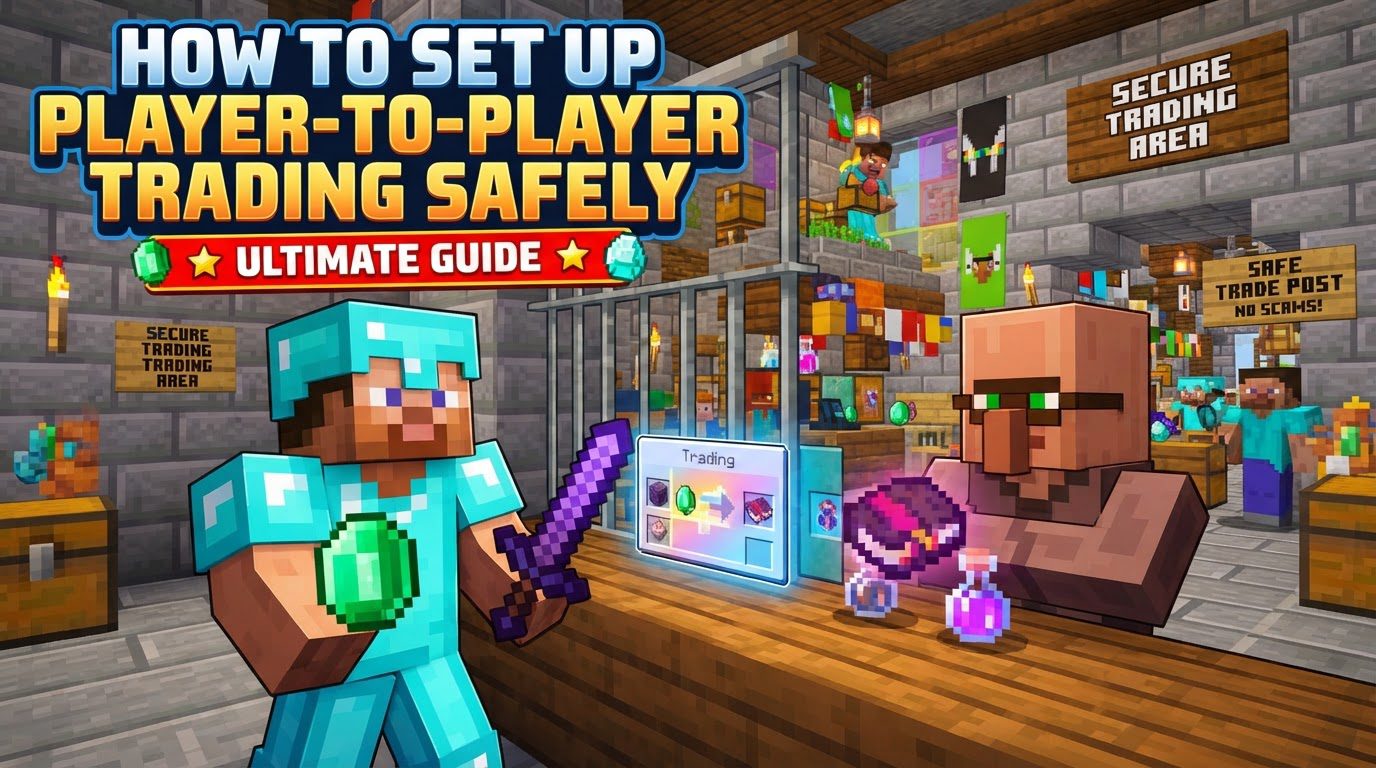
Key Mechanics of Safe Trading
Safe player-to-player trading relies on dedicated systems that enforce mutual agreement and protect both participants from common pitfalls. These systems are designed to offer a secure environment for item exchanges.
- Secure trading typically involves a dedicated system ensuring both parties agree to the exchange before any items are transferred. This prevents unilateral actions and guarantees explicit consent from each player, making the transaction transparent and fair.
- Most secure systems utilize a shared Graphical User Interface (GUI). Within this interactive interface, each player places their items into designated slots, and both must confirm the trade for it to successfully execute. This provides a clear, visual representation of all items involved in the proposed exchange.
- A crucial safety feature inherent in these secure systems is that items are returned to their owners if a trade is canceled by either party for any reason, or if a player unexpectedly disconnects from the server mid-trade. This mechanism prevents items from being lost or exploited during incomplete transactions, safeguarding player inventories.
- These systems are specifically designed to actively prevent last-minute item swapping. If items are changed by one player after the other has already indicated their confirmation, the “accept” button is automatically deselected for both players. This crucial feature requires both parties to re-confirm the new offer, effectively thwarting bait-and-switch scam attempts.
- On many community servers, a simple and efficient way to initiate secure trading is through a dedicated command, such as
/trade. This command, typically followed by the target player’s name, instantly initiates a secure trading interface, streamlining the process and directing players to a protected environment for their exchange. - For players who prefer more hands-on, in-game solutions, Redstone contraptions can also be custom-built to facilitate secure item exchange. These often involve intricate setups using hoppers for item transfer, pressure plates for user presence detection, and levers that act as mutual agreement switches, offering a physical, in-game approach to secure trading.
Step-by-Step Process for Secure GUI Trading
When utilizing a server-provided or mod-based secure trading GUI, the process is designed for clarity and mutual confirmation at every stage. Following these steps will guide you through a safe and successful exchange:
- The first action is to initiate a trade request with the player you wish to trade with. This is most commonly done by typing a specific command into the chat, such as
/trade <playername>, replacing<playername>with the actual in-game name of the other player. On some servers or with certain mods, you might be able to simply right-click the other player while holding an empty hand to send a trade invitation. - Once the request is sent, the other player will receive a notification and must then accept the request. This is often done via a corresponding command, for example,
/tradeaccept <yourname>, where they confirm their willingness to trade with you. Mutual acceptance is paramount before any items are involved. - Upon successful acceptance by both individuals, a shared trading GUI will automatically open on both of your screens. This interface is specifically designed for trading, featuring distinct sections or slots clearly designated for each player’s items. It acts as a neutral ground where both parties can prepare their offerings.
- Now, both players should proceed to place the items they wish to trade into their respective, designated slots within the GUI. Take care to select the correct items and the precise quantities you intend to exchange. As you place items, the other player will see them appear in your designated offering area.
- Before proceeding, it is absolutely critical to visually confirm that the items displayed by the other player are exactly what you expect to receive. Scrutinize the item types, quantities, and any specific attributes (like enchantments or custom names) to ensure they precisely match your agreed-upon deal. This is your primary opportunity to detect any discrepancies.
- Once you are fully satisfied with the items offered by your trading partner, you must then click the “Accept” or “Ready” button located within the GUI. This action signifies your explicit agreement to the current terms of the trade. It’s important to remember that clicking this button only confirms your side; the trade will not execute yet.
- The trade is only finalized and executed once both players have clicked their respective “Accept” buttons. At this point, the system will automatically and instantaneously swap the items between your inventories. This simultaneous transfer eliminates any window for one player to back out after the other has committed, ensuring fairness.
- A vital safety feature of these GUIs is that if a player changes their offered items after another player has already accepted the trade, the acceptance status of the trade is immediately reset. This means that the “Accept” button for both players will revert to an unconfirmed state, requiring both individuals to re-confirm the trade based on the new item arrangement. This prevents last-second item swaps designed to trick an already-committed player.
Important Tips for Secure Trading
Beyond understanding the mechanics, adopting smart trading habits is crucial for consistently safe exchanges in Minecraft. These tips will help you navigate the trading landscape with confidence and minimize risks.
- Always prioritize and use designated trading systems. This means relying on server-provided
/tradecommands or trusted modifications and plugins that offer a secure trading GUI. These systems are specifically engineered to provide a protected environment. Conversely, dropping items on the ground or attempting to use shared chests for trading is inherently insecure and should be avoided at all costs, as these methods offer no protection against theft or scams. - It is paramount to verify items carefully before confirming any trade. Take your time to double-check not only the type of items being offered but also their exact quantities. Pay close attention to items that may appear similar but have vastly different values, or items that have been renamed to disguise their true nature. A quick glance is often insufficient; a thorough inspection can prevent costly mistakes.
- If, for some reason, a secure, dedicated trading system is not available on your server or within your game environment, then the golden rule is to only trade with individuals you know and trust implicitly. This could include members of your established guild, close friends you play with regularly, or real-life acquaintances. Trading with strangers under insecure conditions is an extremely high-risk activity.
- Cultivate a healthy skepticism and be wary of “too good to be true” offers. Scammers frequently employ tactics where they offer highly valuable items, such as rare enchanted gear or large quantities of precious resources, for a significantly lower price than their typical market rate. Such offers are almost always a lure designed to entice unsuspecting players into a scam. If an offer feels unbelievably generous, it likely is.
- Finally, actively protect your account. This extends beyond in-game trading. Ensure that two-factor authentication (2FA) is enabled on your Minecraft account and any associated platforms (like your email). Always use strong, unique passwords that are difficult to guess and never reuse them across different services. Protecting your account credentials is your first line of defense against unauthorized access and the potential theft of your entire inventory, regardless of how carefully you trade.
Common Mistakes to Avoid in Player Trading
Even with the best intentions, players can fall victim to common pitfalls if they aren’t aware of the risks. Understanding and actively avoiding these mistakes is just as important as knowing how to trade securely.
- Dropping items on the ground for a trade is the single most insecure method possible and should be avoided at all costs. When items are dropped, they become vulnerable. Your trading partner could simply pick up your items and run off without fulfilling their end of the bargain, or another opportunistic player could snatch them, leaving you with nothing.
- Beware of item swapping at the last second. This is a classic scam tactic where a malicious player quickly changes a valuable item they are offering to a worthless one just before you confirm the trade. While secure GUIs are designed to prevent this by resetting confirmation, less robust or custom systems might still be vulnerable. Always re-verify if you notice any sudden changes.
- Never, under any circumstances, fall for the “double your items” scam. This is a pervasive trick where a player promises to “double” or “upgrade” your valuable items if you give them to them. They will then simply take your items and disappear. There is no legitimate mechanism in vanilla Minecraft or common server plugins that allows another player to magically double your items.
- Be extremely cautious about clicking external links for “verification”. Scammers often send messages (in-game, on Discord, or other platforms) with links claiming to be for trade verification, account security, or exclusive offers. These are almost always phishing attempts designed to steal your Minecraft login credentials or other personal information. Legitimate trading systems operate entirely within the game or through official, well-known platforms.
- Approach “too good to be true” direct trades with extreme skepticism. If someone offers to sell you an extremely rare or powerful item for a tiny fraction of its actual market value, it’s a red flag. These offers are almost invariably part of a scam, designed to lure you into a situation where your items will be stolen. Trust your instincts; if it seems too profitable, it probably is.
- Finally, avoid any form of trading that does not require mutual confirmation. Any system or situation where items are exchanged without both parties explicitly and simultaneously agreeing to the final terms is inherently risky. Secure trading fundamentally relies on both players confirming the trade, ensuring that neither party can be cheated by a premature item transfer or a unilateral decision.
Tags:
YOU MAY ALSO LIKE...


