Surviving a Minecraft Parkour Map, Explained
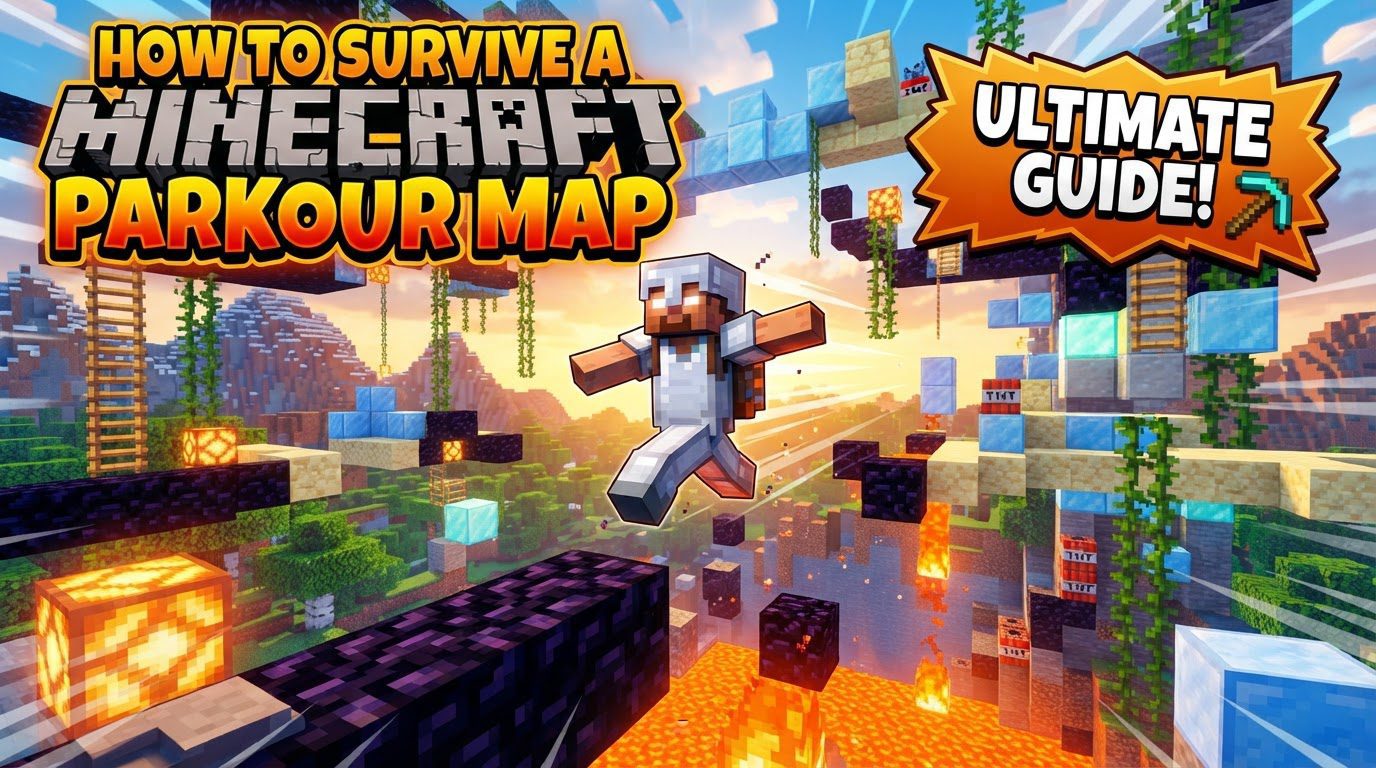
Navigating the challenging landscapes of Minecraft parkour maps demands a deep understanding of the game’s movement mechanics, a structured approach to each obstacle, and diligent practice. Successfully surviving these maps hinges on mastering precise timing, optimizing character positioning, and consistently applying advanced techniques. This comprehensive guide will walk you through the essential mechanics, a step-by-step process for tackling jumps, crucial tips for improvement, and common pitfalls to avoid, ensuring you can conquer even the most daunting parkour challenges.
Understanding Key Mechanics
Success in parkour starts with a foundational knowledge of how your character moves and interacts with the Minecraft world.
- Ticks: Minecraft’s movement system updates every game tick, which occurs every 50 milliseconds, meaning there are 20 ticks per second. This fundamental timing mechanism is critical for executing precise jump timings, as even a slight miscalculation in when to press the jump key can lead to a fall.
- Sprint Jump: A standard sprint jump performed on flat ground allows your character to cover a distance of exactly 4 blocks. In contrast, a non-sprint jump, or a standing jump, will only cover a maximum of 2 blocks. This significant difference highlights the importance of maintaining momentum for longer jumps.
- Force Momentum (FMM): This is an advanced technique used to gain substantial momentum from very confined spaces, often as small as a single block. It involves a specific sequence: first, jamming (holding forward, jump, and sprint simultaneously) without initially sprinting, and then initiating the sprint mid-air. This method makes otherwise challenging jumps, such as 4-block gaps, much more consistent and achievable.
- Jamming: A core component of momentum generation, jamming involves simultaneously holding the ‘W’ key (forward movement), the spacebar (jump), and the sprint key. This combination helps to generate the necessary momentum over a short distance, preparing for more complex jumps.
- Headhitter (HH): A headhitter jump requires running for a specific number of game ticks before initiating the jump. These jumps often involve clearing a block that is directly above your head. Crouch-sprinting can significantly simplify the execution of these particular jumps, allowing for better control and clearance.
- Crouching (Sneaking): Utilizing the ‘Shift’ key to crouch is an invaluable technique for ensuring safe landings on blocks. It prevents you from falling off the edge of a block upon impact and allows for incredibly precise positioning, especially when moving to the very edge of a platform.
- Ladders: Ladders introduce unique parkour dynamics. When attempting jumps from ladders that are not on a flat wall, moving to the outer corner of the ladder and sneaking as you approach your destination block can make the jump considerably easier and more secure. Furthermore, facing slightly outward during ladder jumps is crucial to prevent sprint failure, which can occur if you hit a wall directly. An added benefit of ladders is their ability to prevent fall damage, offering a safe descent.
- Slime Blocks: These bouncy blocks act as trampolines within the Minecraft world. Landing on a slime block enables higher and longer jumps, opening up possibilities for unique jump sequences and vertical challenges.
- Block Properties: Certain blocks possess special properties that directly impact parkour. For instance, ice causes your character to slide, making precise movement difficult, while soul sand significantly slows down movement, requiring adjustments to jump timing and momentum. Awareness of these properties is vital for successful navigation.
The Step-by-Step Parkour Process
Approaching each parkour segment methodically is key to consistent success and minimizing falls.
- 1. Analyze the Jump: Before making any move, take a moment to carefully assess the upcoming jump. Identify its type – whether it’s a standing jump, a walking jump, a full sprint jump, a corner jump, or a jump requiring specific momentum techniques. Crucially, estimate the distance required to clear the gap and land safely on the next platform.
- 2. Optimal Positioning: Precise alignment is paramount. For longer jumps, strategically aim your character towards the two closest corners of the blocks involved in the jump. Alternatively, for maximum reach, position yourself exactly at the very edge of the starting block, ensuring you have every possible pixel of momentum.
- 3. Build Momentum: For the vast majority of extended jumps, initiating a running start is non-negotiable. This provides the necessary speed to clear larger gaps. For particularly challenging or tight jumps, employ specific momentum-generating techniques such as Jamming or Force Momentum to ensure you have adequate velocity.
- 4. Execute with Precision: Perform the jump with accurate and timely execution. A common and effective strategy is to jump at the latest possible moment from the edge of your starting block. This maximizes the distance covered and utilizes your built-up momentum most efficiently.
- 5. Secure Landing: Immediately upon landing on the target block, hold down the ‘Shift’ key to crouch. This crucial action prevents you from inadvertently walking off the edge of the platform, especially on smaller or trickier landing spots, securing your position and preventing an untimely fall.
Important Tips for Success
Beyond the core mechanics and process, several strategies can significantly enhance your parkour abilities.
- Master Core Techniques: Before attempting highly complex courses, dedicate time to thoroughly practice fundamental jumps. This includes mastering 1-to-4 block gaps, understanding the nuances of ladder maneuvers, and effectively utilizing slime block interactions. A strong foundation is critical for advanced challenges.
- Utilize Full Block Space: To achieve the maximum possible jump distance, always position your character to jump from the absolute edge of a block. Every pixel of space matters, and jumping even slightly inward can reduce your reach, leading to failed attempts on longer gaps.
- Maintain Momentum: Consistently striving for a running start is vital. Momentum is not just helpful; it is absolutely crucial for successfully clearing 4-block jumps and executing complex diagonal jumps, where any loss of speed can spell failure.
- Refine Mouse Control: Developing precise mouse movements is an indispensable skill for parkour. This is particularly true for jumps that involve navigating around corners or when performing intricate maneuvers on ladders, where small adjustments can dictate success or failure.
- Dedicated Sprint Key: To gain more reliable and consistent control over your sprint, consider remapping the sprint function. Instead of relying on double-tapping ‘W’, assign sprint to a single, dedicated key, such as ‘Ctrl’. This eliminates accidental sprint drops and ensures your momentum is maintained.
- Adjust Mouse Sensitivity: Configuring your mouse sensitivity to an optimal level is essential for precision. A well-adjusted sensitivity allows for controlled movements and accurate aim during jumps, reducing the likelihood of overshooting or undershooting your target.
- Consistent Practice: Regular and dedicated practice is the most direct path to skill improvement in parkour. When frustration sets in, remember to take short breaks to clear your mind. Utilize dedicated training maps designed for practice to hone specific skills and build muscle memory.
Common Mistakes to Avoid
Being aware of typical errors can help you preemptively prevent them and improve your parkour performance.
- Ignoring Jump Analysis: One of the most frequent mistakes is attempting a jump without first taking the time to understand its specific requirements, such as the type of jump needed and the exact distance to be covered. This often leads to unnecessary falls.
- Incorrect Positioning: Misaligning your character or initiating a jump from an inappropriate spot on the block significantly reduces your chances of success. Proper positioning, often at the very edge of a block, is fundamental for maximizing jump distance and accuracy.
- Losing Sprint Mid-Jump: Losing your sprint momentum in the middle of a jump is a common pitfall. This can happen if you accidentally hit an obstacle, make overly sharp turns, or inadvertently release the forward key. Losing sprint shortens your jump distance, often resulting in a fall.
- Overrunning Landings: Landing too close to the edge of a block and then immediately falling off is a frustrating mistake. This is typically due to not crouching immediately upon landing or failing to adjust your movement to secure your position on the platform.
- Improper Slime Block Interaction: When interacting with slime blocks, a common error is holding or repeatedly pressing the jump key upon landing. This can disrupt the intended bounce, either hindering the height and distance of the jump or even causing damage if you hit a ceiling.
- Facing Walls on Ladder Jumps: During ladder jumps, a critical mistake is directly facing a wall as you jump. This action will almost certainly cause your sprint to fail, resulting in a significantly shorter jump than intended and a likely fall.
- Lack of Momentum: Attempting long jumps from a standing position when a running start or a specific momentum technique is clearly necessary is a common error. Always ensure you have sufficient momentum for the jump’s requirements.
- Rushing: Impatience is a significant enemy in parkour. Rushing through a course or attempting jumps without proper analysis and preparation almost always leads to avoidable mistakes and falls. Take your time, analyze, and execute deliberately.
Tags:
YOU MAY ALSO LIKE...