

Theming a Build Around a Fantasy Treehouse, Explained
Key Mechanics for a Fantasy Treehouse
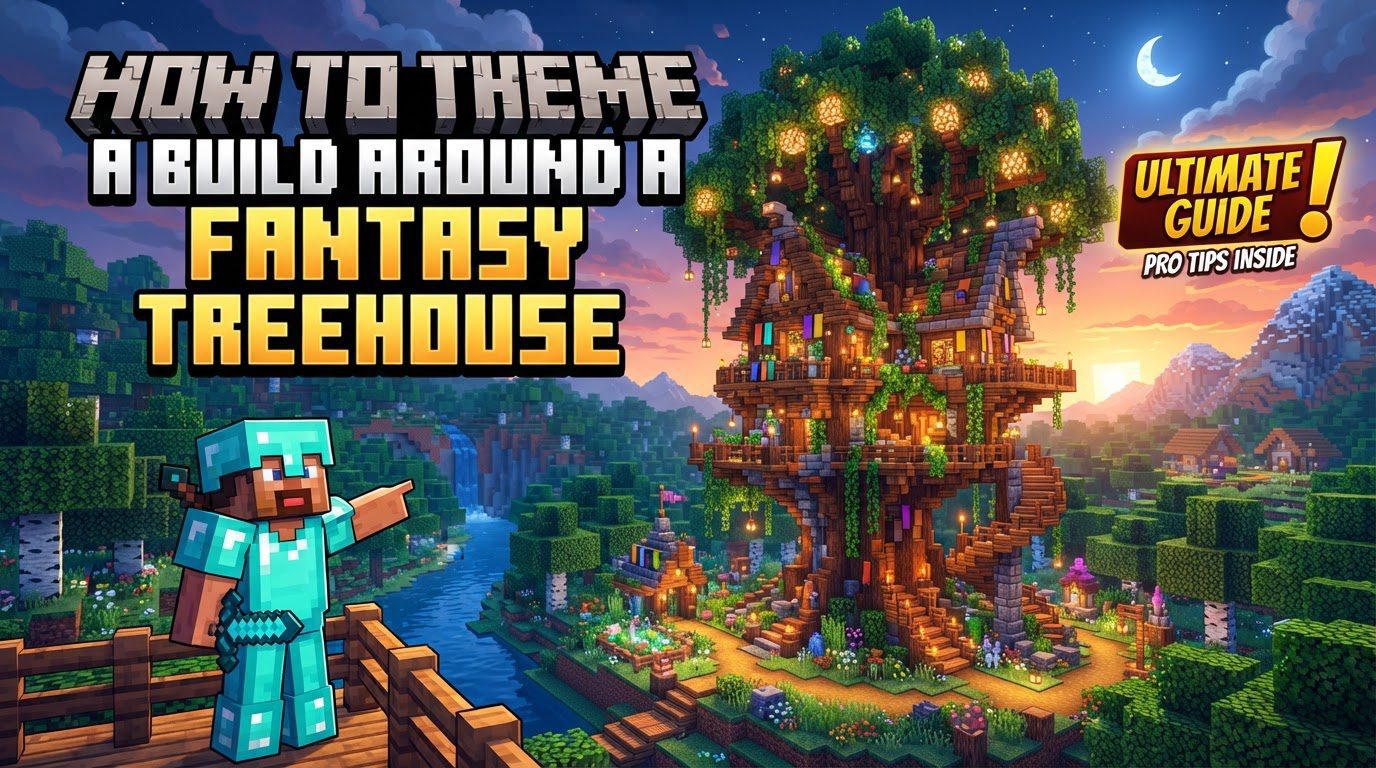
The foundation of any great fantasy treehouse lies in understanding how to manipulate Minecraft’s blocks to achieve an organic, natural feel. This involves more than just stacking wood; it’s about making your structure an extension of the tree itself.
-
Utilize a variety of blocks to create organic shapes: To truly capture the essence of a natural, living structure, avoid relying on a single block type. Incorporate blocks like oak wood for the main trunk and structural elements, while using spruce stairs, slabs, and trapdoors to introduce curves, angles, and finer details that mimic natural growth patterns. These varied blocks allow for the creation of intricate, natural-looking tree shapes that are far more compelling than simple block towers.
-
Build custom trees or modify existing large trees: Your treehouse needs a substantial host. You can either embark on the ambitious project of building a custom tree from the ground up, allowing for complete control over its size and shape, or you can find and modify an existing large tree. When modifying, it’s crucial to clear leaves around the trunk to create adequate building space for your platforms and rooms. This preparation ensures your treehouse has a stable and aesthetically pleasing foundation.
-
Incorporate detailed elements like roots and branches: To enhance the fantasy aesthetic, consider extending the tree’s natural features. Adding sprawling roots that anchor the treehouse to the ground gives it a sense of age and permanence. Similarly, intricate branches extending from the main trunk can serve as decorative elements, support for smaller platforms, or even pathways. These details bridge the gap between a mere structure and a living, breathing part of the environment.
-
Consider a concealed entrance within the tree trunk: For a truly magical and immersive experience, design a hidden entrance. A concealed doorway or pathway integrated directly into the tree trunk adds an element of mystery and wonder, making the discovery of your treehouse even more rewarding. This can be achieved with piston doors, cleverly placed trapdoors, or simply by blending the entrance seamlessly into the bark texture.
-
Add lush details such as vines and leaves: To “liven up” the exterior and make your treehouse feel truly integrated into its environment, adorn it with natural flora. Trailing vines cascading down the sides, strategically placed leaf blocks, and even flowering plants can soften the architectural lines and provide a sense of established natural growth. These details are essential for making the treehouse feel lived-in and part of the fantastical landscape.
Step-by-step Process for Construction
Building your fantasy treehouse is a systematic process, starting from material collection and culminating in intricate decorations.
-
Gather Materials: Before breaking ground (or bark), ensure you have a substantial supply of resources. Wood, being the primary material, should be collected in large quantities; 600-1000 blocks is suggested as a starting point, but more may be needed depending on the scale of your project. Beyond wood, gather other desired building materials like stone, glass, and decorative blocks to ensure variety and texture in your design.
-
Construct the Trunk: The trunk is the backbone of your treehouse. It needs to be robust and tall enough to support your vision. The thickness can range from a simple 1×1 to a more substantial 4×4 blocks thick, or even larger for exceptionally intricate designs. Its height can vary from 8 to 80 blocks high, or even taller. Crucially, ensure the trunk is thick enough to comfortably allow for an interior space where you can place ladders and potentially small rooms or pathways.
-
Add Access: Once the trunk is established, integrate vertical access. Build ladders inside the trunk, allowing you to easily reach the various upper levels and platforms of your treehouse. This internal access maintains the concealed and magical feel, as external stairs might detract from the organic aesthetic.
-
Create the Base: Near the top of your constructed trunk, begin to build the main base of the house. This primary platform should be constructed using wooden planks or other sturdy materials. Design it to be large enough to accommodate essential items, crafting stations, storage, and allow for comfortable movement within the space. This is where the core functionality of your treehouse will reside.
-
Build Walls and Roof: With the base in place, construct the walls around it, typically 2-4 blocks high, to define your living spaces. Follow this by building a roof, positioned 3-4 blocks above the base. When selecting materials for walls and roofs, strive for variety. Combining different wood types, stone, or even glass can add significant texture and visual interest, preventing a monotonous appearance.
-
Decorate: The final and often most rewarding step is decoration. Furnish the interior with beds, crafting tables, chests, and other necessities, personalizing the space to your taste. On the exterior, add details that enhance the fantasy theme: install windows for views, build balconies for outdoor relaxation, place planters with flowers, and ensure adequate lighting to illuminate the structure and deter hostile mobs.
Important Tips for an Exceptional Build
Beyond the basic construction, several key considerations will elevate your fantasy treehouse from good to truly exceptional.
-
Vary Block Palettes: To create a visually rich and engaging structure, avoid using only one type of block. A diverse selection of different blocks for walls, floors, and details adds texture, depth, and character, preventing a monotonous or bland look. Experiment with different wood types, stone variations, and even terracotta or concrete to find combinations that complement your fantasy theme.
-
Add Depth: Flat walls are a common pitfall in Minecraft builds. To make your treehouse dynamic and interesting, introduce depth. This can be achieved by creating different layers, such as recessed sections for windows or doors, adding frames around structural elements, or building overhangs for roofs and balconies. These subtle changes create shadows and visual interest, making the structure feel more substantial.
-
Consider Lighting: Proper lighting is paramount for both aesthetics and safety. Ensure adequate lighting throughout the interior to create a warm, inviting atmosphere and prevent hostile mobs from spawning. Equally important is exterior lighting, especially around the base and accessible platforms, to secure your treehouse from nocturnal threats.
-
Fireproof: If you plan to incorporate fire elements, such as a cozy fireplace or a torch-lit aesthetic, take crucial fireproofing measures. Build these elements exclusively with non-combustible materials like stone, bricks, or netherrack. Furthermore, ensure they are properly enclosed and separated from any flammable wood or foliage to prevent accidental fires that could destroy your treehouse.
-
Plan Layout: Move beyond simple squares or rectangles for your floor plans. While functional, these basic shapes can make a build feel uninspired. Consider more dynamic layouts such as L-shapes, circular platforms, or even diagonal elements. These alternative configurations can make a build significantly more appealing and organic, better fitting a fantasy treehouse theme.
-
Build Near Spawn: For convenience and safety, especially in survival mode, consider constructing your main treehouse base near your world’s spawn point. This provides easy access if you perish and ensures you’re never too far from your primary operations, reducing travel time and risk.
Common Mistakes to Avoid
Learning from common pitfalls can save you time and frustration, ensuring your fantasy treehouse achieves its full potential.
-
Flat, One-Dimensional Walls: As mentioned in the tips, avoid making your walls completely flat. A lack of depth makes a build appear uninspired and blocky. Always strive to add variation through recessed sections, frames, or overhangs to give your walls character and visual appeal.
-
Monochromatic Builds: Using only one type of block throughout your entire structure will result in a bland and uninteresting design. Embrace a varied block palette to introduce textures, colors, and contrasts that make your treehouse visually stimulating and unique.
-
Basic Shapes: Sticking to simple square or rectangular designs can limit the fantasy and organic feel of your treehouse. Experiment with more complex and fluid shapes, incorporating curves, angles, and irregular platforms to create a truly unique and natural-looking structure.
-
Over-detailing: While details are crucial for a fantasy aesthetic, there’s a fine line between intricate and cluttered. Avoid excessive detailing that can make a build look messy or overwhelming. Focus on meaningful details that enhance the theme without creating visual noise.
-
Ignoring Scale: Ensure the scale of your treehouse is appropriate for its surroundings and its intended use. A tiny treehouse on a giant custom tree might look lost, while an enormous structure on a small tree can appear top-heavy and unnatural. Balance is key to a harmonious design.
-
Unstable Water Flow: If you choose to incorporate water features, such as internal waterfalls or exterior ponds, ensure the water is stable and contained. Endless or uncontrolled water flow can create an unsightly mess and even damage parts of your build. Plan your water sources and channels carefully to achieve a serene and controlled effect.
By adhering to these principles and avoiding common mistakes, you can construct a magnificent fantasy treehouse that serves as a unique and enchanting base in your Minecraft world, blending seamlessly with nature while offering all the comforts of a well-designed home.
Tags:
YOU MAY ALSO LIKE...


