

Theming a Build Around a Medieval Castle — A Quick Guide
To theme a Minecraft build effectively around a medieval castle, the focus must be placed firmly on achieving structural integrity, making deliberate material choices, and incorporating authentic architectural details throughout the entire construction process. This approach ensures the final creation not only looks impressive but also feels historically plausible and functional within its virtual landscape.
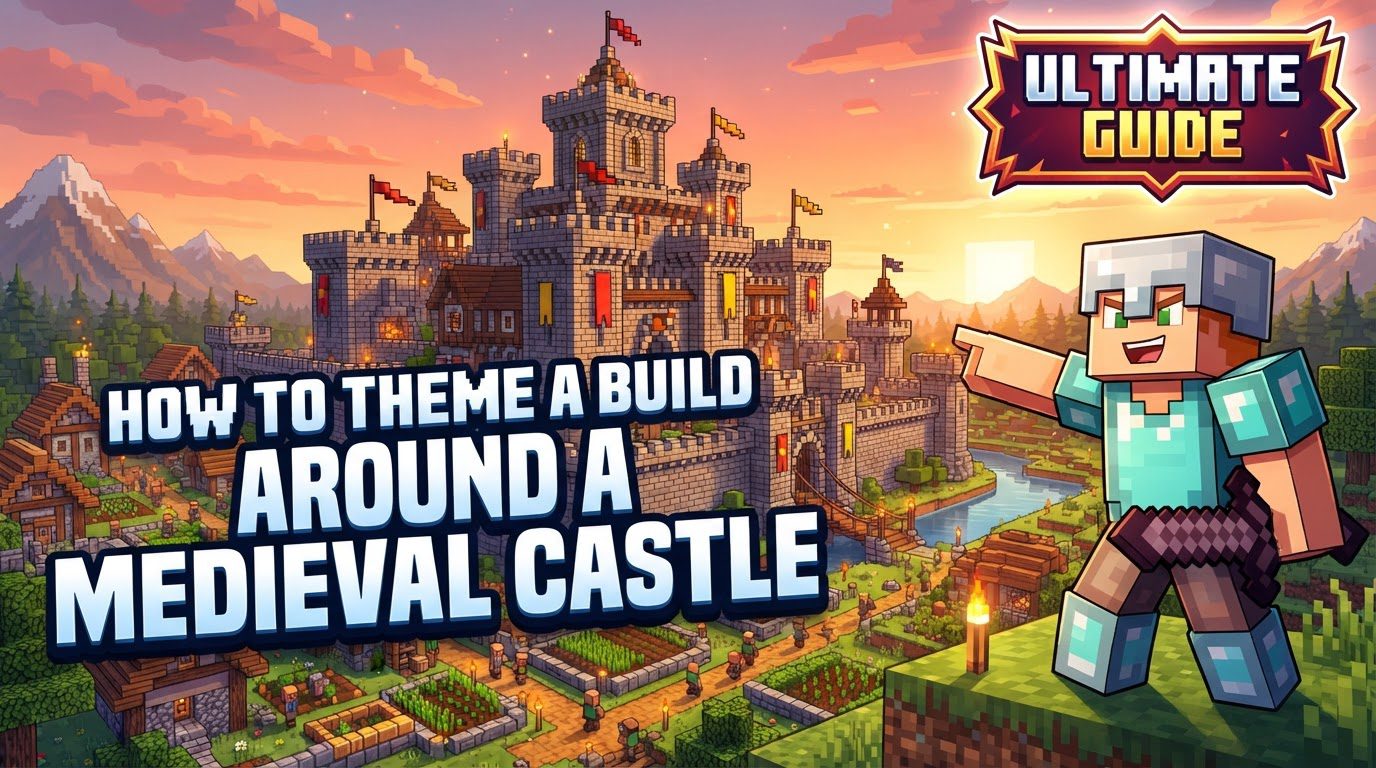
Key Mechanics for Castle Construction
-
Choose a specific style: Before laying the first block, it is crucial to decide on a distinct architectural style for your castle. This foundational decision, whether you opt for a historically authentic recreation or a more fantasy-driven interpretation, will profoundly influence subsequent material selections and the overall proportions of your build. A historically authentic style might demand specific stone types and more realistic dimensions, whereas a fantasy style allows for more creative freedom with exotic materials and exaggerated features, but still requires internal consistency.
-
Vary stone materials and textures: To imbue your castle with visual richness and authenticity, it is highly recommended to vary the types of stone materials and textures used. Instead of a monolithic structure of a single block, employing different shades of stone, cracked bricks, or mossy cobblestone can create an illusion of age, wear, and structural complexity, significantly enhancing the castle’s realism and aesthetic appeal.
-
Understand scale and proportion: Achieving a believable and imposing medieval castle hinges on a deep understanding of scale and proportion. Towers, walls, and the entire structure must be meticulously balanced in relation to each other. Disproportionate elements can make the castle appear cartoonish or unstable, so careful consideration of height, width, and depth for all components is paramount to creating a cohesive and grand design.
-
Incorporate architectural details: Authentic medieval castles are defined by their distinctive architectural features. Integrating elements such as crenellations along battlements, narrow arrow slits in walls, and other defensive characteristics is essential. These details not only contribute to the castle’s visual authenticity but also reinforce its historical purpose as a fortified stronghold, making the build feel more lived-in and functional.
-
Design with defense in mind: Even in a virtual world, designing a castle with defense as a primary consideration adds an invaluable layer of realism and thoughtful construction. This involves strategically placing towers, walls, and gateways to eliminate potential blind spots where attackers could conceal themselves. Thinking like a medieval architect planning for siege warfare will guide your layout and structural decisions, resulting in a more convincing and engaging build.
Step-by-Step Process for Building Your Castle
-
Planning: The construction of any grand castle begins with meticulous planning. Start by outlining the castle’s footprint on the ground using temporary markers. This initial layout should include the general placement of all major components, such as the main keep, corner towers, connecting walls, and the primary entryways. This foundational step ensures a coherent and well-organized build from the outset.
-
Foundation and Main Structures: Once the planning is complete, proceed to build the basic frame of your castle. Begin with the most critical elements, typically the corner towers, which provide structural anchors and define the castle’s perimeter. Following this, construct the connecting walls, ensuring they link the towers seamlessly and establish the primary defensive barrier of your fortress.
-
Gates: The main gatehouse is often the focal point of a medieval castle and should be constructed early in the process. This structure, complete with its portcullis mechanism, frequently serves as a central reference point for the entire build. Its design should reflect both defensive strength and a welcoming, albeit formidable, entrance.
-
Interior Layout: Even as the exterior takes shape, it is vital to plan the interior rooms and their specific purposes early on. While you don’t need to fully furnish them immediately, establishing the floor plans and placing the first layer of blocks for interior walls will ensure that the castle’s internal functionality is integrated with its external structure, preventing awkward spaces later.
-
Roofs and Heights: After the main structures are established, add roofs or other coverings to all buildings within the castle complex. To avoid a monotonous appearance and to reflect the varied functions and importance of different structures, vary their heights. For example, the main keep should typically be significantly taller than other parts of the castle, asserting its dominance and strategic importance.
-
Detailing: The final stage involves incorporating a myriad of decorative elements to bring your castle to life. This includes adding intricate details to walls, placing flags that wave uniformly, and landscaping the surrounding area to blend the castle seamlessly with its environment. These embellishments significantly enhance the castle’s overall appearance and contribute to its authenticity.
Important Tips for an Authentic Castle Build
-
Build on high ground or a mountain: For both aesthetic appeal and strategic realism, constructing your castle on high ground or atop a mountain is highly advantageous. This placement naturally provides a commanding view of the surrounding terrain and offers a significant defensive advantage against any perceived threats.
-
Limit your block palette: To maintain a cohesive and recognizable medieval aesthetic, it is wise to limit your primary block palette to two or three main types. You can then incorporate a few accent blocks to add subtle variations without overwhelming the design. This discipline prevents the castle from appearing disjointed or like a “rainbow toy.”
-
Aim for asymmetry: While perfect symmetry might seem appealing, medieval castles were rarely perfectly symmetrical due to organic growth, repairs, and adaptations over centuries. Embracing asymmetry in your design can make the castle appear far more natural, lived-in, and historically authentic, reflecting its gradual evolution rather than a single, planned construction phase.
-
Ensure battlements are functional: The battlements of your castle should not merely be decorative. Design them with functionality in mind, ensuring they provide adequate cover for defenders to hide behind while also allowing them to effectively shoot arrows or launch other projectiles at attackers below. This attention to detail enhances both realism and potential playability.
-
Add depth to walls: Flat, single-layered walls can make a castle look rudimentary and unconvincing. By adding depth to walls using various blocks, staggering layers, or incorporating buttresses, you can create a much more robust and visually interesting structure. This technique adds perceived thickness and strength, vital for a defensive fortress.
-
Make sure all flags on the build face the same direction: A small but impactful detail is ensuring that all flags or banners on your castle consistently face the same direction. This creates an illusion of a prevailing wind, adding a touch of dynamic realism and attention to environmental consistency within your build.
-
Consider the surrounding biome when selecting materials: The choice of building materials should be influenced by the castle’s surrounding environment. For instance, using dark oak in a desert biome would look out of place and detract from authenticity. Selecting materials that harmonize with the biome helps the castle integrate naturally into its world.
-
When building roofs or central doorways, an odd number for width measurements can help with symmetry: For elements that require a central point, such as roofs or main doorways, using an odd number for width measurements can simplify the process of achieving visual symmetry. This allows for a clear central block or pillar, which can be challenging with even numbers.
Common Mistakes to Avoid
-
Using walls that are too thin: Constructing walls that are excessively thin can make your castle appear fragile and unrealistic. Thin walls also severely limit the potential for interior detailing and architectural complexity, compromising both aesthetics and perceived defensive capability.
-
Overusing too many different block types: While variety is good, excessive use of too many different block types can lead to a confused and visually jarring appearance, often described as a “rainbow toy.” This dilutes the medieval theme and makes the castle look less like a cohesive structure and more like a patchwork.
-
Creating a perfectly symmetrical layout: As previously mentioned, perfect symmetry is rarely found in authentic medieval castles. Striving for it can make your build look artificial and detract from the organic, lived-in feel that characterizes historical fortresses. Embrace slight imperfections for greater realism.
-
Leaving the castle’s interior empty: A castle with an impressive exterior but a hollow interior feels incomplete and lifeless. Furnishing the interior rooms, even with basic elements, makes the building feel functional, inhabited, and truly finished, enhancing the overall immersion.
-
Building walls that are too low: Walls that are excessively low, such as those only three to five blocks tall, compromise both realism and defensive effectiveness. Medieval castle walls were built to deter attackers and provide significant cover; low walls fail to convey this sense of security and grandeur.
-
Relying too heavily on wood in the base structure of outer walls: While wood has its place in castle construction, relying too heavily on it for the base structure of outer walls is a significant vulnerability. Historically, wood is susceptible to fire, and in Minecraft, it makes the structure less robust and visually less imposing than stone.
-
Placing windows too low: Windows placed too close to the ground can create critical vulnerabilities for attackers, allowing easy entry or providing targets for projectiles. Strategically, windows in a medieval castle should be high enough to offer a defensive advantage and prevent easy access.
-
Constructing all structures at the same height: Building every tower, wall, and internal structure at a uniform height results in a monotonous and uninspired appearance. Varying the heights of different components adds visual interest, implies varying functions and importance, and contributes to a more dynamic and realistic castle silhouette.
Tags:
YOU MAY ALSO LIKE...


