

Minecraft Automatic Farms List
The sheer scale of resources an optimized automatic farm can generate often surprises even seasoned players. A well-designed automatic sugar cane farm, for instance, can produce thousands of items per hour, far exceeding manual collection and transforming tedious grinding into a continuous stream of valuable materials.
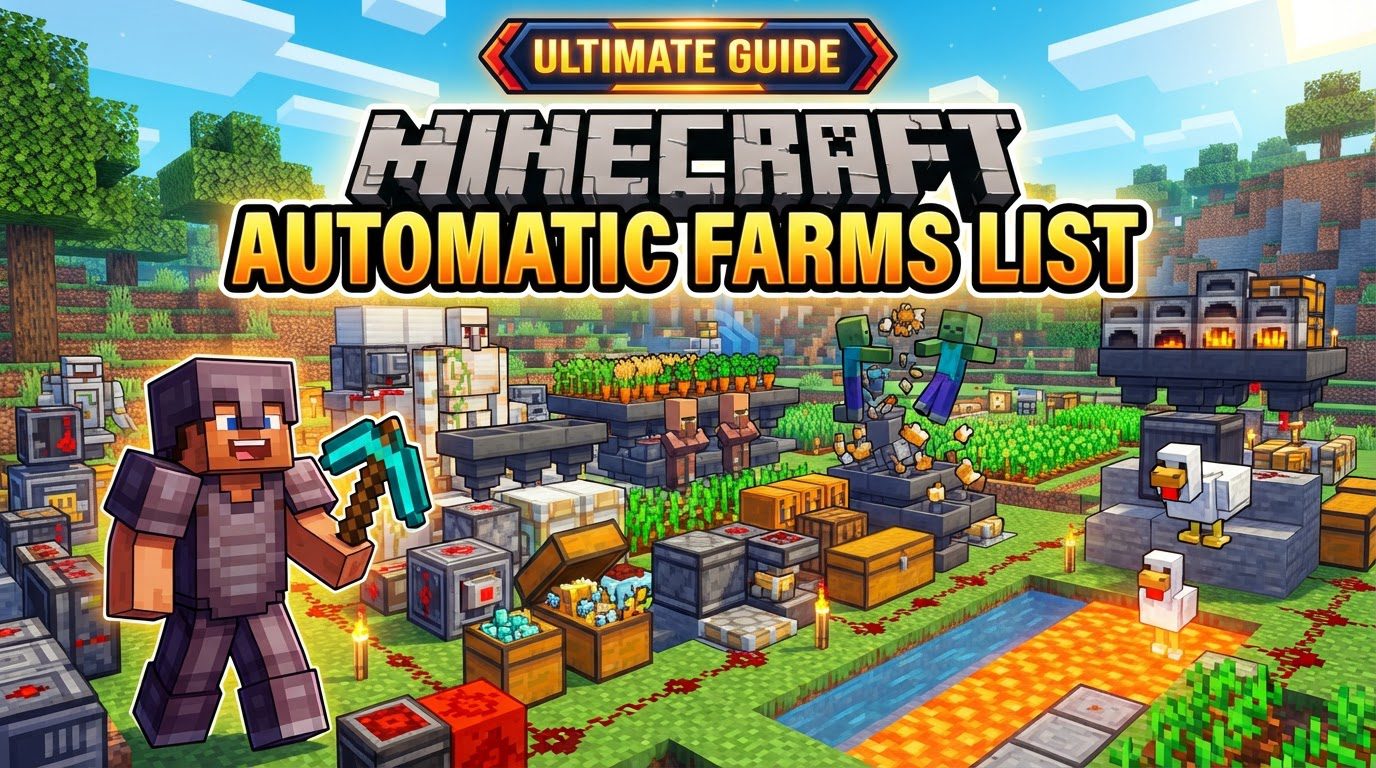
Automating resource gathering is the cornerstone of advanced Minecraft gameplay, allowing players to transcend the repetitive tasks of mining and farming. Automatic farms are ingenious contraptions that leverage the game’s mechanics and Redstone engineering to produce items, experience, or raw materials with minimal player intervention. This guide will delve into the principles, common types, and essential considerations for building efficient automatic farms in Minecraft.
The Core Principles of Automation
At its heart, a Minecraft automatic farm is a system designed to mimic or enhance player actions to generate resources. Understanding the fundamental mechanics is crucial for successful farm construction:
- Redstone Components: The brain of any automatic farm. Components like pistons, observers, dispensers, and timers are used to automate actions such as harvesting crops, pushing blocks, or activating mob traps. A basic understanding of Redstone is indispensable.
- Water Flow for Item Transport: Water is a versatile tool for moving items. It can push harvested crops, mob drops, or generated blocks into designated collection points, often leading to hoppers.
- Hoppers for Collection and Sorting: Hoppers are the workhorses of item logistics. They automatically pick up items from the world or from containers above them and transfer them into other containers, like chests, or into other hoppers for sorting.
- Mob Spawning Mechanics: For farms targeting creatures, a deep understanding of mob spawning rules is vital. This includes controlling light levels (mobs typically spawn in light level 0), block types, and available space to ensure mobs appear exactly where you want them.
- Simulating Player Actions: Many farms replicate what a player would do manually. For example, a piston pushing a block to break a fully grown crop, or a dispenser placing water to harvest sugar cane.
- Environmental Optimization: Crops and other plant-based resources often require specific conditions like water source blocks for hydration and sufficient light levels to grow efficiently. Farms must provide these optimal conditions.
A General Blueprint for Farm Construction
While each farm type has its unique quirks, a universal step-by-step process guides their creation:
- Identify Your Resource Goal: Begin by deciding what you want to automate. Is it food (wheat, potatoes), building materials (wood, cobblestone), mob drops (bones, gunpowder), or something else? This dictates the type of farm you’ll build.
- Design the Generation/Harvesting Mechanism: This is the core of the farm. For crops, it might involve pistons triggered by observers when the crop matures. For mobs, it’s about creating spawning platforms and a collection chute. For cobblestone, it’s about combining lava and water.
- Implement an Efficient Collection System: Once items are generated or harvested, they need to be moved. Water channels are commonly used to direct items towards hoppers. Ensure the water flow is precise to prevent items from getting stuck or despawning.
- Establish Ample Storage: Connect your collection system to chests, barrels, or even more advanced item sorters. Adequate storage prevents collected items from overflowing and despawning, ensuring all your hard work pays off.
- Automate with Redstone Circuitry: Finally, integrate Redstone to make the farm autonomous. This could involve simple observer-piston setups, Redstone clocks for continuous operation, or complex logic gates for advanced functions. The goal is continuous, hands-free production.
Diverse Applications: Types of Automatic Farms
The principles outlined above can be applied to automate a vast array of resources. Here are some common categories of automatic farms:
Crop and Plant Farms
These farms focus on agricultural products. Simple designs might involve observers detecting growth and pistons harvesting, pushing items into water streams. Examples include:
- Wheat, Carrot, Potato, Beetroot Farms: Often use villagers to farm and replant, or piston-based harvesters.
- Melon and Pumpkin Farms: Observers detect fruit growth, triggering pistons to break them.
- Sugar Cane and Bamboo Farms: Observers detect growth, pistons break the top blocks, and water carries them away.
- Cactus Farms: Cactus grows next to an air block, a block is placed to break it when it reaches a certain height, or pistons push it.
- Tree Farms: More complex, often involving TNT dupers or Wither cages to break wood blocks, or simpler piston-based designs for specific tree types.
Mob Farms
Designed to collect drops and experience from hostile or passive mobs. The key is controlling spawning conditions and guiding mobs to a killing chamber.
- Dark Room/Grinder Farms: Create a large, dark area for hostile mobs to spawn, then funnel them into a drop chute or a drowning trap.
- Spawner-Based Farms: Utilize naturally occurring mob spawners (e.g., zombie, skeleton) to produce a constant stream of mobs.
- Iron Golem Farms: Create specific villager and bed setups to trick the game into spawning iron golems, which are then killed for iron.
- Guardian Farms: Built in ocean monuments, these are highly efficient for prismarine and experience.
- Animal Farms: Automated breeding and slaughtering systems for passive mobs like cows, pigs, chickens, and sheep for food, leather, or wool.
Resource Generators
These farms generate infinite supplies of common blocks.
- Cobblestone/Stone Generators: Combine lava and water to create cobblestone, which is then mined by TNT or a player, or converted to stone.
- Basalt Generators: Requires soul soil, blue ice, and lava to create basalt, typically mined by a player.
Essential Tips for Aspiring Farmers
- Start Simple: Don’t try to build a mega-farm on your first attempt. Begin with easy farms like melon, pumpkin, or sugar cane farms to get a feel for Redstone and item collection.
- Master Redstone Basics: Familiarity with Redstone clocks, comparators, repeaters, and observer mechanics will unlock more complex and efficient designs. There are countless tutorials online.
- Version Awareness: Be mindful of your Minecraft version (Java Edition vs. Bedrock Edition). Redstone mechanics, mob spawning, and even block behaviors can differ significantly between versions, impacting farm functionality.
- Optimize Spawning Conditions: For mob farms, precise control over light levels (usually 0 for hostile mobs) and ensuring correct block types and mob cap considerations are paramount for high efficiency.
- Efficiency is Key: Always look for ways to make your farms more compact, faster, and less resource-intensive. Experiment with different designs and learn from others.
Common Pitfalls to Avoid
Even experts make mistakes. Being aware of common issues can save you significant time and frustration:
- Insufficient Redstone Knowledge: Trying to build complex Redstone without understanding the basics often leads to non-functional or unreliable farms. Take the time to learn the fundamentals.
- Inefficient Collection Systems: Poorly designed water flows can lead to items getting stuck, despawning, or not reaching the storage. Always test your collection system thoroughly.
- Incorrect Spawning Conditions: For mob farms, forgetting to completely darken a spawning area, or not understanding mob cap limits, will drastically reduce or prevent mob spawns.
- Inadequate Storage: Many players underestimate the output of automatic farms. Neglecting to provide ample chest space means valuable items will despawn.
- Ignoring Game Mechanics: Every block and item has specific behaviors. Forgetting how water interacts with certain blocks, or how specific crops grow, can break your farm.
Building automatic farms is one of Minecraft’s most rewarding challenges. It combines creativity, engineering, and problem-solving, transforming your world from a manual grind into a thriving, automated empire. With a solid understanding of these principles, you’ll be well on your way to harvesting virtually anything the game has to offer, without lifting a finger.
Tags:
YOU MAY ALSO LIKE...


