

Minecraft Biome Numbers
A seemingly obscure number, 127, once held significant power in Minecraft’s Java Edition, representing the upper limit for primary biome identification. While the game has evolved considerably, moving beyond simple numerical tags for its diverse landscapes, the underlying numerical properties and systems that govern biome generation and behavior remain fundamental to its blocky world.
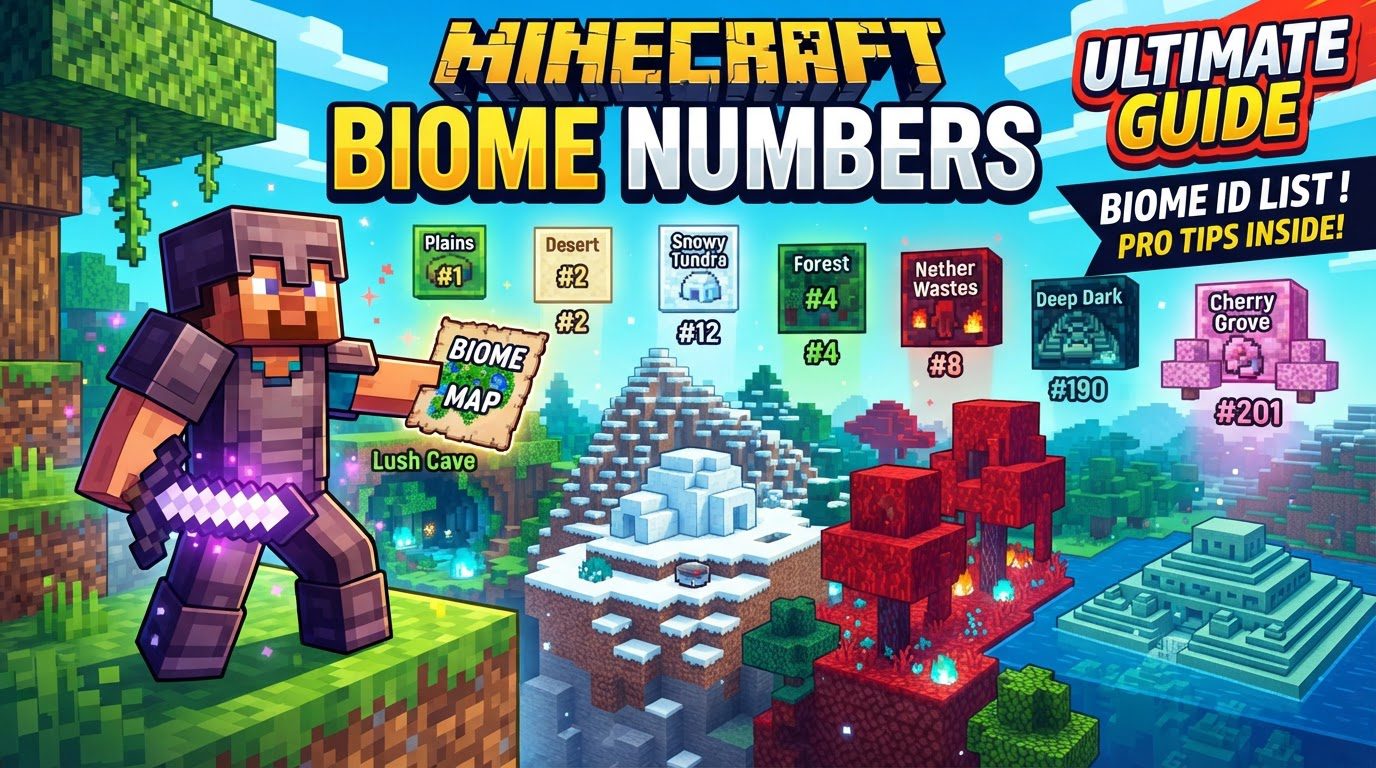
Understanding “biome numbers” in Minecraft isn’t just about memorizing outdated IDs; it’s about grasping the intricate numerical framework that defines everything from a desert’s scorching heat to a snowy tundra’s chilling embrace. This guide delves into the historical context of biome identification, the modern numerical properties that dictate their characteristics, and how these systems impact both gameplay and world creation.
The Evolution of Biome Identification
Historically, in Minecraft Java Edition, particularly before the significant 1.13 update, biomes were primarily identified by numerical IDs. This system was straightforward: main biomes were assigned IDs ranging from 0 to 127. Variations of these biomes, such as a “forest hills” or a “birch forest M” (mutated), typically used the base biome’s number plus 128. For instance, if ‘Plains’ was ID 1, ‘Sunflower Plains’ might have been ID 129. This numerical system was crucial for modders, server administrators, and players looking to interact with or understand the game’s terrain generation at a deeper level.
However, with Java Edition 1.13 and subsequent updates, the identification system underwent a significant transformation. Simple numerical IDs were largely deprecated in favor of string-based identifiers. Biomes are now referred to by descriptive names like “plains,” “desert,” “forest,” or “snowy_taiga” within game files and commands. This shift made biome identification more intuitive for players and streamlined development, reducing the potential for ID conflicts as new biomes were introduced. Despite this change, the legacy of numerical IDs still occasionally surfaces in very old tools or discussions.
In contrast, Minecraft Bedrock Edition continues to utilize numerical biome IDs. These IDs are referenced in commands and within the game’s underlying code, making them directly relevant for Bedrock players and creators. This divergence highlights a key difference between the two primary versions of Minecraft and underscores the importance of understanding which version one is interacting with when discussing biome identification.
Beyond Simple Tags: The Numerical Properties of Biomes
While the direct numerical ID system has largely faded in Java Edition, biomes are still fundamentally defined by a rich array of numerical properties and parameters. These aren’t simple identifiers but rather intrinsic values that shape a biome’s environment and how it behaves within the game world.
- Temperature: Every biome has a numerical temperature value. This property is crucial for determining various environmental effects. Biomes with low temperatures, for example, will see snow accumulate on the ground and water bodies freeze into ice. Higher temperatures prevent these phenomena and can influence foliage coloration.
- Humidity/Downfall: This numerical property dictates the type and frequency of precipitation. High humidity often correlates with rain, while low humidity might mean no precipitation or, in cold biomes, snow. Humidity also plays a lesser-known but critical role in the spread rate of fire within a biome, with drier biomes allowing fires to spread more rapidly.
- Climate Classification: Biomes are often broadly categorized by their climate, which is also driven by underlying numerical ranges. These classifications, such as normal, warm, or cold, inform the game’s generation algorithms and help ensure logical transitions between different types of landscapes.
- Generation Parameters: The very shape and distribution of biomes are determined by a complex interplay of numerical generation parameters during world creation. Values for continentalness, erosion, “weirdness,” and depth work in concert to sculpt the terrain. For instance, high continentalness values might lead to vast landmasses, while varying erosion values create dramatic cliffs or gentle slopes. “Weirdness” can introduce unusual terrain features, and depth controls how low or high the terrain generates. These parameters operate within specific, often hidden, numerical ranges, and their tuning is what gives each biome its unique topographical signature.
- Procedural Generation: At its core, Minecraft’s world generation is procedural, relying heavily on complex algorithms that leverage random numbers. The “seed” used when creating a world is a numerical input that initializes this random number generator, leading to a deterministic outcome. This means that using the same seed will always produce the same world, with the same biome distribution, allowing players to share and explore identical landscapes.
Interacting with Biome Data and Control
Even without direct numerical IDs in Java Edition, players and creators still have ways to interact with and even manipulate biome data:
- Locating Biomes: In Java Edition, the chat command
/locate biome <biome_name>(e.g.,/locate biome plains) allows players to find the nearest instance of a specific biome. This command uses the modern string-based identifiers but is an essential tool for navigation and exploration. - Changing Biomes: For those with operator privileges in Java Edition, the
/fillbiomecommand offers powerful control. It allows players to change the biome of a designated area, transforming one landscape into another. This is invaluable for map creation, server customization, or simply experimenting with different environments. - Accessing and Modifying Data: While Java Edition moved away from simple numerical IDs, older versions and certain mods allowed for “dumping” lists of biome IDs into spreadsheets for reference. In Bedrock Edition, however, the ability to access and modify biome data is much more direct for creators. By modifying JSON sub-objects, creators can extensively customize biome behaviors, terrain generation rules, block distribution within a biome, mob spawns, and even climate properties. This level of granular control, often numerical in nature, enables the creation of truly unique custom worlds.
Leveraging Biome Knowledge for Gameplay and Creation
Understanding the numerical underpinnings of biomes offers practical advantages for both players and world designers:
- Environmental Awareness: A player’s awareness of a biome’s temperature and humidity values can significantly impact their survival strategies. Knowing that a cold biome will cause water to freeze helps in planning routes or building shelters. Anticipating rain or snow based on humidity levels allows for better preparation against environmental challenges.
- Custom World Design: For map makers and mod developers, leveraging numerical biome properties and generation parameters is key to crafting bespoke worlds. By carefully adjusting values for continentalness, erosion, and depth, creators can fine-tune custom world presets to achieve specific geographical features, from sprawling oceans to jagged mountain ranges.
- Seed Exploration: The deterministic nature of world generation from a “seed” is a powerful tool. By exploring and sharing specific numerical seeds, players can reliably generate worlds with desired biome layouts, whether they’re searching for a rare mushroom island, a vast plains biome for building, or a world with a particular distribution of resources.
Common Pitfalls and Version Differences
Despite the clarity provided by modern string identifiers, several common mistakes persist due to the historical context and version disparities:
- Outdated ID Usage: A frequent error is attempting to use the old numerical biome IDs in Minecraft Java Edition versions 1.13 and newer. The identification system fundamentally changed, and such IDs are no longer recognized by the game’s commands or internal logic.
- Oversimplification of Control: Expecting to control biome generation with a single “biome number” is a significant misunderstanding. Modern biome generation is an incredibly complex process involving the interplay of dozens of numerical parameters, not just a single identifier.
- Ignoring Version Differences: Biome IDs, their names, and especially the underlying generation mechanics can vary significantly between Minecraft Java Edition and Bedrock Edition. Furthermore, even within the same edition, major game updates can introduce new biomes, alter existing ones, or refine generation algorithms, making it crucial to always consider the specific game version being discussed.
In conclusion, while the direct “biome numbers” of old Java Edition are largely a relic of the past, the world of Minecraft is still profoundly shaped by numerical values. From the temperature and humidity that dictate weather patterns to the complex generation parameters that sculpt entire continents, numbers remain the silent architects of every block, every tree, and every biome the player encounters. Understanding this numerical language offers a deeper appreciation for Minecraft’s procedural artistry and empowers players and creators to interact with its worlds on a more informed and creative level.
Tags:
YOU MAY ALSO LIKE...


