Minecraft How to Make XP Farm Without Spawner
Many players dream of an endless supply of experience points in Minecraft, often assuming a rare mob spawner is the only path. However, with a solid understanding of game mechanics, you can construct an incredibly efficient XP farm that relies solely on natural mob spawning, no dungeon diving required. This guide will reveal how to build such a contraption, transforming any dark space into a powerful engine for experience and valuable loot.
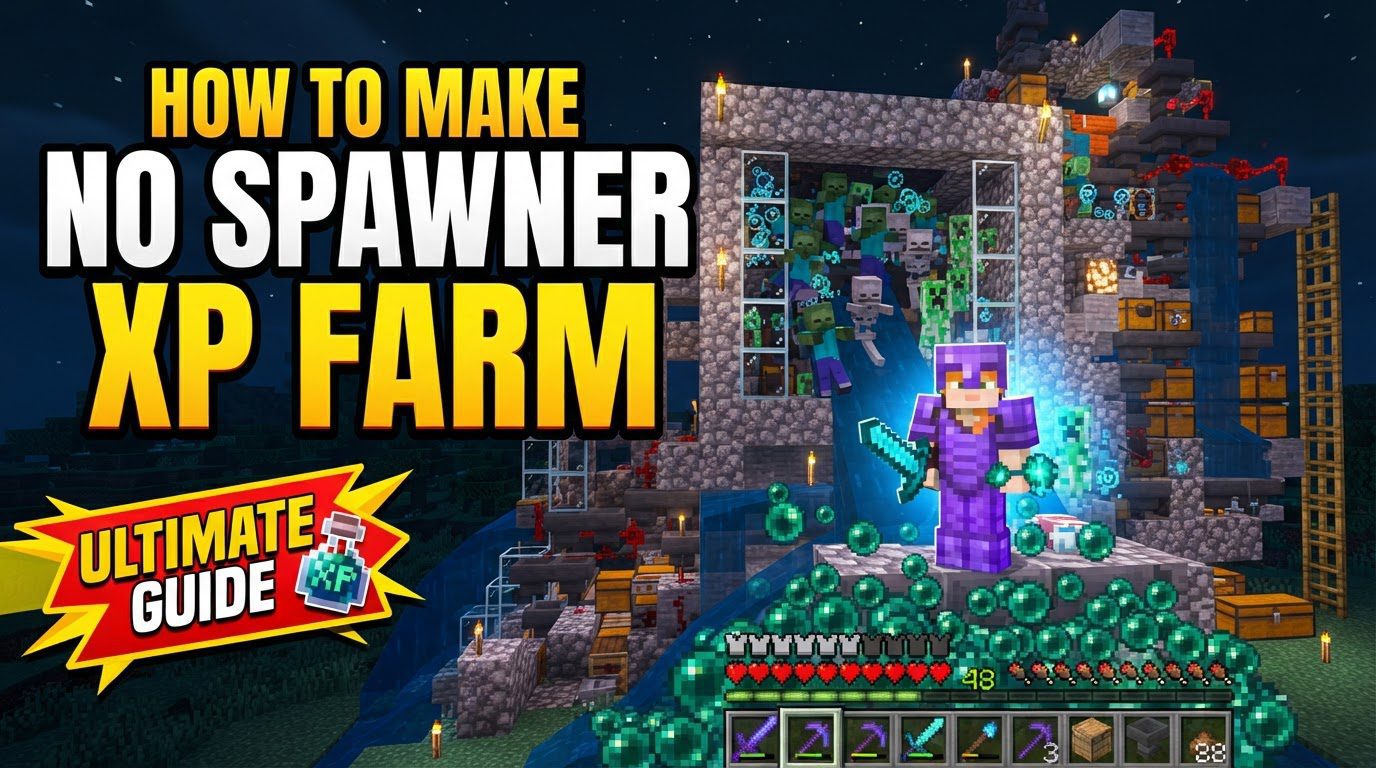
The Science Behind Spawning: Core Mechanics Explained
Building an XP farm without a spawner hinges on manipulating the game’s fundamental rules for hostile mob generation and movement. Understanding these mechanics is crucial for success.
- Darkness-Based Spawning: The cornerstone of these farms is the requirement for most hostile mobs (like zombies, skeletons, and creepers) to spawn at a light level of 0. This means your spawning areas must be absolutely pitch black. Even a single torch or a stray light source can prevent spawns, rendering your farm useless.
- Mob Pathfinding and Movement: Once mobs spawn, they need to be moved to a central collection point. Water streams are the most common and effective method for this, passively pushing mobs along. A clever trick involves using open trapdoors: mobs perceive an open trapdoor as a solid block they can walk on, often stepping onto it and falling into a channel or drop shaft. This exploits their basic AI to guide them to their doom.
- Fall Damage Exploitation: To gain experience from mobs, you must be the one to deal the final blow. However, repeatedly striking dozens of mobs is tedious. The solution is fall damage. Mobs are dropped from a significant height, reducing their health to a mere half-heart. This allows you to kill them with a single punch or sword swipe, securing all their experience points and loot. The precise height is 22 blocks for Java Edition, and typically 22-23 blocks for Bedrock Edition, to ensure they survive with minimal health.
- Player Proximity for Spawning: Mobs will only spawn within a specific radius around the player, typically between 24 and 128 blocks. Crucially, they will not spawn within 24 blocks of the player. This necessitates an AFK (Away From Keyboard) spot that is close enough to trigger spawns but far enough away to allow them to generate effectively.
Strategic Planning: Location and Materials
Before placing your first block, careful planning can significantly boost your farm’s efficiency.
- Optimal Location: The most critical factor for maximum efficiency is minimizing competing mob spawns. Hostile mobs can spawn in any dark area, including unlit caves, ravines, or on the surface at night. If these areas are consuming the global mob cap, fewer mobs will spawn in your farm. Therefore, the best locations are high in the sky (hundreds of blocks above ground level) or directly over an ocean biome. Building high ensures that all potential spawning areas below are outside the 128-block despawn radius from your AFK spot.
- Building Materials: Any solid building block will suffice for the farm’s structure. Cobblestone is a popular choice due to its abundance and ease of acquisition early in the game. You will also need buckets for water, trapdoors (any type), hoppers, chests, and slabs.
Constructing Your XP Engine: A Step-by-Step Blueprint
Now, let’s dive into the practical construction of a classic “dark room” mob farm.
- The Collection System: Start by digging a small pit for your collection point. This will typically be a 1×1 or 2×2 area. Place hoppers at the bottom, facing into one or more chests. These will automatically collect all mob drops. To prevent XP orbs from getting stuck or despawning, place slabs on top of the hoppers. This allows you to stand on the slabs and kill mobs while the XP and items funnel into the chests below.
- The Drop Tower: Directly above your collection point, build a vertical shaft. This is your drop tower. Extend it upwards for exactly 22 blocks (Java Edition) or 22-23 blocks (Bedrock Edition) from the level where mobs will fall onto the slabs. This height is paramount for ensuring mobs take lethal-but-not-fatal fall damage.
- Constructing Spawning Platforms: At the top of your drop tower, around the opening, begin building your spawning platforms. These are typically large, flat, enclosed areas designed to be completely dark. A common design involves creating 7×4 or 8×8 sections. For optimal efficiency, plan for multiple layers of these platforms, stacked vertically with 2-3 blocks of vertical space between each layer to allow mobs to spawn. The more layers, the more surface area for mobs to generate.
- Implementing Mob Movement: On your spawning platforms, you’ll need to guide mobs towards the central drop shaft. This is done using water channels. Place water sources at the edges of your platforms so that the water flows inward towards the central drop. The water should flow just enough to push mobs into the drop shaft without flowing into it itself. Along the edges of the drop-off points, place open trapdoors. Mobs will pathfind towards these, perceiving them as solid ground, and step onto them, falling into the central shaft.
- Enclosing and Darkening: Once your platforms and water channels are in place, completely enclose the entire spawning area with a solid roof. This roof, along with the walls, must ensure absolute darkness (light level 0) inside. Crucially, place torches on top of the roof and around the exterior walls of your farm. This prevents unwanted mobs from spawning outside your farm and consuming the mob cap, which would reduce the efficiency of your internal spawning areas.
- Establishing Your AFK Spot: Your AFK spot is where you’ll stand to trigger mob spawns. It needs to be positioned 24-31 blocks horizontally or vertically away from the spawning platforms. Some designs benefit from an AFK spot 64 blocks directly above the roof of the farm. Experiment with your specific design to find the sweet spot that maximizes spawns without causing despawns or preventing new mobs from generating.
Optimizing for Maximum Yield
Once your farm is operational, a few tweaks can significantly improve its performance.
- Spider Management: Spiders can be a significant nuisance in mob farms, often getting stuck in water channels or clogging the drop shaft due to their 2×2 block size. To prevent spiders from spawning, you can strategically place carpets in a specific pattern on your spawning platforms. A common method is to place carpets every two blocks in a checkerboard pattern. In Bedrock Edition, placing trapdoors on the ceiling of spawning chambers can also prevent spiders while allowing other mobs.
- Multi-Layered Design: As mentioned, adding more spawning layers dramatically increases the number of mobs that can spawn simultaneously, directly boosting your XP and loot rates. Aim for as many layers as you can reasonably build.
- Looting III Enchantment: When you’re ready to collect your bounty, use a sword enchanted with Looting III. This enchantment significantly increases the number of item drops from killed mobs, maximizing the resources you gain alongside your experience.
Troubleshooting and Common Pitfalls
Even seasoned players can make mistakes. Be aware of these common issues to ensure your farm runs smoothly.
- Insufficient Darkness: This is the number one culprit for a non-functional mob farm. Double-check every inch of your spawning platforms for any light sources, including lava, glowstone, or even tiny cracks in the walls.
- Incorrect Fall Height: If your drop is too short, mobs won’t take enough damage, making them a chore to kill. If it’s too tall, they’ll die from fall damage before you can hit them, and you won’t receive any XP. Stick to the precise 22 (Java) or 22-23 (Bedrock) block height.
- Unlit Surrounding Areas: Caves, ravines, or even the surface within a 128-block radius of your AFK spot that are not lit up will consume the mob cap. This means fewer mobs will spawn inside your carefully constructed farm. Consider undertaking a significant cave-lighting project in the surrounding area or building your farm extremely high.
- Improper AFK Distance: Standing too close (within 24 blocks) to your spawning platforms will prevent mobs from generating. Standing too far (over 128 blocks) will cause mobs to despawn before they reach your kill chamber. Find the optimal 24-31 block range.
- Spiders Clogging: Without proper prevention, spiders will inevitably get stuck and reduce your farm’s efficiency. Implement carpet patterns or other spider-prevention techniques early on.
- Using Bottom Half Slabs: While top half slabs block light, bottom half slabs can sometimes create lighting glitches or allow light to pass through in unexpected ways, negatively impacting mob spawning rates. Stick to full blocks for walls and ceilings of spawning areas.
Building an XP farm without a spawner is a rewarding project that combines engineering, an understanding of game mechanics, and a touch of patience. With this guide, you have all the knowledge needed to construct a powerful, self-sustaining source of experience and loot, making your Minecraft adventures far more efficient and enjoyable.
Tags:
YOU MAY ALSO LIKE...