

Minecraft How to Tame a Horse
Taming a horse in Minecraft is often perceived as a daunting task, but understanding a few core mechanics makes it surprisingly straightforward. With a bit of patience and the right approach, you can transform a wild equine into your loyal companion, ready to whisk you across vast biomes and aid in your explorations.
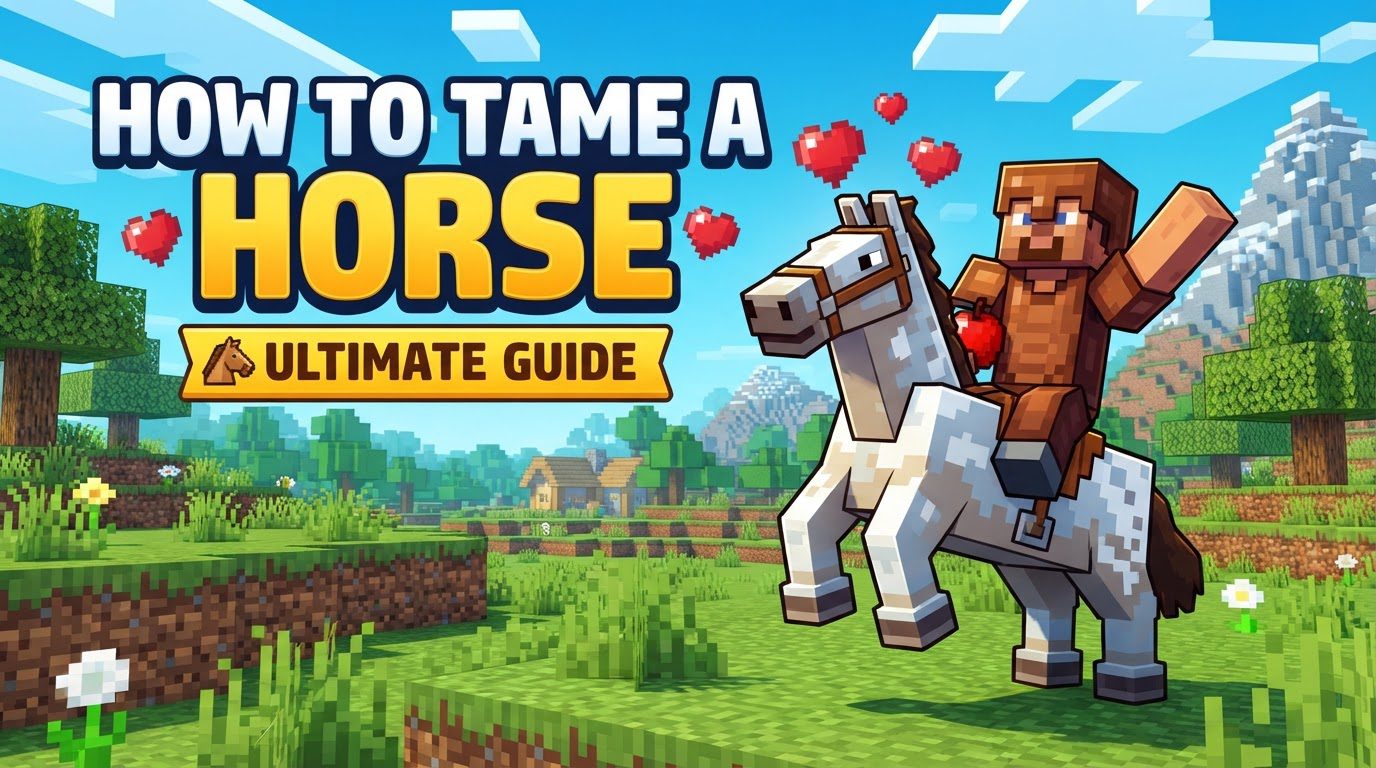
Understanding Equine Temperament: The Hidden Mechanics
Unlike some other tamable creatures in Minecraft, horses operate on a hidden “temper” system. Each horse possesses a temper value ranging from 0 to 100, which dictates its willingness to accept a rider. When you first attempt to mount a wild horse, the game generates a random “taming threshold” between 0 and 99. If the horse’s current temper value is higher than this randomly generated threshold, it will be tamed instantly. More often than not, however, its temper will be lower, and it will buck you off.
The key to successful taming lies in persistence. Every time you mount a horse and it bucks you off, its internal temper value increases by 5 points. This means each failed attempt brings you closer to success. Eventually, its temper will be high enough to surpass the randomly generated threshold, or reach 100, at which point it will accept you as its rider. Furthermore, certain food items can significantly boost a horse’s temper before you even attempt to mount it, drastically speeding up the process.
It’s crucial to remember that while a horse can be tamed, it won’t be controllable until you equip it with a saddle. Taming grants ownership and prevents it from bucking you off, but the saddle is what allows you to steer and truly utilize your new steed.
Embarking on the Hunt: Locating Your Future Mount
Your first step towards equestrian companionship is finding a horse. These magnificent creatures naturally spawn in specific biomes, usually in small herds. The most common locations are:
- Plains Biomes: These wide, open grasslands are ideal for horse spawning and often house several herds. They are characterized by their flat terrain and abundance of tall grass and flowers.
- Savanna Biomes: Distinguished by their acacia trees and dry, grassy plains, Savannas are another prime location for finding wild horses.
Horses typically appear in groups of 2 to 6 individuals. Keep an eye out for them grazing or running across these landscapes. Occasionally, you might also find horses already stabled within villages, offering a convenient, pre-contained option.
The Taming Ritual: A Step-by-Step Guide to Friendship
Once you’ve spotted a horse you wish to tame, the process begins. Follow these steps carefully:
- Approach with Empty Hands: Before you interact with the horse, ensure your active hotbar slot is empty, or that you are not holding any weapons or tools. Right-clicking a horse with an item in hand can accidentally hit it, causing it to flee or even become hostile, making taming much more difficult.
- Attempt to Mount the Horse: With empty hands, right-click on the horse (or use the designated interaction button on consoles). Your character will attempt to get on its back.
- Persist Through the Bucking: The horse will almost certainly buck you off during your initial attempts. This is perfectly normal and part of the process. As soon as you are dismounted, immediately right-click the horse again to remount. Do not give up! Each time it bucks you off, its temper increases, bringing you closer to success.
- Witness the Hearts of Friendship: Continue this cycle of mounting and remounting. Eventually, after several attempts (the exact number varies per horse due to the random threshold), heart particles will erupt around the horse. This visual cue signifies that the horse has been successfully tamed and now accepts you as its owner.
- Equip Your Saddle for Control: Congratulations, your horse is tamed! However, you still can’t steer it. While riding your newly tamed horse, open your inventory (E on PC). You will see a special inventory interface for the horse. Drag and drop a saddle into the designated saddle slot. Once equipped, you can dismount and remount, and now you’ll have full control over its movement.
Expediting the Bond: The Power of Food
While persistence alone will eventually tame any horse, certain food items can dramatically speed up the process by directly increasing its temper. Feeding a horse before you even attempt to mount it can sometimes lead to instant taming or significantly reduce the number of buck-offs.
- Golden Apples: These rare and valuable items add a substantial 10 temper points to a horse. They are the most effective food for quick taming.
- Golden Carrots: Also valuable, Golden Carrots add 5 temper points. They are a great middle-ground option if you have them.
- Sugar, Wheat, or Apples: These common items each add 3 temper points. While less potent individually, they are easily obtainable and can be fed in larger quantities to achieve the same effect.
To feed a horse, hold the desired food item in your hand and right-click on the horse. You’ll see it consume the item, and its temper will increase accordingly. You can feed a horse multiple times before trying to mount it.
The Essential Gear: Acquiring a Saddle
One of the most common points of confusion for new Minecraft players is the saddle. Unlike most tools and armor, saddles cannot be crafted. They are treasure items that must be found within the world or acquired through trade. This makes obtaining a saddle a separate objective:
- Dungeon Chests: These underground structures, often marked by cobblestone and mossy cobblestone, frequently contain saddles in their chests.
- Desert Temple Chests: Hidden beneath the central colored blocks of desert temples, these chests are another reliable source. Be wary of the TNT trap!
- Stronghold Chests: Found within the massive underground strongholds that lead to the End portal, saddles can sometimes be found in their various chests.
- Nether Fortress Chests: Venturing into the Nether can also yield saddles from chests found within these fiery structures.
- Fishing: While less reliable, fishing can occasionally yield saddles as “treasure” loot.
- Villager Trading: Leatherworker villagers, once leveled up, may offer saddles for emeralds.
It’s often a good strategy to secure a saddle before you even begin actively looking for a horse to tame, so you’re ready to ride immediately after success.
Common Pitfalls to Sidestep
Even with the right knowledge, a few common mistakes can hinder your horse-taming efforts:
- Giving Up Too Soon: Patience is paramount. Some horses might be tamed in just a few mounts, while others might take dozens. Remember that every buck-off is progress, not failure.
- Forgetting the Saddle: A tamed horse without a saddle is essentially a passive mob that follows you. You cannot steer it, jump with it, or control its movements. Always have a saddle ready.
- Holding an Item While Mounting: Accidentally hitting a horse can make it flee, or even become aggressive and kick you, prolonging the taming process or forcing you to find a new horse. Always approach with an empty hand.
Cultivating a Calm Environment for Taming
While not strictly necessary, ensuring a calm environment can make the taming process smoother. Horses can become agitated by their surroundings:
- Hostile Mobs: The presence of zombies, skeletons, or other hostile creatures can panic a horse, making it harder to mount and potentially causing it to run away. Clear the area of threats before you begin.
- Lava or Dangerous Terrain: Horses can be damaged by environmental hazards. Ensure the area is safe for both you and your potential steed.
Taming a horse in Minecraft is a rewarding experience that opens up new avenues for exploration and travel. With these tips and a little perseverance, you’ll soon be galloping across your world with your loyal companion.
Tags:
YOU MAY ALSO LIKE...


