

Minecraft Tutorial for House
Many new Minecraft players make a critical error in their first few in-game days: underestimating the night. As dusk settles, the peaceful landscape transforms into a dangerous realm where hostile creatures emerge, eager to make short work of unprepared adventurers. Your first house in Minecraft isn’t just a creative endeavor; it’s a fundamental necessity for survival, a secure refuge against the lurking dangers of the dark, and the central hub for all your future adventures.
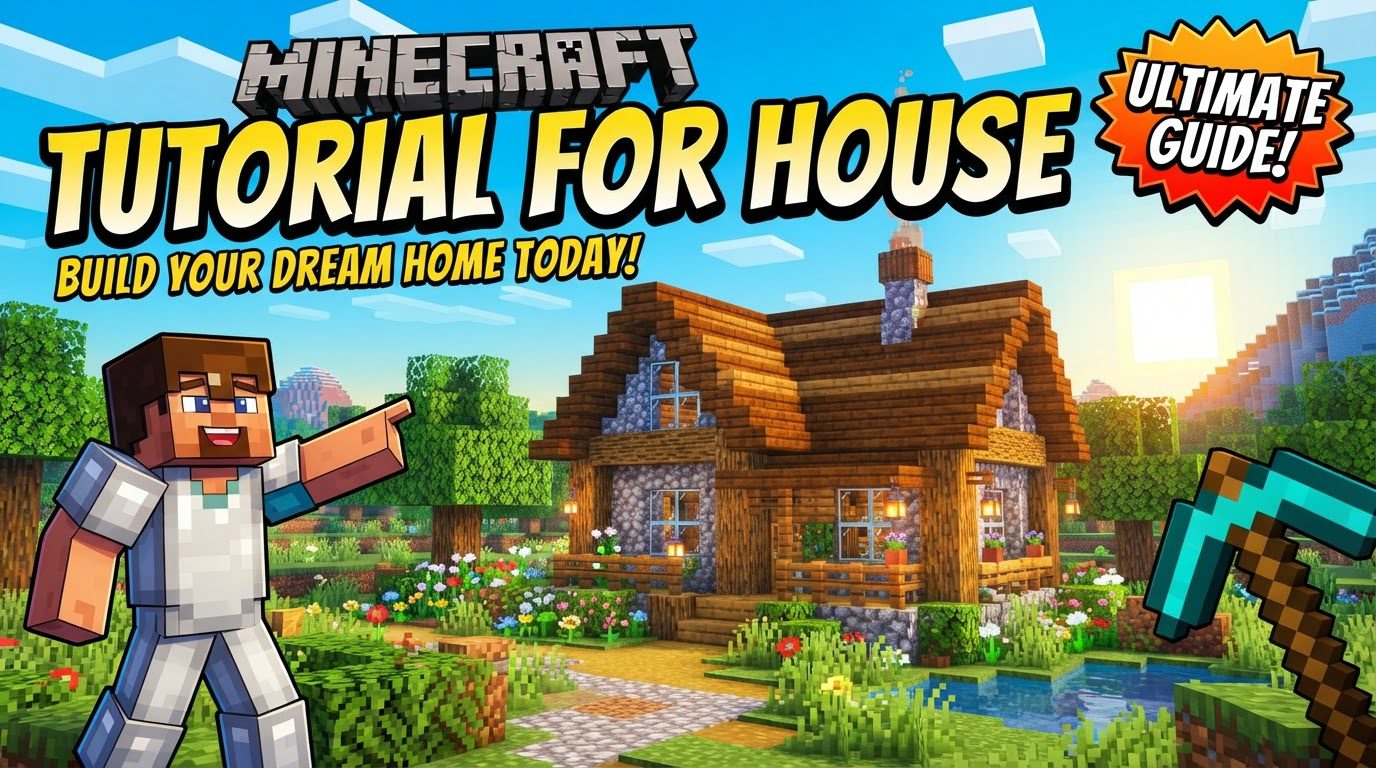
The Imperative of Shelter: Why Build?
In the blocky world of Minecraft, a house serves multiple vital purposes beyond mere aesthetics. Primarily, it offers impenetrable protection from hostile mobs like zombies, skeletons, spiders, and creepers that spawn when light levels are low. Without a secure structure, you’ll spend your nights either constantly fleeing or repeatedly meeting an untimely end. Beyond safety, a house becomes the heart of your operations, providing a centralized location for essential utilities. Here, you can place a bed to skip the dangerous night and set your spawn point, a crafting table for creating tools and items, a furnace for smelting ores and cooking food, and chests for storing your precious resources safely away from inventory limits and potential loss upon death.
Laying the Groundwork: Core Mechanics of Construction
Before you even think about placing your first wall, understanding the fundamental mechanics of building in Minecraft is crucial. These simple actions form the backbone of all construction, from a basic shack to an elaborate castle.
- Resource Gathering: Every structure begins with raw materials. The most fundamental resources you’ll need are wood, obtained by punching or chopping down trees, and cobblestone, acquired by mining stone blocks with a pickaxe. These two materials will form the bulk of your initial home.
- Crafting: Raw resources are rarely used directly in their initial form. Wood logs, for instance, are processed into wood planks, which are the primary building blocks for many early structures. Planks are also used to craft essential tools like crafting tables, which then allow for more complex recipes.
- Block Placement: Building in Minecraft is a tactile experience. You physically place individual blocks in the game world to construct walls, floors, roofs, and any other structural elements. Understanding how blocks connect and support each other is key to creating stable and functional designs.
Your First Blueprint: Gathering Essential Materials
The journey to your first home begins with collecting enough raw materials. Don’t underestimate this step; running out of resources mid-build is a common frustration. Start by gathering a substantial amount of wood. Aim for at least 10-15 wood blocks (logs) initially, as these will convert into many more planks. While you’re at it, keep an eye out for stone. Mining some stone to craft into cobblestone is also highly recommended, as cobblestone is a durable and readily available material perfect for foundations and early walls.
Designing Your Sanctuary: Planning and Foundation
Even for a simple starter home, a little planning goes a long way. Resist the urge to just start placing blocks randomly. Instead, take a moment to consider these points:
- Plan Your Build: Scout for a suitable location. A relatively flat area is ideal for a stable foundation and makes building much easier. Think about the overall size of your house. For a first home, a compact, single-room dwelling is perfectly adequate. You can always expand later.
- Build the Foundation: Once you’ve chosen your spot, outline the base of your house. This can be a simple square or rectangle. Use a sturdy material like cobblestone, wood planks, or even stone bricks if you have them. This foundation defines the footprint of your home and provides a solid base for your walls.
Raising the Walls and Capping It Off
With your foundation laid, it’s time to give your house its shape and form.
- Construct Walls: Begin erecting your walls directly on top of your foundation. A common and practical height for walls is four blocks high, which is tall enough for your character to move freely inside without hitting their head and provides ample space for windows.
- Add a Roof: A roof is not just for aesthetics; it’s crucial for keeping hostile mobs out. An open roof is an invitation for spiders to climb in or for zombies to drop down. Consider using stairs or slabs to create a sloped roof design. This not only looks better but also prevents mobs from easily spawning or landing on top of your house.
Making It Home: Essential Furnishings and Access
Once the basic structure is up, it’s time to make it functional and livable.
- Install Doors and Windows: A door is your primary entry and exit point, and crucially, it keeps hostile mobs out. Craft one from wood planks and place it in a gap in your wall. For natural light, add windows. These can be simple one-block-wide gaps or crafted glass panes/blocks. Windows allow you to see outside without exposing yourself to danger.
- Furnish the Interior: This is where your house truly becomes a home and a base of operations.
- Bed: Craft a bed from three wool and three wood planks. Placing a bed allows you to skip the night by sleeping, and it also sets your spawn point, meaning you’ll respawn there if you die.
- Crafting Table: Essential for almost all crafting recipes.
- Furnace: Used for smelting ores into ingots and cooking raw food to make it more nourishing.
- Chests: Crucial for storage. Crafting chests allows you to store your collected items safely, preventing inventory overflow and loss if you perish.
Beyond the Basics: Adding Character and Utility
Once you have a functional shelter, you can begin to refine its appearance and integrate it into your survival strategy.
- Detail the Exterior: Don’t let your house be a plain box forever. Enhance the outside with simple elements like leaves from trees, fences, or even a small crop farm nearby to secure a consistent food source.
- Add Depth and Variety: To move beyond the “box” house, incorporate architectural features. Overhangs, recessed entrances, and mixing different but complementary materials can dramatically improve visual appeal.
- Utilize Texture: Avoid monochrome walls. Mix blocks of similar color palettes to add visual interest. For instance, combine cobblestone, regular stone, stone bricks, and andesite for walls to create a more natural and varied look.
- Small Touches, Big Impact: Decorative blocks can transform a plain room. Use fence posts as structural supports, slabs for lower ceilings or pathways, buttons and trapdoors for detailing, and potted plants to add life.
- Functional Surroundings: Consider placing a farm right outside your door. A steady supply of wheat, carrots, or potatoes means you’ll rarely go hungry.
- Illumination is Key: Place torches or other light sources generously inside your house. Hostile mobs spawn in darkness, so proper lighting ensures your interior remains a safe zone.
Common Pitfalls to Avoid
Even seasoned players can make mistakes, but new players are particularly susceptible to these common building errors:
- Lack of Planning: Rushing into construction without considering size, shape, or location often leads to inefficient builds, wasted resources, and dissatisfaction with the final product.
- Insufficient Materials: Starting a significant build with only a handful of resources will inevitably lead to frustrating pauses as you scramble to gather more. Always over-gather rather than under-gather.
- “Box” Houses: While functional, a simple square or rectangular structure with flat walls can be aesthetically unappealing. Experiment with shapes and features.
- Flat Walls/No Depth: Walls that are entirely flat lack visual interest. Introduce depth through recessed windows, pillars, or varying block placements.
- Poor Lighting: Neglecting to adequately light your interior is an open invitation for creepers, zombies, and other hostile mobs to spawn directly inside your “safe” haven.
- Open or Flat Roofs: An open roof leaves you vulnerable to airborne mobs or those that can climb. Flat roofs can also become mob spawning platforms, posing a threat to your entry.
Building your first house in Minecraft is a rite of passage. It’s more than just stacking blocks; it’s about establishing your foothold in a vast, unpredictable world. With careful planning, resourcefulness, and a touch of creativity, you’ll soon have a secure, functional, and aesthetically pleasing home to call your own.
Tags:
YOU MAY ALSO LIKE...


