

Minecraft What to Build Ideas
The most common question among new and veteran Minecraft players alike often isn’t ‘What do I do?’ but rather ‘What should I build next?’ With an infinite world stretching in every direction and a seemingly endless array of blocks and mechanics, the sheer freedom can sometimes be overwhelming. This guide aims to ignite your imagination, providing a comprehensive overview of build ideas, from the purely practical to the utterly fantastical, ensuring your next Minecraft project is both rewarding and inspiring.
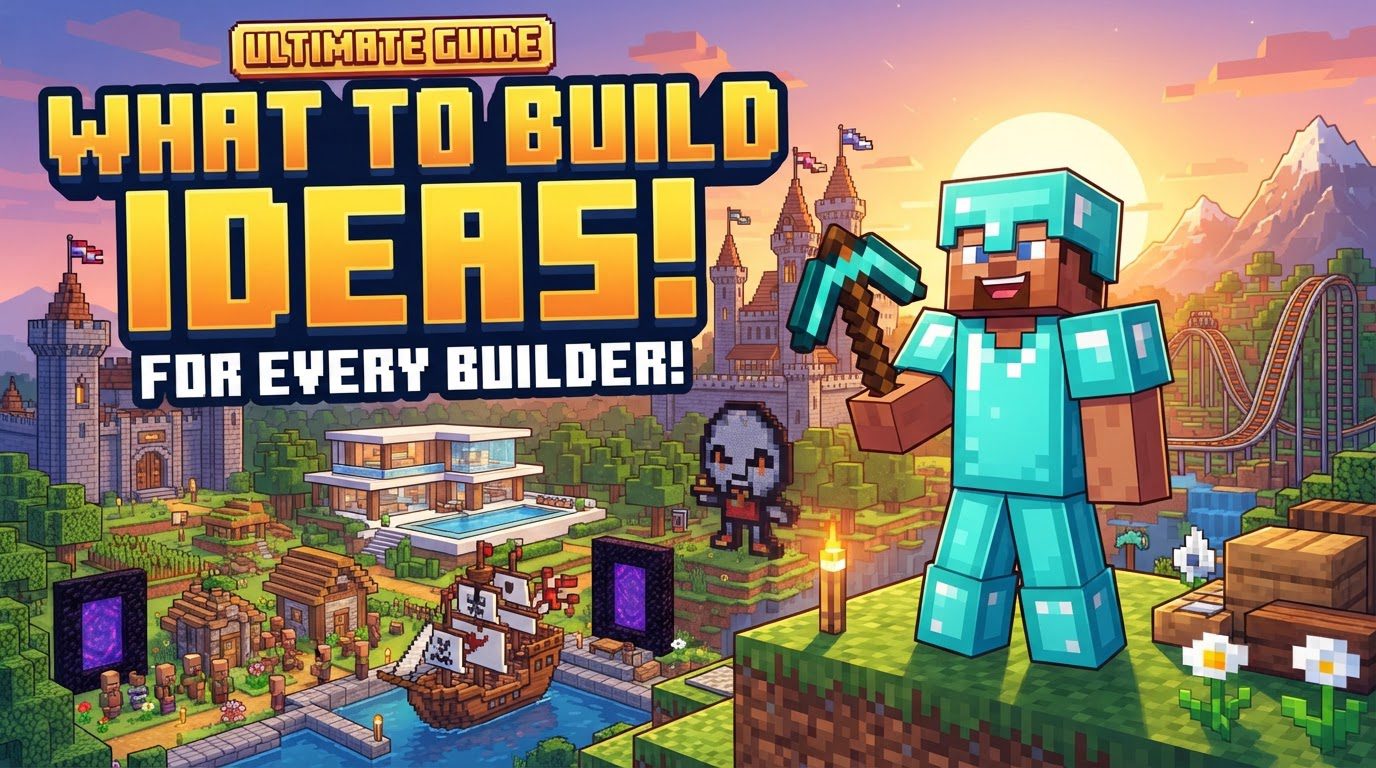
The Foundation of Creativity: Your Essential Base
Every journey in Minecraft begins with a safe haven. While a simple dirt hut might suffice for your first night, establishing a robust and aesthetically pleasing base is a cornerstone of long-term play. Think beyond mere shelter; your base is your home, your workshop, and your personal monument in the blocky wilderness.
Practicality Meets Personalization
Consider the primary functions: secure storage for your precious resources, a crafting area, a furnace array for smelting, and a comfortable sleeping spot. However, don’t let utility overshadow design. Your base can be a cozy cabin nestled in a forest, a sprawling underground bunker, a towering skyscraper, or even a floating island retreat. Integrate features like an enchanting room, a potion brewing station, or a dedicated map room to track your explorations. The materials you choose-wood, stone, brick, concrete, or even rare blocks like prismarine or obsidian-will dramatically impact its character.
Beyond the Starter Box
As your resources grow, so too can your base. Expand with dedicated wings for specific purposes, create grand entrances, or add decorative elements like fountains, gardens, or custom trees. A well-designed base evolves with your progress, reflecting your adventures and growing expertise. Don’t be afraid to experiment with different architectural styles, from medieval castles to futuristic laboratories. The key is to make it uniquely yours, a place you genuinely enjoy returning to after a long day of mining or adventuring.
Mastering Resource Management: Automated Farms & Storage Solutions
Once your basic needs are met, efficiency becomes paramount. Minecraft’s redstone mechanics and farming systems offer incredible opportunities to automate resource gathering, freeing you up for more ambitious projects. These builds are not just functional; they represent a mastery of game mechanics.
Bountiful Harvests
Automated farms are game-changers. Start with simple crop farms using water streams and hoppers to collect wheat, carrots, and potatoes. Progress to more complex designs for melons, pumpkins, and sugar cane. Animal farms, ranging from simple pens to elaborate systems for automatic slaughter and item collection, provide endless supplies of food, leather, and wool. Don’t forget mob farms – structures designed to spawn hostile creatures, which are then dispatched to yield experience points, gunpowder, string, bones, and other valuable drops. Iron golem farms can provide an incredible source of iron, while gold farms in the Nether can make you rich beyond measure. Each farm presents a unique design challenge and a substantial reward.
Order Amidst Chaos
As your resource stockpiles grow, a robust storage system becomes indispensable. While simple chests stacked in a room work initially, consider building an organized storage warehouse. This could involve labeling chests by item type, or for advanced players, creating a fully automated sorting system using hoppers and redstone. Such a system can automatically sort incoming items into designated chests, making inventory management a breeze and ensuring you always know where to find that specific block or item you need. A well-designed storage area can be both highly functional and visually appealing, becoming a central hub of your operations.
Forging a Path: Infrastructure & Exploration Enhancements
The Minecraft world is vast, and connecting its disparate parts can be a project in itself. Building infrastructure not only facilitates travel but also shapes your world, making it feel more integrated and manageable.
Connecting Your World
Roads, paths, and railways are essential for efficient travel. Laying down a network of paths, whether simple dirt tracks or elaborate stone highways, makes navigating your world faster and safer. Railways, powered by redstone, offer an even quicker mode of transport, especially over long distances. Consider building nether tunnels as a super-fast travel network; a single block in the Nether corresponds to eight blocks in the Overworld, making it ideal for connecting distant bases or biomes. These infrastructural projects are often overlooked but significantly enhance the quality of life in your Minecraft world.
Overcoming Obstacles
Bridges can span treacherous ravines or connect islands, ranging from rustic rope bridges to grand, multi-arched stone structures. Tunnels can bore through mountains, providing direct routes where surface travel is difficult. Lighthouses can serve as beacons for returning explorers, while watchtowers offer strategic vantage points. Even simple staircases or elevators (using water mechanics or redstone) can transform vertical travel, turning a steep climb into a swift ascent. These builds are about making the world work for you, transforming natural barriers into convenient passages.
Unleashing Imagination: Decorative & Thematic Builds
Beyond utility, Minecraft is a canvas for pure artistic expression. These builds are about aesthetics, storytelling, and creating visually stunning environments.
From Pixel Art to Grand Structures
Pixel art, recreating 2D images using blocks, is a popular creative outlet. From famous characters to abstract designs, these can be massive monuments visible from afar. Statues, whether of mythical creatures, players, or abstract forms, add character and scale to your world. Consider building a grand cathedral, a bustling market town, a hidden elven village, or a futuristic city skyline. The only limit is your imagination and the blocks available. Experiment with different block palettes to create texture and depth, and pay attention to lighting to enhance the mood.
Crafting Narratives
Thematic builds allow you to tell stories within your world. Recreate scenes from your favorite books or movies, design a haunted mansion, an ancient ruin, or a thriving port city. Build a giant chessboard, a sprawling labyrinth, or an underwater dome. These projects often involve extensive terraforming – reshaping the landscape to fit your vision – and careful detailing to bring your narrative to life. They challenge you to think about atmosphere, scale, and the overall experience you want to create for anyone exploring your build.
Building for Fun & Function: Minigames & Redstone Contraptions
Minecraft’s mechanics allow for incredible interactivity, turning your world into a playground of challenges and clever machines.
Interactive Experiences
Design your own minigames! Create a parkour course that tests agility, a PvP arena for combat, a maze for navigation, or even a sophisticated puzzle map. These builds often require careful planning and a good understanding of command blocks or redstone to implement game rules, scoring, and resets. Building a functional roller coaster, complete with drops, loops, and tunnels, can be a thrilling project. The goal here is to create engaging experiences, whether for solo play or with friends.
The Logic of Blocks
Redstone contraptions range from simple automated doors and hidden entrances to complex calculators and fully functional computers. Building a logic gate system, an automatic potion brewer, or a giant TNT cannon can be incredibly satisfying. These projects push your understanding of redstone circuits and logic, transforming blocks into circuits and levers into switches. Even small, clever redstone devices can add immense utility and a sense of wonder to your base.
Tips for Aspiring Architects
Embarking on large-scale builds can seem daunting, but with a few guiding principles, you can tackle any project.
Start Small, Think Big
Don’t feel pressured to build a mega-project immediately. Begin with smaller, manageable builds to hone your skills and understand block palettes. A simple house, a small garden, or a single automated farm can provide valuable experience. As you gain confidence, gradually scale up to more ambitious designs. Break down large projects into smaller, achievable tasks.
Gather Inspiration
The Minecraft community is a vast repository of creativity. Browse online galleries, watch build tutorials, and explore other players’ worlds for ideas. Don’t copy directly, but instead, draw inspiration from architectural styles, color schemes, and functional designs. Real-world architecture, nature, and even concept art can also serve as powerful muses.
Embrace Materials
Minecraft offers an incredible diversity of blocks. Learn their textures, colors, and how they interact. Don’t limit yourself to just wood and cobblestone. Experiment with concrete, terracotta, prismarine, nether bricks, quartz, and various types of stone and wood to add depth, contrast, and realism to your builds. Using a varied block palette prevents your builds from looking monotonous and adds visual interest.
Ultimately, Minecraft building is an exploration of your own creativity. Whether you’re constructing a purely functional redstone machine, a breathtaking aesthetic masterpiece, or a sprawling adventure map, the joy comes from the process of creation. So grab your pickaxe, gather your blocks, and let your imagination run wild!
Tags:
YOU MAY ALSO LIKE...


