

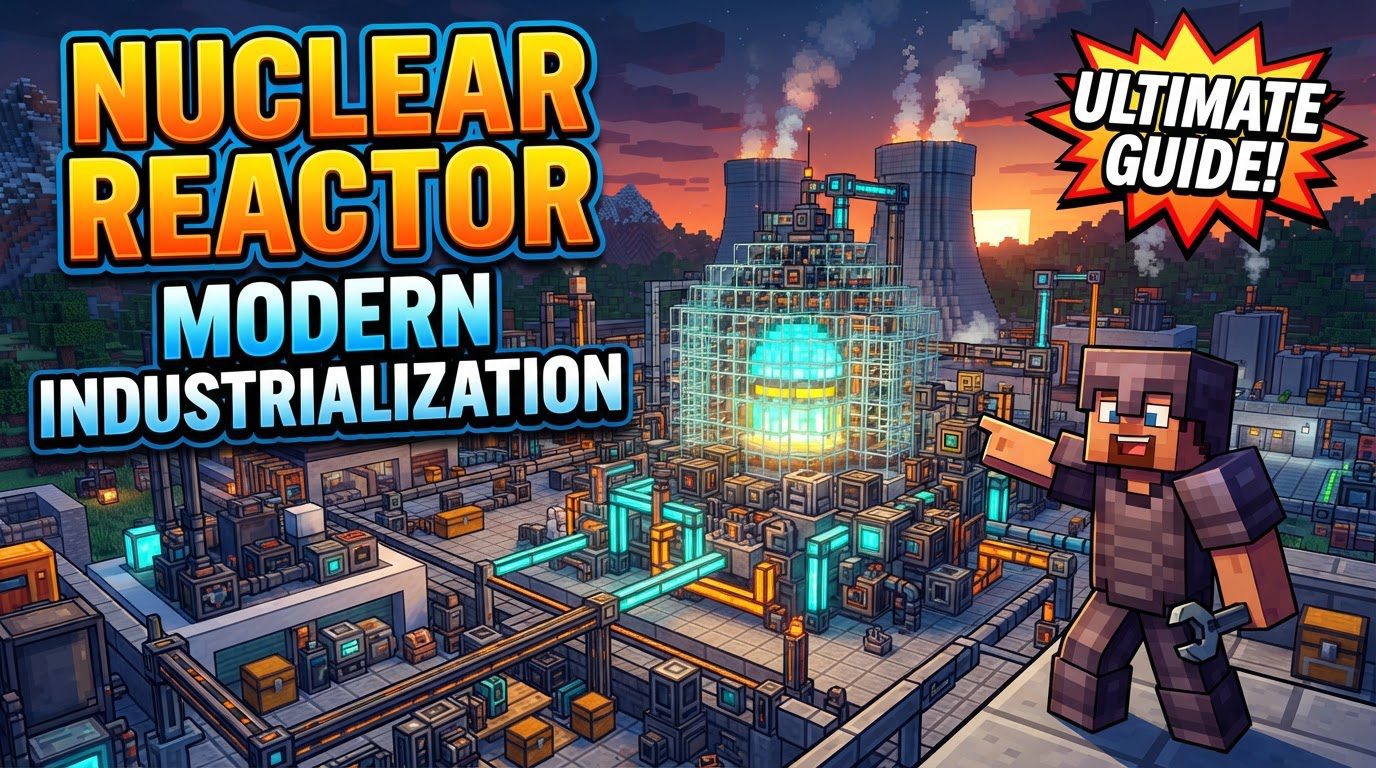
Nuclear Reactor Modern Industrialization
Allowing a Minecraft Modern Industrialization nuclear reactor to overheat is not just an inconvenience; it’s an invitation to a cataclysmic explosion that can devastate your meticulously crafted base and erase hours of progress. Mastering the intricate dance of heat management and power generation is paramount for any aspiring industrialist venturing into the nuclear age.
The Gateway to Advanced Industrialization
Modern Industrialization (MI) transforms Minecraft’s power landscape, pushing players beyond conventional steam and electric generators into the realm of nuclear energy. This powerful, yet perilous, technology isn’t merely about generating immense amounts of electricity; it’s a fundamental stepping stone towards the most advanced tiers of gameplay, including the quantum age and even fusion power. Understanding and safely operating these complex machines is critical for unlocking the full potential of your industrial empire.
MI’s nuclear reactors are sophisticated systems, far removed from simple block-and-furnace mechanics. They demand a deep understanding of their core components and the delicate balance required to harness their power without triggering a catastrophic meltdown. The journey begins with establishing robust infrastructure in earlier technological ages, preparing your base for the unprecedented demands and opportunities that nuclear power presents.
Deconstructing the Nuclear Core: Key Mechanics
At the heart of every MI nuclear reactor lies a set of interconnected mechanics that dictate its operation, output, and inherent risks. Proficiency in these areas is non-negotiable for safe and efficient power generation.
- Essential Components: The reactor core is built around several crucial elements. Fuel rods, typically made from uranium, are the primary source of energy. These rods interact with control rods, which regulate the reaction rate and thus the heat and power output. Beyond these, the interaction between fluids and neutrons within the core is paramount. Water or heavy water serves a dual purpose, acting as both a coolant and a neutron moderator, influencing the efficiency and safety of the reaction. The flexibility of MI even allows for new components and customization through KubeJS scripts, enabling modpack developers to tailor the nuclear experience.
- Critical Heat Management: Reactors are prodigious heat generators. Uncontrolled heat buildup is the primary precursor to a nuclear explosion, a scenario to be avoided at all costs. Effective cooling is essential, and fluids like water or, more efficiently, heavy water, are circulated through the reactor core to absorb and dissipate this heat. Constant monitoring and proactive adjustments are vital to maintain temperatures within safe operating parameters.
- Unlocking Advanced Power and Resources: Nuclear reactors represent a significant leap in power generation capability, transitioning players from the electric age to the nuclear age and paving the way for even more advanced concepts like fusion power. However, their utility extends beyond mere electricity. Reactors are instrumental in producing rare and vital resources such as Deuterium, Tritium, and Plutonium. These exotic materials are indispensable for progressing into the quantum age, enabling the creation of top-tier machinery and technologies.
- The Specter of Explosion: The risk of a reactor explosion is a constant undercurrent in nuclear operations. These devastating events are primarily triggered by uncontrolled heat buildup, but also by more subtle issues such as improper chunk loading which can disrupt redstone signals or internal reactor states. Understanding these triggers is crucial for implementing preventative measures.
The Nuclear Ascent: A Step-by-Step Progression
Embarking on the nuclear journey requires careful planning and execution, typically following a structured progression within the Modern Industrialization framework.
- Establishing the Electric Age Foundation: Before even considering a nuclear reactor, players must have firmly established themselves in the electric age. This means having a stable power grid, automated crafting systems, and the ability to produce advanced machinery. The components required for a reactor are far too complex for early-game production.
- Crafting Sophisticated Components: The construction of a nuclear reactor demands a suite of advanced materials and complex machines. This involves extensive processing of raw resources, often through multiple tiers of MI machinery, to produce the specialized parts needed for fuel rods, control mechanisms, and the reactor casing itself.
- Reactor Construction and Setup: With the components in hand, the next step is to build the physical reactor structure. While designs can vary, a common and effective setup for smaller reactors involves strategically placing uranium fuel rods in the corners of the reactor chamber. The remaining internal spaces are then typically filled with a cooling fluid, usually water or heavy water, inserted via fluid hatches. Item hatches are used for fuel insertion and spent fuel removal.
- Fuel and Coolant Insertion: Once the structure is complete, the reactor requires its operational fluids and fuel. Uranium fuel rods are carefully inserted into their designated slots, and the chosen coolant (water or heavy water) is continuously supplied through the fluid input hatches. Maintaining adequate coolant flow is as critical as having fuel.
- Activation and Vigilant Monitoring: With fuel and coolant in place, the reactor can be activated. This is not a set-and-forget operation. From the moment of activation, meticulous monitoring of heat levels and power output is absolutely essential. Automated redstone circuits, alarms, and emergency shutdown protocols should be in place to prevent overheating and ensure maximum efficiency without risking a meltdown.
Mastering Reactor Operation: Tips for Success
Achieving stable and efficient nuclear power generation involves more than just following steps; it requires strategic design and resource management.
- Optimizing Reactor Layouts: Experimentation with reactor layouts is key to maximizing efficiency and managing heat. For many smaller reactor designs, a highly effective strategy involves placing uranium fuel rods specifically in the corners of the reactor chamber. The remaining internal spaces should then be completely filled with a cooling fluid, such as water or heavy water. This configuration often provides a good balance of neutron moderation and heat dissipation.
- Seamless Resource Management: The sustained operation of a nuclear reactor hinges on the continuous and efficient management of both fluid and item inputs and outputs. This includes a steady supply of fresh fuel rods, constant circulation of coolant, and the automated extraction of spent fuel and valuable byproducts. Any bottleneck or interruption in these flows can lead to instability, inefficiency, or even a critical failure.
- Exploring Progression Alternatives: While nuclear reactors are powerful, it’s wise to consider alternative paths for resource acquisition in certain modpacks. For instance, in modpacks like ATM10, it might be possible to obtain crucial quantum-age resources such as Deuterium, Tritium, and Plutonium through other means. These could include centrifuging Hydrogen to get Deuterium or crushing Blutonium for Plutonium, potentially bypassing the immediate need for a full-scale nuclear reactor specifically for power generation if your primary goal is quantum progression. This approach can be less resource-intensive or safer in the early stages of advanced tech.
Avoiding Catastrophe: Common Pitfalls in Nuclear Operations
The power of a nuclear reactor comes with inherent dangers. Understanding and mitigating common mistakes is crucial for long-term survival and success.
- The Peril of Overheating and Explosions: This is unequivocally the most critical mistake. Allowing a reactor’s internal temperature to climb unchecked will inevitably lead to a devastating explosion. Robust cooling systems, redundant monitoring, and automated emergency shutdowns are not optional; they are necessities to prevent your base from becoming a crater.
- The Insidious Threat of Chunk Loading Issues: A less obvious, but equally dangerous, pitfall involves chunk loading. If a reactor’s chunk is unloaded and then reloaded, there can be a brief, perilous window where the reactor’s internal state or its redstone control signals are not properly registered. If fuel cells are present during this period, the reactor might begin generating heat without acknowledging an “off” switch, rapidly escalating to an explosion before you can react. Implementing robust chunk loading solutions or ensuring reactors are only active in permanently loaded chunks is paramount.
- The Cost of Inefficient Designs: Poorly designed reactors might not explode, but they will certainly underperform. Inefficient layouts can lead to suboptimal power generation, excessive consumption of fuel or coolant, or uneven heat distribution that strains cooling systems. Investing time in researching and testing optimal designs can save vast amounts of resources and frustration in the long run.
- Overlooking Resource Alternatives for Progression: While nuclear reactors are central to MI’s highest tiers, a common mistake is to assume they are the only path. As noted, specific modpacks might offer alternative, potentially safer or less resource-intensive, methods for acquiring key quantum-age materials like Deuterium, Tritium, and Plutonium. Failing to explore these alternatives can lead to unnecessary risk and resource expenditure if your immediate goal isn’t massive power generation but rather specific resource acquisition. Always check your modpack’s specific recipes and progression paths.
The nuclear reactor in Modern Industrialization is a double-edged sword: a source of unparalleled power and crucial resources, yet also a constant threat if mismanaged. By understanding its mechanics, meticulously planning its construction, and vigilantly monitoring its operation, you can safely harness its immense potential, propelling your Minecraft industrial complex into the quantum age and beyond.
Tags:
YOU MAY ALSO LIKE...


