

The Complete Breakdown of Mob Behavior
Understanding mob behavior in Minecraft is crucial for survival, resource gathering, and efficient game progression. These non-player characters, known as mobs, populate the game world, each with distinct artificial intelligence (AI) and interaction patterns that dictate how they perceive and react to their environment and players.
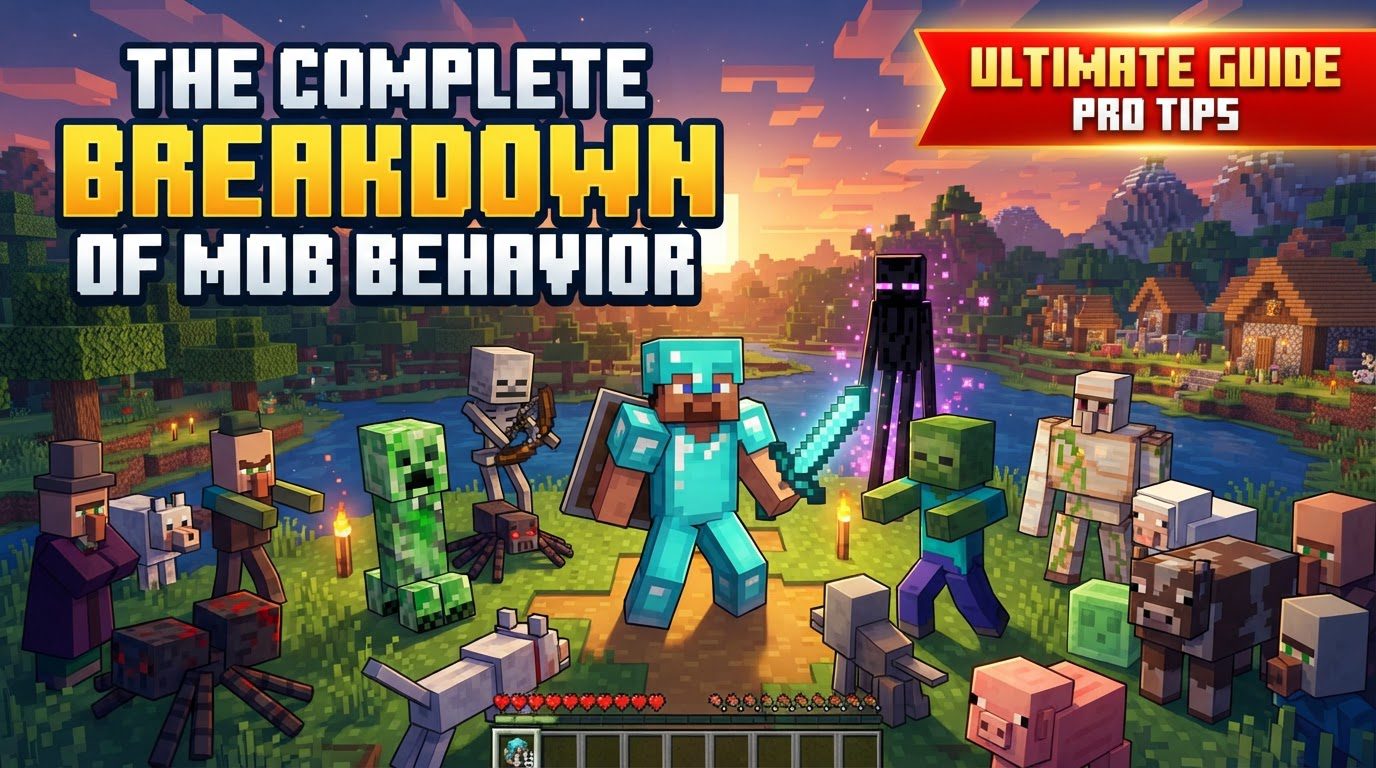
Categorizing the Denizens: Mob Types
Mobs are broadly categorized into three primary behavioral groups, each dictating their initial disposition towards a player:
- Passive Mobs: These creatures are inherently peaceful and will never attack a player, even if provoked. They serve various purposes, from providing resources through drops (like cows for leather and beef) to being tamed or bred. Examples include common farm animals such as cows, pigs, and chickens. Their predictability makes them safe to approach and interact with.
- Neutral Mobs: These mobs maintain a non-aggressive stance until provoked. Once a neutral mob is attacked by a player or another entity, it becomes hostile and will retaliate. This state of aggression typically persists until the player is out of range or defeated. Notable examples include Endermen, who become hostile if you look them in the eye or attack them, wolves, which turn hostile if attacked or if you harm their pack, and zombie piglins, who become enraged if you attack one of their kind in the Nether.
- Hostile Mobs: These are the game’s primary antagonists, exhibiting aggressive behavior towards players on sight. They possess a detection radius, typically around 16 blocks, and will immediately attack any player entering this zone. Hostile mobs are relentless, pursuing their target until either the mob or the target is defeated, and they will not retreat. Classic examples include zombies, skeletons, and creepers.
The Inner Workings: Mob AI Decision-Making
Mob AI follows a systematic process to determine its actions, from initial awareness to engagement:
- Detection: The first step involves mobs assessing their surroundings to identify any potential targets, be it a player or another mob, within their awareness range. This initial scan is constant and fundamental to their behavior.
- Target Acquisition: If a potential target is detected, the mob’s AI evaluates its aggression type and specific conditions to decide whether to engage. For instance, a neutral mob will only acquire a player as a target if specific conditions for provocation are met, whereas a hostile mob will do so automatically.
- Path Calculation: Once a target is acquired, the mob’s AI calculates the most efficient route to reach it. This calculation is complex, often relying on a modified A* graph search algorithm, which considers obstacles, terrain, and even blocks it perceives as solid for pathing.
- Movement: The mob then executes its movement along the calculated path, utilizing its unique movement mechanics (e.g., jumping, hopping, swaying) to close the distance to its target.
- Attack/Interaction: Upon successfully reaching its target, the mob will perform its designated action. This could be a direct attack for hostile mobs, a chase for provoked neutral mobs, or a passive interaction for others.
- Retargeting/Disengagement: Should the target move out of range, be defeated, or if a more immediate threat emerges, the mob’s AI will either disengage from the current target or acquire a new one, restarting the decision-making process.
Advanced Navigation & Targeting Nuances
Beyond basic aggression, several sophisticated mechanics influence how mobs move and select their targets:
- Pathfinding Peculiarities: Mobs utilize an advanced pathfinding system. Interestingly, mobs can sometimes pathfind to blocks they cannot physically reach, including those underground, indicating a perception that doesn’t always align with their physical capabilities. Furthermore, mob AI perceives certain blocks, such as open trapdoors or coral fans (in Bedrock Edition), as solid. This quirk is extensively exploited in mob farm designs. The system also incorporates “block malus,” a cost associated with traversing certain blocks, influencing a mob’s pathing decisions.
- Dynamic Targeting: While hostile mobs typically target players, their aggression can be redirected. If a hostile or neutral mob is attacked by another mob or player, it will often switch its target to the attacker. This phenomenon, known as “monster infighting,” can be strategically used to weaken or eliminate mobs without direct player engagement. This new target becomes permanent until the attacker dies or leaves the mob’s sight range. Certain conditions can also set a player as a permanent target; for example, piglins will relentlessly pursue a player who breaks gold blocks or opens a chest near them without wearing gold armor. Pack mobs, like wolves, will also call upon nearby members of their species to assist in targeting a victim, amplifying their threat.
- Movement Modifiers: Each mob possesses specific movement controls. Some mobs jump, others hop, and some sway, all contributing to how they navigate the world. Understanding these individual movement patterns is key to predicting their behavior and exploiting their limitations.
Strategic Interaction: Tips for Engagement
Leveraging knowledge of mob behavior can significantly enhance your Minecraft experience:
- Optimizing Mob Farms: The perception of open trapdoors as solid blocks by mob AI is a cornerstone of efficient mob farm design. By strategically placing these, you can funnel mobs into collection points. Additionally, luring mobs with specific attractants, such as cats for creepers or turtle eggs/villagers for zombies, can dramatically boost a farm’s effectiveness and yield.
- Mastering Combat: Strategic combat involves more than just hitting enemies. Use water flows to create barriers against melee mobs or pillar up to a safe height to avoid ground-based threats. Boats can be used to incapacitate mobs, rendering them harmless. Exploiting monster infighting by provoking mobs to attack each other can conserve your health and resources. In multiplayer, having one player “tank” (lure hostile mobs away) while another attacks from a safe distance is an effective team strategy.
- Controlling Mob Targeting: In advanced scenarios, commands can be used to place players on the same “team” as a mob, causing the mob to ignore them and instead target other players or entities. This is more relevant for command block creations or custom maps.
- Manipulating Movement: By understanding path costs and block “malus,” players can design invisible traps or complex control systems. For instance, creating paths that are technically traversable but have a high “cost” can deter mobs from certain routes, guiding them towards desired locations.
Common Pitfalls to Avoid
Even seasoned players can make mistakes when interacting with mobs:
- Underestimating Pathfinding Complexity: Assuming mobs will always take the most direct or obvious route can lead to failed traps or unexpected mob breaches in bases. Remember, mobs can pathfind to seemingly unreachable blocks, which can alter their behavior in unpredictable ways.
- Ignoring Mob Categories: Misidentifying a mob’s aggression type, such as mistaking a neutral mob for a passive one, is a common error that can lead to unintentional provocation and sudden, dangerous attacks. Always confirm a mob’s category before engaging.
- Mismanaging Aggro: Forgetting that once a mob is damaged, it may set the player as a permanent target can lead to continuous, relentless pursuit, even if new threats appear or the player attempts to disengage. Also, hostile mobs will not retreat, meaning an encounter, once initiated, must be seen through.
- Overlooking Environmental Interactions: Neglecting how certain mobs interact with their environment can have dire consequences. For example, zombies will actively seek out and attempt to break down doors to invade villages, and drowned mobs behave similarly to zombies, posing a threat in aquatic environments.
By delving into the intricate world of Minecraft’s mob behavior, from their basic classifications to their advanced AI and pathfinding, players can transform their gameplay from mere survival to strategic mastery, turning potential threats into predictable resources and challenges into opportunities.
Tags:
YOU MAY ALSO LIKE...


