

The Complete System Behind Experience Orb Collection
Upon death, players lose all their experience levels, instantly resetting years of virtual progress to zero. This harsh reality underscores the critical importance of understanding and managing experience points (XP) in Minecraft. Far from a mere cosmetic number, experience is the lifeblood of advanced gameplay, enabling powerful enchantments, crucial item repairs, and sophisticated crafting.
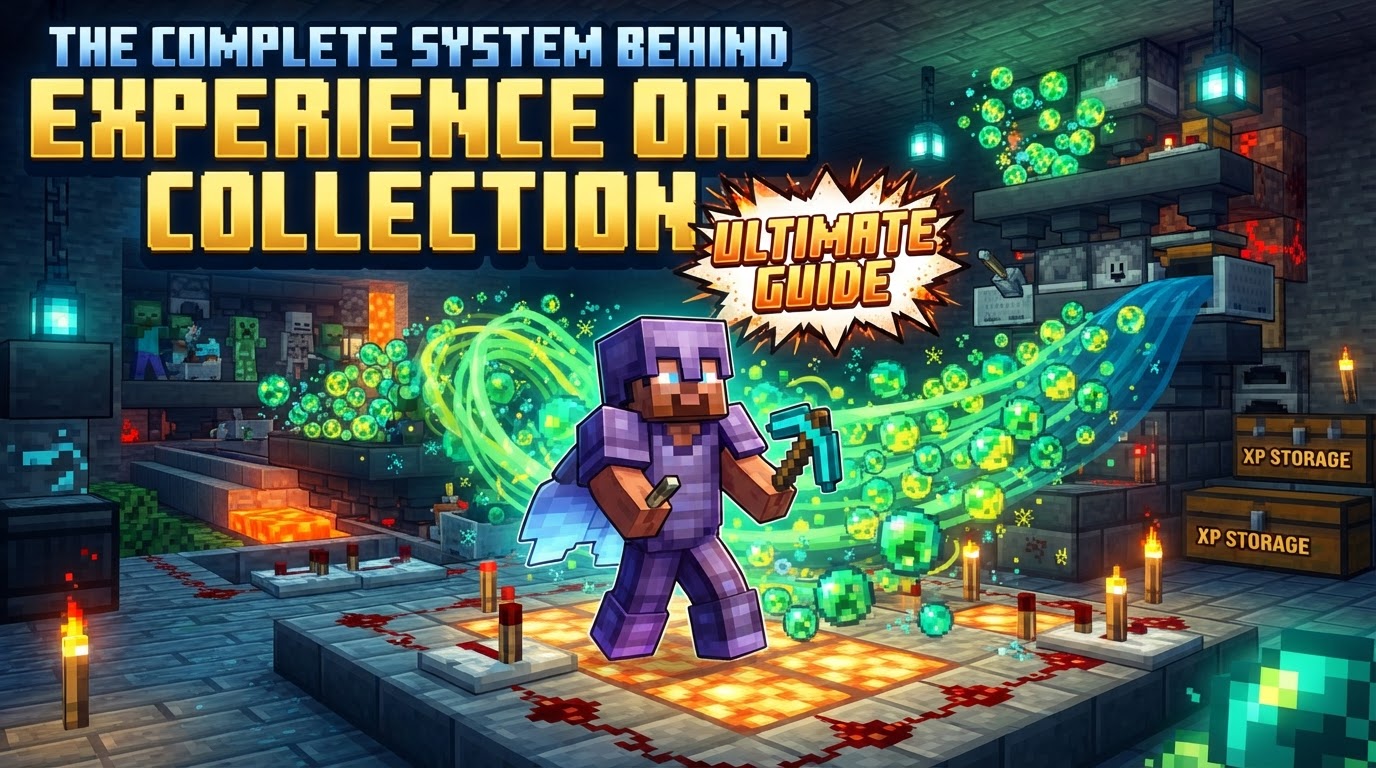
In the expansive and evolving world of Minecraft, experience orbs are the glowing green or yellow spheres that represent these valuable points. Collecting them fills your experience bar, propelling you through levels essential for unlocking the game’s deeper mechanics. From enhancing your gear to maintaining its durability, XP is interwoven into nearly every aspect of progression. This guide delves into the intricate system behind experience orb generation, collection, and strategic utilization, ensuring you can harness its full potential and avoid common pitfalls.
The Essence of Experience Orbs
Experience orbs are more than just shiny pickups; they are the tangible representation of your character’s growth. When collected, these orbs contribute to an experience bar, which, upon filling, grants you a new experience level. These levels are indispensable for several core activities:
- Enchanting Items: Applying powerful enchantments to tools, weapons, and armor at an enchanting table.
- Repairing Equipment: Using an anvil to repair damaged items, often combining them with other items or materials.
- Combining Enchantments: Merging enchantments from two items onto one, typically at an anvil.
- Renaming Items: Giving custom names to items, also done at an anvil.
- Mending Enchantment: Crucially, experience orbs directly repair items enchanted with Mending, restoring durability whenever you collect XP while holding or wearing the item.
Physically, experience orbs behave in specific ways within the game world. They possess buoyancy, allowing them to float on water, which is a useful property for collection systems. However, they are vulnerable to environmental hazards; fire, lava, explosions, and even cacti can destroy them. Orbs are also capable of interacting with redstone mechanisms, triggering pressure plates and tripwires, and can even halt minecarts. There’s a subtle but significant difference in their appearance mechanics between game editions: in Java Edition, experience orbs manifest simultaneously with loot when an entity is slain, whereas in Bedrock Edition, they appear only after the mob entity has fully despawned.
The values represented by experience orbs vary depending on their source. Higher value experience gains are typically split into multiple smaller orbs (e.g., values like 1, 3, 7, 17). The game prioritizes larger orb values when performing this split. To optimize performance and reduce lag, multiple orbs of the same value can merge, increasing their internal count without necessarily altering their visual size. A player can absorb approximately 10 experience orbs per second under normal vanilla conditions. If left uncollected, experience orbs will despawn after 6000 game ticks, equivalent to 5 minutes.
Diverse Avenues for Experience Acquisition
Gaining experience in Minecraft is a multifaceted endeavor, with numerous activities yielding these precious green spheres. Understanding these sources is key to consistent progression:
- Killing Mobs: The most straightforward method. Most mobs drop experience orbs upon defeat, with hostile mobs generally providing more XP than passive creatures. The ultimate mob-killing reward comes from the Ender Dragon, which drops an immense 12,000 experience points the first time it is vanquished.
- Mining Specific Blocks: Certain ores, such as diamonds, emeralds, lapis lazuli, redstone, and coal, grant experience when mined. Monster spawners also yield XP when broken.
- Breeding Animals: Successfully breeding two animals results in a single experience orb being dropped, offering a renewable, albeit small, source.
- Trading with Villagers: Engaging in successful trades with villagers can provide a small but consistent stream of experience.
- Fishing: Reeling in a catch, whether it’s a fish, junk, or treasure, immediately grants experience points, regardless of whether you pick up the item.
- Smelting and Cooking: Furnaces are an excellent passive source of XP. Smelting ores, cooking food, or processing other items like sand into glass automatically awards experience points when the finished product is removed from the furnace’s output slot. This is often considered one of the easiest and most consistent ways to accumulate XP.
- Bottle o’ Enchanting: Breaking a “Bottle o’ Enchanting” releases experience orbs. These valuable items can be obtained through trading with cleric villagers.
- Grindstones: Disenchanting items using a grindstone returns a portion of the experience invested in their enchantments, making it a way to recycle unwanted enchantments for XP.
- Commands: For creative or debugging purposes, experience can be directly granted to a player using the
/experienceor/xpcommand.
Mastering Efficient Experience Collection
While many activities grant XP, strategic approaches can dramatically increase your collection rate. Efficiency is paramount for reaching higher levels quickly:
- Automated Mob Farms: Constructing farms that efficiently spawn and allow for the easy defeat of hostile mobs is arguably the most potent method for large-scale XP generation. Designs often incorporate fall damage or lava to eliminate mobs, with the player positioned to safely collect all dropped orbs.
- Targeted Diamond Mining: Especially in the early to mid-game, actively seeking out and mining diamonds can be a rapid way to gain levels, providing both valuable resources and experience.
- Continuous Smelting Operations: Set up multiple furnaces to constantly smelt raw ores, cook food, or process other blocks like sand, cobblestone, or cactus. The continuous output ensures a steady flow of experience whenever you retrieve the finished products.
- Prudent XP Spending: It’s generally wise to spend your accumulated experience on enchantments or repairs relatively soon after leveling up. This minimizes the risk of losing a substantial amount of progress upon an untimely death, as all experience is lost when you respawn.
- Optimizing Mob Farm Collection Paths: When designing mob farms, pay close attention to the collection area. Ensure there are no obstructions (such as certain blocks or uneven water levels) that might prevent experience orbs from reaching the player. Remember that XP orbs “roll” better than they “fly,” so collection points on lower ground are often more effective.
Avoiding Common Experience Traps
Even seasoned players can fall victim to mistakes that hinder their experience progression. Being aware of these pitfalls can save you significant time and effort:
- Wasting Experience by Dying: The most painful mistake is dying with a high level of experience. Upon death, your entire experience level count is reset to zero. This emphasizes the importance of spending XP regularly or storing valuable items in safe locations.
- Inefficient Mob Farm Design: A poorly designed mob farm might kill mobs effectively but fail to deliver all the dropped experience orbs to the player. Gaps in collection systems, incorrect water flows, or inaccessible killing chambers can lead to a significant waste of potential XP.
- Ignoring the Mending Enchantment: Overlooking the Mending enchantment is a major oversight. This enchantment allows experience orbs to repair your tools and armor directly from your inventory or when held, turning every collected XP orb into durability for your most important gear. Not utilizing Mending means constantly crafting new items or spending valuable resources on anvil repairs.
- Delaying XP Spending Indefinitely: While it’s tempting to hoard high levels for that “perfect” enchantment, delaying XP spending can be inefficient. The amount of experience required to gain a level increases exponentially. Spending lower levels on useful enchantments or repairs as you go can be more impactful than saving for very high levels, especially given the constant risk of loss upon death.
Mastering the experience orb system is a journey of understanding, efficiency, and careful management. By grasping how these glowing spheres are generated, collected, and best utilized, you can significantly enhance your Minecraft adventure, ensuring your tools remain sharp, your armor strong, and your enchantments legendary.
Tags:
YOU MAY ALSO LIKE...


