Understanding Mob Behavior Changes Between Difficulty Levels
One of the most frequent errors players make in Minecraft is underestimating the profound impact of difficulty settings on mob behavior and overall survival. Many assume that a simple switch from Normal to Hard only means mobs hit a little harder, but the reality is far more intricate, affecting everything from health regeneration to specific mob abilities and even environmental interactions.
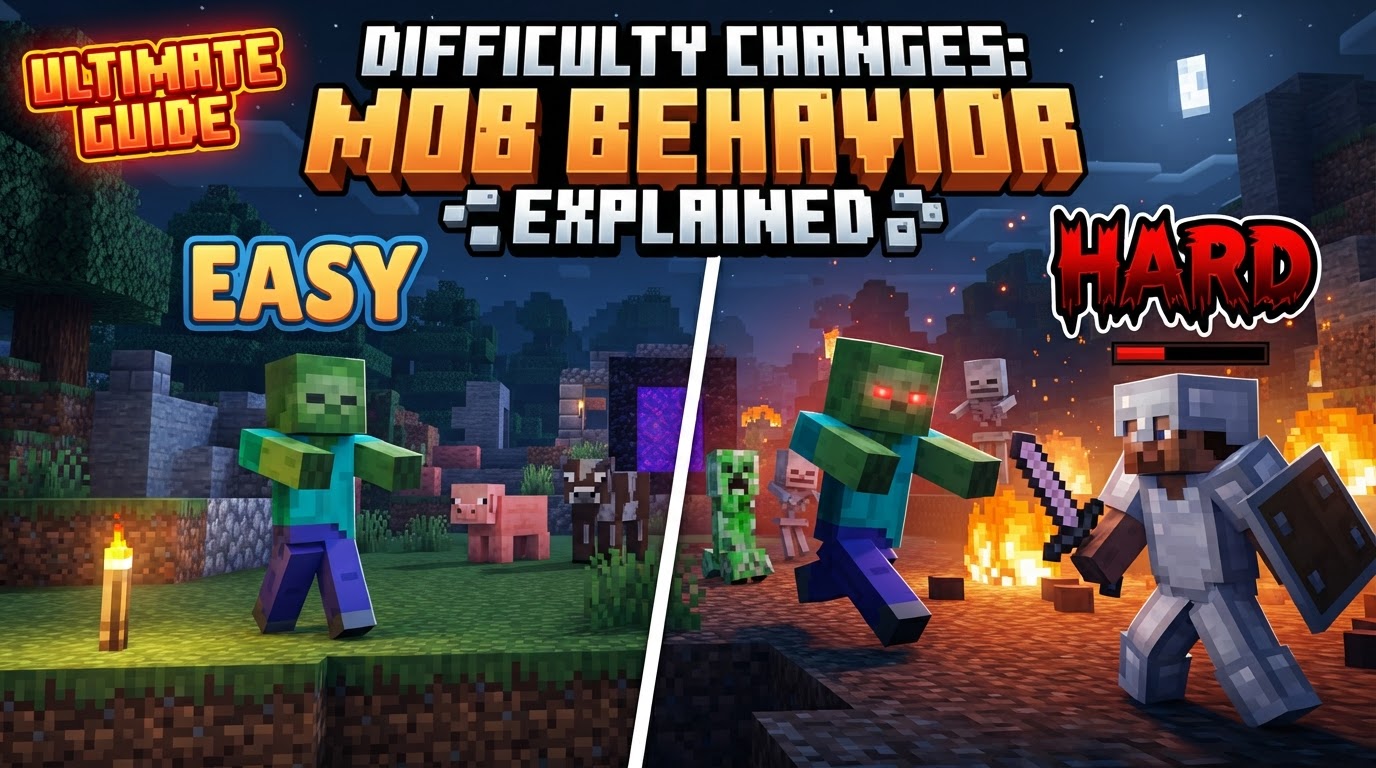
Minecraft offers a nuanced spectrum of challenge through its four primary difficulty levels: Peaceful, Easy, Normal, and Hard. While Hardcore mode shares the gameplay mechanics of Hard, its permadeath feature sets it apart as a distinct playstyle rather than a unique difficulty setting in terms of mob behavior. Understanding how these settings sculpt the world around you is not just beneficial; it’s essential for effective gameplay, whether you’re a seasoned veteran or a budding adventurer.
The Spectrum of Challenge: Difficulty Levels Explained
The chosen difficulty level acts as a master switch, dictating a multitude of variables that directly influence your interactions with the game’s inhabitants and environment. Each level is carefully calibrated to provide a distinct experience, from a serene building sandbox to a brutal fight for survival.
- Peaceful: This mode is designed for exploration, building, and resource gathering without the constant threat of hostile mobs. It’s an ideal setting for creative projects or for new players to learn the ropes without immediate danger.
- Easy: A gentle introduction to combat and survival. Hostile mobs still spawn, but they deal reduced damage, and certain survival mechanics are less punishing.
- Normal: The standard Minecraft experience. Mobs deal moderate damage, and survival mechanics like hunger become more significant.
- Hard: The ultimate test of survival. Mobs deal maximum damage, possess enhanced abilities, and environmental threats are at their peak.
Core Mechanics: How Difficulty Alters Mob Behavior and Survival
The changes between difficulty levels aren’t superficial; they permeate core game mechanics, fundamentally altering how you approach combat, resource management, and even base design.
Mob Damage Scaling
Perhaps the most straightforward change is the scaling of damage dealt by hostile mobs. On Peaceful, hostile mobs deal no damage whatsoever, effectively making them harmless nuisances that despawn. As you move up the ladder from Easy to Normal and then to Hard, the damage output of every hostile creature increases progressively. A zombie punch on Easy might be a minor inconvenience, but on Hard, the same attack can be a significant chunk of your health, demanding better armor and more cautious engagement.
Health Regeneration and Hunger
Your ability to recover from damage is also heavily influenced by difficulty. On Peaceful, health regeneration is significantly faster, allowing players to quickly bounce back from falls or environmental damage without needing food. However, on Easy, Normal, and Hard, health regeneration becomes tied to your hunger bar. If your hunger bar isn’t sufficiently filled, you won’t regenerate health. Furthermore, on Normal and Hard, players can actually starve to death if their hunger bar depletes entirely, adding a critical layer of resource management to survival.
Hostile Mob Spawning and Despawning
The very presence of hostile mobs is governed by difficulty. On Peaceful, the game entirely disables the spawning of most hostile mobs. Any existing hostile mobs (perhaps from changing difficulty mid-game) will instantly despawn. This allows for uninterrupted exploration and building. On Easy, Normal, and Hard, hostile mobs spawn freely in dark areas and at night, with their numbers and types often increasing with difficulty due to other mechanics.
Local Difficulty: The Invisible Escalation
Beyond the global difficulty setting, Minecraft introduces an invisible mechanic known as “local difficulty.” This value increases over time in chunks that are frequently played in. A higher local difficulty doesn’t change the global setting, but it makes mobs within those specific areas tougher. They are more likely to spawn with armor, enchantments on their gear, or even special status effects, adding an unexpected layer of challenge to long-established bases or mining operations.
Villager Zombification Rates
Villagers, vital for trading and iron golem protection, become increasingly vulnerable as difficulty rises. When a zombie attacks and kills a villager, there’s a chance the villager will transform into a zombie villager. This chance is 0% on Easy, meaning villagers are safe from zombification even if killed by a zombie. On Normal, this chance jumps to 50%. On Hard, it becomes a guaranteed 100%, making village protection a paramount concern and requiring robust defenses to prevent total annihilation of a village population.
Adapting Your Strategy: Thriving in Any Difficulty
Understanding these mechanics is only the first step; adapting your gameplay is crucial for success. Your approach to Minecraft needs to be fluid, adjusting to the demands of the world around you.
- Assess Initial Threat: The moment you spawn into a new world, identify the chosen difficulty. On Peaceful, you have the luxury of leisurely exploration. On higher difficulties, every moment counts.
- Prioritize Defense: For Easy, Normal, and Hard modes, securing a shelter before nightfall is non-negotiable. A simple dirt hut can be a lifesaver against the initial onslaught of hostile mobs.
- Understand Mob-Specific Changes: Learn that on Hard difficulty, zombies can break down wooden doors and even call for reinforcements, making iron doors or reinforced structures essential for bases and villages.
- Adjust Combat Strategies: Higher difficulties demand more than just mindless clicking. Utilize shields, strafing, critical hits, and ranged weapons. Avoid direct confrontations when outnumbered, and prioritize upgrading your gear.
- Manage Hunger and Health: On Normal and Hard, constantly monitor your hunger bar. Always carry ample food to prevent starvation and ensure consistent health regeneration.
Common Pitfalls to Avoid
Even experienced players can fall into traps if they don’t fully grasp the implications of difficulty settings.
- Underestimating Higher Difficulties: Many players transition to Normal or Hard without fully appreciating the cumulative impact of increased mob damage, special abilities, and the unforgiving hunger mechanics. The game is not just “harder” but fundamentally different.
- Not Securing Villages on Hard: Failing to adequately protect villages on Hard difficulty is a recipe for disaster. A single zombie breach can quickly lead to a full-blown zombie villager epidemic, decimating trade opportunities.
- Ignoring the Hunger Bar: Neglecting to keep the hunger bar full on Normal and Hard modes can lead to a slow, preventable death by starvation, or leave you vulnerable with no health regeneration during combat.
- Using Wooden Doors in Bases on Hard: Relying on wooden doors for protection on Hard difficulty is a critical mistake. Zombies will eventually break them down, compromising your safety. Always opt for iron doors or alternative barricades.
- Assuming Mob Behavior is Static: Expecting mobs to behave identically across all difficulty levels can lead to unpleasant surprises. A zombie that’s a minor threat on Easy becomes a door-destroying, villager-converting menace on Hard.
Mastering Minecraft’s diverse difficulty settings transforms the game from a simple block-building adventure into a dynamic survival challenge. By understanding how mob behavior, damage, and core survival mechanics shift, players can adapt their strategies, build more resilient structures, and ultimately thrive in any environment the game throws at them.
Tags:
YOU MAY ALSO LIKE...