Understanding Why Bees Refuse Certain Hives
A single bee nest or beehive in Minecraft can only house a maximum of three bees. This fundamental limit is often the first hurdle players encounter when trying to understand why their buzzing companions seem to ignore perfectly good homes. But beyond this simple numerical constraint, the intricate AI and environmental interactions of Minecraft’s bees can lead to a host of perplexing behaviors, making them appear to “refuse” certain hives. Navigating these quirks requires a deeper dive into their mechanics and common pitfalls.
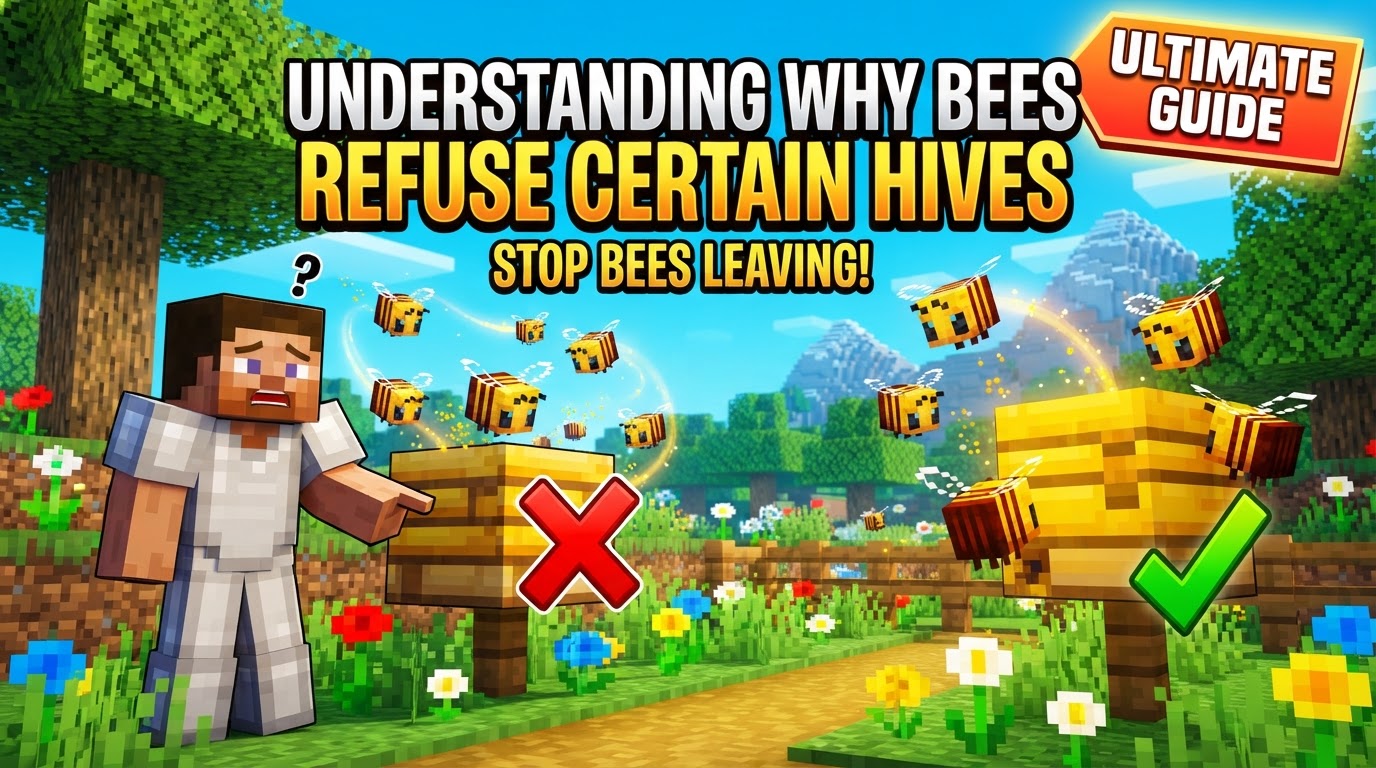
The Fundamental Life of a Minecraft Bee
Before addressing why bees might refuse a hive, it’s crucial to understand their basic operational parameters. These tiny, blocky creatures follow a set routine, dictated by their programming and the surrounding environment.
- Hive Capacity: As mentioned, both naturally generated bee nests and player-crafted beehives can only accommodate up to three bees. If a hive is already at capacity, any additional bees will simply not enter, even if they are trying to return home.
- Return to Base: Bees are creatures of habit, or rather, necessity. They will diligently return to their designated home hive under specific conditions: when night falls, during rain or thunderstorms, or when they are carrying a payload of pollen. This behavior is essential for honey production.
- Daytime Departures: Conversely, bees will only venture out of their hives during the day. Adverse weather conditions like rain or thunderstorms will keep them safely tucked inside, regardless of the time.
- The Need for Nectar: Bees require flowers to collect pollen, which is then transported back to the hive to create honey and increase the honey level. They possess a remarkable range, traveling up to 22 blocks in any direction to locate a suitable flower. Without flowers nearby, they have no incentive to leave their hive or, if already out, may wander aimlessly.
- Pathfinding Predicaments: Minecraft’s AI, while generally robust, can sometimes falter. If a bee cannot find a clear path to its target – be it a flower, its home hive, or an attacker – it may “freeze” in place, becoming unresponsive or seemingly stuck.
- The Unreliable “Home Hive”: A peculiar aspect of bee AI is that a bee’s designated “home hive” isn’t always reliably updated. Even if an empty hive is nearby and more accessible, a bee might continue trying to pathfind to a distant or full hive it previously considered home, leading to unnecessary wandering.
- End Dimension Efficiency: For advanced players seeking maximum efficiency, the End dimension offers a unique advantage. Bees here operate continuously, unhindered by the day-night cycle, significantly boosting honey production rates.
Why Your Bees Are Stubborn: Common Issues and Glitches
Understanding the core mechanics helps contextualize the various reasons bees might seem to ignore an available hive. These often stem from environmental factors, player mistakes, or occasional AI quirks.
- Blocked Entrance: This is a surprisingly common culprit. The entrance to a bee nest or beehive must be completely unobstructed. Even seemingly innocuous items like flowers, tall grass, carpets, or other non-solid blocks placed directly in front of the hive’s opening can prevent bees from entering or exiting.
- Incorrect Placement: How you place your hive matters. Hives situated too close to the ground, or with solid blocks like leaves directly underneath them, can sometimes trap bees upon exiting or make their pathfinding difficult, leading them to get stuck or refuse to re-enter.
- Missing Flowers: If there are no flowers within a 22-block radius of the hive, bees have no purpose in leaving. They will remain inside, or if already outside, they may wander far afield in a fruitless search for pollen, eventually getting lost or despawning if they travel too far from loaded chunks.
- Full Hive: This is the simplest explanation. If a hive already contains three bees, it’s at maximum capacity. No other bees, regardless of how much they want to, can enter until one of the current occupants leaves or is removed.
- Weather and Time of Day: Bees are fair-weather creatures. They will steadfastly refuse to leave their hive during nighttime, rain, or thunderstorms. Attempting to force them out or expecting them to enter during these conditions is futile.
- Pathfinding Glitches and Wandering: Bees are susceptible to getting stuck on various blocks, including slabs, stairs, cherry blossom leaves, or even complex player-built structures. Furthermore, if a bee drifts outside the player’s simulation distance, its AI might temporarily halt, causing it to freeze. Their AI can also lead them to wander significant distances from their home hive, especially if they haven’t pollinated for a while, making it difficult for them to find their way back.
- The “Dead” or Absconded Hive: Sometimes, a hive appears empty and unused because it truly is. Bees can despawn if they travel too far from a loaded chunk, get killed by hostile mobs, or simply glitch out of existence. If all occupants of a hive are gone, it becomes a “dead” hive that new bees won’t spontaneously adopt unless guided.
- Mod-Related Issues: For players using Minecraft mods, the complexity can increase. Certain mods might introduce specific bee types with unique behaviors, or they could inadvertently introduce bugs that affect bee pathfinding, hive recognition, or general AI, leading to refusal issues not present in the vanilla game.
Encouraging Your Bees: Solutions and Best Practices
Addressing these common problems often involves simple adjustments to your bee farm setup or a better understanding of bee handling.
- Ensure Clear Access: Always make sure the hive’s entrance (the small hole on the front face) is completely unobstructed. Keep a 1×1 block space clear directly in front of it. Remove any flowers, tall grass, or other non-solid blocks that might be blocking the path.
- Provide Abundant Flowers: Plant a generous supply of various flowers within a 22-block radius of your hives. This ensures bees always have a readily available source of pollen, giving them a reason to leave and return. Different flower types work equally well.
- Relocate Bees Safely: If you need to move a hive with bees inside, use a tool enchanted with Silk Touch. Harvest the hive at night or during rain when all three bees are guaranteed to be inside. To harvest honey or honeycomb without angering the bees, place a campfire directly underneath the hive; the smoke will pacify them.
- Breed New Bees: To populate empty hives or increase your bee population, feed two adult bees any type of flower. They will breed, producing a baby bee. If the “parent” hive is full, the new baby bee will seek out and claim an available empty hive nearby. This is the primary method for directing bees to new homes.
- Use Leads for Wandering Bees: If a bee has wandered too far or seems lost, you can sometimes use a lead on it. This allows you to physically guide it closer to its intended home hive, where it might then re-establish its pathfinding.
- Create Enclosures: Building a glass or transparent block enclosure around your bee farm can be incredibly effective. This prevents bees from flying too far away, getting stuck on terrain features, or being attacked by hostile mobs, ensuring they remain within the loaded chunks and near their hives.
- Consider the End Dimension: For highly automated, large-scale honey farms, moving your operation to the End dimension eliminates the day-night cycle. This means bees will continuously work, leading to much faster honey production without the downtime experienced in the Overworld.
By understanding the nuances of bee behavior and proactively addressing potential issues, you can cultivate a thriving and efficient bee farm, ensuring your hives are always buzzing with activity and producing a steady supply of sweet, golden honey.
Tags:
YOU MAY ALSO LIKE...