

Understanding Why Villagers Sometimes Refuse to Breed
Many a Minecraft player has stared in frustration at their seemingly uncooperative villagers, wondering why these blocky inhabitants refuse to expand their population. Despite providing a cozy home and ample resources, sometimes those crucial heart particles just won’t appear, leaving your breeding efforts stagnant. The truth is, villager breeding in Minecraft isn’t just about throwing two villagers together; it’s a delicate dance of specific conditions, resource management, and environmental factors that, if not precisely met, will lead to your villagers stubbornly refusing to procreate.
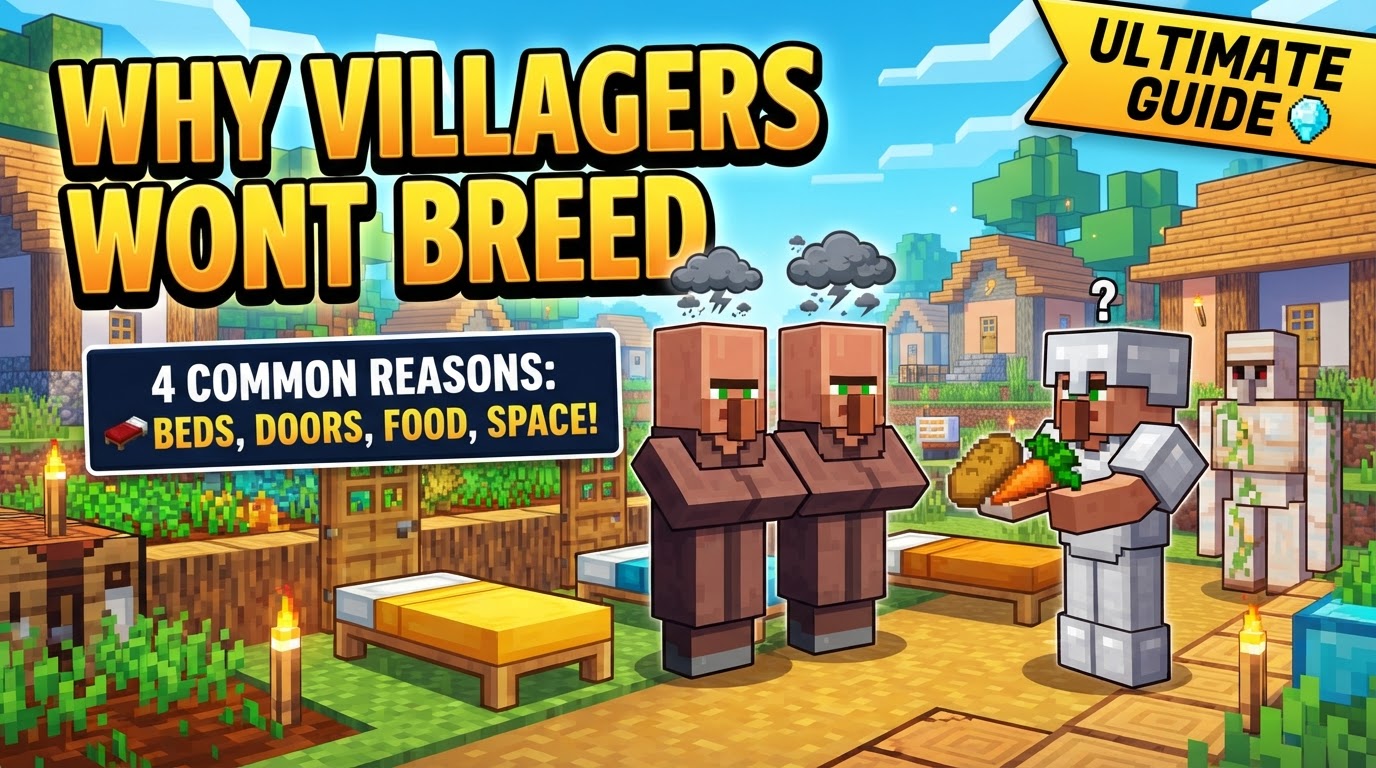
Understanding these underlying mechanics is paramount for anyone looking to establish a thriving villager population for trade halls, iron farms, or simply expanding a village. This guide will demystify the process, pinpointing common reasons for breeding failures and providing clear solutions to ensure your villagers become willing participants in population growth.
The Foundations of Fertility: Core Breeding Mechanics
Successful villager breeding hinges on several key mechanics, all working in concert. If any one of these conditions is not met, your villagers will simply not breed, often leaving players perplexed.
Willingness: The Prerequisite for Procreation
The most fundamental requirement for villager breeding is that both adult villagers must be “willing.” This state is visually indicated by heart particles appearing above their heads. Without these hearts, no breeding attempt will even begin. Villagers primarily become willing when they have accumulated enough food in their personal inventory.
Food: The Driving Force Behind Willingness
Villagers aren’t interested in romance on an empty stomach. Each villager requires 12 food points in their inventory to become willing. Different food items provide varying amounts of these points:
- Bread: Provides 4 food points per item. This makes bread the most efficient food for breeding.
- Carrots, Potatoes, Beetroots: Each provides 1 food point per item. This means a villager needs 12 of any of these items to become willing.
Players can provide food by throwing it on the ground near villagers, who will then pick it up. Farmer villagers, with access to a farm, can also distribute food among themselves and other villagers, creating a self-sustaining food supply.
Beds: The Essential Nursery
Perhaps the most common oversight in villager breeding setups is the proper management of beds. For breeding to occur, there must be:
- Beds for Parents: Both parent villagers need a bed they can claim.
- An Unclaimed Bed for the Baby: Crucially, there must be at least one additional, unclaimed bed available specifically for the new baby villager. If this bed is not present or is claimed by another villager, breeding will not happen.
- Overall Population Cap: The total number of villagers in an area is capped by the number of valid beds. If you have 10 beds and 10 villagers, no more villagers can be born until more beds are added.
Furthermore, beds must be accessible and have at least two blocks of clear air space directly above them for villagers to recognize and utilize them. Beds blocked by other blocks or lacking sufficient air space are considered invalid.
Proximity and Safety: A Secure Environment
Once two villagers are willing, they need to be in close proximity to one another to initiate the breeding process. Beyond proximity, villagers are also concerned with their safety. They will generally refuse to breed if they perceive a risk of death, such as hostile mobs being nearby. Ensuring a well-lit, secure environment free from monsters is vital.
Player Interaction and Game Settings
- Mob Griefing (Java Edition): In Java Edition, if the
mobGriefinggame rule is set tofalse, villagers will not be able to pick up items from the ground. This directly prevents them from acquiring food and thus becoming willing to breed. - Player Proximity (Implied Privacy): While not a strict game mechanic, anecdotal evidence suggests that villagers may pause or stop breeding attempts if a player is too close to them. Giving them some “privacy” by stepping away can sometimes resolve breeding stalls.
A Step-by-Step Blueprint for Successful Breeding
To ensure your villagers breed effectively, follow these steps, keeping the core mechanics in mind:
- Gather Your Breeders: Transport at least two adult villagers into a securely enclosed area. Minecarts or boats are excellent tools for this purpose, preventing them from wandering off or despawning.
- Provide Ample Beds: Place beds within the enclosed area. You need beds for both adult villagers, plus at least one extra, unclaimed bed for the potential baby. For example, if you have two villagers, place three beds. Ensure each bed has at least two blocks of air space directly above it to be considered valid.
- Supply Sustenance: Throw sufficient food items onto the ground for the villagers to pick up. For two villagers, you’d want at least 6 bread (3 per villager) or 24 carrots/potatoes/beetroots (12 per villager). Watch for them to pick up the food and for heart particles to appear. If you have a farmer villager, setting up a small farm nearby can automate food distribution.
- Maintain a Safe and Secure Environment: Ensure the area is well-lit to prevent hostile mob spawns. Build walls or fences to keep monsters out.
- Exercise Patience: Once all conditions are met, the villagers will eventually become willing, interact, and produce a baby villager. This process isn’t instantaneous, so be prepared to wait a short while.
Troubleshooting: Why Your Villagers Are Still Reluctant
Even with the best intentions, breeding can sometimes fail. Here are common reasons and their solutions:
The Unclaimed Bed Conundrum
This is arguably the most frequent cause of breeding failure. Players often forget the baby needs its own bed. Worse, other villagers, even those far away (up to 96 blocks horizontally and 76 blocks vertically), can claim beds in your breeding area. This makes the bed unavailable for your breeding pair.
Solution: Build your breeding chamber in an isolated location, far from other villages. Place more beds than you think you need, and ensure they are all valid and have sufficient air space. If problems persist, check for claimed beds using debug tools or by observing villager behavior.
Insufficient Food Supply or Acquisition Issues
If villagers don’t have enough food in their inventory, they won’t become willing.
Solution: Throw more food items (bread is most efficient) onto the ground. In Java Edition, double-check that /gamerule mobGriefing is set to true. If it’s false, villagers cannot pick up items, effectively starving them of willingness.
Inaccessible or Invalid Beds
Beds blocked by other blocks (even transparent ones) or lacking the required 2-3 blocks of air space above them are useless to villagers.
Solution: Ensure beds are placed in an open area with nothing directly above them for at least two blocks. Simplify the bed setup to rule out obstructions.
Threats and Disturbances
Villagers are easily scared. The presence of hostile mobs nearby will prevent them from breeding. Similarly, staying too close to the villagers during the breeding process might interrupt their attempts.
Solution: Thoroughly light up the breeding area to a light level of 7 or higher to prevent mob spawns. Create a barrier to keep existing mobs out. Consider stepping away from the breeding chamber for a few minutes to give them “privacy.”
Game Version Differences and Bugs
Minecraft’s mechanics can sometimes vary slightly between Java and Bedrock editions, or even between different updates. Occasionally, bugs can interfere with breeding.
Solution: Always check community wikis or official patch notes for any recent changes to breeding mechanics specific to your game version. If all else fails, a quick search for “Minecraft villager breeding bug [your version]” might reveal known issues.
Optimizing Your Breeding Operations
Once you understand the basics, you can refine your setup for maximum efficiency:
- Prioritize Bread: Due to its 4 food points, bread is the most resource-efficient food for making villagers willing. A small wheat farm is easy to set up.
- Automate with Farmers: Integrate a farmer villager and a small farm into your breeding setup. Farmers will harvest crops, replant, and distribute excess food to other villagers, creating a self-sustaining cycle.
- Isolate Your Breeders: Building a dedicated breeding chamber far from other villagers prevents external villagers from claiming the crucial baby beds or interfering with your breeding pair.
- Trading for “Happiness”: While food is the primary trigger, trading with villagers can increase their “happiness” level. This might subtly influence their willingness, though it’s not a direct trigger like food points.
- Stay Informed: Keep an eye on Minecraft updates. Mechanics can be tweaked, and being aware of changes will save you troubleshooting time.
By diligently adhering to these principles-ensuring villagers are well-fed to become willing, providing ample and accessible beds, securing their environment from threats, and understanding game-specific nuances-you can transform a frustrating breeding attempt into a consistently successful villager farm. Your bustling new village awaits!
Tags:
YOU MAY ALSO LIKE...


