Why Certain Structures Generate With Wrong Bias
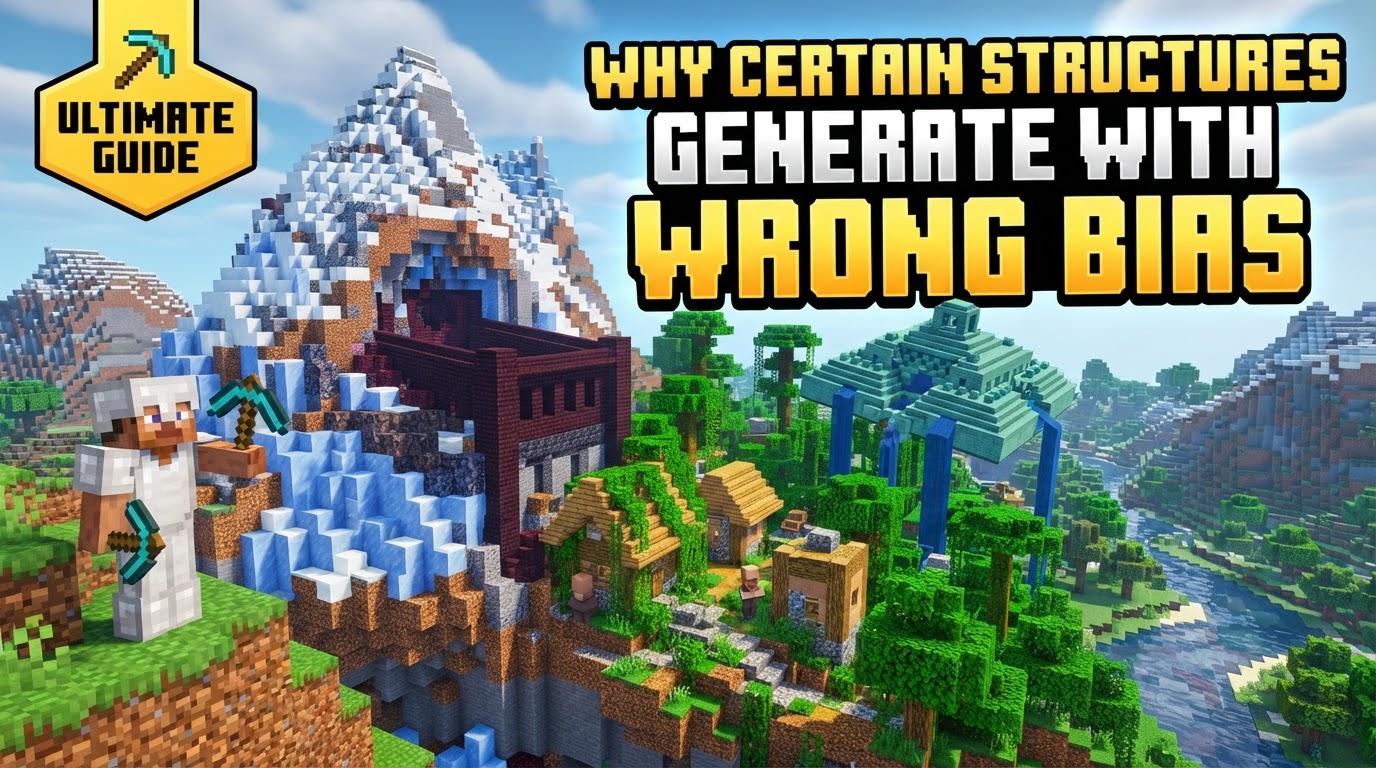
Unraveling the Mysteries of Minecraft’s “Wrong Bias” Generation
Imagine stumbling upon a magnificent desert temple, only to find its iconic orange terracotta riddled with veins of coal, or a shipwreck partially buried in solid stone. This frustrating phenomenon, where Minecraft structures appear to generate with a “wrong bias”-as if nature itself decided to redecorate-is a common complaint among players. Far from being random glitches, these seemingly incorrect generations are often the result of Minecraft’s incredibly complex procedural world generation system working exactly as designed, albeit with interactions that can lead to unexpected outcomes. Understanding these underlying mechanics is key to demystifying why your village might have a tree growing through its well, or why your fortress is half-submerged.
The Foundational Pillars: Key Mechanics of Structure Generation
Minecraft’s worlds are masterpieces of algorithmic design, each unique yet predictably consistent. At its core, the game relies on several fundamental mechanics to bring its blocky landscapes and structures to life:
- Procedural Generation and Seeds: Every Minecraft world begins its existence from a “seed”-a unique numerical identifier. This seed acts as the blueprint for all subsequent generation, meaning the same seed will always produce an identical world, including the precise location and characteristics of every structure. This deterministic nature highlights that what appears “wrong” is consistently so for that specific seed.
- Algorithms and Randomness: While the seed provides the starting point, various sophisticated algorithms and random number generators are employed to flesh out the world. These dictate everything from terrain contours to the specific details within a structure, aiming for diversity within a cohesive framework.
- Structure Definitions: Each structure in Minecraft, be it a village, a dungeon, or a stronghold, has a predefined set of rules. These rules dictate its general layout, the types of blocks it uses, and crucially, the specific biomes or conditions under which it is allowed to spawn.
- Multi-Pass Generation: World creation is not a single, instantaneous event. Instead, it unfolds in a series of distinct passes. The initial passes lay down the fundamental terrain, followed by the assignment of biomes. Structures are then placed in later passes, with environmental features like trees and ores populating the world in subsequent stages. This sequential process is often the root cause of perceived “bias.”
The Sequential Symphony: How Generation Passes Lead to Bias
The multi-pass nature of Minecraft’s world creation is critical to understanding why structures might seem “wrongly” generated. Each step builds upon the last, and conflicts can arise from this ordered sequence:
- Terrain Generation: The very first step involves shaping the basic landscape. Noise generators create the fundamental hills, valleys, and flat plains that define the world’s topography.
- Biome Assignment: Once the terrain is established, biomes are overlaid. These distinct ecological zones are determined by factors like temperature, humidity, and erosion. Crucially, biomes dictate which types of structures are even eligible to spawn in a given area.
- Structure Placement: Only after the terrain and biomes are set does the game attempt to place structures. These algorithms check the defined conditions for each structure (e.g., “spawn only in deserts,” “must be above sea level”) and slot them into appropriate locations.
- Feature Population: This is where many instances of “wrong bias” become visible. After structures have been placed, the world undergoes further population passes. During this stage, natural features like foliage (trees, grass), ores, gravel patches, and other environmental blocks are added. If a structure’s blocks occupy the same space where the game’s algorithms decide to place an ore vein or a tree, the natural feature often overwrites the structural block, leading to the appearance of a structure being “corrupted” by nature. The ‘step’ property assigned to a structure determines its generation order in this sequence; an inappropriate ‘step’ can lead directly to these conflicts.
Deciphering the Discrepancies: Common Causes of “Wrong Bias”
The perception of “wrong bias” is rarely a bug, but rather an outcome of these complex interactions. Several common scenarios contribute to this phenomenon:
- Block Replacement by Natural Generation: This is perhaps the most frequent culprit. Imagine a dungeon’s cobblestone walls suddenly containing coal or iron ore. This happens because the ore generation pass occurs after the dungeon itself has been placed. The game’s ore distribution algorithm doesn’t “know” it’s generating inside a structure and simply replaces the existing stone-type blocks. Similarly, trees might sprout through village houses or desert wells. For custom structures, understanding and correctly setting the ‘step’ property (e.g., to ‘underground_decoration’ for subterranean builds) is crucial to minimize such overwrites.
- Chunk Overwrites and Terrain Deletion (Primarily Bedrock Edition): A particularly frustrating issue, especially for players updating older worlds in Bedrock Edition, involves unexplored chunks. When an old world is updated to a new game version, loading previously unvisited chunks can cause generation algorithms from the new version to overwrite existing player-built structures or even parts of already generated structures with fresh terrain. This can lead to entire sections of a base or a generated monument being replaced by raw landscape.
- Mod and Addon Conflicts: The vibrant modding community introduces countless new ways to play, but also new complexities. Custom structures and world generation mods can interfere with each other, leading to crashes, bizarre terrain, or structures failing to generate correctly. For instance, some mods might inadvertently create “forbidden zones” where vanilla structures cannot spawn, or their generation logic might clash. For addon creators, ensuring the `min_engine_version` in the `manifest.json` is correctly set can sometimes alleviate compatibility issues.
- Incorrect Generation in Other Dimensions: Structures are often designed with the Overworld’s generation logic in mind. When these rules are applied or misinterpreted in dimensions like the Nether or End, strange occurrences can arise. Nether Fortresses might consistently generate partially embedded in the bedrock ceiling, or End Cities could appear dramatically cut off at the bottom of the world, due to fundamental differences in how these dimensions handle terrain height and placement.
- Ambiguous ‘Step’ Property for Custom Structures: For creators building custom structures via data packs, the ‘step’ property dictates at which stage of world generation their structure is placed. A misunderstanding or incorrect assignment of this property can lead to structures being generated too early (and thus being heavily overwritten by later terrain features) or too late (causing conflicts with existing generated elements).
Navigating the Nuances: Tips for Understanding and Mitigating
While some generation quirks are inherent to the game’s design, understanding them empowers players and creators to better manage or even prevent unwanted outcomes:
- Backups are Crucial: This cannot be stressed enough. Before updating worlds, installing new mods, or experimenting with data packs, always create a backup. This is your primary defense against unforeseen chunk overwrites or generation errors.
- Understand Generation Order: For anyone creating custom content, a deep dive into Minecraft’s multi-pass generation system and the specific implications of the ‘step’ property is invaluable. Knowing when your structure generates relative to ores, trees, and other features is key to ensuring it appears as intended.
- Check Mod Compatibility: When integrating multiple world-generating mods or addons, always research their compatibility. Consult mod documentation, community forums, or bug trackers for known conflicts and potential solutions. Adjusting the `min_engine_version` for addons can sometimes resolve generation issues by ensuring the addon runs with the expected game engine behaviors.
- Test in Different Environments: Custom structure creators should rigorously test their designs across various biomes and in different dimensions. Observing how a structure interacts with diverse generation conditions will reveal potential issues before wider deployment.
- Consider Data Packs for Customization: Data packs offer unparalleled control over structure spawning. They allow creators to precisely define valid biomes, adjust rarity, and even implement terrain adaptation logic, providing powerful tools to fine-tune generation behavior and avoid common “bias” issues.
Ultimately, what appears to be a “wrong bias” in Minecraft’s structure generation is often a fascinating glimpse into the intricate dance of algorithms that build your world. By understanding these processes, players can appreciate the complexity and even predict some of the quirks, transforming frustration into a deeper appreciation for the game’s engineering marvel.
Tags:
YOU MAY ALSO LIKE...