Building a Ars Nouveau Glyph Spell (Step by Step)
Unlocking Arcane Power: A Comprehensive Guide to Ars Nouveau Glyph Spells
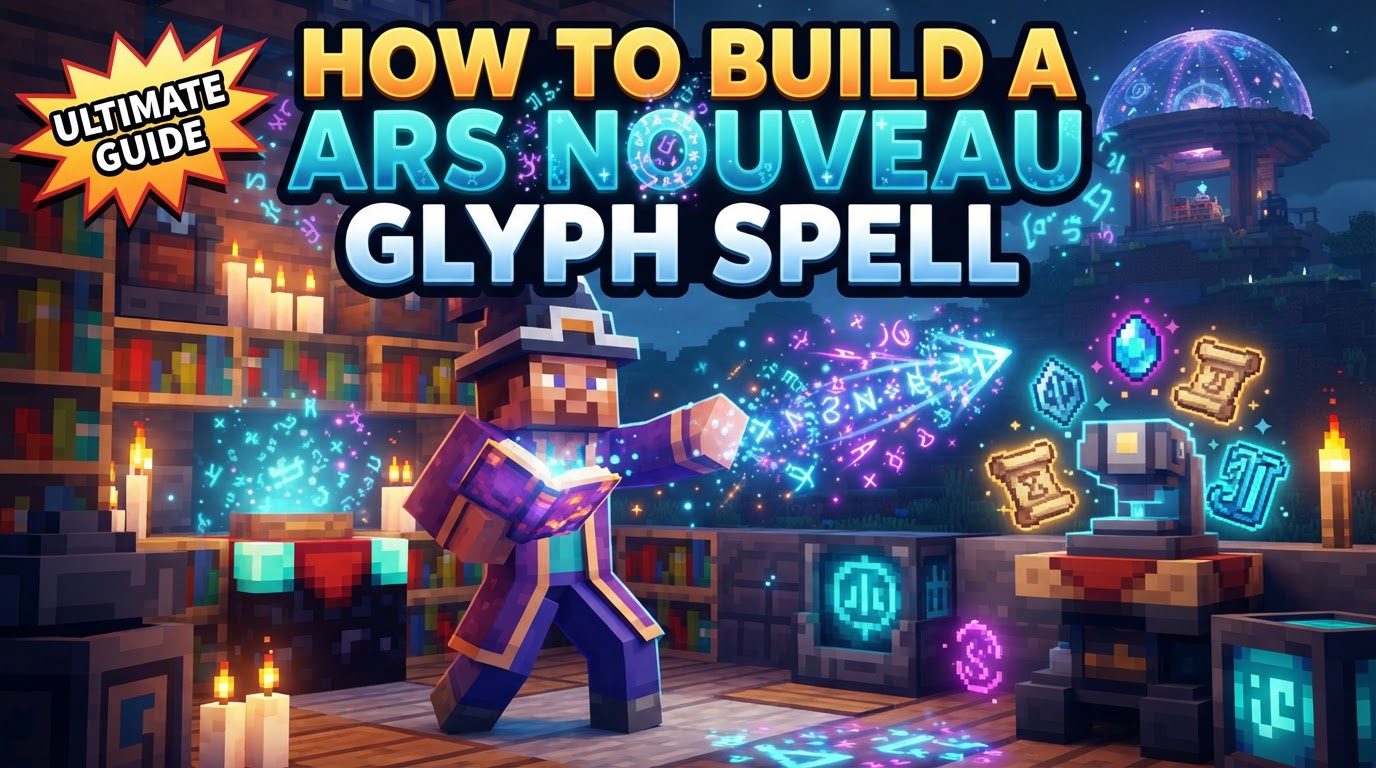
Building Ars Nouveau Glyph spells in Minecraft involves combining different glyphs within a spellbook to create custom magical effects. This intricate system allows players to tailor their magical arsenal to specific needs, from combat and utility to automation and exploration. Mastering the art of glyph combination is key to becoming a powerful mage within the Ars Nouveau mod.
Key Mechanics of Spellcrafting
Understanding the core components of Ars Nouveau spellcrafting is fundamental before delving into spell construction. Each element plays a crucial role in how spells are created, powered, and cast.
- Spellbooks: These mystical tomes are the cornerstone of all spellcasting. They are not merely storage devices but essential tools for crafting, storing, and ultimately casting your custom spells. As you progress in Ars Nouveau, you’ll encounter higher-tier spellbooks, which are invaluable for their increased capacity. Superior spellbooks offer more spell slots, allowing you to carry a wider variety of spells, and often enable the creation of more complex and powerful magical effects.
- Glyphs: Glyphs are the fundamental building blocks of every Ars Nouveau spell. They are categorized into three distinct types, each serving a specific purpose in defining a spell’s behavior:
- Form Glyphs: These glyphs dictate the delivery method or shape of your spell. They determine how the magical energy is projected into the world. A Form glyph is absolutely critical and must always be the very first glyph placed in any spell recipe. Examples include Projectile, which launches a magical entity, Touch, which applies an effect upon contact, or Self, which applies an effect directly to the caster.
- Effect Glyphs: Effect glyphs define the actual action or outcome of your spell. They are the “what” of your magic. These glyphs determine what the spell does once it is cast and delivered by a Form glyph. Examples range from Harm, which deals damage, to Break, which can destroy blocks, or Conjure Magelight, which creates a source of light.
- Augment Glyphs: Augment glyphs are modifiers designed to enhance or alter the behavior of preceding Form or Effect glyphs. They add layers of complexity and power to your spells. An important rule to remember is that an Augment glyph only applies its modification to the glyph immediately to its left in the spell sequence. This allows for precise control over which part of your spell is being enhanced. Examples include Amplify, which increases the potency of an effect, Extend Time, which prolongs a duration, or Pierce, which allows a projectile to pass through multiple targets.
- Mana: Mana is the magical energy resource consumed when you cast a spell. Every spell, regardless of its complexity, requires a certain amount of mana to activate. An interesting mechanic in Ars Nouveau is that unlocking more glyphs, even those you don’t immediately plan to use, generally contributes to increasing your maximum mana capacity and improving your mana regeneration rate. This encourages widespread glyph acquisition.
- Scribes Table: The Scribes Table is your primary workbench for expanding your magical knowledge. It is used to unlock new glyphs, making them available for use in your spellbook. To unlock a glyph, you typically combine specific material items at the table, and in some cases, a certain amount of experience may also be required.
- Glyph Press: The Glyph Press is a specialized crafting station used for the physical creation of glyphs. Once you’ve unlocked a glyph at the Scribes Table, you can then produce its physical manifestation using the Glyph Press, which typically requires Magical Clay, various reagents, and World Mana as its components.
Step-by-Step Process for Building a Glyph Spell
Creating your first spell might seem daunting, but by following these steps, you’ll be crafting powerful magic in no time.
- Obtain a Spellbook: Your journey into spellcraft begins with acquiring a spellbook. The most basic, the Novice Spellbook, is crafted using a standard book, an iron shovel, an iron pickaxe, and an iron sword. This initial spellbook will serve as your entry point into the world of Ars Nouveau magic, allowing you to store a limited number of spells.
- Unlock Glyphs: With your spellbook in hand, locate a Scribes Table. Interact with the table while holding your spellbook to open its interface. Here, you will see a list of available glyphs that you can learn. Each glyph will display its specific crafting recipe, detailing the items required to unlock it. Gather the necessary materials, place them into the Scribes Table’s inventory, and then select the desired glyph to unlock it. Be aware that some advanced glyphs may also require you to spend a certain amount of experience levels to learn them. Unlocking a variety of glyphs is crucial for both spell versatility and increasing your overall mana pool.
- Open Spellbook Interface: Once you have some glyphs unlocked, you’re ready to start building. Hold your spellbook in your hand and press the designated key to open the spell creation interface. By default, this key is ‘C’. This interface is where you will visually arrange your glyphs to form new spells.
- Select Glyphs: This is the core of spell creation. The order and type of glyphs you select are paramount to your spell’s functionality.
- Start with a Form Glyph: Every single spell must begin with a Form glyph. This is non-negotiable. Choose a Form glyph that dictates how you want your spell to be delivered. For instance, if you want to shoot a magical bolt, select Projectile. If you want to affect yourself, choose Self. The Form glyph sets the stage for the entire spell.
- Add Effect Glyphs: After your Form glyph, you will add one or more Effect glyphs. These define what the spell actually does. If your Form glyph is Projectile, you might add a Harm glyph to make it a damaging projectile, or a Break glyph to make it a projectile that can destroy blocks. You can often chain multiple Effect glyphs to create spells with several simultaneous effects, provided your spellbook has enough complexity slots.
- Optionally, Add Augment Glyphs: Augment glyphs are used to modify the properties of the Form or Effect glyphs preceding them. Remember the crucial rule: an Augment glyph only affects the glyph immediately to its left. For example, if you have a Projectile -> Harm spell, placing an Amplify glyph after Harm (Projectile -> Harm -> Amplify) will make the Harm effect stronger. If you wanted the Projectile to be faster, you would need an augment that modifies projectiles placed directly after the Projectile glyph. Multiple augments can be chained, allowing for highly customized effects, such as Projectile -> Harm -> Amplify -> Amplify, which would further boost the damage.
- Name and Save: Once you have arranged your glyphs to your satisfaction, it is essential to name your newly created spell. A descriptive name will help you identify it later. After naming, click the “Create” or “Save” button within the spellbook interface to finalize and store your spell. If you do not save, your glyph arrangement will be lost.
- Cast Spell: With your spell saved, hold the spellbook in your hand. You can cycle through your stored spells using the designated keybinds (default ‘Z’ to cycle forward and ‘X’ to cycle backward). Once the desired spell is selected, simply right-click with the spellbook in hand to cast your custom creation.
Important Tips for Effective Spellcrafting
To truly master Ars Nouveau and create powerful, efficient spells, consider these valuable tips:
- Maximize Mana: Always strive to unlock as many glyphs as possible. Even glyphs you don’t foresee using immediately contribute to your overall magical potential. Each unlocked glyph provides a slight, passive increase to your maximum mana capacity and improves your mana regeneration rate. This means a broader knowledge base directly translates to more casting power.
- Tier Up Spellbooks: As you progress, prioritize upgrading to higher-tier spellbooks. The Major Spellbook and eventually the Arch Mage Spellbook offer significantly more spell slots, which are crucial for carrying a diverse set of spells. More importantly, higher-tier spellbooks often provide access to more advanced glyphs and allow for the construction of far more complex and potent spell recipes, pushing the boundaries of what your magic can achieve.
- Utilize Amplify: The Amplify glyph is exceptionally powerful and versatile. It can dramatically increase the effectiveness of most spell effects, making it a staple in many combat and utility spells. Whether you’re trying to deal more damage, increase the range of a spell, or enhance the harvest level of a breaking spell, Amplify is often the go-to augment.
- Consider Mana Cost: Always be mindful of the mana cost associated with your spells. Adding more glyphs, especially powerful Augments like Amplify, will significantly increase the spell’s mana consumption. While a complex spell can be potent, it’s useless if you can’t afford to cast it. Balance power with efficiency, especially in the early game with limited mana resources.
- Organize Materials: When unlocking numerous glyphs at the Scribes Table, efficiency is key. Place a chest or other inventory container directly adjacent to your Scribes Table. The Scribes Table is designed to automatically pull required items from nearby inventories, saving you the hassle of constantly moving materials in and out of your personal inventory.
Common Mistakes to Avoid
Even experienced mages can make errors. Be aware of these common pitfalls to ensure your spellcrafting is successful:
- Incorrect Glyph Order: This is perhaps the most common mistake. Always remember that a spell must begin with a Form glyph. Effects and augments follow this initial Form glyph. Placing an Effect or Augment glyph first will result in an invalid spell that cannot be saved or cast. Double-check your starting glyph.
- Forgetting to Save: After meticulously arranging your glyphs and creating the perfect spell, it’s easy to forget the final step. Always make sure to name your spell and click the “Create” or “Save” button in the spellbook interface. If you exit the interface without saving, all your hard work will be lost, and you’ll have to reconstruct the spell from scratch.
- Mana Depletion: It’s tempting to create incredibly complex or heavily amplified spells right from the start. However, doing so with a basic spellbook and a low mana pool can quickly drain your resources, leaving you unable to cast. Begin with simpler, less mana-intensive spells and gradually increase complexity as your maximum mana and regeneration improve.
- Misplaced Augments: Augment glyphs are powerful but precise. A frequent error is expecting an Augment to modify a glyph that is not directly to its left. For example, in a spell like Projectile -> Break -> Amplify, the Amplify only affects the Break glyph. If you intended to amplify the projectile itself (e.g., its speed or range), the relevant augment would need to be placed immediately after the Projectile glyph. Always visualize the direct leftward application of augments.
Tags:
YOU MAY ALSO LIKE...