How to Say Elytra
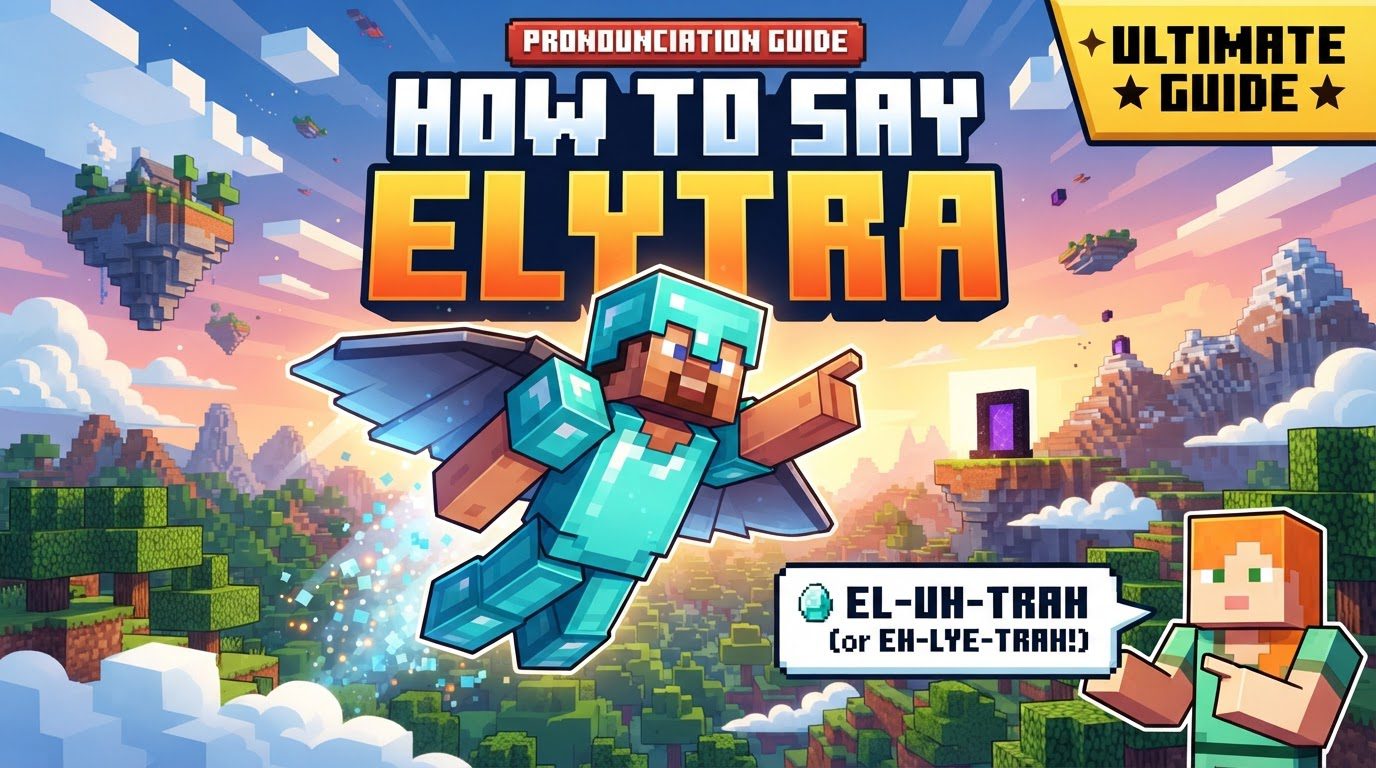
The definitive pronunciation of ‘Elytra,’ the highly sought-after gliding item in Minecraft, is ‘EL-ih-truh’. This phonetic breakdown emphasizes the short ‘e’ sound at the beginning, followed by a short ‘i’ sound, and concluding with a soft ‘uh’ sound, with the primary stress placed firmly on the first syllable. Mastering this pronunciation not only ensures clear communication within the vast Minecraft community but also reflects an understanding of the term’s intriguing etymological origins.
Understanding the Definitive Pronunciation of Elytra
To break down ‘Elytra’ into its most accurate phonetic components, we can use the International Phonetic Alphabet (IPA) and a more common English approximation. The IPA transcription is /ˈɛlɪtrə/. For those less familiar with IPA, think of it as a three-syllable word:
- EL: This is the stressed syllable. The ‘E’ here sounds like the ‘e’ in ‘egg’ or ‘elephant’. It’s a short, crisp ‘e’ sound.
- ih: The ‘y’ and ‘t’ combine to create a short ‘i’ sound, similar to the ‘i’ in ‘sit’ or ‘kit’. It’s not a long ‘eye’ sound, nor is it a ‘lee’ sound.
- truh: The final ‘ra’ forms a schwa sound, often represented as ‘uh’. This is the same sound you hear at the end of words like ‘sofa’ or ‘comma’. It’s a relaxed, unstressed vowel sound.
When you combine these, you get ‘EL-ih-truh’. The key is to emphasize that initial ‘EL’ sound, letting the subsequent syllables flow quickly and lightly after it. Practicing this rhythm and vowel sounds will solidify the correct pronunciation in your mind and speech.
Navigating Common Mispronunciations
Despite its straightforward phonetic structure, ‘Elytra’ is frequently mispronounced in various ways. These common errors often stem from assumptions about English spelling rules or a lack of familiarity with the word’s scientific background. Recognizing these pitfalls can help you avoid them.
- “Eh-LIE-tra”: This is arguably the most prevalent mispronunciation. Players often see the ‘y’ and instinctively apply a long ‘i’ sound, as in ‘fly’ or ‘sky’. However, in ‘Elytra’, the ‘y’ functions more like a short ‘i’. This error shifts the stress and completely alters the word’s auditory identity.
- “Ee-LIT-ra”: Another common mistake involves elongating the initial ‘E’ to an ‘Ee’ sound, as in ‘eel’, and then placing undue stress on the second syllable, ‘LIT’. This creates an unnatural rhythm and distorts the intended vowel sounds.
- “El-EE-tra”: Some individuals might pronounce the ‘y’ as a long ‘e’ sound, similar to ‘elite’ or ‘lyric’, giving it an ‘El-EE-tra’ sound. While closer in vowel sound to the correct pronunciation than ‘Eh-LIE-tra’, it still misplaces the stress and changes the flow of the word.
The core issue with these mispronunciations is often the misplacement of stress and the incorrect interpretation of the ‘y’ vowel sound. Remembering that the stress falls on the first syllable and the ‘y’ carries a short ‘i’ sound is crucial for correction.
The Etymological Roots: Why it’s Pronounced That Way
The correct pronunciation of ‘Elytra’ is deeply rooted in its etymology, specifically its origins in entomology – the study of insects. The word ‘elytron’ (singular of elytra) comes from Ancient Greek, ἔλυτρον (élytron), meaning ‘sheath’ or ‘case’. In biology, elytra refer to the hardened forewings of certain insect orders, most notably beetles. These wings serve as protective covers for the more delicate hindwings used for flight.
When scientific terms are adopted into English, especially from Latin or Greek, they often retain their original pronunciation patterns and stress. The Greek ‘e’ (epsilon) typically translates to a short ‘e’ sound in English, and the ‘y’ (upsilon) often becomes a short ‘i’ or ‘u’ sound, depending on context. In ‘elytron’ and ‘elytra’, this pattern holds true, preserving the original Greek stress on the first syllable and the short vowel sounds.
Understanding this biological connection provides a compelling reason for the specific pronunciation. It’s not an arbitrary choice by Mojang; rather, it’s a nod to real-world scientific terminology, enriching the game’s lore and offering a subtle educational element. When you pronounce ‘Elytra’ correctly, you’re not just speaking Minecraft; you’re speaking a fragment of scientific history.
Mastering the Sound: Tips for Perfect Pronunciation
Achieving perfect pronunciation of ‘Elytra’ is a skill that can be developed with conscious effort and practice. Here are some actionable tips to help you ingrain the correct sound:
- Break it Down and Build it Up: Start by isolating each syllable. Say ‘EL’ distinctly. Then add ‘ih’. Finally, attach ‘truh’. Repeat ‘EL’, ‘EL-ih’, ‘EL-ih-truh’ slowly and deliberately until it feels natural.
- Exaggerate the Stress: When practicing, overemphasize the first syllable. Say ‘EL-ih-truh’ with extra force on ‘EL’. This helps train your ear and mouth to place the stress correctly. Over time, you can soften the exaggeration.
- Associate with Familiar Words: Think of words with similar sounds. For ‘EL’, think ‘elephant’ or ‘enter’. For ‘ih’, think ‘sit’ or ‘kit’. For ‘truh’, think ‘truck’ or ‘extra’ (the ‘ra’ part). Creating these mental links can make the sounds less alien.
- Record Yourself: Use your phone or computer to record yourself saying ‘Elytra’. Listen back critically. Does it sound like ‘EL-ih-truh’ or one of the common mispronunciations? This self-assessment is invaluable for identifying areas for improvement.
- Listen to Examples: While I cannot provide audio here, seek out videos or streams where reputable Minecraft content creators or developers say the word. Pay close attention to their pronunciation and try to mimic it.
- Practice in Context: Don’t just say ‘Elytra’ in isolation. Incorporate it into sentences. “I found some Elytra.” “My Elytra are broken.” “We need to repair the Elytra.” This helps integrate the word into your natural speech patterns.
- Be Patient: Learning new pronunciations takes time, especially if you’ve been saying it incorrectly for a while. Be patient with yourself and celebrate small improvements. Consistency is key.
The Importance of Correct Usage in the Minecraft Community
While a simple word, the correct pronunciation of ‘Elytra’ holds more significance than just academic accuracy within the Minecraft community. It plays a role in effective communication, community cohesion, and even a subtle respect for the game’s design choices.
- Clarity in Communication: In multiplayer environments, clear communication is paramount. Mispronouncing ‘Elytra’ could lead to misunderstandings, especially if players are discussing strategies, item locations, or trading. “Did you say ‘Elytra’ or ‘Electra’?” could lead to confusion that wastes time or resources.
- Community Respect and Understanding: Adhering to the established terminology shows a certain level of engagement and respect for the game and its community. While no one will ban you for mispronouncing a word, using the correct terms helps you blend in and be perceived as a knowledgeable member of the player base.
- Avoiding Confusion with Other Items: Minecraft has a vast array of items. While ‘Elytra’ is unique in its sound, consistent mispronunciation could, in rare cases, lead to it sounding similar to other in-game items or concepts, creating unnecessary ambiguity.
- Educational Value: As mentioned, the word has real-world scientific origins. Using the correct pronunciation subtly reinforces this connection, potentially sparking curiosity in others about the term’s background.
Ultimately, while the Minecraft experience is deeply personal, it’s also a shared journey. Speaking the common language, including correct pronunciations, enhances that shared experience for everyone involved.
A Brief Refresher: What are Elytra Anyway?
For context, and to ground our pronunciation guide in the game itself, it’s worth briefly touching upon what Elytra actually are in Minecraft. Elytra are rare, non-craftable items that allow players to glide through the air. They are found exclusively in End ships, which generate in End cities within the outer islands of the End dimension. To obtain them, players must defeat a Shulker and navigate the challenging terrain of the End.
Once equipped in the chest plate slot, Elytra enable players to launch themselves from high places and glide, using fireworks rockets for propulsion and extended flight. They are invaluable for traversing large distances quickly, especially over dangerous terrain or voids, and are considered one of the most transformative items for late-game gameplay. Their utility makes them a frequent topic of conversation among players, underscoring the importance of knowing how to refer to them correctly.
Final Thoughts on Eloquence in the Blocky World
In a world built on blocks and creativity, even the smallest details, like how we articulate a word, can contribute to a richer and more connected experience. The journey to correctly pronounce ‘Elytra’ is more than just learning a sound; it’s about connecting with the game’s lore, its scientific inspirations, and its vibrant community. By embracing the ‘EL-ih-truh’ pronunciation, you not only speak with accuracy but also with a deeper appreciation for the intricate details that make Minecraft so compelling. So go forth, explore the End, soar through the skies, and confidently declare your acquisition of those magnificent ‘EL-ih-truh’.
Tags:
YOU MAY ALSO LIKE...