How to Build a Manufacturing Factory
One of the most frequent errors aspiring Minecraft engineers make when envisioning a factory is focusing solely on the grand exterior, neglecting the intricate, automated heart that truly defines a manufacturing powerhouse. Building a truly functional manufacturing factory in Minecraft is less about monumental architecture and more about mastering the art of automation. It demands a deep understanding of item flow, redstone logic, and efficient resource management.
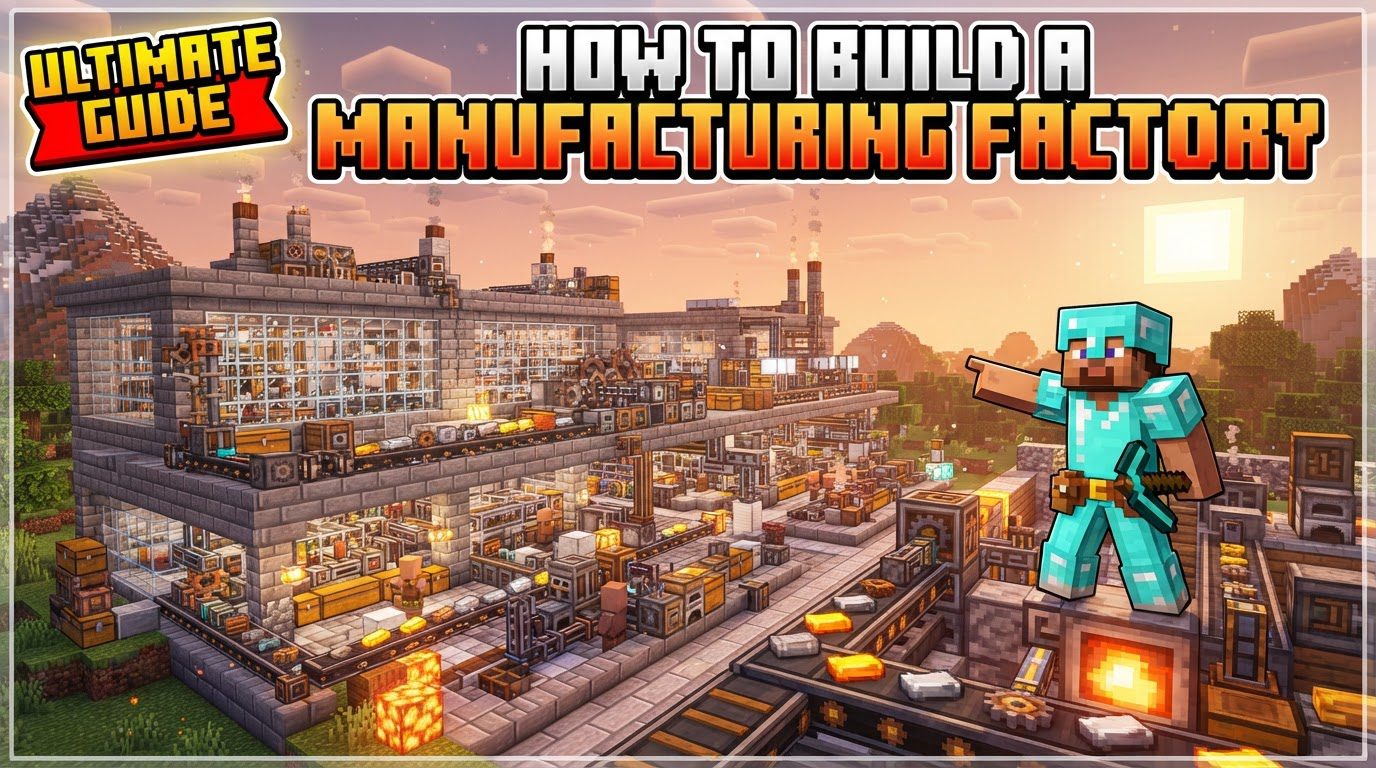
The Blueprint: Core Mechanics of Automation
At its heart, a Minecraft manufacturing factory is a symphony of automated systems designed to convert raw materials into finished products with minimal player intervention. Understanding the fundamental mechanics is crucial:
- Automation with Redstone: Redstone is the lifeblood of any automated system. It’s the electrical current of Minecraft, allowing you to control mechanisms, timings, and logic gates. Components like comparators, repeaters, observers, and pistons are your essential toolkit for tasks such as item transport, crafting, smelting, and automated farming.
- Item Transportation Systems: Moving resources seamlessly from one processing station to the next is paramount. Hoppers are indispensable for transferring items between containers and processing blocks. For vertical movement or long-distance conveyance, droppers and dispensers, often combined with water streams or conveyor belts (constructed using ice blocks for speed or powered rails for minecarts), become vital.
- Automated Crafting: While true auto-crafters are typically features of modded Minecraft, vanilla players can still achieve a form of automated “crafting” through systems like automated smelting arrays, potion brewing stations, or even more complex setups that automate block placement and breaking. The goal is to reduce manual intervention in the production of desired items.
- Automated Farming: A factory’s raw material supply must be robust and self-sustaining. Integrating automated farms for essential resources like wood, crops, or mob drops is critical. These farms feed directly into the manufacturing process, ensuring a constant input. For example, a bamboo farm can generate both planks (by crafting) and fuel for smelters.
- Power Generation (Modded): For those venturing into modded Minecraft, factories often rely on various forms of automated power generation. Systems like solar panels, windmills, or even more advanced energy sources are necessary to run the specialized machinery and tools introduced by mods.
- Multi-Layered Design: Efficiency isn’t just about speed; it’s about organization. Utilizing multiple levels or floors within your factory allows for efficient organization of machines, power lines, and item transport systems. The “three-layer floor” method is a popular technique to effectively hide and manage pipes, wires, and conveyances, preventing cluttered layouts.
Constructing Your Production Line: A Step-by-Step Journey
Building a factory is a methodical process. Following these steps will guide you from conception to a fully operational manufacturing hub:
- Define Your Product: Before placing a single block, determine what precisely you aim to produce. This crucial first step dictates the necessary raw materials, machines, and the overall complexity of your factory.
- Gather Raw Materials: With your product defined, identify its constituent parts. Your immediate next step is to set up automated farms for these necessary resources. For instance, if you need planks and fuel, a bamboo farm is an excellent starting point.
- Design the Layout: This crucial planning phase determines the factory’s material flow, from raw input to finished product. Consider separate areas for industrial processes, agriculture, and item sorting. The layout should prioritize efficient item transport and machine placement to minimize “spaghetti wires” and bottlenecks.
- Construct the Structure: Build the physical shell of your factory. Historically, materials like stone and bricks are common, while modern designs might favor concrete or plastic for a sleeker look. Remember to implement multi-layered floors to effectively hide and manage piping and wiring.
- Install Machines and Automation: Populate your factory with processing units: furnaces, crafting tables (or auto-crafters if modded), and other processing blocks. Connect them meticulously with hoppers and other redstone mechanisms for automated input and output.
- Implement Transportation: The circulatory system of your factory, item transportation, must be robust. Set up systems using hoppers, water streams, droppers, and possibly minecarts or conveyor belts to move items efficiently between stages.
- Power Up (if modded): If your factory incorporates modded machinery, establish a reliable power generation system to supply energy to all your machines. This could involve solar panels, windmills, or other mod-specific power sources.
- Test and Refine: No complex system works perfectly on the first try. Rigorously test each stage of your manufacturing process. Adjust redstone timings, optimize item flow, and refine machine placement as needed to maximize efficiency and prevent bottlenecks.
- Add Aesthetics: Once fully functional, don’t neglect the visual appeal. Enhance the factory’s appearance with industrial themes, chimneys, gears, and pipes to add realism and atmosphere, transforming a functional build into an impressive landmark.
Optimizing Output: Advanced Tips for Factory Owners
Beyond the basics, several strategies can elevate your factory from merely functional to truly outstanding:
- Modular Design: Think in self-contained units. Build separate sections for different functions, such as a dedicated smelting array, a crafting station, or a storage area. This modular approach makes troubleshooting easier and allows for seamless expansion without disrupting the entire operation.
- Hide Redstone and Pipes: A clean factory is an efficient factory. Utilize multi-layer floors and walls to conceal redstone wiring and item transport lines. This not only improves the factory’s aesthetic but also makes it easier to navigate and identify issues without being overwhelmed by a tangle of connections.
- Efficient Space Usage: Avoid the temptation to build sprawling, empty spaces. Design your factory to use space efficiently, ensuring that machines are placed optimally for material flow without being cramped. This maximizes output within a smaller footprint.
- Lighting: Adequate lighting is not just for aesthetics; it’s a critical safety measure. Ensure sufficient light throughout the factory to prevent hostile mob spawns, which can disrupt automated systems and pose a threat to the player.
- Experiment in Creative Mode: For complex redstone contraptions and novel layouts, the creative sandbox is your best friend. Test your designs and optimize your systems in Creative Mode before committing precious resources in Survival.
- Consider Modded Minecraft: For those seeking to push the boundaries of automation, modded Minecraft offers a universe of possibilities. Many mods significantly enhance manufacturing capabilities, providing more complex machinery, advanced tools, and sophisticated automation options.
Avoiding Industrial Setbacks: Common Pitfalls
Even the most experienced builders can fall prey to common mistakes. Being aware of these will save you countless hours of frustration:
- Underestimating Redstone Complexity: Redstone can be deceptively simple in concept but intricate in execution. Rushing or failing to grasp basic logic often leads to malfunctions, requiring extensive debugging. Take your time to understand each component.
- Inefficient Item Flow: A factory is only as good as its supply chain. Poorly planned item transportation is a primary culprit for bottlenecks, leading to wasted resources or machines stalling due to lack of input or full output buffers.
- Lack of Expansion Planning: The desire to grow is natural, but not leaving room for future expansion can lead to frustrating reorganizations or even the need to rebuild entire sections of your factory from scratch. Plan for growth from the outset.
- “Spaghetti Wires”: This colloquial term refers to disorganized redstone or pipe routing. A chaotic mess of wires makes debugging a nightmare, prevents easy upgrades, and detracts significantly from the factory’s appearance.
- Ignoring Chunk Loading: For large, automated systems, continuous operation is key. Ensure all necessary chunks are loaded, either by being present yourself or by using chunk loaders (if available in your version or modpack) to prevent parts of your factory from ceasing operation when you’re away.
- Building Too Large Too Soon: Ambition is commendable, but starting with an overly ambitious factory size can be overwhelming. Begin with smaller, functional units that produce a single item, and then gradually expand and connect them into a larger, more complex system.
By adhering to these principles and learning from common mistakes, you can transform your Minecraft world into a hub of automated production, churning out resources and items with impressive efficiency.
Tags:
YOU MAY ALSO LIKE...