How Can I Start My Own Logistics Company
Many aspiring Minecraft tycoons make one critical error when their operations begin to scale: they underestimate the sheer complexity of item management. What starts as a few disorganized chests quickly devolves into a logistical nightmare, stifling progress and creativity. Building a successful “logistics company” in Minecraft, whether for a solo empire or a bustling server, isn’t about grand declarations; it’s about meticulous planning, efficient systems, and intelligent automation. This guide will equip you with the knowledge to transform your chaotic inventory into a streamlined, high-performing distribution network.
The Core Concept: What is a Minecraft Logistics Company?
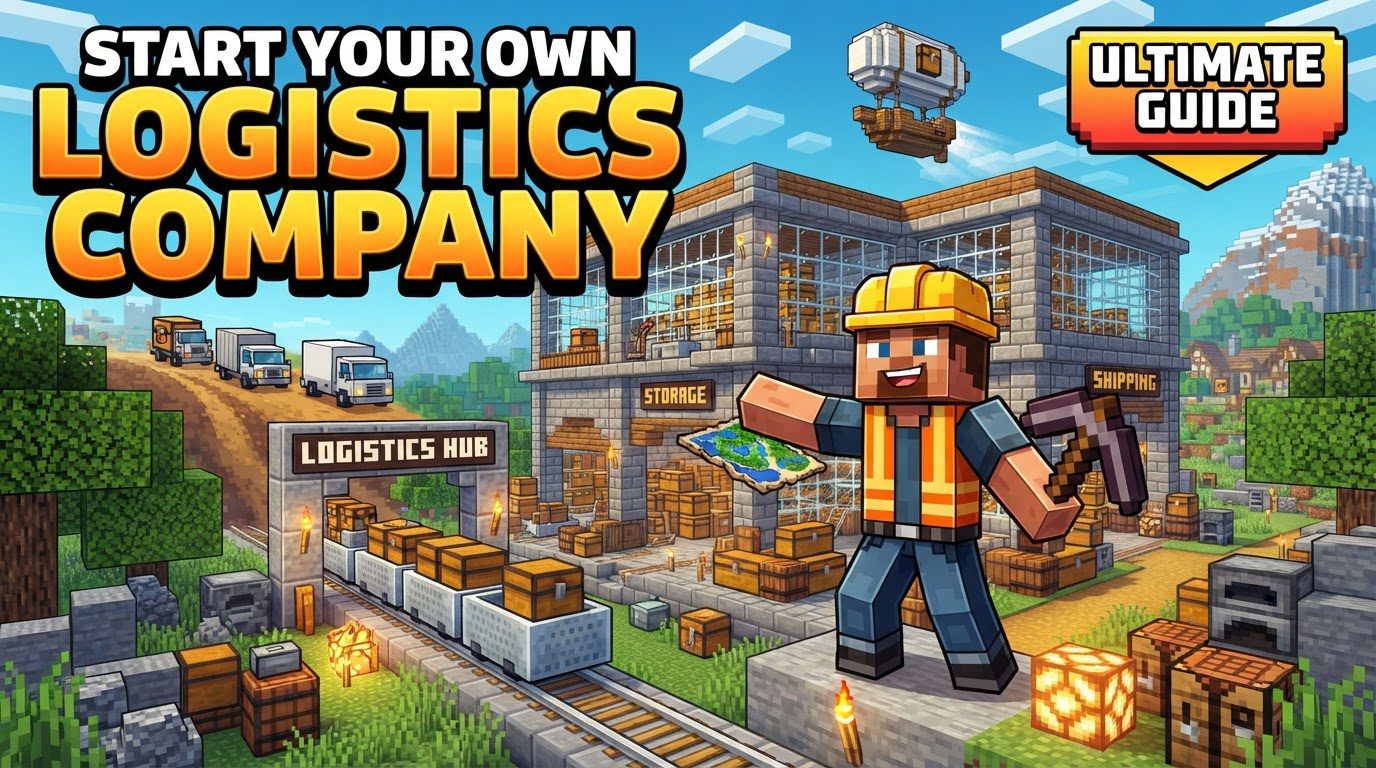
In essence, a Minecraft logistics company is your comprehensive strategy for handling items within your world. It encompasses everything from where raw materials are stored, how they are transported across vast distances, processed into useful goods, and finally distributed to their intended destinations. The goal is to optimize item flow, minimize manual intervention, and ensure you always have what you need, where you need it, when you need it. This can range from a simple sorting system in your starter base to an intricate, multi-dimensional transport network spanning hundreds of blocks.
Vanilla Foundations: The Building Blocks of Efficiency
Even without mods, Minecraft offers a powerful suite of tools for establishing robust logistics. Mastering these fundamental mechanics is crucial before venturing into more complex systems.
- Hoppers: These are the workhorses of any item management system. Hoppers can pull items from inventories above them and push them into inventories below or to their sides. Their primary use is for automatic item sorting, feeding processing machines, and collecting drops from farms. Understanding their directional flow is key to designing compact and efficient sorting arrays.
- Minecarts: For long-distance bulk transport, minecarts are indispensable. A minecart with chest can carry a significant amount of items, while a minecart with hopper can pick up loose items or pull from inventories as it passes. Combining these with automated loading/unloading stations and extensive rail systems allows for hands-off transfer of resources between distant bases or mining operations.
- Water Streams: Water is a surprisingly versatile transport medium. Items float on water and can be carried along current lines, especially when enhanced with ice blocks underneath for increased speed. For vertical transport, bubble columns created by magma blocks (pulls down) or soul sand (pushes up) can serve as efficient item elevators, moving stacks of items quickly between different levels of your base.
- Shulker Boxes: These unique items are a game-changer for inventory management. A shulker box can store 27 stacks of items and then be picked up and stored in your inventory, effectively multiplying your carrying capacity. They are invaluable for manual bulk transport, organizing specific sets of items, and even acting as temporary storage containers within automated systems.
- Ender Chests: While not for bulk transport, Ender Chests offer a shared inventory accessible from any Ender Chest in the world. This makes them perfect for quick transfers of essential tools, rare items, or small batches of materials between remote locations without needing a physical transport route.
- Redstone: The ultimate automation tool, Redstone powers everything from simple item sorters to complex loading/unloading stations, automatic farms, and even rudimentary flying machines for item delivery. Learning Redstone logic is fundamental to truly automating your logistics “company.”
- Nether Tunnels: The Nether’s compressed distance (1 block in the Nether equals 8 blocks in the Overworld) makes it the ideal dimension for high-speed, long-distance travel and item transport. Building rail lines, ice boat paths, or even dedicated item streams through the Nether drastically reduces the time and resources required to move goods across your world.
Scaling Up: Modded Logistics for Grand Operations
When vanilla mechanics no longer suffice for your ever-growing empire, Minecraft’s modding community offers incredibly powerful solutions for large-scale logistics and automation.
- Applied Energistics 2 (AE2): This mod introduces a powerful, network-based storage and automation system. Imagine a single terminal where you can access every item and fluid you own, regardless of where it’s physically stored. AE2 allows for vast digital storage, complex auto-crafting recipes, and instant item retrieval. It requires careful power management and understanding of “channels” for connections, offering a deep and rewarding system for expert players.
- Refined Storage: Often seen as a more user-friendly alternative to AE2, Refined Storage provides similar network-based storage, auto-crafting, and easy access to all items and fluids through a central interface. It’s generally simpler to set up and manage, making it an excellent entry point into large-scale digital storage.
- Logistics Pipes: Inspired by the classic BuildCraft pipes, this mod focuses on visible item movement through an intricate network of pipes. It offers tiered progression, advanced routing capabilities, request systems, and auto-crafting across multiple inventories. Logistics Pipes excel at creating complex distribution networks where items are visually transported to their destinations.
- Create Mod: A unique mod that emphasizes mechanical solutions and physical contraptions. Create allows for innovative item transport, sorting, and automation using conveyor belts, chutes, mechanical arms, and other kinetic components. Its logistics networks can manage bulk inventories and even integrate with “offline storage” in unloaded chunks, offering a distinct and engaging approach to item flow.
Establishing Your Enterprise: A Step-by-Step Blueprint
Building your logistics company is a journey. Follow these steps for a structured approach:
- Initial Storage & Organization: Begin by dedicating specific chest rooms or areas for different item categories (e.g., stone, wood, ores, food). Avoid the “junk drawer” approach from day one.
- Basic Automation: Implement simple hopper-based item sorters as soon as you have a steady influx of resources from early farms or mining. This prevents manual sorting and keeps your initial storage tidy.
- Expand Transport: As your base grows and resources are needed further afield, set up longer-distance transport using minecarts, water channels, or your first Nether routes. Prioritize routes for high-volume items.
- Integrate Advanced Storage (Modded): For truly large-scale operations, transition to network-based storage mods like Refined Storage or AE2. Centralize all your items and fluids, enabling quick searching and simplifying complex crafting recipes.
- Automate Production & Distribution: Utilize the capabilities of your chosen mods (importers, exporters, auto-crafting units) or advanced Redstone systems to automatically pull raw materials, process them into finished products, and then distribute or store them.
- Optimize for Scale: Continually refine your systems. This includes ensuring load balancing for high-throughput areas, utilizing chunk loaders for active systems that span unloaded chunks, and ensuring efficient power delivery for modded setups. Your logistics company should always be evolving.
Expert Tips for Streamlined Operations
- Early Organization is Paramount: Categorize items and use dedicated storage from the very beginning. This foresight will save you countless hours of reorganization later.
- Leverage Shulker Boxes Aggressively: Use shulker boxes to condense inventory space, especially when transporting items manually, clearing out mines, or setting up temporary storage at construction sites.
- Utilize the Nether Religiously: For any significant distance, build transport lines through the Nether. The 1:8 distance ratio is simply too powerful to ignore for efficient travel and item movement.
- Build Modularity: Design your sorting and storage systems in expandable modules. This allows you to easily add more capacity or specialized processing units without tearing down your entire infrastructure.
- Prioritize Items in Modded Systems: Learn to use priority settings in mods like AE2 or Refined Storage. This allows you to dictate where items are stored first or extracted from, optimizing your storage cells and preventing imbalances.
- Don’t Hoard Unnecessary Items: Regularly declutter. Discard junk items you truly don’t need. A lean inventory is an efficient inventory.
Avoiding Common Pitfalls: Lessons Learned in Logistics
Even the most experienced logistics managers can stumble. Be aware of these common mistakes:
- Lack of Early Organization: This is the most common and damaging mistake. Failing to establish a clear storage and sorting system from the start leads to overwhelming clutter and makes future automation exponentially harder.
- Ignoring Item Despawn Timers: For very long, un-chunkloaded transport routes, items can despawn if they remain in transit for more than 5 minutes. Ensure your routes are either short, chunk-loaded, or designed to keep items moving continuously.
- Underestimating Chunk Loading: Automated transport systems, especially over long distances or in other dimensions, require the relevant chunks to be loaded to function. Neglecting to implement chunk loaders can halt your entire operation when you’re away.
- Inefficient Transport Methods: Using slow or manual methods for high-volume transport when automated or faster alternatives (like Nether routes or minecarts) are readily available wastes time and resources.
- Not Understanding Mod Specifics: Diving into complex mods without reading their documentation can lead to frustration. Forgetting about AE2 channels, Refined Storage power requirements, or Logistics Pipes pipe tiers can result in non-functional or inefficient systems.
Conclusion
Starting your own Minecraft logistics company is a journey of continuous improvement and creative problem-solving. By mastering vanilla mechanics, strategically implementing powerful mods, and diligently following a structured approach, you can transform your Minecraft world from a jumbled mess into a highly efficient, automated powerhouse. Embrace the challenge, learn from your mistakes, and soon your base will be a testament to logistical excellence.
Tags:
YOU MAY ALSO LIKE...