Create Stones
Many aspiring Minecraft engineers, upon first encountering the Create mod, might assume stone generation is a simple matter of combining lava and water for cobblestone. While that’s a foundational truth, it barely scratches the surface of the vast and automated geological possibilities Create unlocks, allowing you to craft entire palettes of building materials with ingenious liquid interactions. The Create mod transforms the very ground beneath your feet into a resource ripe for automated harvesting and sophisticated processing, moving far beyond mere manual mining into an era of industrial-scale stone production.
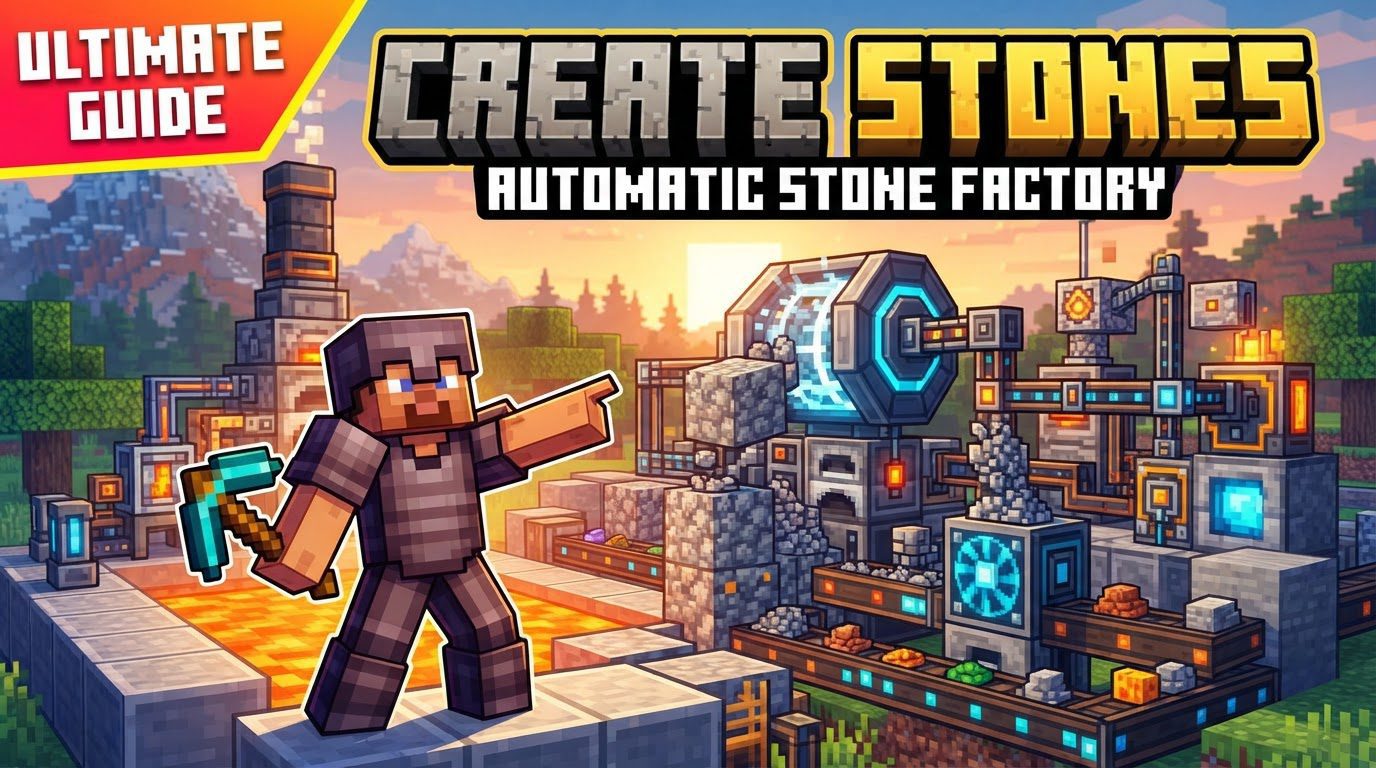
The Core of Create Stone Generation: Liquid Interaction
At its heart, the Create mod’s approach to generating various stone types revolves around the dynamic interaction of liquids. Unlike vanilla Minecraft’s sometimes unpredictable liquid flows, Create provides the tools to precisely manage and automate these interactions, turning them into reliable production lines. This fundamental mechanic allows players to not only create basic building blocks but also to lay the groundwork for complex material processing chains.
- Liquid Chemistry: The primary catalyst for stone formation is the meeting of specific liquid types. Typically, this involves lava reacting with another liquid, such as water, honey, or even chocolate. The specific combination dictates the resulting stone block.
- Solid Interactions: Beyond liquid-liquid reactions, some advanced stone types require lava to interact with specific solid blocks, like blue ice or soul soil, adding another layer of complexity and material requirement to your generators.
- Automation is Key: Create is synonymous with automation. Every step, from sourcing liquids to collecting generated blocks and processing them further, is designed to be handled by mechanical components. This means once a system is built, it can run indefinitely, churning out resources without player intervention.
The base Create mod offers robust stone generation capabilities, but the ecosystem is further enriched by community-driven addons. Mods like “Create: Easy Stone Generators” and “Create Cobblestone” significantly expand the repertoire of available recipes and generator types. These addons can introduce new ways to produce vanilla stones, Create-specific blocks, and even optimize existing generation methods, often reducing potential lag associated with massive liquid-based setups.
Building Your First Automated Stone Generator
While the specific configuration will vary based on the desired stone, the general principles for setting up an automated stone generator remain consistent. Let’s outline a foundational approach, often used for basic cobblestone or stone production, which can then be adapted for more exotic materials.
- Liquid Source Placement: Begin by establishing infinite liquid sources. For cobblestone, this means placing a source of lava and a source of water. Position them so their flows meet at a specific point. The ideal setup often involves one liquid flowing over another, or two liquids flowing into a single block space, to reliably create the desired block.
- Automated Collection: Manual mining is a bottleneck in any automated system. Instead, deploy Mechanical Arms or Conveyors directly adjacent to where the stone block forms. These components will automatically pick up the newly generated block as soon as it appears, preventing blockages and ensuring continuous production.
- Optional Processing Chains: For many applications, the raw generated stone is just the first step. For instance, cobblestone can be transported to Crushing Wheels. These powerful machines can grind cobblestone into gravel, which can then be further crushed into sand, flint, and clay. This multi-stage processing significantly expands the utility of your primary stone generator.
- Powering the Machinery: No Create contraption functions without rotational power. Ensure all your mechanical components – the arms, conveyors, crushing wheels, and any other processing units – are adequately connected to a reliable rotational power source. This could be anything from a simple Water Wheel to a complex array of Steam Engines, depending on the scale and power demands of your setup. Pay attention to both RPM (Revolutions Per Minute) and Stress Units (SU) to ensure your system runs smoothly.
Expanding Your Geological Horizons: Diverse Stone Generation
The true power of Create’s stone generation lies in its versatility. Beyond the simple lava-and-water combination, a wide array of liquids and solid blocks can be combined to produce a diverse palette of building materials.
- Cobblestone: The classic. Generated by lava meeting water. A staple for early-game automation and a base for many other materials.
- Smooth Stone: While also originating from lava and water, producing smooth stone directly often requires specific conditions or is facilitated by addons. Sometimes, the presence of a Heated Blaze Burner can influence the outcome, turning ordinary cobblestone generation into smooth stone.
- Obsidian: A valuable and durable block. Obsidian forms when lava and water interact, but crucially, the liquids are consumed in the process. For automated obsidian generation, a Heated Blaze Burner is typically essential to ensure reliable formation.
- Basalt: This dark, igneous rock is generated by a three-way interaction: lava, Blue Ice, and Soul Soil. This requires a more intricate setup to bring all three components together at the point of creation.
- Limestone: For those seeking a lighter, sedimentary look, Limestone is created by the interaction of lava and Honey. This introduces the need for a honey farm or a reliable source of honey.
- Scoria: A distinctive red-brown volcanic rock, Scoria is produced when lava meets Chocolate. Similar to limestone, this requires a supply of chocolate, often processed from cocoa beans.
- Advanced Processing Chains: Many common vanilla stones like granite, diorite, and andesite aren’t generated directly by liquid interactions. Instead, they are formed through a processing chain. For example, crushing cobblestone yields gravel, which can then be crushed into sand. Washing sand yields more clay. These base materials (sand, gravel, clay, etc.) can then be combined with lava and other specific items within a Mechanical Press to forge these more refined stone types. This often involves a recipe that combines a base material with a specific mineral or item under pressure.
Optimizing Your Stone Production Lines
To truly master Create’s stone generation, consider these tips for efficiency and expandability.
- Space Efficiency: As your production lines grow, space can become a premium. Plan your layouts to be as compact and modular as possible. Vertical designs or stacked layers can maximize output within a smaller footprint, especially when integrating multiple stone types or complex processing lines.
- Leverage Addons: Don’t hesitate to install and utilize “Create: Easy Stone Generators” or “Create Cobblestone.” These mods often provide streamlined recipes, pre-built schematics, or more efficient generation methods that can save you time and resources, and potentially reduce computational load on your server or client.
- The Ponder Feature is Your Friend: The Create mod is incredibly well-documented through its in-game Ponder feature. By hovering over almost any Create item or block in your inventory or the creative menu and holding ‘W’ (by default), you can access animated tutorials and explanations. This is an invaluable tool for understanding complex mechanics, troubleshooting setups, and discovering new possibilities for stone generation and processing.
Avoiding Common Pitfalls in Create Stone Generation
Even seasoned engineers can stumble. Being aware of these common mistakes can save you hours of troubleshooting and frustration.
- Incorrect Liquid Placement: This is perhaps the most frequent error. The exact configuration of liquids is paramount. If lava and water are placed incorrectly, they might flow away without interacting, create an unintended block, or simply do nothing at all. Always double-check your liquid flow paths and interaction points.
- Lack of Automation: The core philosophy of Create is automation. Manually mining generated blocks, even if they are continuously produced, defeats the purpose and severely limits your output. Always integrate mechanical arms, conveyors, or chutes for automatic collection and transport.
- Insufficient Power: A common oversight for new players. Automated systems, especially those involving multiple crushing wheels, mechanical arms, and long conveyor belts, demand significant rotational power. Ensure your power source (e.g., water wheels, windmills, steam engines) and the gearing connecting them to your machinery are robust enough to handle the total Stress Units (SU) required by all components. An underpowered system will stutter, slow down, or stop altogether.
- Overlooking Processing Chains: Many of the more advanced and desirable stone types in Create are not direct liquid-interaction products. They require intermediate processing steps, such as crushing cobblestone into gravel, then into sand, and then combining these with other elements in a mechanical press. Failing to plan for these multi-stage processing chains will limit your access to a full spectrum of building materials. Always consult the Ponder feature or a recipe book for the full material flow.
Mastering Create’s stone generation system unlocks an incredible potential for creativity and industrial efficiency in Minecraft. By understanding the core mechanics of liquid interaction, leveraging automation, and being mindful of common pitfalls, you can transform your world into a geological powerhouse, producing any stone you desire with effortless precision.
Tags:
YOU MAY ALSO LIKE...