How Armor Durability Damage Gets Calculated Exactly
For every four hearts of damage you take in Minecraft, each piece of your armor loses one durability point. This isn’t a simple 1:1 exchange with every hit, nor does every scratch and burn contribute to your gear’s decay. Understanding the exact mechanics behind armor durability damage is crucial for any seasoned adventurer looking to maximize their gear’s lifespan and efficiency in the perilous Overworld, Nether, and End.
The Fundamental Durability Equation
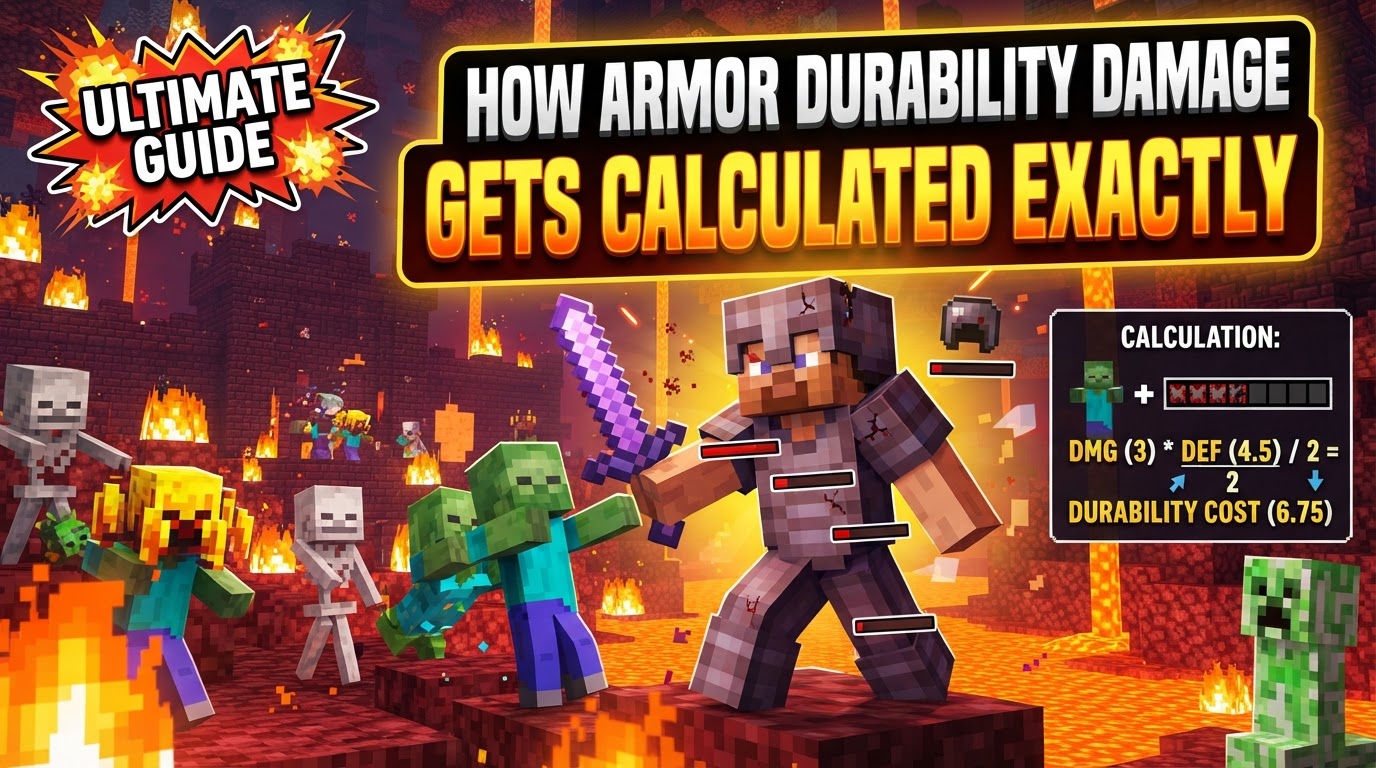
At its core, armor durability loss is directly tied to the amount of damage you, the player, absorb that is actually mitigated by your armor. Specifically, for every eight health points (equivalent to four hearts) of damage that successfully bypasses your armor’s protection and is applied to your health bar, every single piece of armor you are wearing takes one point of durability damage. This calculation is always rounded down. However, it’s vital to remember that if any damage is taken that could be reduced by armor, at least one durability point will be lost from each worn piece, even if the damage was less than eight health points. This ensures that even minor scrapes contribute to wear and tear.
The base durability of an armor piece is determined by its material. Leather armor, for instance, has a relatively low base durability, meaning it can withstand fewer hits before breaking. Gold armor shares a similar fate. Iron offers a significant step up, while diamond armor boasts a far superior base durability, allowing it to endure much more punishment. Netherite armor, the pinnacle of protection, surpasses even diamond in its inherent resilience, granting players the longest possible lifespan for their gear before enchantments are even considered.
Enchantments: The Game-Changers
While base durability is important, enchantments are where the true potential for extending armor lifespan lies. Two enchantments, in particular, play a significant role in how durability damage is calculated and applied:
Unbreaking: Defying Decay
The “Unbreaking” enchantment is arguably the most valuable for any piece of equipment, and armor is no exception. Unbreaking provides a direct chance for an armor piece to completely ignore durability loss when it would normally occur. This isn’t just a minor buff; it’s a game-changer that can drastically extend your armor’s functional life.
- Unbreaking I: On average, items with Unbreaking I will last twice as long as their unenchanted counterparts. This means there’s a 50% chance for the item to not take durability damage.
- Unbreaking II: This level extends the average lifespan to three times that of an unenchanted item, offering approximately a 66.67% chance to avoid durability loss.
- Unbreaking III: The highest level, Unbreaking III, makes items last four times longer on average. This translates to an impressive 75% chance that your armor piece will not lose durability when hit.
It’s crucial to understand that this is a probabilistic effect. You might get unlucky and have your armor take damage several times in a row, or you might get lucky and have it last an exceptionally long time. On average, however, Unbreaking provides a substantial multiplicative increase in effective durability, making it an essential enchantment for any serious player.
Thorns: A Double-Edged Sword
The “Thorns” enchantment offers a defensive counter-attack, damaging attackers who strike you. While this can be useful for fending off mobs, it comes at a significant cost to your armor’s durability. When Thorns activates and successfully damages an attacker, the armor piece it’s on loses an additional three durability points. Even if Thorns activates but fails to damage the attacker (e.g., due to the attacker having too much armor or being immune to damage), the armor piece still loses one durability point. This additional durability drain means that armor with Thorns will, by design, break much faster than armor without it, even with Unbreaking present. Players must weigh the benefits of counter-damage against the accelerated wear and tear.
Damage Types That Don’t Affect Your Armor
Not all damage sources contribute to your armor’s decay. Understanding these exceptions is vital for managing your gear’s lifespan. Damage from the following sources will not reduce your armor’s durability:
- Fire and Lava: Whether you’re burning or swimming in lava, your armor remains unaffected.
- Suffocation: Getting stuck in a block and suffocating won’t damage your gear.
- Drowning: Running out of air underwater leaves your armor pristine.
- Falling Damage: Unless you have the Feather Falling enchantment, fall damage does not affect armor durability. If Feather Falling is present, the boots will take durability damage.
- Magic Damage: This includes damage from potions (like Instant Damage), Wither effect, or Guardian beams.
- Starvation: Taking damage from a depleted hunger bar doesn’t affect armor.
- Cactus Damage: Brushing against cacti won’t wear down your protection.
- Poison: The lingering effects of poison don’t harm your armor.
- Lightning: Being struck by lightning itself doesn’t damage armor.
- Powder Snow: Unless you are specifically wearing leather armor, taking damage from powder snow does not affect armor durability. Leather armor provides immunity and thus doesn’t take damage either in this specific case.
This means that while these hazards might deplete your health, they won’t hasten the need for armor repairs, allowing you to save your precious durability for combat encounters.
The Step-by-Step Durability Calculation Process
When you take damage that *can* be reduced by armor, here’s the precise sequence of events that determines durability loss:
- Raw Damage Assessment: The game first calculates the total raw damage that was dealt to the player by the attack or environmental hazard (e.g., a zombie hit, an arrow).
- Armor Reduction: This raw damage is then mitigated by your armor points and armor toughness. This step determines how much actual damage is applied to your health bar.
- Durability Point Determination: For every eight health points of damage that you take *after* the armor reduction, each piece of worn armor is queued to lose one durability point. This value is always rounded down, but a minimum of one durability point is lost per piece if any damage was taken.
- Unbreaking Check: For each individual armor piece that is about to lose durability, the game performs an Unbreaking check. Based on the level of Unbreaking enchantment present (e.g., 75% for Unbreaking III), there’s a chance that the durability loss for that specific piece will be completely bypassed. This check is performed independently for each piece.
- Thorns Activation (if applicable): If any of your armor pieces have the Thorns enchantment and it activates, additional durability loss occurs for that specific piece:
- If Thorns successfully damages the attacker, the armor piece loses an additional three durability points.
- If Thorns activates but does not successfully damage the attacker, the armor piece loses one additional durability point.
This layered process ensures that durability loss is a nuanced calculation, not a simple one-to-one exchange with incoming hits.
Strategic Tips for Prolonging Armor Life
Armed with this precise knowledge, you can adopt several strategies to make your armor last longer:
- Prioritize Unbreaking: Always aim to put Unbreaking III on every piece of your armor. This single enchantment is the most effective way to extend its lifespan, making repair costs less frequent.
- Embrace Mending: The Mending enchantment is your ultimate repair solution. By simply gaining experience orbs while wearing or holding a Mending item, its durability will be restored. This eliminates the need for expensive anvil repairs with duplicate items or grinding for specific materials.
- Monitor Durability Closely: Keep an eye on the durability bar below your armor icons. It changes from green to yellow, then orange, and finally red as durability depletes. For precise numeric values, enable advanced tooltips (F3 + H in Java Edition) to see the exact remaining durability points.
- Choose Materials Wisely: While enchantments are key, don’t neglect the base durability. Netherite and Diamond armor offer the highest inherent resilience, making them the best candidates for long-term use, especially when combined with Unbreaking and Mending.
- Be Mindful of Thorns: If durability is a major concern, reconsider using Thorns. While it offers a defensive advantage, its accelerated durability drain can quickly wear down even the toughest armor.
Common Misconceptions Debunked
Many players harbor misunderstandings about how armor durability works. Let’s clarify some common mistakes:
- “All Damage Affects Armor Durability”: As detailed above, a significant number of environmental and magical damage sources do not impact armor durability. Knowing these exceptions can save your gear.
- “Unbreaking is a Minor Buff”: Many underestimate the power of Unbreaking. Its multiplicative effect on average lifespan means Unbreaking III effectively quadruples your armor’s durability, making it far more impactful than a simple percentage reduction in damage.
- “Thorns is Free Damage”: While Thorns does deal damage, it comes at a direct and often significant cost to your armor’s durability. Ignoring this cost can lead to unexpectedly rapid armor degradation.
- “Armor Breaks After X Hits”: Armor durability is not tied to the number of hits you take, but rather to the total amount of damage that *would have been dealt to your health* if your armor hadn’t absorbed it. A single, powerful blow can deplete more durability than several weaker ones.
Mastering the intricacies of armor durability calculation is a hallmark of an experienced Minecraft player. By understanding the core mechanics, the impact of enchantments, and which damage types to avoid, you can ensure your valuable gear lasts longer, keeping you protected through countless adventures.
Tags:
YOU MAY ALSO LIKE...