Breaking a Sulfur Spike Safely
Understanding Sulfur Spikes: An Introduction
In the expansive and often perilous world of Minecraft, adventurers constantly seek valuable resources and master unique environmental challenges. Among these, the sulfur spike stands out as a distinct mineral formation, presenting both a valuable resource and a significant hazard if not handled with care. These geological curiosities are primarily found within the atmospheric confines of Sulfur Cave biomes and the more localized pockets of Sulfur Springs. They manifest in two primary forms: as menacing stalactites, which hang precariously from cavern ceilings, and as sturdy stalagmites, which rise from the ground below.
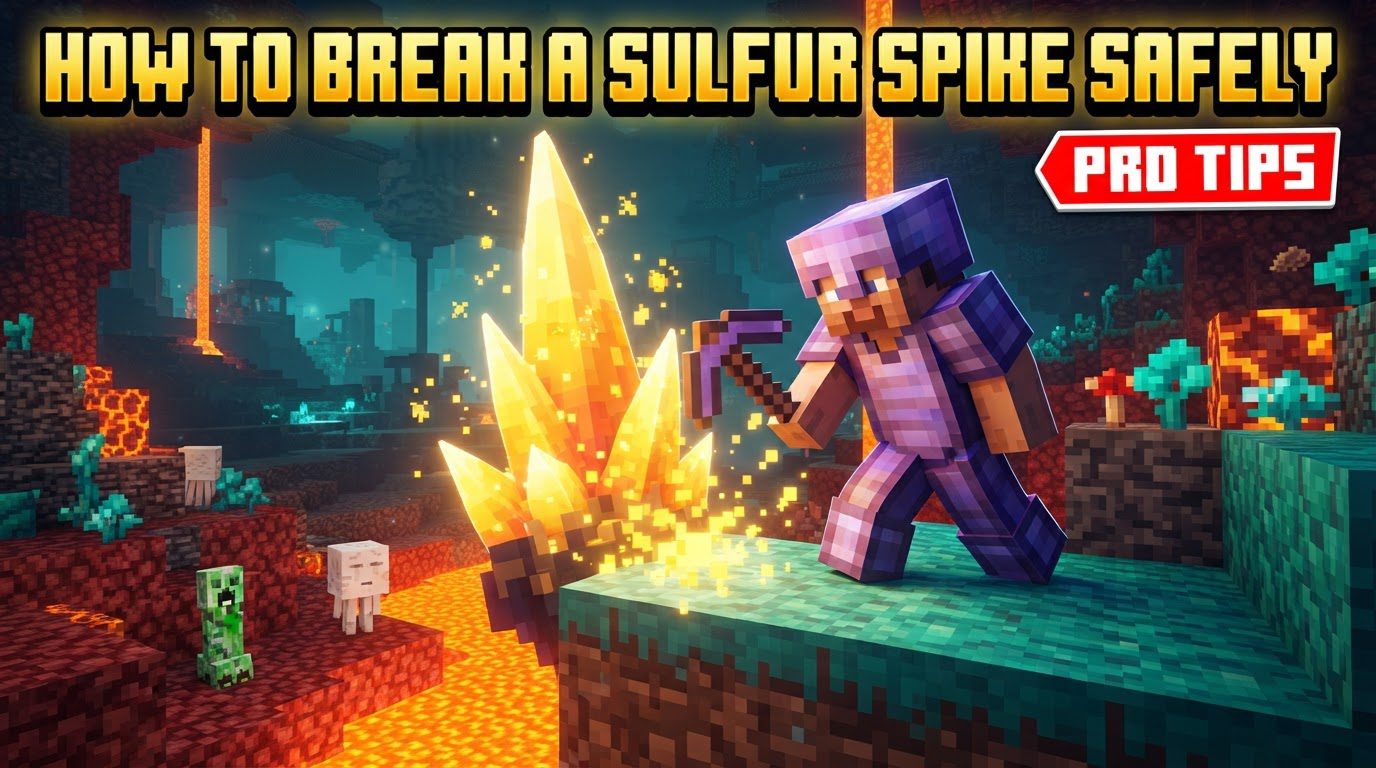
The collection of sulfur spikes is crucial for various crafting endeavors, most notably for creating sulfur blocks, with four individual spikes combining to form one block. However, the process of acquiring these spikes is not without its dangers, especially concerning the falling stalactites. This comprehensive guide will equip you with the knowledge and strategies necessary to safely and efficiently harvest sulfur spikes, ensuring your survival and success in these challenging environments.
The Mechanics of Sulfur Spikes and Their Environment
To safely interact with sulfur spikes, it is paramount to understand their unique mechanics and the environmental conditions of their natural habitat.
Stalactites vs. Stalagmites: A Critical Distinction
- Sulfur Stalactites: These are the more dangerous variant. Hanging from the ceiling, sulfur stalactites possess a perilous property: they can fall. This occurs if their supporting block is removed, or if they become unsupported due to surrounding block changes. When a stalactite falls, it behaves much like an anvil, inflicting significant damage to any player or mob unfortunate enough to be beneath it. This makes approaching and breaking them a high-risk endeavor without proper precautions.
- Sulfur Stalagmites: In contrast to their ceiling-dwelling counterparts, sulfur stalagmites, which grow upwards from the ground, pose less direct threat through impact. Unlike pointed dripstone, landing upon a sulfur stalagmite does not inflict additional fall damage. While they still need to be broken to be collected, they do not carry the same falling hazard as stalactites.
Breaking Methods and Efficiency
When it comes to extracting sulfur spikes, players have several options:
- Breaking by Hand: While possible, breaking sulfur spikes by hand is the slowest method. It is generally not recommended for efficiency or in situations where speed is critical for safety.
- Using a Pickaxe: For optimal speed and resource collection, a pickaxe is the fastest tool for breaking sulfur spikes. Equipping a pickaxe will significantly reduce the time and effort required to harvest these formations.
- Projectile Breaking: In situations where direct contact with a sulfur spike, particularly a stalactite, is deemed too risky, projectiles offer a safe alternative. A trident, when thrown, can effectively break sulfur spikes from a safe distance, allowing players to avoid the danger of falling objects or direct engagement in hazardous areas.
The Sulfur Cave Biome: Beyond the Spikes
The environment in which sulfur spikes are found also presents its own set of challenges. The Sulfur Cave biome is not merely a source of spikes but also a hazardous zone. One of the most notable environmental dangers is the presence of toxic gases. These gases can cause the nausea status effect, impairing a player’s vision and making navigation and combat significantly more difficult. Awareness and preparedness for these biome-specific hazards are crucial for any expedition.
A Step-by-Step Guide to Safe Sulfur Spike Extraction
Follow these steps to ensure a safe and successful harvest of sulfur spikes:
1. Identify the Type of Spike
Before any interaction, your first and most critical step is to determine if the sulfur spike is a stalactite or a stalagmite. This initial assessment dictates your approach and safety protocols. A stalactite hanging from the ceiling requires a far more cautious strategy than a stalagmite on the ground.
2. Approach Cautiously, Especially for Stalactites
If you have identified the spike as a stalactite, extreme caution is advised. Remember that breaking the stalactite itself or, more importantly, its supporting block will cause it to fall. Never position yourself directly underneath a stalactite you intend to break. Plan your approach to ensure you can strike the spike from a safe angle, or utilize alternative methods to avoid direct contact.
3. Use the Right Tool for Efficiency
For ground-based stalagmites or safely accessible stalactites, equip a pickaxe. The pickaxe is the most efficient tool, significantly speeding up the breaking process. While breaking by hand is an option, it is considerably slower and increases your exposure time to potential environmental hazards.
4. Employ Alternative Breaking Methods for Risky Spikes
When faced with a stalactite that is too dangerous to approach directly, or if its position makes it impossible to break without standing underneath, consider using a trident as a projectile. Throwing a trident at the spike allows you to break it from a safe distance, completely mitigating the risk of being crushed by a falling stalactite. This method is invaluable for securing spikes in precarious locations.
5. Collect the Drops
Once the sulfur spike is broken, it will drop as an item. Simply move in and collect the dropped sulfur spikes. Ensure your inventory has sufficient space for the collected resources.
Essential Tips for Successful Sulfur Spike Harvesting
Beyond the step-by-step process, several key tips will enhance your safety and efficiency:
- Maintain Distance from Falling Spikes: This cannot be stressed enough. Never stand directly under a sulfur stalactite while mining it or its support block. The damage inflicted by a falling spike is substantial and can be fatal. Always ensure there is no chance of you being in the fall path of a stalactite.
- Be Environmentally Aware: The Sulfur Cave biome is not just about the spikes. Always be mindful of the nausea-inducing toxic gases. Prepare for these effects by bringing milk buckets, potions of clear vision, or simply by being ready to navigate with impaired sight. Environmental vigilance is key to preventing unexpected negative status effects from hindering your mining operations.
- Strategic Placement for Growth: For advanced players interested in cultivating resources, it’s useful to know that when you place sulfur stalactites yourself, they can be made to grow. This growth occurs when they are placed under a sulfur block, allowing for potential future resource generation and demonstrating the versatile nature of sulfur as a building and utility block.
Common Mistakes to Avoid
Even with the best intentions, mistakes can happen. Being aware of common pitfalls can prevent costly errors:
- Standing Under Falling Spikes: This is arguably the most critical mistake a player can make. Positioned beneath a stalactite when it falls guarantees significant damage, often leading to death, especially if you are not at full health or lack protective gear. Always err on the side of caution and assume a stalactite will fall.
- Ignoring Biome Hazards: Disregarding the inherent dangers of the Sulfur Cave biome, particularly the toxic gases, is another common error. Entering these areas unprepared for nausea can lead to disorientation, make combat difficult, and increase the risk of accidental falls or misjudgments during mining. Always prioritize understanding and mitigating the environmental risks of your surroundings.
By diligently following these guidelines, understanding the mechanics of sulfur spikes, and respecting the dangers of their natural habitat, you can safely and effectively gather this valuable resource. Remember, caution and preparedness are your best allies in the challenging world of Minecraft.