Building a Crushing Wheel Ore Processing Line, Explained
The Create mod in Minecraft offers an innovative and highly efficient method for processing raw ores, significantly increasing resource yields. At the heart of this system lies the Crushing Wheel, a powerful block capable of transforming raw materials into more valuable forms. This guide will walk you through the comprehensive process of building an automated Crushing Wheel ore processing line, from initial setup to maximizing your resource output.
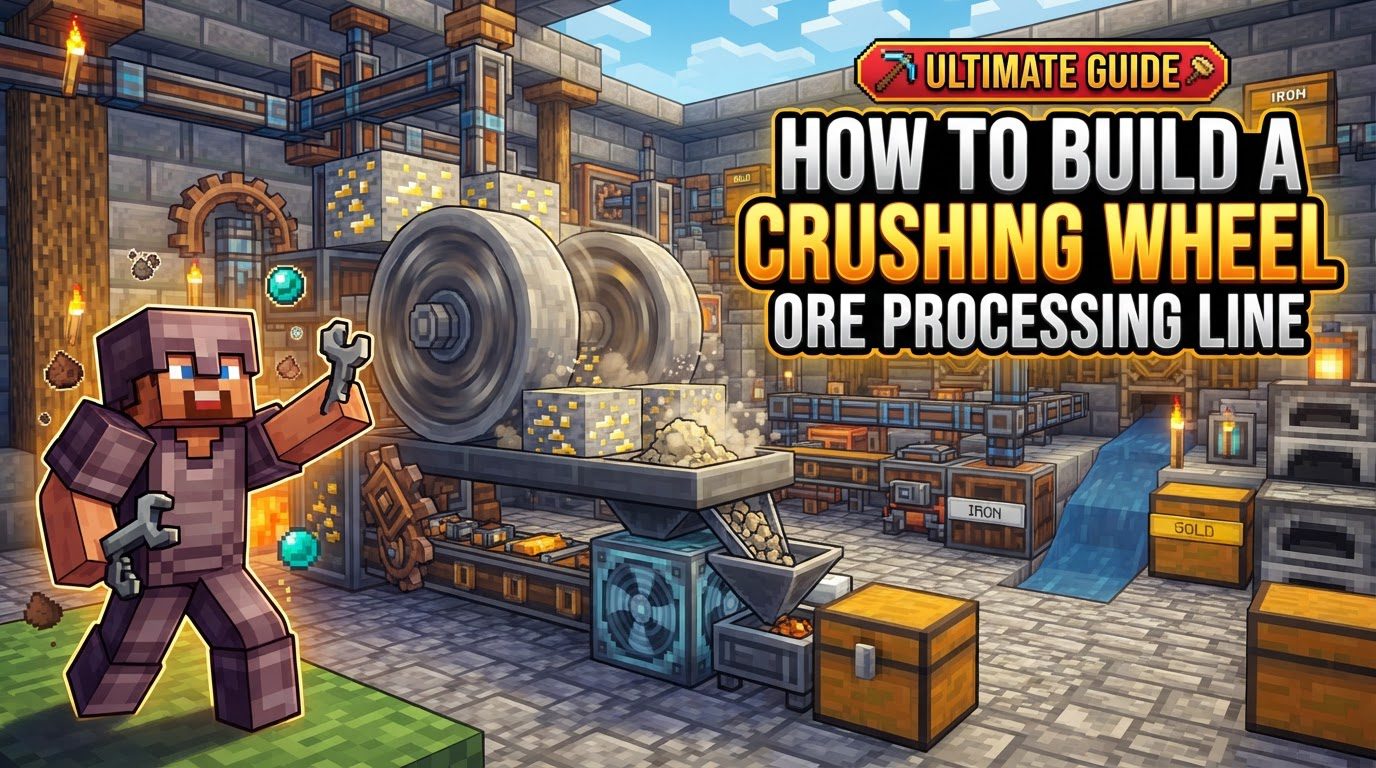
Understanding Crushing Wheel Mechanics
The Crushing Wheel is a cornerstone of advanced resource processing within the Create mod. To effectively utilize these machines, it’s crucial to grasp their fundamental mechanics:
- Dual Wheel Operation: Crushing Wheels function by processing items positioned directly between two wheels. These two wheels must spin in precisely opposite directions and at the exact same rotational speed to generate the necessary crushing force.
- Raw Ore Transformation: Their primary application in ore processing is to convert raw ores into a refined state known as “crushed ore.” This intermediate product is designed to yield a greater quantity of resources when subjected to further processing stages.
- Comprehensive Processing Chain: A complete and optimized ore processing line typically involves several steps: first, crushing raw ore into crushed ore; second, washing the crushed ore to produce nuggets; and finally, pressing these nuggets into finished ingots.
- Unmatched Efficiency: When the full crushing and washing process is implemented, it can generate approximately 2.22 times the amount of resources compared to the original raw ore. This makes it the most efficient ore processing method available in the Create mod, far surpassing basic smelting.
- High Stress Impact: Crushing Wheels are demanding machines. They exert a significant stress impact on your rotational power network, meaning they require a substantial and consistent rotational force (RPMs) to operate effectively without stalling.
- Versatile Crushing: Beyond just ores, Crushing Wheels possess versatility. They can process other blocks, such as cobblestone into gravel, and gravel into sand, offering additional utility for various crafting needs.
Step-by-Step Guide to Building Your Ore Processing Line
1. Crafting Crushing Wheels
Before you can begin crushing, you need the wheels themselves. Crushing Wheels are not crafted in a standard crafting table. Instead, they require the use of Mechanical Crafters configured in a specific pattern. To craft a pair of Crushing Wheels, you will need a total of 21 Mechanical Crafters, along with materials such as Andesite Alloy, Oak Planks, and Stone.
2. Power Source Setup
Given the high stress impact of Crushing Wheels, a robust and reliable power source is paramount. You will need to generate sufficient rotational force (RPMs) to drive the wheels. Common components used for this purpose include water wheels, which harness the power of flowing water, or encased fans, which can be powered by various means and transmit rotational energy. Ensure your power generation system can handle the significant demand.
3. Crushing Wheel Placement
Proper placement is critical for the Crushing Wheels to function. You must place two Crushing Wheels precisely one block apart. This gap is where the raw materials will be fed for crushing. The wheels can be oriented either horizontally (side-by-side) or vertically (one above the other), depending on your design preferences and space constraints.
4. Rotational Alignment
This is a non-negotiable step for successful operation. The two Crushing Wheels must spin in opposite directions, with their crushing surfaces facing inward towards the one-block gap. Crucially, they must also spin at the exact same speed. If one wheel spins faster or in the wrong direction, the crushing action will not occur. Gearboxes are invaluable tools for achieving the correct rotational alignment, as they can be used to reverse the direction of rotational force as needed.
5. Ore Input System
Once your Crushing Wheels are correctly set up and powered, you need a method to feed raw ores into the crushing gap. Automation is key for efficiency. Common input mechanisms include:
- Hoppers: Simple and effective for basic item transfer.
- Chutes: Allow items to fall vertically directly into the crushing zone.
- Mechanical Belts: Provide a continuous flow of items, ideal for automated systems.
Ensure your chosen input method reliably drops raw ores directly into the one-block space between the spinning wheels.
6. Crushed Ore Collection
After raw ores are crushed, they will drop from the bottom of the Crushing Wheels as “crushed ore.” You need a system to collect these processed materials for the next stage. Effective collection methods include:
- Mechanical Belts: Can transport the crushed ore away horizontally.
- Depots: A simple block for temporary item storage and interaction.
- Funnels: Can collect items and direct them into containers or onto belts.
Proper alignment of your collection system is vital to prevent items from getting stuck or despawning.
7. The Washing Station
To achieve the maximum 2.22x resource yield, the “crushed ore” must be washed. This crucial step converts crushed ore into valuable nuggets. Set up your washing station as follows:
- Transport the collected crushed ore to a depot.
- Position an encased fan such that it blows air towards the depot.
- Place a water source block directly in front of the encased fan, between the fan and the depot. The fan’s airflow will pass through the water, creating a washing effect on the crushed ore in the depot, transforming it into nuggets.
8. Nugget to Ingot (Pressing)
With your crushed ore now converted into nuggets through washing, the final step for creating usable ingots is pressing. This is achieved using a Mechanical Press:
- Move the washed nuggets to a basin.
- Position a mechanical press directly above the basin.
- When activated, the press will repeatedly descend into the basin, compacting the nuggets into their respective ingots.
9. Final Output
To complete your automated line, you need a system to extract the finished ingots into storage. Use funnels or mechanical belts to transport the ingots from the basin or a connected inventory directly into chests, item vaults, or your preferred storage solution.
Important Tips for Optimal Performance
- Maximize Speed: Running your Crushing Wheels at a relatively high rotational speed will significantly increase their processing rate, allowing you to process more ore in less time.
- Embrace Automation: For continuous and hands-free operation, fully automate your input and output. Utilize components like mechanical belts for transport, funnels (Andesite Funnels for basic item transfer, Brass Funnels for filtered item management), depots for temporary holding, and chutes for vertical item flow.
- Utilize Filtering: Brass Funnels are invaluable for managing specific items. They can be configured with filters to direct certain materials, such as separating unwanted cobblestone byproducts, or ensuring unique ores like diamonds, lapis, and quartz are handled appropriately.
- Batch Processing Efficiency: Crushing Wheels operate more efficiently when processing a larger batch size of items at once. Instead of feeding single ores, aim to provide a steady stream or small stacks of items for optimal throughput.
- Combine for Maximum Yield: Always remember that for the highest possible ore return, you must combine the crushing process with the washing step. Simply crushing yields 1.6x, but crushing followed by washing boosts the yield to an impressive 2.22x.
Common Mistakes to Avoid
Building an efficient Crushing Wheel line can be tricky. Be mindful of these common pitfalls:
- Incorrect Rotational Direction: This is the most frequent error. Both Crushing Wheels absolutely must spin in opposite directions, facing inward towards each other, and at the exact same speed. If these conditions are not met, the wheels will not process any items.
- Insufficient Power: Crushing Wheels have a very high stress impact. Attempting to run them with an inadequate power source (insufficient RPMs or torque) will result in them stalling or operating extremely slowly. Always ensure your power generation can comfortably handle the demand.
- Improper Item Flow: Items must be dropped precisely between the Crushing Wheels. If items miss the gap, get stuck, or are not collected efficiently, they can despawn or clog the system. Ensure all input and collection systems are perfectly aligned.
- Ignoring Byproducts: Some ores, when crushed, have a chance to produce cobblestone as a byproduct. Failing to implement filtering systems (e.g., with Brass Funnels) to handle or store these unwanted items can lead to clogged inventory systems or wasted resources.
- Not Washing Crushed Ore: Skipping the washing step means you are leaving significant resources on the table. While crushing alone offers a 1.6x yield, washing the crushed ore dramatically increases this to 2.22x. Always include the washing station for optimal returns.
- Wrong Recipes: If you are playing with multiple mods that might introduce overlapping recipes or additional crushing options, always double-check that your crushing wheels are configured to process items according to the desired recipe to avoid unexpected or incorrect outputs.
By carefully following these steps and heeding the advice on common mistakes, you will be well on your way to constructing a highly efficient and automated Crushing Wheel ore processing line, significantly boosting your resource acquisition in Minecraft’s Create mod.
Tags:
YOU MAY ALSO LIKE...