Identifying Crimson Forest Resources — A Quick Guide
The Crimson Forest biome in Minecraft’s Nether presents a unique and often challenging environment, rich with distinct resources essential for various crafting recipes and progression. To effectively navigate and harvest the valuable materials this biome offers, players must first understand its unique characteristics and the creatures that inhabit it. This guide provides a comprehensive overview of how to identify and acquire the resources found within the Crimson Forest, ensuring a productive and safer expedition.
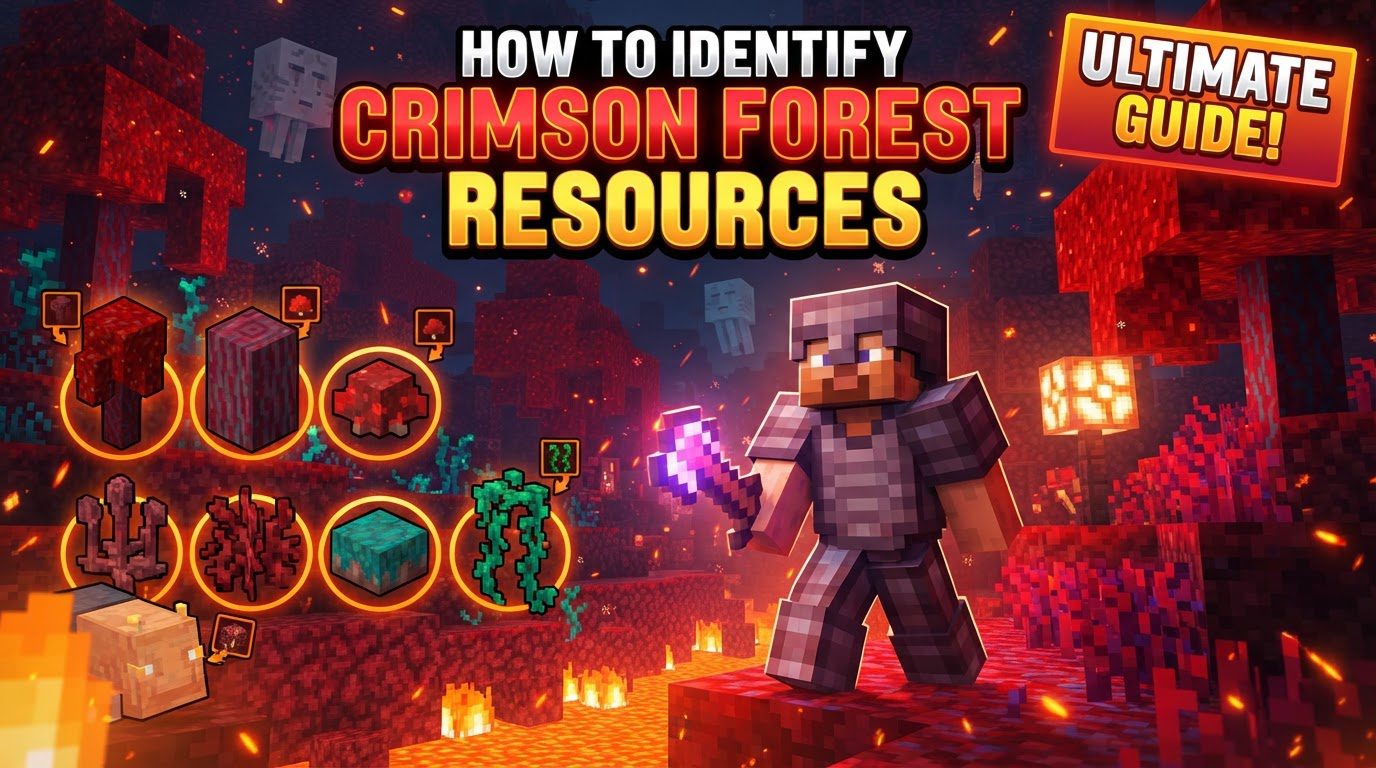
Understanding the Crimson Forest Biome
The Crimson Forest is a visually striking and dense Nether biome immediately recognizable by its prominent red color scheme. The atmosphere is further defined by a pervasive dark red fog and constant blazing particles, creating an immersive, albeit somewhat disorienting, environment. Identifying these visual cues is the first step toward locating the biome and its treasures.
- Distinctive Terrain and Vegetation:
- The forest floor is primarily composed of crimson nylium, a unique block that defines the biome’s ground cover. Some areas may also feature patches of regular netherrack.
- The biome’s most prominent feature is its unique vegetation. Towering huge crimson fungi dominate the landscape, resembling large, tree-like structures. These ‘trees’ are constructed from sturdy crimson stems, which serve as their trunks, and possess clusters of nether wart blocks that function as their “leaves” or caps.
- Smaller crimson fungi and intricate crimson roots can be found growing directly on the forest floor, contributing to the dense undergrowth.
- Long, cascading weeping vines often hang from the ceilings of caves, overhangs, or even from the larger fungi structures, adding to the biome’s unique verticality.
- A crucial light source within this dark biome, shroomlights, are found embedded within the huge crimson fungi, providing pockets of illumination.
- Inhabitants of the Crimson Forest:
- The biome is home to several distinct mob types. Piglins are commonly found here; they are neutral unless provoked or if the player is not wearing at least one piece of gold armor.
- Hoglins, aggressive creatures that can deal significant damage, also roam the Crimson Forest. Players must be prepared to either combat or repel them.
- Zombified Piglins are another common sight. These mobs are neutral unless directly attacked, at which point all nearby Zombified Piglins will become hostile.
- Striders, passive mobs that can be ridden across lava, are also present, often found near lava bodies.
- Additional Nether Resources:
- Beyond its unique crimson-themed blocks, the biome also contains common Nether resources. Players can find clusters of glowstone, valuable for light and crafting, typically on ceilings or high ledges.
- Magma blocks, which deal damage upon contact and provide light, are also present, often forming hazardous terrain.
- Numerous lava springs and expansive lava seas are characteristic of the Nether and are also found within the Crimson Forest, demanding careful navigation.
- Valuable ores such as nether gold ore and nether quartz ore are embedded within the surrounding netherrack.
- The highly coveted ancient debris, crucial for crafting Netherite, can also be found at specific Y-levels, often deep within the Nether’s bedrock layers, which can extend into or beneath the Crimson Forest.
- Potential Structures:
- Players exploring the Crimson Forest may also stumble upon generated structures. Nether fortresses, which house Wither Skeletons, Blazes, and provide valuable loot, can generate within this biome.
- Additionally, bastion remnants, large Piglin strongholds filled with various treasures and dangerous inhabitants, may also be found here.
Step-by-Step Resource Identification and Gathering
Embarking on a resource-gathering expedition in the Crimson Forest requires careful preparation and a systematic approach.
- Enter the Nether: The journey begins by constructing a Nether Portal using obsidian blocks, typically in a 4×5 frame, and activating it with flint and steel. This gateway provides access to the Nether dimension.
- Locate a Crimson Forest: Once in the Nether, travel until you encounter an area with the distinct visual characteristics of the Crimson Forest: a pervasive red tint to the environment, the dark red fog, and the sight of large, red “trees” (huge crimson fungi). For players in creative mode or with cheats enabled, the command
/locate biome crimson_forestcan provide exact coordinates to the nearest biome. - Prepare for Mobs: Before venturing deep, ensure you are adequately prepared for the biome’s inhabitants. Always wear at least one piece of gold armor to prevent Piglins from becoming immediately hostile upon seeing you. Be ready to face Hoglins, which are aggressive and will charge players; consider carrying warped fungus, as it can be used to repel them. Remember that Zombified Piglins are neutral unless provoked, so avoid attacking them directly to prevent a swarm.
- Gather Crimson Wood: The most abundant wood resource is obtained by harvesting crimson stems from the huge crimson fungi. These tree-like structures are composed entirely of crimson stems for their trunks and nether wart blocks for their caps. Break down the stems to acquire this unique wood type.
- Collect Fungi and Roots: Scan the forest floor for smaller crimson fungi and intertwining crimson roots. These can be easily mined. Additionally, if you have bonemeal, apply it to crimson nylium on the ground; this action can cause more crimson roots and crimson fungi to sprout, providing a renewable source.
- Acquire Shroomlights and Weeping Vines: Look for the glowing shroomlights embedded within the caps or sides of the huge crimson fungi. These blocks are excellent light sources. Also, gather weeping vines, which are often found hanging from the ceiling of the biome or draped from the larger fungi structures.
- Mine Ores: Systematically explore the terrain for valuable ores. Look for clusters of nether gold ore and nether quartz ore within the surrounding netherrack. Keep an eye out for glowstone clusters, which typically generate on ceilings or high up. Be cautious around magma blocks, which are often found on the ground and can cause damage. For the highly sought-after ancient debris, focus your search at lower Y-levels, often around Y=15, and be prepared for extensive mining.
- Explore Structures: If you encounter any generated structures such as Nether fortresses or bastion remnants, investigate them. These structures often contain valuable loot chests, rare blocks, and offer opportunities to acquire experience and unique items, though they are usually heavily guarded.
Important Tips for Crimson Forest Exploration
- Always Wear Gold Armor: To maintain a non-hostile relationship with Piglins, ensure you are always wearing at least one piece of gold armor. This simple act prevents them from immediately attacking you upon sight.
- Carry Warped Fungus: If Hoglins become a nuisance or a threat, having warped fungus in your inventory can be a lifesaver. Hoglins will actively avoid players holding this item, allowing for safe passage or escape.
- Utilize Silk Touch for Nylium: When collecting crimson nylium, use a tool enchanted with Silk Touch. Without this enchantment, breaking crimson nylium will only yield netherrack, and you will lose the nylium block itself.
- Bring Adequate Light Sources: The dark red fog of the Crimson Forest can significantly reduce visibility. Bring plenty of torches or other light sources to illuminate your path and mark areas, or utilize the naturally occurring shroomlights.
- Be Aware of Mob Utility: Hoglins, despite their aggressive nature, are a source of raw porkchop (food) and leather upon defeat. Piglins are not just obstacles; they can be valuable trading partners. Approach them with gold ingots in hand to initiate bartering, which can yield a variety of useful items.
- Leverage Renewable Resources: Many Crimson Forest resources can be renewed. Crimson fungi can be grown into huge crimson fungi by using bonemeal on crimson nylium. Similarly, weeping vines can be extended downwards by applying bonemeal to them, providing an easy way to create ladders or decorative elements.
Common Mistakes to Avoid
- Entering without Gold Armor: This is a critical error. Approaching Piglins without at least one piece of gold armor will instantly provoke them into attacking, potentially leading to a swift and untimely demise.
- Ignoring Hoglins: Hoglins are not to be underestimated. They are highly aggressive, possess a strong attack, and can quickly overwhelm an unprepared player. Always be aware of their presence and have a plan to either fight, avoid, or repel them.
- Mining Nylium without Silk Touch: As mentioned, attempting to mine crimson nylium without a Silk Touch enchantment will result in the block dropping as netherrack. This means you will lose the unique nylium block, which is essential for certain aesthetic builds or for creating a renewable fungi farm.
- Getting Lost: The dense environment, combined with the dark red fog and often chaotic terrain generation, makes it very easy to become disoriented. Always place torches, create clear paths, or use other markers to ensure you can find your way back to safety or to your portal.
- Falling into Lava: The Nether is notorious for its vast lava seas and hidden lava springs. Be extremely cautious while exploring, especially when navigating vertical terrain or crossing open areas, as a single misstep can lead to an instant and irreversible death.
- Provoking Zombified Piglins: While generally neutral, attacking even a single Zombified Piglin will cause all other Zombified Piglins in a wide radius to become hostile towards you. This can quickly lead to an overwhelming swarm, making escape or combat incredibly difficult.
- Overlooking the Ceiling: Many valuable resources can be found above eye level. Glowstone clusters are frequently attached to the ceilings of the biome, and weeping vines often hang down from high points. Always remember to look up during your exploration.