

Influencing Panda Personality Traits — A Quick Guide
Understanding Panda Genetics and Personalities in Minecraft
In the vibrant world of Minecraft, pandas are unique creatures not only for their distinctive appearance but also for their complex genetic system that dictates a variety of personality traits. Influencing these traits in baby pandas through careful breeding is a fascinating and rewarding aspect of the game. To successfully cultivate pandas with specific characteristics, it’s crucial to understand the underlying mechanics of their genetics and behavior.
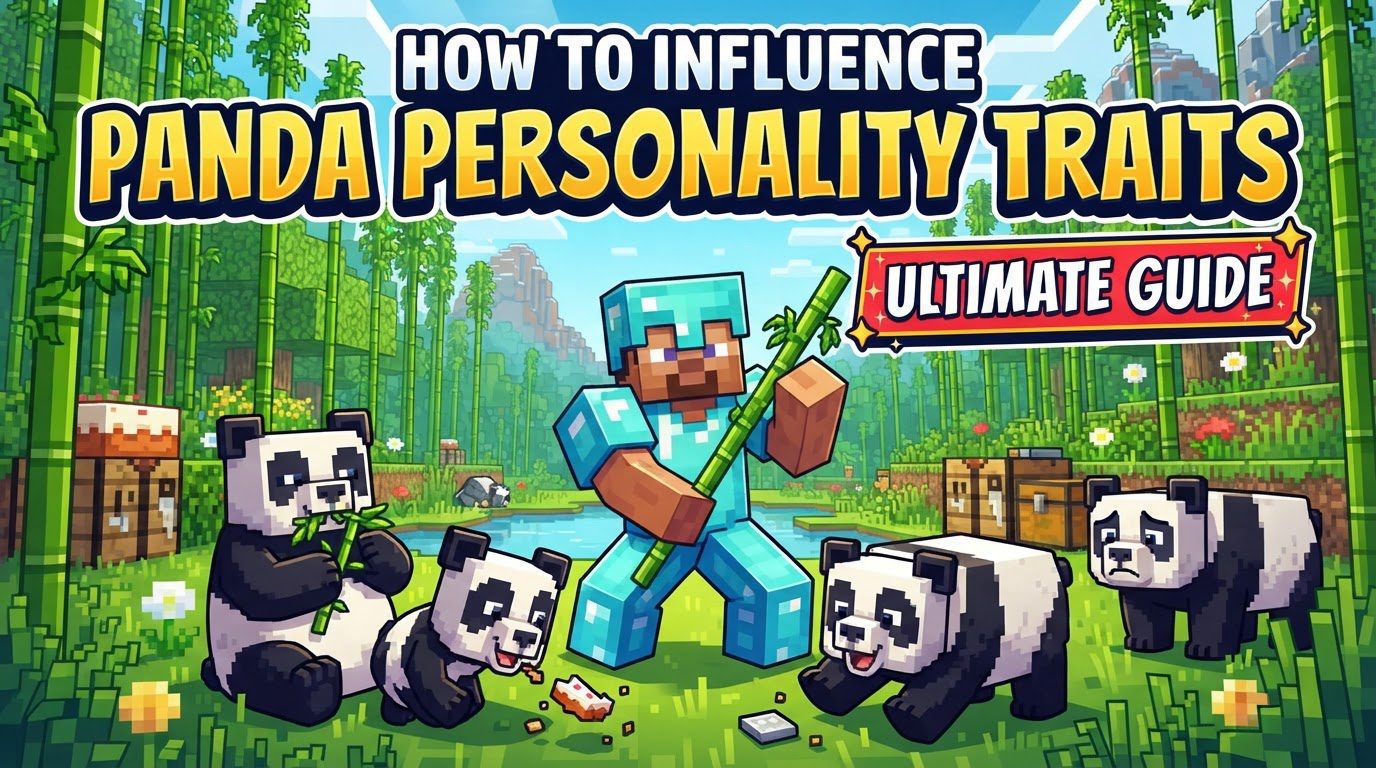
Pandas in Minecraft possess seven distinct personality types: Normal, Lazy, Worried, Playful, Aggressive, Weak, and Brown. Each of these traits manifests in different behaviors and appearances, adding depth to your panda farm. For instance, a Normal panda exhibits balanced behavior, while a Lazy panda might spend more time lying on its back. Worried pandas often shiver and avoid players, Playful pandas roll around, and Aggressive pandas can sometimes attack. Weak pandas have a distinct appearance and often sneeze more, while Brown pandas are a rare cosmetic variant.
The key to influencing these traits lies in the genetic makeup of each panda. Every panda carries two genes: a main gene and a hidden gene. Both of these genes play a critical role in determining the traits passed down to their offspring. When two pandas breed, each parent contributes one of its genes to the baby. These two inherited genes then randomly combine to form the baby panda’s new main and hidden genes, which in turn dictate its expressed personality.
Understanding the dominance of these genes is vital for selective breeding. The Normal, Aggressive, Lazy, Worried, and Playful traits are considered dominant. This means that if a panda inherits one of these genes, it is likely to express that trait. Conversely, the Weak and Brown traits are recessive. For a baby panda to exhibit a recessive trait like Weakness or the Brown coloration, both of its parents must carry that specific recessive gene, either as their main or hidden gene. This makes breeding for recessive traits a more challenging but ultimately rewarding endeavor.
Adding another layer of complexity and excitement to panda breeding is the possibility of mutation. During the breeding process, there is a small chance – specifically, a 1/32 chance for each gene – for the baby’s inherited genes to mutate. This mutation can introduce traits that were not present in either of the parent pandas, offering an element of surprise and the potential for discovering new genetic lines.
The Step-by-Step Process of Breeding Pandas
Successfully breeding pandas to influence their personality traits requires adherence to a specific process, ensuring all conditions are met for them to enter “love mode” and produce offspring.
-
Locate Two Adult Pandas: Your breeding journey begins with finding two adult pandas. These gentle giants naturally spawn in jungle biomes, with a higher frequency in the dense bamboo jungles. Scout these areas until you find a suitable pair to begin your breeding program.
-
Ensure Sufficient Bamboo: Bamboo is the cornerstone of panda breeding. Before attempting to breed, you must ensure there is an adequate supply of bamboo plants growing near your pandas. The specific requirements vary slightly between game editions:
- In Java Edition, a single bamboo plant growing within a 7x7x3 area around the pandas is sufficient to meet their breeding needs.
- In Bedrock Edition, the requirements are more stringent; at least eight bamboo blocks must be present within a five-block radius of each panda you intend to breed. This often means planting a small grove of bamboo around your breeding pair.
-
Feed Pandas Bamboo: Once the bamboo requirements are met, you can initiate the breeding process by feeding both adult pandas bamboo. To do this, hold bamboo in your hand and right-click on each panda. If all conditions are satisfied, heart particles will emanate from the pandas, signaling that they have entered “love mode” and are ready to breed.
-
Observe Offspring: Shortly after entering love mode, a baby panda will spawn. This newborn panda will inherit personality traits that are directly influenced by the main and hidden genes of its parents, as well as the small chance of mutation.
-
Accelerate Growth (Optional): Baby pandas will naturally grow into adults over time. However, if you wish to speed up this process, you can feed them additional bamboo. Each piece of bamboo fed to a baby panda will accelerate its growth, allowing you to quickly assess its traits and potentially integrate it into your next breeding cycle sooner.
Important Tips for Strategic Panda Breeding
To efficiently achieve your desired panda traits, employ these strategic tips throughout your breeding program:
-
Selective Breeding: This is the most effective method for trait manipulation. Continuously breed pandas that either already exhibit the desired traits or are known to carry the specific genes you are looking for, even if hidden. By focusing on particular genetic lines, you increase the probability of producing offspring with the traits you want.
-
Focus on Recessive Traits: If your goal is to obtain a Weak or Brown panda, your strategy needs to be precise. Since these are recessive traits, both parent pandas must contribute the recessive gene for the baby to express it. This means you should prioritize breeding two pandas that both have the recessive gene, whether it’s their visible main gene or their hidden gene. This often requires several generations of breeding to isolate and combine these genes.
-
Utilize Weak Pandas: Weak pandas, with their distinctive appearance and sneezing behavior, can be a strategic starting point for identifying potential mutations or for breeding for other recessive traits. Their unique characteristics make them easier to track and differentiate in a breeding program.
-
Provide Ample Enclosure Space: Pandas, especially playful ones, tend to roll around and move quite a bit. To prevent them from getting stuck against walls or other obstacles, ensure their enclosure provides ample space. A minimum area of approximately 10×10 blocks is recommended to allow them to move freely and express their behaviors without hindrance.
-
Identify and Separate Offspring: As you breed, continuously observe the offspring. Identify those that possess the traits you are aiming for and separate them into a dedicated area for further breeding. Conversely, remove or separate pandas that do not fit your breeding goals to prevent them from diluting your desired genetic lines. This systematic approach helps maintain the integrity of your breeding program.
Common Mistakes to Avoid in Panda Breeding
Even experienced players can encounter setbacks when breeding pandas. Being aware of common mistakes can help you streamline your efforts and avoid frustration.
-
Insufficient Bamboo: One of the most frequent reasons pandas fail to breed is an insufficient supply of bamboo within their vicinity. Always double-check the bamboo requirements for your specific game edition (Java vs. Bedrock) and ensure enough blocks are growing within the required radius. A lack of bamboo will prevent pandas from entering “love mode.”
-
Aggravating Pandas (Bedrock Edition): In Bedrock Edition, feeding two pandas too closely together can sometimes lead to an unintended consequence: the pandas may become aggressive towards the player. It’s advisable to give them a little space or feed them one at a time to avoid this hostile reaction, which can disrupt your breeding attempts.
-
Taming Expectation: Unlike some other mobs in Minecraft, pandas cannot be tamed. You cannot make them follow you permanently or sit on command. While you can lead them with bamboo, they will not become permanent companions in the same way a wolf or cat might. Understanding this limitation prevents unrealistic expectations.
-
Misconception of Brown Pandas: Brown pandas are a rare and visually distinct variant. However, it’s a common misconception that they possess unique abilities or functions beyond their appearance. Brown pandas are purely a cosmetic variant; their personality traits and behaviors are determined by their main and hidden genes, just like any other panda, and not by their brown coloration itself.
By diligently following these guidelines and understanding the intricate genetic system of Minecraft pandas, you can effectively influence their personality traits and cultivate a delightful and diverse panda population in your world. Happy breeding!
Tags:
YOU MAY ALSO LIKE...


