How to Properly Enchant Minecraft
One of the most common pitfalls for aspiring Minecraft adventurers is misinterpreting the true power behind a fully optimized enchanting setup. Many players settle for mediocre enchantments, unaware that a few simple adjustments can unlock the most potent upgrades for their tools, weapons, and armor. Mastering the art of enchanting is not just about clicking a button; it’s about understanding intricate mechanics, precise setup, and strategic application to transform basic items into legendary gear.
The Arcane Core: Understanding Enchantment Mechanics
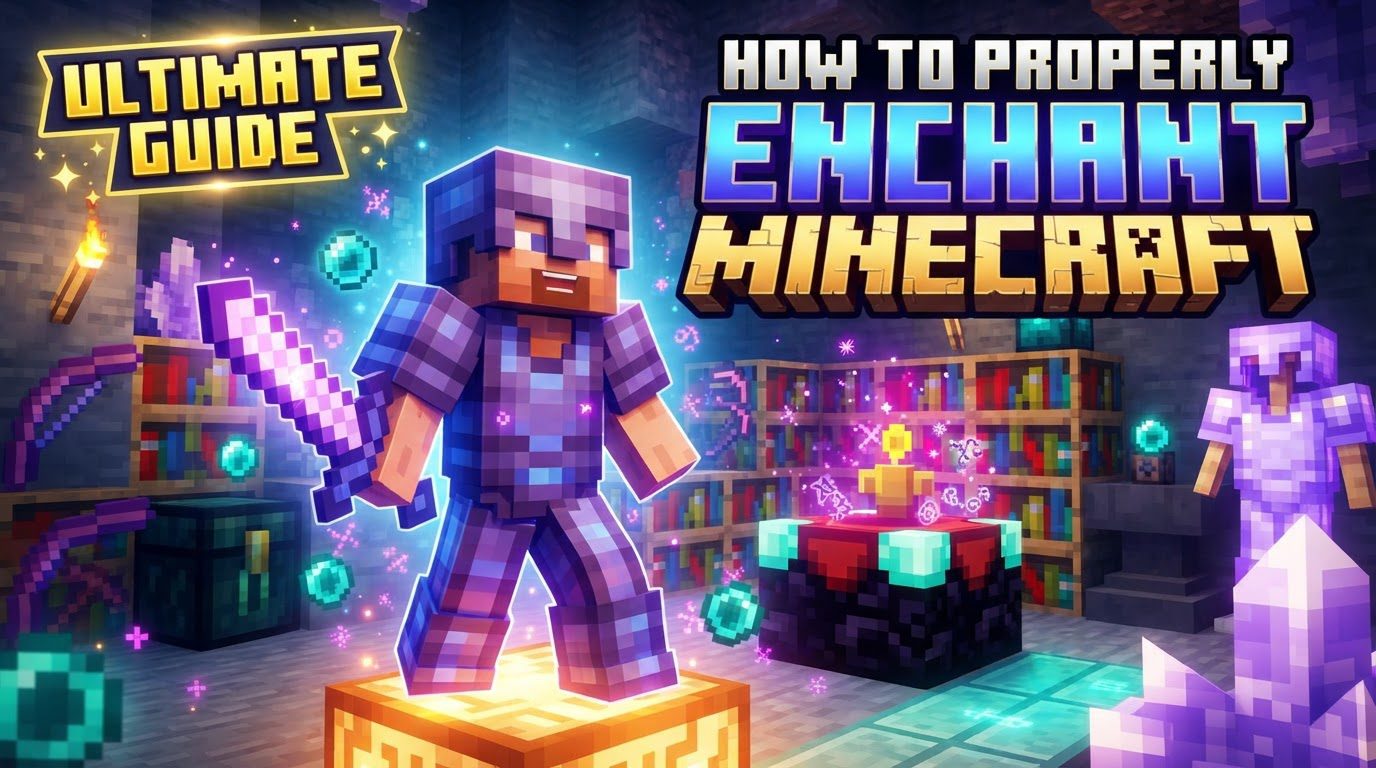
At the heart of all enchantment lies the Enchanting Table, your primary interface for applying magical properties. This crucial block is crafted from Obsidian, Diamonds, and a Book. However, merely crafting the table is only the first step. To unlock its full potential, particularly the coveted level 30 enchantments, you need to amplify its power.
- Bookshelves: These are paramount for reaching higher enchantment tiers. To access the maximum level 30 enchantments, you must have 15 bookshelves surrounding your enchanting table. Crucially, these bookshelves need to be placed exactly one block away from the table, with an air block in between. Any obstruction in this air gap – be it a torch, carpet, or block – will prevent the table from registering the bookshelf’s power.
- Experience Levels: Enchanting is an experience-hungry process. Each enchantment consumes a specific number of your accumulated experience levels. Higher-tier enchantments, offering more potent or numerous effects, demand a greater investment of your hard-earned experience. For the highest possible enchantments, you’ll need to have at least level 30 experience.
- Lapis Lazuli: Unlike experience, which is consumed from your overall pool, Lapis Lazuli is a direct material cost for every single enchantment. You’ll need a steady supply of this blue gem to fuel your enchanting endeavors.
- Randomness: The enchantments offered by the table are not entirely predictable. They are pseudo-random, meaning they are influenced by factors like the item being enchanted, the enchantment power (determined by bookshelves), and an internal “seed.” This element of chance means you might not always get the exact enchantment you desire on the first try.
Constructing Your Magical Hub: Crafting and Setup
Proper setup is non-negotiable for effective enchanting. Without it, you’ll be limited to low-level enchantments, which are often not worth the cost.
- Crafting the Essentials: Begin by crafting your enchanting table. You’ll also need to craft at least 15 bookshelves. While the notes don’t detail bookshelf crafting, ensure you have the necessary materials for them.
- Strategic Placement: This is where many players falter. Arrange all 15 bookshelves around your enchanting table. The critical rule is to leave a one-block air gap between the table and each bookshelf. This means the bookshelves should form a square or rectangle around the table, with the table in the center, and no blocks filling the space immediately adjacent to the table on any side. This precise arrangement is what unlocks the full level 30 enchantment options.
- Gather Experience: Before attempting to enchant, ensure you have sufficient experience levels. You can gain experience by mining ores, defeating hostile and passive mobs, smelting items in a furnace, or breeding animals. For the strongest enchantments, aim for at least level 30.
The Ritual of Enhancement: Step-by-Step Enchanting
Once your enchanting station is perfectly set up and you’ve accumulated enough experience and Lapis Lazuli, you’re ready to imbue your items with magical properties.
- Access the Interface: Right-click on your enchanting table to open its interface.
- Place Your Item: In the left slot of the enchanting table interface, place the item you wish to enchant (e.g., a diamond pickaxe, an iron sword, leather boots).
- Add Lapis Lazuli: In the right slot, place your Lapis Lazuli. The number of Lapis Lazuli required will depend on the chosen enchantment.
- Select Your Enchantment: On the right side of the interface, three enchantment options will appear. Each option displays its experience cost (in levels) and the Lapis Lazuli required. The bottom option typically represents the highest level and most expensive enchantment available, often providing the best results. Hovering over an option will usually reveal at least one of the enchantments you will receive, though it may not show all of them. Choose the option that best suits your needs and budget.
Elevating Your Gear: Advanced Strategies and Best Practices
Beyond the basic steps, strategic enchanting involves utilizing other game mechanics to refine and perfect your gear.
- Maximizing Enchantment Power: Always aim for a level 30 enchantment if you desire the best possible results. This means having all 15 bookshelves correctly placed around your enchanting table. The higher the enchantment level, the greater the chance of getting multiple or more powerful enchantments.
- The Power of the Anvil: The anvil is an indispensable tool for advanced enchanting. It allows you to:
- Combine Enchanted Books: Apply enchantments from an enchanted book to an item.
- Merge Items: Combine two enchanted items of the same type to merge their enchantments or repair one using the other.
- Repair Enchanted Gear: Repair items using their base materials while preserving enchantments.
- Rename Items: Renaming an item on an anvil can reset its “prior work cost,” preventing repair costs from escalating to “Too Expensive!” status.
- Prioritize Essential Enchantments: Not all enchantments are created equal. Research and prioritize the most beneficial enchantments for specific items. For instance, Efficiency V and Unbreaking III are paramount for pickaxes, while Sharpness V and Looting III are excellent for swords.
- Low-Level Enchantments for Early Game: In the early stages of your game, or for disposable tools, don’t hesitate to use low-level enchantments (even without all 15 bookshelves). A basic Efficiency I or Unbreaking I can significantly improve tool utility at minimal cost, allowing you to save your higher experience levels for more critical gear later on.
Sidestepping the Snares: Common Enchanting Errors to Avoid
Even seasoned players can make mistakes. Being aware of common pitfalls can save you time, resources, and frustration.
- Incorrect Bookshelf Placement: This is perhaps the most frequent error. Failing to have 15 bookshelves, or placing any block (like torches, carpets, or even flowers) in the one-block air gap between the table and the bookshelves, will prevent you from accessing level 30 enchantments. Always double-check your setup.
- Ignoring Enchantment Priority: Mindlessly enchanting items without considering the utility of specific enchantments can lead to less effective gear. A pickaxe with Bane of Arthropods isn’t as useful as one with Efficiency, for example.
- Using Thorns on Armor: While seemingly appealing, the Thorns enchantment is often regretted. It causes your armor to take more durability damage when it reflects damage to attackers, leading to faster degradation and higher repair costs for a relatively small benefit.
- The “Too Expensive!” Anvil Error: This message appears when the experience cost of an anvil operation (combining items, applying books) becomes prohibitively high. This often happens if you combine enchanted items or books in an inefficient order, or if an item has been worked on too many times. Renaming an item can sometimes reset this, but careful planning is key.
- Conflicting Enchantments: Some enchantments are mutually exclusive and cannot exist on the same item. For example, you cannot have Mending and Infinity on the same bow, or Protection and Blast Protection on the same armor piece. Attempting to combine these will fail.
- Applying the Wrong Effect: Always double-check the enchantment names. Confusing similar-sounding enchantments or accidentally applying an undesirable effect can waste valuable Lapis Lazuli and experience.
By diligently following these guidelines and understanding the nuances of Minecraft’s enchanting system, you’ll be well-equipped to forge powerful, enchanted gear that will serve you faithfully in your adventures. Happy enchanting!
Tags:
YOU MAY ALSO LIKE...