Minecraft Why Is Villager Not Taking Job
One of the most common frustrations for any Minecraft player delving into advanced villager mechanics is encountering a seemingly stubborn villager who refuses to take a job. You’ve placed the workstation, you have an unemployed villager, yet nothing happens. This perplexing behavior often stems from a misunderstanding of the intricate systems governing villager professions, which were significantly revamped in the 1.14 Village & Pillage update. Understanding these underlying mechanics is crucial to building efficient and reliable villager trading halls.
The Core Principles of Villager Employment
Before troubleshooting, it’s essential to grasp how villagers interact with job sites. Villagers are not born with inherent professions; they begin their lives as unemployed individuals, identifiable by their plain brown robes. Their profession is determined solely by claiming a specific job site block. Each profession is intrinsically linked to a unique block: a Lectern for a Librarian, a Composter for a Farmer, a Grindstone for a Weaponsmith, and so on.
An unemployed villager actively seeks out the nearest unclaimed job site block within its detection range. This search primarily occurs during their designated work hours in the daytime. The range for this search differs between game editions: Java Edition villagers scan a generous 48-block spherical radius, while Bedrock Edition villagers operate within a more confined 16-block radius and a 4-block height. Once a villager claims a block, they adopt its associated profession. They must also be able to physically access this block to replenish their trades, which they do twice daily – once in the morning and again in the afternoon. A critical point to remember is that once you make even a single trade with a villager, their profession becomes permanently locked. They will no longer be able to change jobs, even if their job site block is removed.
The Ideal Job Assignment Workflow
When everything works as intended, assigning a job to a villager is a straightforward process:
- Identify the Unemployed: Look for villagers wearing plain brown robes. These are your potential employees.
- Place the Job Site Block: Position the desired job block (e.g., a Smoker for a Butcher) near the unemployed villager. Ensure there are no obstructions directly on, above, or around the block that would prevent the villager from pathfinding to it.
- Observe the Claiming: During daytime hours, the villager should approach the block, and after a few seconds, green particles will appear, signifying they have successfully claimed it. Their attire will change to reflect their new profession.
- Verify the Profession: Interact with the villager to check their trade offerings. This confirms they have taken on the desired job.
- Lock the Profession (Recommended): To prevent accidental job changes or other villagers from claiming the block, make at least one trade with the villager. This permanently locks them into their current profession.
Why Your Villager Might Be Refusing Work
When the ideal workflow breaks down, several factors can prevent a villager from taking a job. Understanding these common pitfalls is key to troubleshooting.
The Dreaded Nitwit
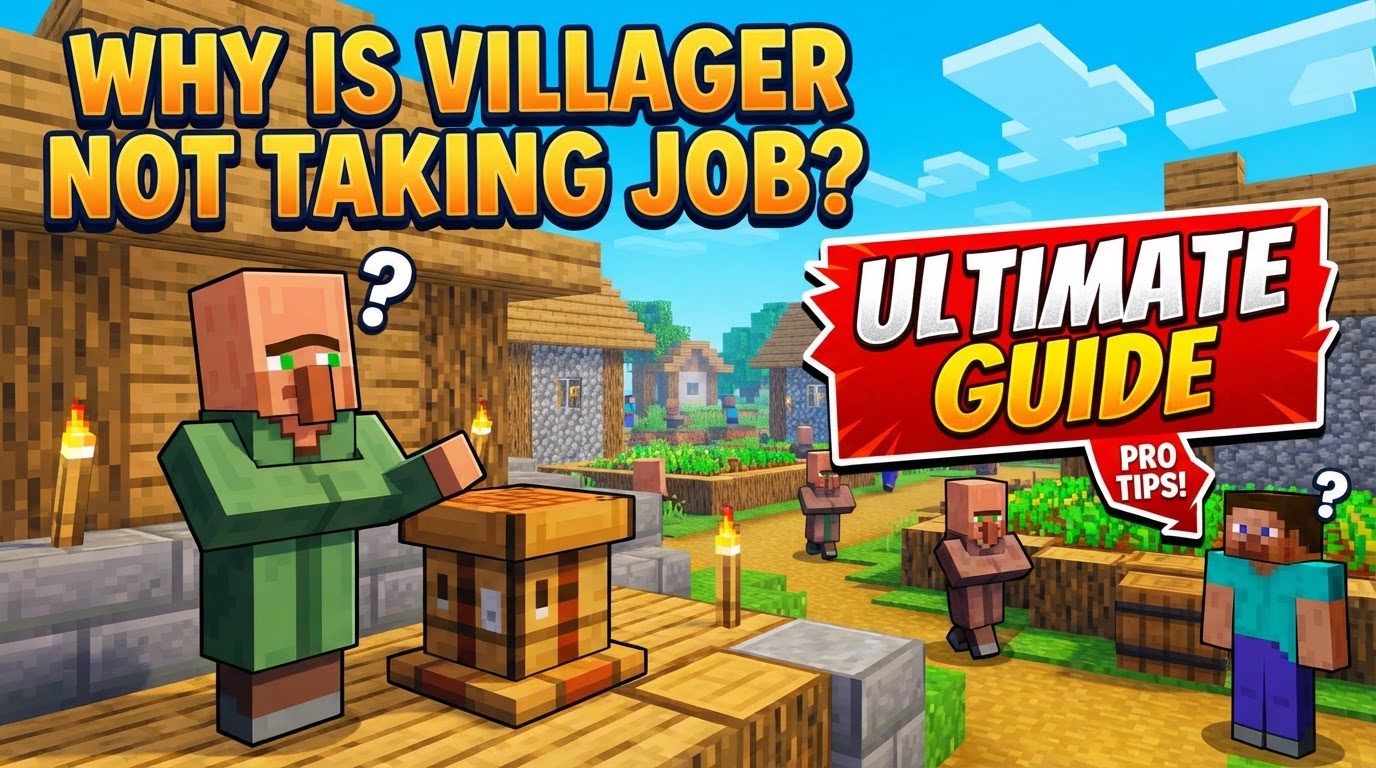
Not all villagers are created equal. Villagers wearing distinctive green robes are known as Nitwits. These villagers are fundamentally different; they cannot take any job, nor can they offer any trades. They are permanently jobless and will always remain so, regardless of how many job site blocks you place around them. There is no way to change a Nitwit’s status.
Timing is Everything: The Day/Night Cycle
Villagers are creatures of habit. They will not attempt to claim a job site block during the nighttime. They need to have slept in a bed and be awake during the daytime hours to seek out and claim a profession. If you’re trying to assign a job at dusk or during the night, simply wait until morning.
Obstacles and Pathfinding Failures
Villagers need to be able to physically reach their job site block. If there are any obstructions – walls, fences, trapdoors, carpets, or even other mobs – blocking their path, they will not claim the job. Ensure a clear, accessible path. Sometimes, even if a path seems clear, the game’s pathfinding AI can struggle. Try simplifying the area around the job block or temporarily trapping the villager in a small enclosure with the block.
The Block is Already Taken or Too Far
Perhaps the most common reason for a villager not taking a job is that the job site block you’ve placed is already claimed. Each job block can only be claimed by one villager. Another villager, even one far away and out of sight, might have claimed it. This is especially prevalent in larger villager setups or if you’ve transported villagers from a breeder. Similarly, if the villager is simply too far from any unclaimed job site block (beyond their 48-block or 16-block search radius), they won’t find it.
Lingering Links to Distant Workstations
Villagers can sometimes retain a link to a job site block they encountered previously, even if it’s far away or has been broken. If a villager was transported from a breeder or walked past a workstation before you intended them to take a job, they might still be attempting to pathfind to that distant, non-existent, or claimed block. Breaking and replacing the job block you want them to take can sometimes reset this.
Lack of Beds and Village Formation
While not always a direct cause, villagers generally need to be linked to a bed. Beds are crucial for forming a village, and a villager’s willingness to take a job can sometimes be tied to their perception of being part of a stable village. Ensure there’s at least one unclaimed bed available for the villager to link to, even if they don’t sleep in it every night.
Already Employed or Locked In
If you have previously traded with a villager, their profession is permanently locked. They will not abandon their current job for a new one, even if their current workstation is destroyed. Similarly, if they already have a profession (indicated by their attire), they won’t seek a new one unless their current workstation is broken and they haven’t been traded with yet.
Temporary Glitches and Chunk Loading Issues
Minecraft, like any complex game, can sometimes have minor bugs or chunk loading issues. A villager might simply not register the presence of a job block due to a temporary glitch. Try breaking and replacing the job block. If that doesn’t work, moving a significant distance away from the area (to unload the chunks) and then returning can often resolve these transient problems.
Effective Strategies for Villager Management
To minimize issues and streamline your villager employment process, consider these best practices:
- Centralize Job Site Areas: Group your job site blocks together in a dedicated area. This makes it easier for villagers to find available blocks and for you to manage them.
- Adequate Spacing: Ensure there’s enough room around each job site block for villagers to pathfind to it without getting stuck or confused. One block of clear space around the workstation is usually sufficient.
- Duplicate Job Sites: If you plan to have multiple villagers of the same profession (e.g., several Librarians), ensure you have an equal number of job site blocks (Lecterns) available for them to claim.
- Rerolling Trades: Before making the crucial first trade that locks a villager’s profession, you can repeatedly break and replace the job block. Each time you place the block, the villager will re-claim it and generate a new set of trades. This is invaluable for getting desirable enchantments or item trades.
- Isolate Unemployed Villagers: When trying to assign a specific job, it’s often helpful to temporarily isolate the unemployed villager you want to employ in a small room with only the desired job site block. This prevents other villagers from claiming it and ensures your target villager links to it.
Mastering villager employment requires patience and an understanding of their peculiar behaviors. By systematically checking for these common issues and implementing good management practices, you’ll soon have a thriving, well-employed village ready to offer you the best trades in Minecraft.
Tags:
YOU MAY ALSO LIKE...