

Why Your Automatic Potion System Produces Errors
Did you know that a single misplaced redstone repeater or an incorrectly timed button press can completely sabotage your meticulously crafted automatic potion system in Minecraft? Many aspiring alchemists spend hours designing intricate contraptions, only to be met with frustrating inconsistencies. The truth is, automatic potion brewing, while incredibly rewarding, is a dance of precise timing and meticulous item flow, where the smallest misstep can lead to a cascade of errors.
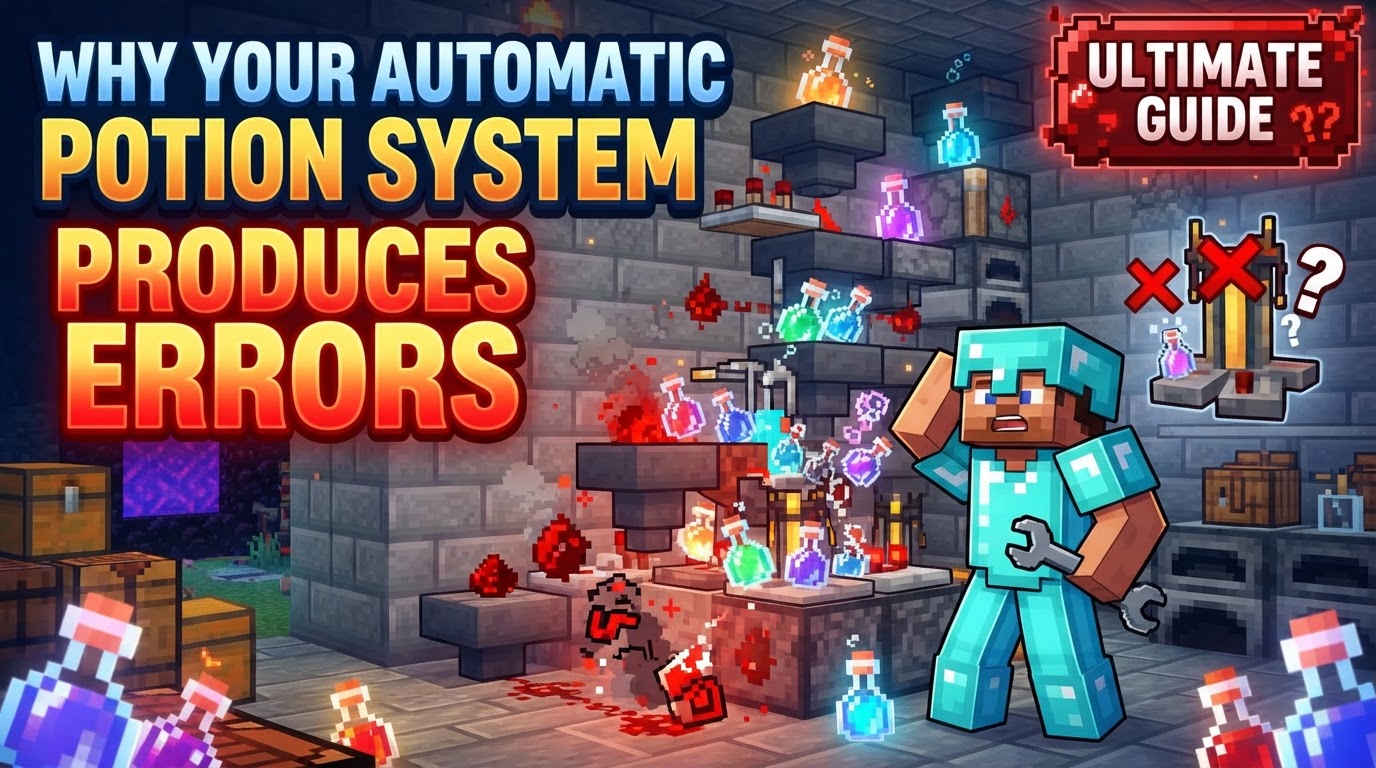
An automatic potion system in Minecraft is a marvel of engineering, combining brewing stands, hoppers, droppers, and an array of redstone components to automate the entire potion-making process. When executed flawlessly, it can churn out batches of potent elixirs with a single button press. However, the path to perfection is often paved with common pitfalls that cause systems to malfunction. Understanding these errors, and more importantly, how to prevent them, is key to unlocking truly hands-free potion production.
The Core Components of Automated Brewing
At the heart of any automatic potion system lies a suite of essential blocks, each playing a critical role in the brewing process and item management:
- Brewing Stand: This is the central processing unit, where water bottles are transformed into potions. It requires a primary ingredient, optional secondary ingredients, and, crucially, blaze powder as fuel.
- Hoppers: These versatile blocks are the circulatory system of your build, transferring items from one container to another. Hoppers pull items from containers above them and push them into blocks or containers they point into. A vital feature is their ability to be locked with a redstone signal, preventing item transfer.
- Droppers: Acting as precise dispensers, droppers eject items from their inventory when powered by redstone. They are indispensable for delivering ingredients in a specific sequence to the brewing stand.
- Redstone Dust, Repeaters, Comparators, and Torches: These form the brain of your system. Redstone circuitry dictates the timing and sequencing of item delivery and potion extraction. Comparators are particularly powerful, capable of detecting item presence in containers, allowing for intelligent, condition-based automation.
- Wooden Buttons: Often the system’s “on” switch, a wooden button provides a temporary redstone pulse. Its longer pulse duration compared to a stone button is critical for ensuring all three potions are fully ejected from the brewing stand.
The Ideal Brewing Workflow: A General Outline
Before diving into what goes wrong, let’s briefly review how a well-designed system is intended to operate:
- A collection chest is set up to receive finished potions, usually with a hopper feeding into it from above.
- The brewing stand is positioned directly on top of this output hopper.
- Water bottles are supplied to the brewing stand via a hopper, typically from a chest situated above or beside it.
- A sophisticated arrangement of droppers and hoppers sequentially feeds the necessary potion ingredients into the top of the brewing stand. This includes Nether Wart first, followed by specific effect ingredients, and then modifiers like Redstone Dust or Glowstone Dust.
- A dedicated hopper or system ensures a constant supply of blaze powder to the brewing stand’s fuel slot.
- A meticulously designed redstone control system is built to trigger droppers in the correct order, lock the output hopper beneath the brewing stand during brewing, unlock it post-brewing to collect potions, and finally, reset for the next batch.
- A simple button press initiates this entire, complex sequence.
Decoding Common Errors in Automatic Potion Systems
Even with a clear blueprint, errors frequently plague automatic potion systems. These issues generally fall into categories relating to timing, item flow, and component placement.
The Criticality of Timing and Redstone Signals
Redstone is the lifeblood of automation, but its signals must be perfectly orchestrated:
- Insufficient Redstone Signal Duration: One of the most common errors. If the redstone pulse that triggers the brewing stand to release its contents is too short (e.g., from a stone button), only one or two potions might be ejected, leaving the rest stuck. A wooden button’s longer pulse is vital here.
- Premature Potion Extraction: Hoppers beneath the brewing stand are notorious for pulling out unfinished potions if not properly controlled. This occurs when the hopper is not locked by redstone during the brewing process, leading to wasted ingredients and incomplete batches.
- Droppers Dispensing Multiple Items: Without careful redstone logic, a dropper might activate twice per cycle (once when powered, once when unpowered), dispensing two items instead of one. This wastes ingredients and can throw off brewing recipes. Utilizing an “edge detector” circuit, which provides a short pulse only when the button is released, can prevent this.
- Redstone Delays and Synchronization: A lack of properly timed redstone repeaters can lead to components activating out of sync. Ingredients might be delivered too early or too late, or hoppers might unlock before the brewing is truly complete.
- Redstone Interference: In compact designs, complex redstone circuits can sometimes bleed signals into adjacent components, causing unintended activations or deactivations. This can lead to unpredictable and frustrating system behavior.
Item Flow and Ingredient Management
The journey of items through your system is just as crucial as the redstone signals:
- Incorrect Ingredient Delivery Order: Potion recipes are strict. Nether Wart must always be added first to create an Awkward Potion, followed by the main ingredient for the effect, and then any modifiers (Redstone for duration, Glowstone for potency). If this order is not precisely followed by your droppers, the desired potion will not brew.
- Hopper Malfunctions (Locking/Unlocking Issues): Hoppers that fail to unlock will prevent water bottles or ingredients from reaching the brewing stand. Conversely, hoppers that remain locked will prevent finished potions from being collected or new ingredients from being supplied. This is almost always a redstone control issue.
- Lack of Blaze Powder Supply: The brewing stand requires blaze powder as fuel. If your system does not automatically resupply this fuel, the entire operation will grind to a halt once the initial supply is depleted.
- Water Bottle Supply Issues: Similar to blaze powder, if the hopper supplying water bottles stops functioning (often due to a redstone-locking problem), the system cannot begin or continue brewing.
- System Jamming: Items can get stuck in hoppers or the brewing stand’s inventory due to improper redstone timing or item overflow. This can be exacerbated by accidental item drops into open hoppers. Consider placing blocks or composters over open hoppers to prevent this.
Physical Placement and Initial Setup
Even the simplest placement mistakes can disrupt the entire system:
- Incorrect Hopper Direction: Hoppers must be placed precisely to feed items in the correct direction – into the brewing stand from above or its sides, and into the output chest from above. A hopper pointing the wrong way will break the item flow.
- Priming the System: Some complex automatic potion systems may not function perfectly from the very first run. They might require an initial manual setup or a few brewing cycles to “prime” the system, filling internal buffers or aligning redstone states.
Troubleshooting and Best Practices
To mitigate these errors and build a robust automatic potion system, consider these tips:
- Embrace the Wooden Button: Always use a wooden button to initiate the brewing cycle. Its longer redstone pulse is essential for ensuring all three potions are fully dispensed from the brewing stand.
- Strict Ingredient Sequencing: Design your dropper system to strictly adhere to the brewing order: Nether Wart first, then the primary effect ingredient, then any modifiers.
- Master Hopper Locking: Implement redstone logic to lock hoppers feeding items into and out of the brewing stand. This prevents premature item transfer and ensures brewing completes undisturbed.
- Utilize Edge Detectors for Droppers: Prevent droppers from dispensing two items by incorporating an edge detector circuit, ensuring only a single, precise pulse.
- Leverage Comparator Logic: Use comparators to detect when brewing is complete (by monitoring the brewing stand’s item count) or to manage ingredient levels in supply chests, enabling more intelligent and efficient systems.
- Strategic Redstone Delays: Incorporate redstone repeaters to introduce necessary delays, synchronizing item transfers and redstone signals across your entire contraption.
- Prevent Jamming: Place blocks or even composters over any exposed hoppers to prevent accidental item drops from disrupting the system.
- Test Iteratively: Build and test your system in stages. Ensure each component and redstone circuit works as intended before connecting the next part.
By understanding the intricate interplay of components and redstone, and by meticulously addressing potential points of failure, you can transform a temperamental contraption into a reliable, high-volume potion factory. Happy brewing!
Tags:
YOU MAY ALSO LIKE...


