Avoiding Curse of Binding on Equipped Armor
Understanding the Curse of Binding
The Curse of Binding is a unique and often frustrating negative treasure enchantment in Minecraft that can significantly impact a player’s gear management. Unlike beneficial enchantments that enhance items, this curse serves as a persistent hindrance. Its primary function is to prevent an enchanted item, once equipped in an armor slot, from being removed by conventional means. This means that if you accidentally don a piece of armor, an Elytra, a carved pumpkin, or even a mob head bearing this curse, it becomes inextricably linked to your character until specific conditions are met.
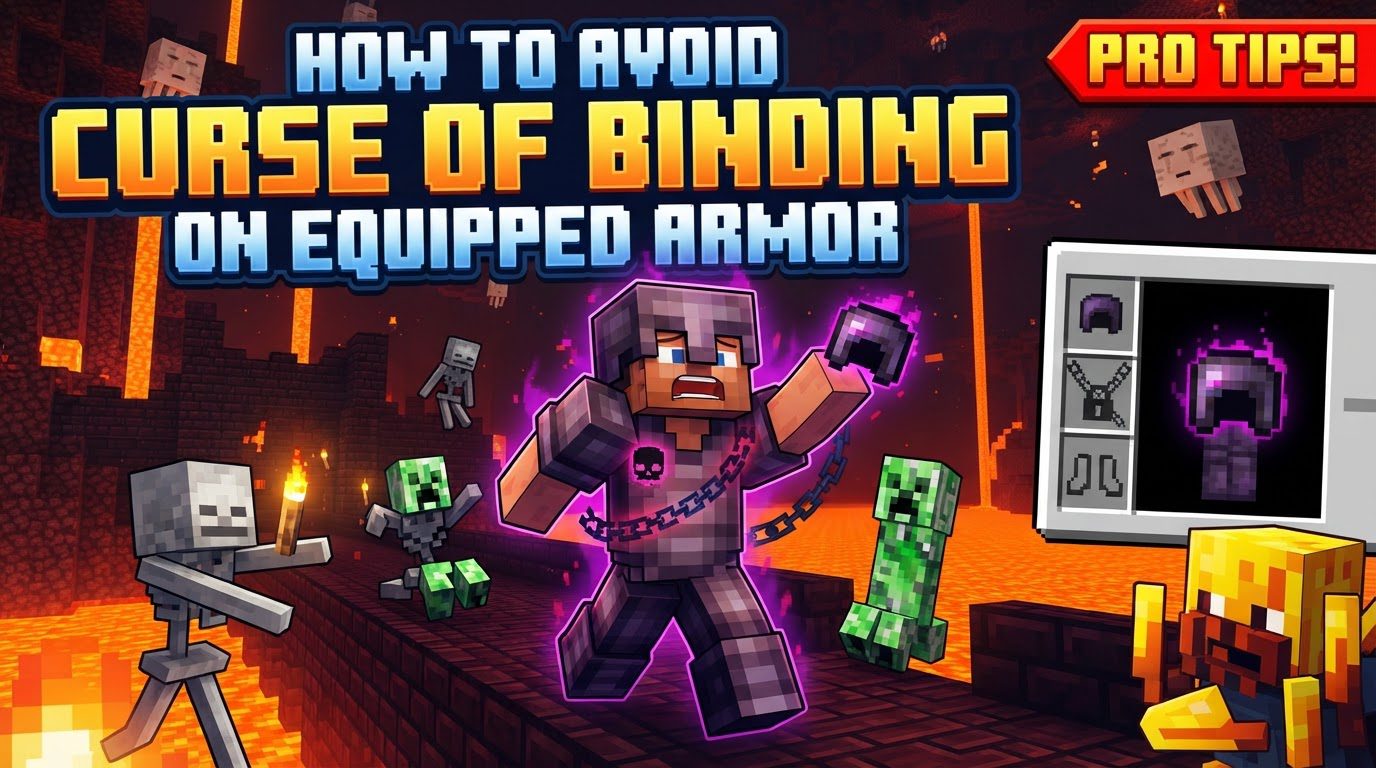
It’s crucial to understand that the Curse of Binding cannot be acquired through the standard enchanting table mechanic. Instead, it falls under the category of “treasure enchantments,” meaning it is typically discovered on items or enchanted books found in various loot chests throughout the game world. Common locations for such discoveries include the perilous End Cities, the sprawling Strongholds, and other structures where valuable loot is stashed. Players might also stumble upon cursed items through fishing, a method that can yield a wide array of enchanted gear. Furthermore, enterprising players might encounter items with the Curse of Binding offered through trades with Librarian villagers, adding another layer of unpredictability to item acquisition.
The curse itself only becomes active and problematic once the item is actually equipped into an armor slot. While an item with Curse of Binding is merely sitting in your inventory, it poses no immediate threat. You can freely move it between inventory slots, store it in chests, or even trade it with other players without any binding effects taking hold. The moment it occupies a helmet, chestplate, leggings, or boots slot, or is used as an Elytra, carved pumpkin, or mob head, its binding properties activate. It’s also worth noting that players operating in Creative mode are immune to the effects of Curse of Binding; in this mode, items can be freely removed from any slot without consequence, offering a stark contrast to Survival mode’s strict limitations.
Proactive Strategies: Preventing Accidental Binding
The most effective way to deal with the Curse of Binding is to avoid equipping cursed items in the first place. Vigilance and careful inspection are paramount to preventing the headache of a bound item.
- Inspect Loot Carefully: This is arguably the most critical preventative measure. Whenever you acquire an enchanted item or an enchanted book, especially from loot chests, fishing, or villager trades, make it an absolute habit to inspect its enchantments thoroughly before interacting with it further. Enchantments with the Curse of Binding are always displayed in a distinctive bright red text within the item’s tooltip. This visual cue is your primary indicator that an item carries this problematic enchantment. Take an extra moment to hover over new gear and books; a quick check can save you hours of frustration later on. Never equip an item found in loot without first verifying its enchantments, as this is a common mistake that leads to accidental binding.
- Be Cautious with Dispensers: Dispensers, while useful for automating many tasks, possess a unique and potentially hazardous property when it comes to armor. If a dispenser is loaded with an armor piece, Elytra, carved pumpkin, or mob head and is activated while a player is standing directly in front of it, it will forcibly equip the item onto the player. If that item happens to carry the Curse of Binding, it will immediately bind to the player, regardless of their intention. This mechanic makes dispensers a potential trap, especially in multiplayer environments or adventure maps where such devices might be used mischievously or inadvertently. Always be aware of your surroundings and the contents of dispensers before triggering them or standing near their output.
Dealing with Already Equipped Cursed Items
Should you find yourself in the unfortunate situation of having an item with Curse of Binding already equipped, there are several methods to remove it. Each method has its own implications and suitability depending on your game mode and the item type.
- Die In-Game: The most direct and universally applicable method to remove a cursed item is to die in the game. When a player dies, all equipped items are typically dropped onto the ground at the death location. This action effectively frees the armor slot that the cursed item occupied. However, this method comes with the inherent risk of losing other valuable inventory items, unless you have specifically set up safeguards like a respawn anchor or know the exact coordinates of your death. It’s important to note that if the cursed item also possesses the Curse of Vanishing, it will be permanently destroyed upon death instead of dropping, meaning it won’t be recoverable.
-
Break the Item: For any cursed item that possesses durability – this includes all types of armor (helmets, chestplates, leggings, boots) and the Elytra – you can remove it by causing it to break entirely. This involves continuously taking damage while the item is equipped until its durability reaches zero. There are several efficient ways to achieve this without necessarily dying yourself:
- Standing on Cacti: Cacti inflict continuous, small amounts of damage when stood upon, making them an excellent tool for slowly but surely depleting item durability.
- Standing in Sweet Berry Bushes: Similar to cacti, sweet berry bushes also inflict minor damage over time, which will wear down your armor.
- Taking Hits from Weak Mobs: Engaging with weak hostile mobs, such as zombies, skeletons, or spiders, can also serve to break your armor over time. This method allows for some control over the damage intake, but be mindful not to take too much damage yourself.
Once the item’s durability is exhausted and it breaks, it will automatically unequip from your character, freeing the slot.
- Place and Break (Carved Pumpkins/Mob Heads): If the cursed item happens to be a carved pumpkin or a mob head, their removal process is uniquely simpler. Unlike armor pieces, these items can be placed as blocks in the world. Once placed, you can then simply break them like any other block. Upon being broken, the item will be unequipped from your head slot and drop as an item, effectively removing the curse’s hold.
- Switch to Creative Mode: For players who have access to game commands and can switch between game modes, transitioning to Creative mode offers the easiest solution. In Creative mode, all restrictions on item removal are lifted. You can simply open your inventory and drag the cursed item out of its armor slot without any penalties or complications. This is often the preferred method for single-player worlds or servers where players have administrative privileges.
Common Mistakes and Ineffective Solutions
Understanding what *doesn’t* work is just as important as knowing what does, especially when dealing with a persistent enchantment like the Curse of Binding. Avoiding these common pitfalls can save you time and resources.
- Equipping Without Checking: As mentioned previously, one of the most frequent errors players make is equipping an item without first verifying its enchantments. The allure of new gear or the rush of loot collection can lead to overlooking the bright red text indicating the curse. Always, without exception, inspect new enchanted items.
-
Using Grindstones or Anvils: Many players instinctively turn to grindstones or anvils to modify or remove enchantments, but these tools are ineffective against the Curse of Binding.
- Grindstones: While a grindstone can successfully remove most other enchantments from an item, it specifically leaves the Curse of Binding intact. You might remove Fortune or Protection, but the binding curse will remain, rendering the grindstone useless for freeing the item.
- Anvils: Similarly, an anvil, used for repairing items, combining enchantments, or renaming, will retain the Curse of Binding when combining items or performing any other action. It does not offer a mechanism to remove this specific negative enchantment.
- Relying on `keepInventory` Gamerule: The `keepInventory` gamerule is a popular setting, especially in casual play, as it allows players to retain their inventory items upon death. However, if this gamerule is enabled, dying will *not* remove a cursed item from your character. Since your inventory is kept, the cursed item remains equipped, making death an ineffective method for removal. In such scenarios, your only recourse would be to either break the item through durability loss or switch to Creative mode if available. This makes the `keepInventory` setting a double-edged sword when dealing with Curse of Binding.
By understanding the mechanics of the Curse of Binding, practicing careful inspection of loot, and knowing the appropriate steps to take if an item becomes bound, you can effectively navigate this challenging enchantment and maintain control over your valuable gear in the world of Minecraft.
Tags:
YOU MAY ALSO LIKE...