Cooking Food Faster Using a Campfire
Mastering Campfire Cooking: Your Guide to Efficient Food Preparation
In the vast world of Minecraft, sustaining yourself with cooked food is paramount for survival and exploration. While various cooking methods exist, the humble campfire offers a unique and highly efficient approach, particularly for bulk processing without the constant need for fuel. Understanding its mechanics and mastering its use can significantly streamline your food preparation, freeing up valuable resources and time for other endeavors. This comprehensive guide will walk you through everything you need to know about cooking food faster and more efficiently using a campfire.
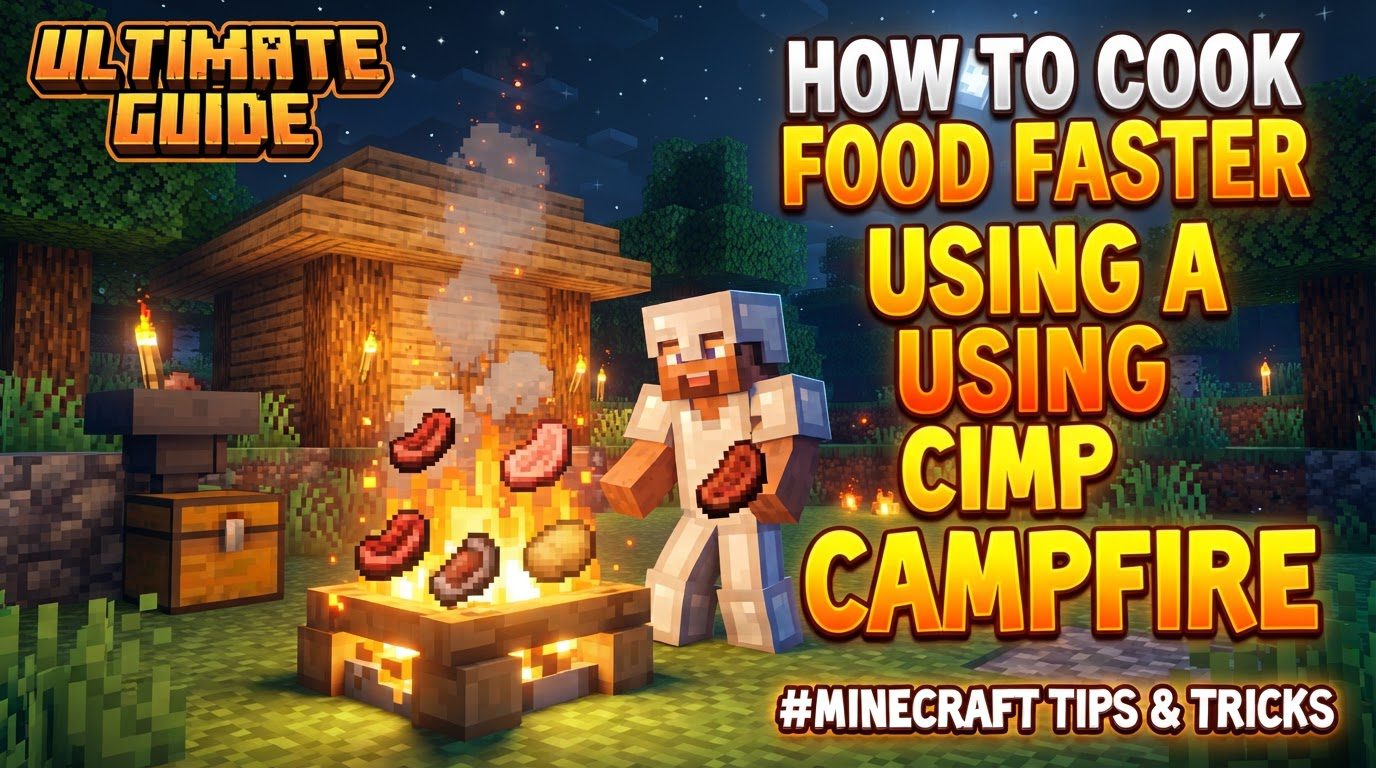
The campfire stands out as a distinctive cooking block due to several key mechanics that differentiate it from other cooking utilities like furnaces or smokers. Foremost among these is its impressive capacity to cook up to four food items simultaneously. This multi-tasking capability means that while a single item might take a certain amount of time, the overall throughput for multiple items is considerably faster than single-slot alternatives. Furthermore, a major advantage of the campfire is its complete independence from fuel. Once placed and lit, it will cook food indefinitely without requiring any coal, charcoal, or other combustible materials, making it an exceptionally sustainable and cost-effective option. Each individual food item placed on a campfire takes approximately 30 seconds to cook. Once the cooking process is complete, the cooked items automatically pop off the campfire, ready for collection. It’s important to note that if a campfire is extinguished while food is still cooking, the entire cooking process for any items currently on it will reset, meaning precious time and potential food resources could be lost. Interestingly, food items can be placed on a campfire even when it is unlit, but the actual cooking process will only commence once the campfire is ignited.
Step-by-Step Guide to Campfire Cooking
Utilizing a campfire for your cooking needs is a straightforward process, involving just a few simple steps:
- Crafting Your Campfire: The first step is to craft a campfire. This requires a specific combination of materials: three logs (any type of wood will suffice, such as oak, spruce, birch, etc.), three sticks, and one piece of coal or charcoal. Arrange these in the crafting grid according to the standard recipe to produce your campfire.
- Placing and Igniting: Once crafted, place the campfire on the ground in your desired location. Upon placement, the campfire will automatically ignite, beginning its perpetual burning state. There’s no need for flint and steel or any other ignition tools.
- Placing Food Items: With raw food items in your hand – be it raw porkchops, raw beef, raw chicken, or any other cookable food – right-click directly on the campfire. You can place up to four individual food items onto the campfire. Each right-click will place one item onto an available slot, until all four slots are occupied.
- Waiting for Cooking: After placing your food, a brief waiting period is required. Each food item will take approximately 30 seconds to cook completely. You will observe the raw food item transform into its cooked counterpart as it processes.
- Collecting Cooked Food: Once an item is fully cooked, it will automatically pop off the campfire and appear as a dropped item on the ground nearby. Simply walk over it to collect your freshly cooked meal. This automatic ejection means you don’t have to manually retrieve items, streamlining the collection process.
Maximizing Efficiency and Strategic Use
To truly harness the power of campfire cooking, understanding a few important tips can significantly enhance your food production strategy:
- Utilize All Four Slots: Always aim to fill all four cooking slots on a campfire. Since the campfire cooks multiple items simultaneously without consuming any additional fuel, using all available slots ensures you are maximizing its throughput and efficiency. Cooking one item takes the same amount of time and zero fuel as cooking four items, making full utilization the most logical approach.
- Cost-Effective Early Game Solution: Campfires represent an incredibly cost-effective cooking method, especially for players in the early stages of their Minecraft journey. They are cheap to craft, requiring only common resources, and their complete lack of ongoing fuel consumption means you save valuable coal, charcoal, or wood that can be allocated to other crucial crafting or smelting tasks. This makes them ideal for setting up a sustainable food source without taxing your initial resource gathering efforts.
- Fuel Efficiency Over Raw Speed: While campfires are slower per item compared to a smoker (which cooks in 5 seconds) or a furnace (which cooks in 10 seconds), their superior fuel efficiency for bulk cooking is unparalleled. Furnaces and smokers require continuous fuel input, which can quickly deplete resources when cooking large quantities. Campfires, by contrast, cook indefinitely for free, making them the most fuel-efficient choice for processing massive amounts of raw food over time, despite the longer individual cook time.
- Scaling with Multiple Campfires: If your demand for cooked food is exceptionally high, consider setting up multiple campfires. Each additional campfire effectively adds another four cooking slots, allowing you to process large quantities of food concurrently. For instance, three campfires would allow you to cook twelve items simultaneously, dramatically increasing your overall cooking speed and output for bulk operations. This strategy transforms a single campfire’s modest speed into a powerful, scalable cooking array.
Common Mistakes to Avoid
Even with its simplicity, there are a few pitfalls that players commonly encounter when using campfires for cooking. Being aware of these can save you frustration and resources:
- Avoid Standing on Campfires: A critical safety note: do not stand directly on a campfire. Campfires inflict fire damage to any entity standing on them. This can quickly deplete your health, and in extreme cases, lead to an untimely demise or loss of inventory items upon death. Always maintain a safe distance when interacting with them.
- Prompt Collection of Cooked Food: Once food items are cooked and pop off the campfire, they become dropped items on the ground. Like all dropped items, they are susceptible to despawning after a certain period if not collected. Furthermore, other entities, such as certain mobs or even other players, could potentially pick them up. Ensure you collect your cooked food promptly to prevent loss.
- Do Not Extinguish Cooking Campfires: As mentioned in the mechanics, extinguishing a campfire while food is still cooking will reset all cooking progress for the items on it. This means any time invested in that batch of food will be wasted, and you’ll have to start over once the campfire is re-lit. Always allow your food to finish cooking before extinguishing the campfire, if necessary.
- Manual Placement is Required: It’s important to understand that campfires do not integrate with automated systems in the same way as furnaces. Hoppers cannot place food onto campfires, nor can dispensers. This means that all food items must be placed onto the campfire manually by the player. While this limits automation, the fuel-free cooking often outweighs this minor inconvenience for many players.
By understanding these mechanics, following the simple steps, leveraging the efficiency tips, and avoiding common mistakes, you can transform the humble campfire into a powerful and sustainable cooking station in your Minecraft world. Its unique combination of simultaneous cooking, fuel independence, and scalability makes it an invaluable tool for any player looking to optimize their food production.
Tags:
YOU MAY ALSO LIKE...