How to Build a Factory in Minecraft
One of the most common mistakes Minecraft players make when embarking on a factory build is overestimating its necessary size, leading to sprawling, inefficient structures. A “factory” in Minecraft isn’t just a giant, imposing building; it’s a sophisticated system designed for resource generation, processing, and automation, whether for aesthetic appeal, functional output, or a blend of both.
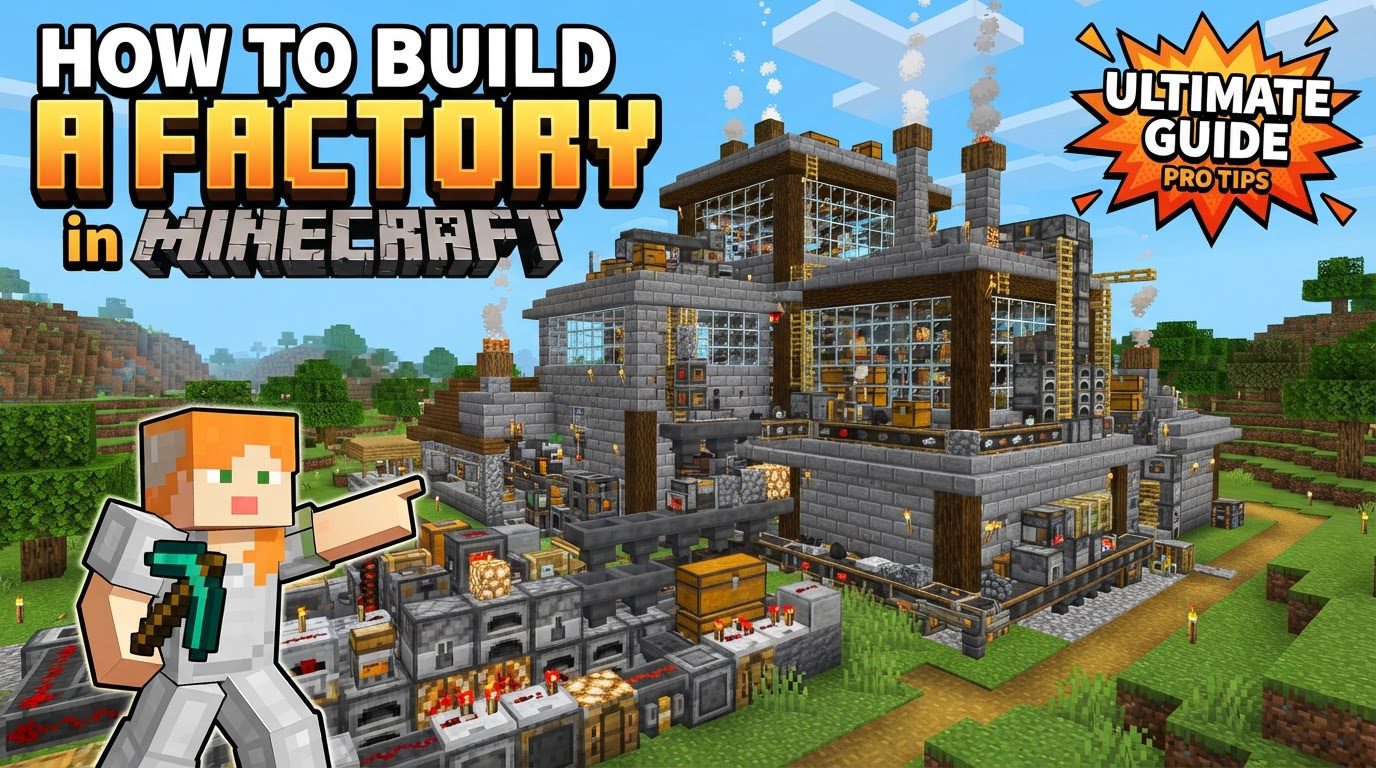
Defining Your Factory’s Vision
Before placing a single block, the most critical step is to define your factory’s purpose. Is it primarily for aesthetic display, a grand industrial monument in your world? Or is its main function to house complex machines and automate specific processes, such as farming, ore processing, or item sorting? Perhaps it’s a server-specific factory designed to generate income or items over time, even when you’re offline. Clearly outlining its role will dictate every subsequent design and construction choice, preventing the common pitfall of a disorganized or less functional build.
Understanding Core Factory Mechanics
At the heart of any effective Minecraft factory lies a combination of ingenious mechanics.
- Automation Essentials: Many functional factories leverage intricate redstone mechanics, advanced item sorters, and various contraptions to automate resource generation and processing. This could involve anything from automatic farms to complex sorting systems that direct items to their designated storage.
- Mod Integration for Enhanced Functionality: For those playing on modded servers or single-player worlds, specific modifications significantly expand factory capabilities. Mods like Mekanism introduce tiered factories (basic, advanced, elite, ultimate) for highly efficient resource processing. FactoryMod, another example, relies on a core setup of a furnace, crafting table, and chest to operate, allowing for automation around these central components.
- Modular Design Principles: To combat complexity and prevent a tangled mess of wires and pipes, adopting a modular design is crucial. This involves creating separate areas or even distinct buildings for different functions. Imagine dedicated sections for warehousing raw materials, refining processed goods, assembling final products, and even a central control room to manage operations. This approach simplifies troubleshooting and allows for future expansion.
- Resource Generation & Upgrades: Particularly on specific Minecraft servers (like Minecraft Breakdown mentioned in research), factories can be designed to generate income or items consistently, even when players are offline. These systems often come with upgrade paths to enhance their efficiency, increase storage capacity, or improve output over time, providing a sustained benefit to the player.
Aesthetic and Structural Blueprint
Once the purpose is clear, it’s time to consider the factory’s physical form. Building around your intended machinery is often more efficient than trying to fit machines into a pre-built shell.
- Choosing a Style & Palette: Factories can embody a wide range of architectural styles. You might opt for a historical, rugged look using stone, bricks, and dark oak, or a sleek, modern, high-tech aesthetic with concrete, plastic blocks, and factory-specific blocks from mods. Industrial and Steampunk themes are particularly popular for their intricate detailing and imposing presence. Experimenting with different block palettes in creative mode can help visualize the final outcome.
- Laying a Solid Foundation: Every great build starts with a strong base. Begin by framing your build and establishing a solid foundation. For functional server factories, this might involve placing specific “foundation items” acquired or bought in-game, which are integral to the factory’s operation.
- Building Around Your Machines: For functional factories, a practical approach is to set up your machines first. Place your automated farms, ore processors, item sorters, and storage systems. Then, construct the building around them. This ensures that space is used efficiently, and all components are accessible, preventing awkward layouts.
- Implementing Multi-Layered Floors: A common challenge in factory builds is managing the visual clutter of redstone, pipes, and wiring. A highly effective solution is to implement three-layer floors. This design allows you to hide all conduits, wires, and redstone dust within the floor itself, maintaining a clean and aesthetically pleasing interior, especially for multi-story designs.
- Utilizing Roof Space: Don’t overlook the potential of your factory’s roof. Flat roofs, in particular, can serve multiple practical purposes. They are ideal locations for passive power generation, such as solar panels (from mods) or decorative windmills. They can also be used as an additional hidden layer for stashing extra wires, pipes, or overflow storage, keeping the main factory floors uncluttered.
- Adding Interior and Exterior Details: To bring your factory to life, focus on details. Incorporate interior layouts that include walkways, control panels, and staff areas. On the exterior, consider adding elements like decorative trucks, forklifts, loading docks, or smoking chimneys to enhance its industrial charm and realism. Looking at real-life factories, Pinterest, or Google images can provide excellent inspiration.
Tips for an Optimized Factory
Building a factory goes beyond mere construction; it’s about optimization and smart design.
- Space Efficiency is Key: While the temptation to build monumentally large structures is strong, factories often look and function best when space is used efficiently. Avoid excessively large builds unless absolutely necessary for the scale of your automation. A compact, well-designed factory can outperform a sprawling, empty one.
- Conceal Your Mechanics: As mentioned, utilizing multi-layered floors to conceal redstone, pipes, or wires significantly improves the factory’s aesthetic appeal. A clean look enhances the feeling of professionalism and advanced engineering.
- Seek Diverse Inspiration: Don’t limit your design ideas to other Minecraft builds. Look at real-life factories, industrial architecture, and even concept art for inspiration. This broadens your creative palette and can lead to truly unique designs.
- Server Protection: If you’re building on a multiplayer server, always place your factory on claimed territory. This protects your valuable assets from theft, griefing, or accidental destruction by other players. Some server-specific factories may also offer outer layer upgrades for additional defense.
- Redstone Integration for Modded Factories: For modded factories, particularly those using systems like FactoryMod, redstone is invaluable. It can be used to start and stop processes, automate material handling, or trigger specific sequences, allowing for a truly hands-off operation once set up.
Common Pitfalls to Avoid
Even seasoned builders can fall prey to common mistakes that hinder a factory’s functionality or appearance.
- Overestimating Size: As noted earlier, building a factory that is too large often results in wasted space, difficulty in navigation, and a less cohesive design. Focus on functionality and efficient layout over sheer scale.
- Lack of Planning: Rushing into a build without a clear purpose or layout plan invariably leads to disorganized, less functional, and aesthetically unpleasing designs. Always plan your factory’s purpose and basic layout beforehand.
- Exposing Wiring/Piping: Failing to conceal redstone, pipes, or wires is a major aesthetic detractor. Take the time to integrate these elements cleanly into your structure using hidden layers or clever routing.
- Breaking Core Blocks (Modded): In certain modded systems like FactoryMod, breaking the central furnace, crafting table, or chest that defines the factory will cause the entire system to go into disrepair, potentially losing progress or resources. Always be mindful of critical components in modded setups.
Building a factory in Minecraft is a rewarding endeavor that combines creativity, engineering, and problem-solving. By carefully planning its purpose, understanding its core mechanics, designing with both aesthetics and efficiency in mind, and avoiding common pitfalls, you can construct a powerful and impressive industrial hub in your world.
Tags:
YOU MAY ALSO LIKE...