How to Build Bases Invisible to Thermal Detection
Many players believe a simple hidden piston door guarantees their base’s secrecy, only to find their meticulously crafted sanctuary plundered. The truth is, true invisibility in Minecraft goes far beyond a clever entrance, especially when facing adversaries equipped with advanced detection methods, whether through mods or clever use of vanilla mechanics.
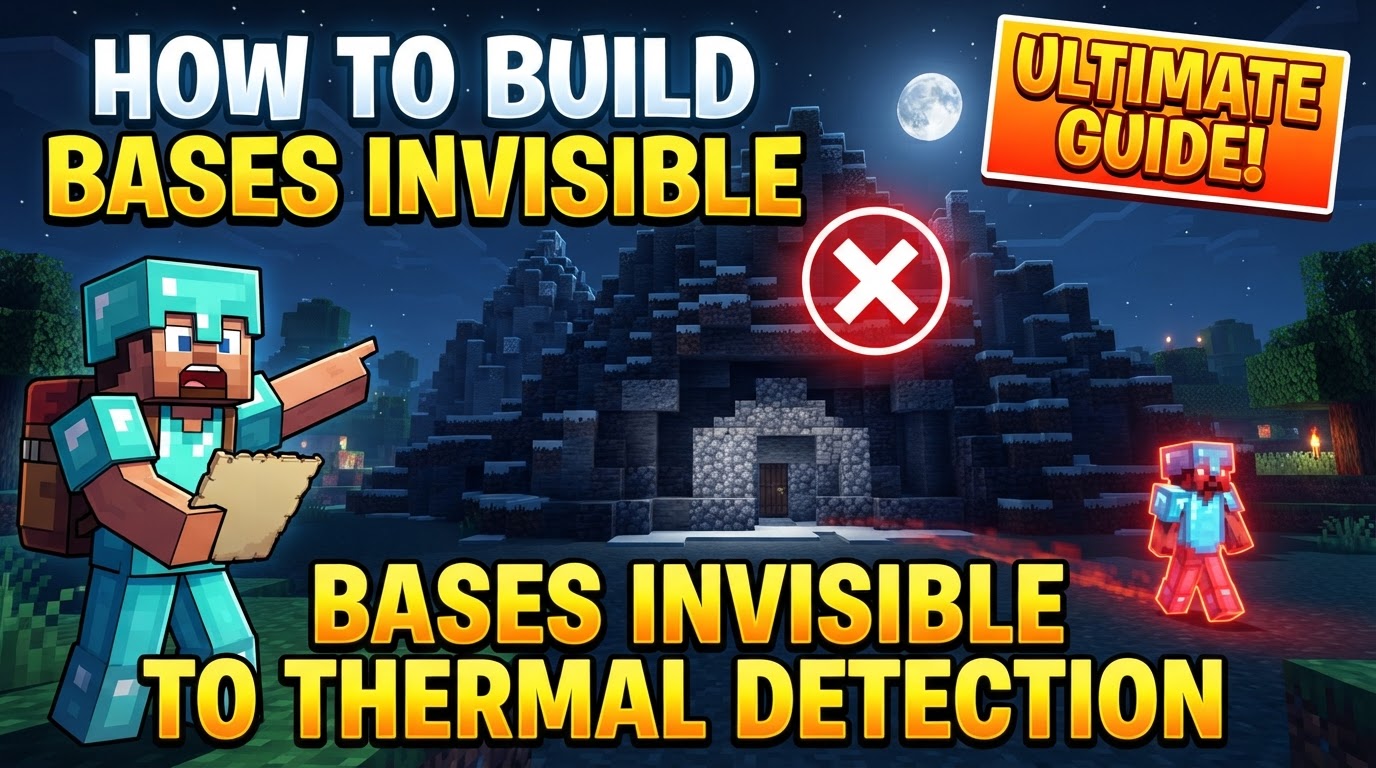
While vanilla Minecraft doesn’t feature an inherent “thermal detection” system in the way one might imagine heat signatures, the concept extends to any method players use to locate hidden structures without direct visual contact. This guide will delve into making your base undetectable, addressing both specific modded thermal vision tools and the pervasive X-ray cheats and debug screen tactics used by experienced base hunters.
The Invisible Threat: Understanding Detection Mechanics
To build an undetectable base, you must first understand how bases are detected. The threats come in several forms:
- Modded Thermal Vision: Certain server modifications introduce items like “Thermal Vision Goggles” or “Thermal Imagers.” These devices typically highlight living entities (players, mobs) and sometimes specific block types, rendering the world in a grayscale palette with distinct heat signatures. They are usually activated via a keybind.
- X-ray Cheats & Texture Packs: The most common form of “seeing through walls” on multiplayer servers, X-ray allows players to render certain blocks transparent, revealing ores, chests, spawners, and hidden base structures.
- F3 Debug Screen (Block Entities): A vanilla mechanic, the F3 debug menu provides a “block entities” pie chart. Savvy players can use this to detect an unusual concentration of block entities (chests, shulker boxes, enchanting tables, item frames, spawners, etc.) in an area, even if they are deep underground and otherwise hidden. This is a powerful, often overlooked, detection method.
- Visual Cues: The most basic but often effective detection method. Unnatural terrain alterations, exposed redstone, random torches in a cave, or obvious entrances are glaring giveaways.
- Chunk Loading Anomalies: On some servers, areas under constant chunk loading (due to complex redstone or exploits) can sometimes be identified, indirectly pointing to player activity.
Scouting for Secrecy: Location is Key
The first and most critical step in building an invisible base is choosing the right location. A perfectly concealed base in a bad spot is still a vulnerable base.
- Seek Remoteness: Build far from spawn points, commonly traveled paths, and significant natural landmarks (e.g., strongholds, ocean monuments, large cave systems). These areas are frequently explored.
- Avoid Populated Areas: Never build directly under villages or near valuable natural structures that attract players.
- Embrace the Obscure: Consider remote, less desirable biomes, deep oceans, or even the nether’s vast, often-ignored ceilings or floors. These locations are less likely to be stumbled upon.
- Go Deep: Building at very low Y-coordinates makes a base harder to find by casual exploration. However, be wary of “drillers” who specifically target these depths.
Architecting the Unseen: Construction Techniques
Once you have your location, the construction phase demands meticulous attention to detail to avoid detection.
- Deep Burial & Obscured Entrances: Underground bases are paramount. Your entrance must be virtually invisible. Utilize hidden piston doors that perfectly blend with the surrounding terrain, secret passages behind waterfalls or lava flows, or entrances integrated into natural cave formations. The goal is seamless integration.
- Mimic Natural Generation: When digging or building, use blocks that perfectly match the surrounding environment. Avoid creating unnatural clearings, perfectly smooth walls, or geometric shapes that scream “player-made.” Incorporate random patches of gravel, dirt, or even lava around your base to further blend it with natural cave systems and deter casual digging.
- Redstone Cloaking: All redstone mechanisms, whether for hidden doors, traps, or other contraptions, must be fully concealed within walls and terrain. Exposed redstone is a dead giveaway, even if the base itself is hidden.
Beyond the Surface: Advanced Cloaking Strategies
To counter more sophisticated detection methods, you need advanced defensive layers.
- Anti-X-ray Measures:
- Strategic Storage: X-ray cheats often prioritize highlighting chests. Diversify your storage by using dispensers, droppers, or furnaces for less critical items.
- Disperse Valuables: Instead of one grand vault, spread your valuable items across multiple smaller, well-hidden stashes in different chambers or even entirely separate locations.
- Confuse the Cheaters: Create decoy rooms filled with empty chests or common items. Build layers of common, uninteresting blocks (like cobblestone or dirt) around your main base to make it harder for X-rayers to pinpoint valuable areas.
- Minimizing “Block Entity” Signatures: This is crucial for avoiding F3 debug screen detection. Limit the number of block entities (chests, shulker boxes, item frames, enchanting tables, etc.) in any concentrated area. If you need many containers, spread them out widely, perhaps in separate, distant chambers or vertically across different levels of your base.
- Water and Lava Concealment: Entrances or even entire base sections deep underwater or behind thick lava flows serve as excellent visual deterrents and can sometimes obscure X-ray views.
- “Air Holes” and Buffer Zones: Creating empty spaces or layers of air blocks around the perimeter of your base can sometimes confuse certain X-ray glitches and make it harder to pinpoint exact wall locations.
The Silent Watch: Maintaining Stealth
Building the base is only half the battle; maintaining its secrecy is an ongoing effort.
- Minimal Surface Impact: Leave absolutely no evidence of your presence on the surface. This means no random blocks, no dropped items, no un-replanted trees, and certainly no torches. Always replant what you harvest and fill in any holes you make.
- No Obvious Trails: Avoid creating clear paths, tunnels, or clearings that lead directly to your base. Vary your travel routes and use indirect paths.
Traps for the Unwary: Common Blunders
Even experienced players make mistakes that compromise their base’s security. Avoid these common pitfalls:
- Proximity to Landmarks: Building too close to highly visible or frequently visited natural structures is an open invitation for discovery.
- Leaving Trace Evidence: Forgetting to cover up dig sites, leaving stray torches, dropped items, or even distinct block patterns near the surface are all tell-tale signs.
- Over-reliance on a Single Method: A single, no matter how clever, hidden door will eventually be found. Layer your defenses.
- Ignoring F3 Debug Screen: Concentrating all your valuables and block entities in a single, small vault is a beacon for F3 users.
- Above-Ground Bases: Unless part of an elaborate, highly effective disguise, above-ground bases are inherently more visible and less secure.
- Under-Village Bases: Villages are player magnets. Building directly beneath one drastically increases your chances of discovery.
- Neglecting Modded Detection: If playing on a modded server, failing to account for specific detection items like thermal goggles or advanced scanners will render your efforts useless.
True base invisibility in Minecraft is a multi-faceted challenge requiring foresight, meticulous planning, and diligent execution. By understanding the various detection methods and employing layered concealment strategies, you can significantly increase the longevity and security of your hidden sanctuary.
Tags:
YOU MAY ALSO LIKE...