How to Build Bases Resistant to Water Griefing
Many Minecraft players focus heavily on warding off TNT and Creeper explosions, often overlooking one of the most insidious and annoying forms of griefing: water. While water rarely causes direct block destruction, it can utterly devastate a base by flooding interiors, interfering with redstone, dislodging torches, and creating an impassable, noisy mess that is incredibly frustrating to clean up. Building a base that can withstand a determined water griefer requires a deep understanding of Minecraft’s fluid mechanics and strategic construction choices.
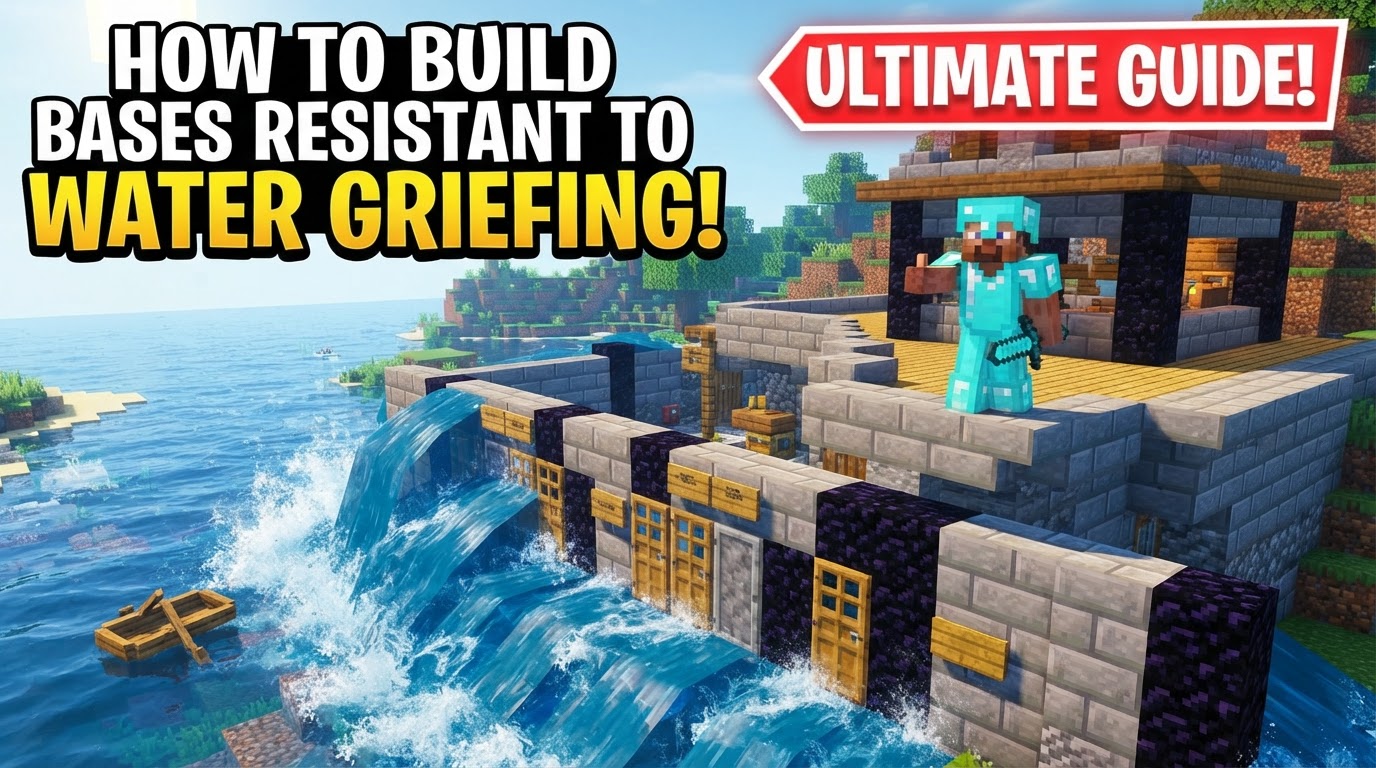
Understanding the Aquatic Threat
Before fortifying your defenses, it’s crucial to understand how water functions in Minecraft and how griefers exploit it.
- Waterlogging Mechanics: This fundamental mechanic allows many non-full blocks, such as stairs, slabs, fences, doors, and trapdoors, to occupy the same space as a water source block. This has several implications:
- Explosion Resistance: Waterlogged blocks become explosion-proof. The water surrounding or within them absorbs the blast force, protecting the block and adjacent structures. This even applies to flammable blocks if they are waterlogged.
- TNT Absorption: Water source blocks themselves can absorb the destructive power of TNT explosions, preventing damage to surrounding blocks entirely.
- Platform Differences: In Java Edition, doors can create temporary air pockets underwater, which is useful for construction. However, Bedrock Edition handles waterlogging differently, making this specific trick generally ineffective there.
- The Annoyance Factor: Griefers frequently deploy water (and lava) not necessarily to destroy blocks, but to create constant trickling sounds, impede movement, dislodge non-solid blocks like torches, or simply make a base unplayable and difficult to rebuild.
- Mob Interactions: Water can be a surprisingly effective deterrent. Endermen, notorious for teleporting and picking up valuable blocks, cannot do so when in contact with water or when standing on non-full-sized blocks.
Fortifying Your Foundations: Strategic Construction
Building with water resistance in mind means incorporating specific design elements from the ground up.
Underwater Base Construction
One of the most effective ways to be water-griefing resistant is to embrace the water itself by building an underwater base. This inherently protects against surface-level water attacks and often makes your base harder to find.
- Framework First: Begin by constructing the outer shell of your base using a solid, non-flammable, and preferably blast-resistant material like glass or stone. This framework is crucial for containing the air pocket you’ll create.
- Clearing the Interior: Once the framework is sealed, you need to remove the water from the inside.
- Gravity Blocks: For large underwater sections, a highly efficient method is to place gravity-affected blocks (sand or gravel) directly above the area you want to clear. They will fall to the ocean floor, displacing water as they descend. Once the water is gone, you can easily mine them away.
- Sponges: Sponges are invaluable for soaking up water. Keep a supply of dry sponges and a way to dry them (e.g., in a furnace or by placing them in the Nether).
- Torches: A quick trick for single water source blocks is to place a torch, which will instantly remove the water.
- Air Pockets (Java Edition): While building, placing doors or signs can create temporary air pockets, allowing you to breathe and work without constantly surfacing.
General Base Reinforcement
Even if you’re not building underwater, these techniques enhance water resistance.
- Blast-Resistant Materials: Always use blast-resistant blocks such as obsidian, reinforced deepslate, stone bricks, or iron blocks for critical areas like walls, ceilings, and floors. While water absorbs explosions, a griefer might try to bypass water with direct TNT placement.
- Hidden Entrances: A base that cannot be found cannot be griefed. Implement hidden entrances using redstone, pistons, or clever landscaping to conceal your entry points. This denies griefers the opportunity to flood your main access.
- Perimeter Water Features: Strategically placing moats or decorative water features around your base can serve a dual purpose. They act as an aesthetic barrier and deter Endermen, preventing them from stealing blocks from your exterior walls.
Strategic Defenses: Placement and Prevention
Beyond construction, where and how you set up your base can drastically reduce its vulnerability.
- Distance and Depth: The harder your base is to find, the safer it is. Build far from spawn points and at very low Y-levels (close to bedrock). This makes accidental discovery or casual griefing much less likely.
- Avoid Internal Nether Portals: Never place a Nether portal directly inside your base. Griefers can use these portals to gain access, or worse, funnel hostile mobs like Ghasts or Blazes directly into your sanctuary, creating chaos and potential destruction.
- Building Aids:
Server-Side Safeguards: For the Realm Owners
For server administrators, preventative measures are the most powerful tools against water griefing.
- Anti-Griefing Plugins: Utilize server plugins (e.g., Bukkit/Spigot plugins) that allow you to restrict who can place water or lava. Many plugins also offer region protection, preventing anyone but the owner from modifying blocks within a defined area.
- Logging and Rollback Tools: Implement logging plugins that record every block placement and destruction. Combined with rollback tools, you can easily undo any damage caused by griefers with a few commands, effectively neutralizing their efforts.
- Cautious Admin Privileges: Granting operator (OP) status should be done with extreme caution. An OP with malicious intent can bypass almost any protection. Only the most trusted individuals should have such power.
- Regular World Backups: This is non-negotiable. Regularly back up your server world. In the event of catastrophic griefing that cannot be easily rolled back, a recent backup can save countless hours of rebuilding.
Avoiding the Floodgates: Common Errors
Even experienced players can make mistakes that leave their bases vulnerable.
- Neglecting Server Security: Running a server without anti-griefing plugins, proper logging, or careful management of admin privileges is an open invitation for fluid-based destruction.
- Lack of Backups: Underestimating the importance of world backups can lead to irreversible damage. A single determined griefer can cause enough chaos to make recovery impossible without a recent save.
- Unintentional Waterlogging of Walls: Be careful when building with non-full blocks. Mistakenly waterlogging an exterior wall can create unexpected water flow into your base if a block is later broken or a new water source is introduced nearby.
- Placing Nether Portals Inside Bases: This remains a critical vulnerability. It’s a direct conduit for trouble, whether it’s griefers entering or unwanted mobs spawning and causing havoc. Always place Nether portals in a secure, separate location away from your main base.
By understanding water mechanics, employing smart building techniques, utilizing server-side protections, and avoiding common pitfalls, you can construct a Minecraft base that stands resilient against the most annoying and persistent forms of water griefing, allowing you to enjoy your creations in peace.
Tags:
YOU MAY ALSO LIKE...